


Temple of the Sun in Machu Picchu
The Temple of the Sun is one of the most important, sacred, and architecturally advanced structures within the Inca citadel. Built with extraordinary precision and astronomical purpose, this temple reflects the deep spiritual connection the Incas had with the Sun, the cosmos, and the natural world.
For archaeologists, historians, and travelers alike, the Temple of the Sun represents the religious heart of Machu Picchu and a powerful symbol of Inca cosmology and engineering mastery.
What Is the Temple of the Sun in Machu Picchu?
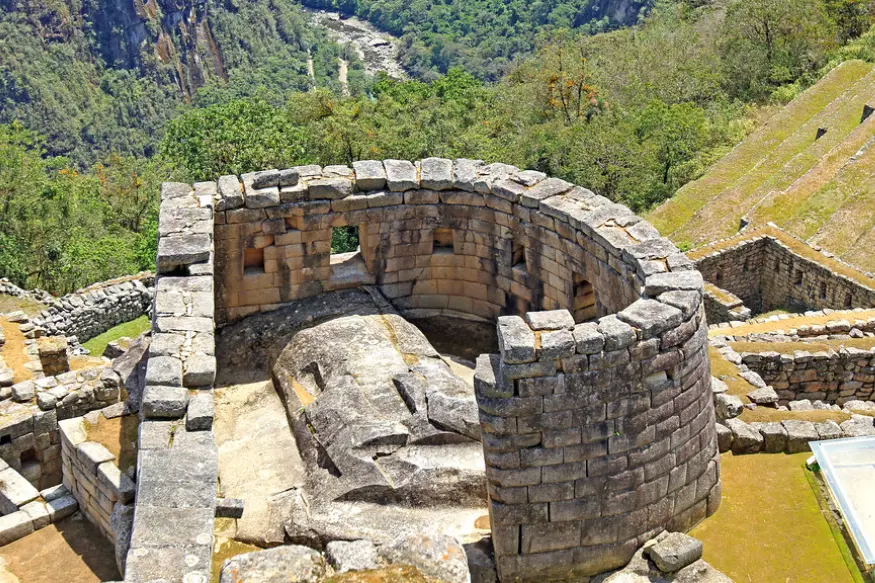
The Temple of the Sun (also known as Torreón) is a semicircular stone structure located in the religious sector of Machu Picchu. It was dedicated to Inti, the Sun god, the most revered deity in the Inca Empire.
Unlike rectangular Inca buildings, the Temple of the Sun features a curved outer wall, perfectly carved stones, and ceremonial windows aligned with key astronomical events. Its design confirms that it was not a residential building but a highly sacred ceremonial space reserved for priests and Inca elites.
Location of the Temple of the Sun in Machu Picchu
The Temple of the Sun is strategically positioned in the lower religious sector, directly above the Royal Tomb and near the Temple of the Condor.
Sector: Sacred / Religious Sector
Elevation: approx. 2,430 meters (7,970 ft)
Accessibility: Visible from main circuits, interior access restricted
The placement of the temple is not accidental—it overlooks the Urubamba River and is aligned with surrounding sacred mountains (apus).
Historical Background of the Temple of the Sun
The Temple of the Sun was constructed during the reign of Pachacuti Inca Yupanqui in the 15th century, at the height of the Inca Empire. Pachacuti ordered Machu Picchu to be built as a royal estate and ceremonial sanctuary, and the Temple of the Sun was one of its most important religious buildings.
The Incas believed the sun was their divine ancestor. As such, this temple functioned as
A place for solar worship
A site for astronomical observation
A ceremonial center for elite rituals
Its construction reflects state-level planning and advanced scientific knowledge.
Architectural Design and Construction
Curved Stone Wall
The semicircular wall of the Temple of the Sun is one of the finest examples of Inca ashlar masonry. Each stone was precisely cut and fitted without mortar, demonstrating:
Earthquake resistance
Structural durability
Artistic perfection
This curved design is extremely rare in Inca architecture, emphasizing the building’s ceremonial importance.
Astronomical Windows
The Temple of the Sun contains two trapezoidal windows, each aligned with specific solar events:
June Solstice Window: aligned with the sunrise during the winter solstice
December Solstice Window: aligned with the summer solstice
During these events, sunlight enters the temple in a controlled and symbolic manner, illuminating specific interior points used for ritual observation.
This confirms the temple’s role as an astronomical observatory.
Relationship Between the Temple of the Sun and Inca Cosmology
In Inca belief, the universe was divided into three realms:
Hanan Pacha (upper world—gods, Sun, stars)
Kay Pacha (earthly world – humans)
Uku Pacha (inner world – ancestors, death)
The Temple of the Sun symbolically connects these realms:
The upper temple honors Inti (Sun god)
The Royal Tomb below represents Uku Pacha
The surrounding city reflects Kay Pacha
This vertical alignment makes the structure one of the most spiritually complex in Machu Picchu.
The Royal Tomb Beneath the Temple of the Sun
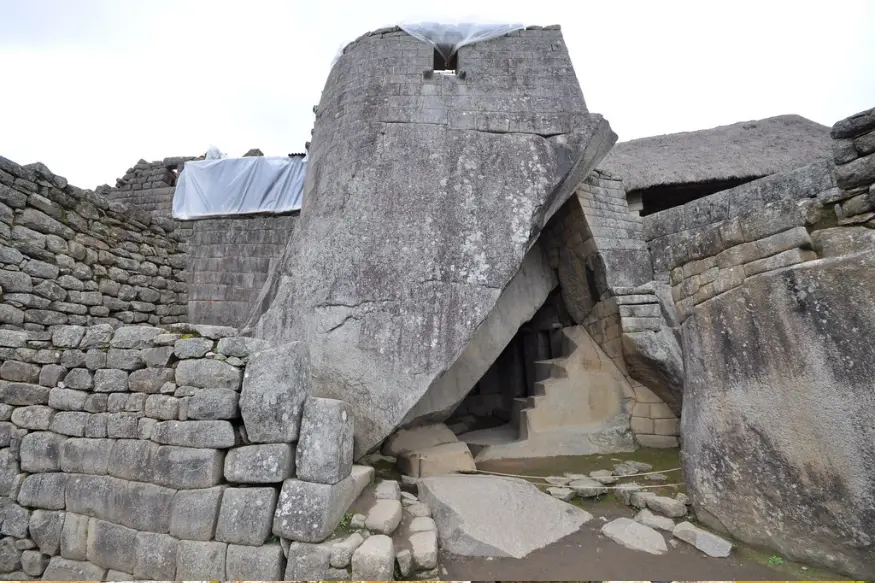
Directly beneath the Temple of the Sun lies the Royal Tomb, a carved cave-like chamber with symbolic niches and altars.
Although no mummy was found, archaeologists believe it was used for
Elite burials
Ritual offerings
Ancestor worship ceremonies
The Royal Tomb strengthens the theory that the Temple of the Sun served both solar worship and funerary rituals, linking life, death, and rebirth.
Religious Ceremonies at the Temple of the Sun
The Temple of the Sun was likely used for:
Solstice ceremonies
Rituals led by high priests (Willac Umu)
Offerings of food, textiles, chicha, and sacred objects
Only select individuals—priests, nobles, and possibly members of the royal family—were allowed inside. Common people would have participated from surrounding plazas.
Why Was the Temple of the Sun Sacred to the Incas?
The Sun was central to Inca identity:
The emperor (Sapa Inca) was considered the son of the Sun
Agricultural cycles depended on solar observation
Political authority was legitimized through solar lineage
As a result, the Temple of the Sun functioned as a religious, political, and cosmic center.
Can You Enter the Temple of the Sun Today?
Today, visitors cannot enter the interior of the Temple of the Sun due to preservation efforts. However:
The exterior is clearly visible from Circuit 2 and other main routes
Windows, curvature, and stonework can be admired from multiple angles
Restricted access helps protect one of the most fragile and valuable structures in Machu Picchu.
Temple of the Sun vs Other Sacred Structures in Machu Picchu
The Temple of the Sun stands out for its precision, location, and celestial alignment.
Best Time to See the Temple of the Sun
Dry season (May–September): clearer views and light
Early morning: softer light highlights stone curvature
Solstice dates (June & December): maximum symbolic value
While interior access is restricted, exterior views are spectacular year-round.
Interesting Facts About the Temple of the Sun
One of the only curved Inca temples ever built
Perfectly aligned with solstices
Built directly above a sacred cave
Combines astronomy, religion, and royal symbolism
Importance of the Temple of the Sun in Machu Picchu
The Temple of the Sun in Machu Picchu represents:
The pinnacle of Inca stone engineering
Advanced astronomical knowledge
The spiritual authority of the Inca state
It is a physical expression of how the Incas understood the universe and their place within it.