Rainbow Mountains

Hike to Rainbow Mountain Cusco

Tour Overview

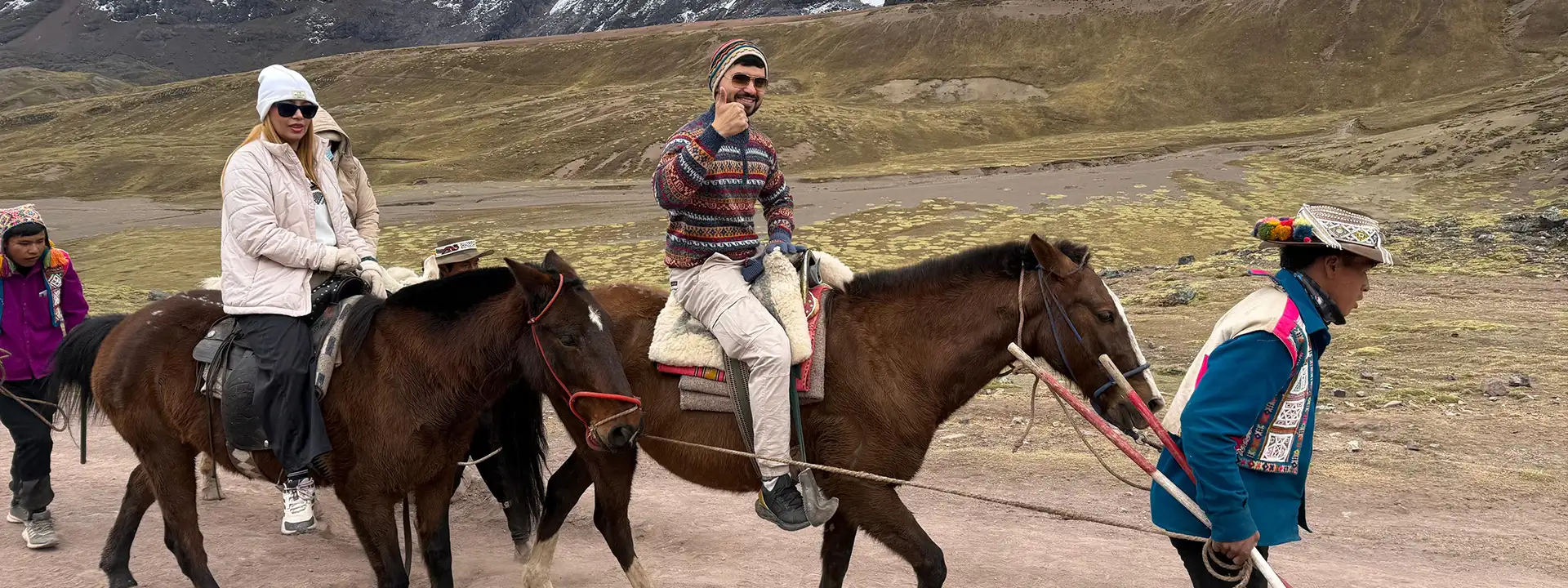
This exclusive 4 Day Hike to Rainbow Mountain Cusco is the best alternative to Ausangate Trek. On this 3 nights and 4 day you with our local guide you will see some of the beautiful landscapes. 

Hike to Rainbow Mountain Cusco is a challenging hike. This is a high altitude experience. The highest point is at 5200 metres (17,000 feet) above sea level. It is highly recommended that you spend a few days in Cusco acclimatising before the trek to avoid altitude sickness

The Rainbow Mountain in Peru is one of the most visited attractions after Sacred Valley and Machu Picchu. Infact, it is one of the popular day tours in Cusco

We have designed this 4 day trip to let you experience the beauty of the wilderness here. You will also get to know a bit about the traditions and culture of locals living here.

Do take a moment to check our reviews on Trip Advisor.

We will pick you up at your hotel at 6:00am. Then we will drive nearly 3 hours to Tinki. It is often referred as the gateway to Ausangate. Here we will stop for organic breakfast which is prepared by our professional chef.

 After breakfast the hiking is around 5 hours to get to the lunch camp. Our destination for the night is Samacancha. Here we will enjoy a beautiful evening surrounded by sharp mountains and beautiful landscapes in the middle of the Andes.

We will have early in the morning our organic breakfast. Afterwards we will hike through the Ausangate Mountain. It is incredibly colorful as it has four lagoons; Yanacocha, Vinococha, Huchuy Pucacocha and Hatun Pucacocha. They are even more alluring than the seven colored mountains. 

We will then continue ahead, meeting native quechua-speaking people. They are Inca descendants and spend their life in the middle of these mountains. Its fauna including the Llamas, Alpacas and Vicuñas luckily are the main resource for them. 

The day is finished after 6 hours of hiking in Hatun Pukacocha.

After an early, organic and nutritious breakfast with your trekking team, you will prepare for the third day of the hike. This day offers a variety of colorful lakes and dramatic scenery along a steady climb, which allows for plenty of breaks. 

We will arrive into the high pampas –  rugged meadows of long grass across to Apacheta Pass (4850m). We will take the trail to another mountain pass, dropping down, by Lake Ausangate. This region is surrounded by rugged mountain peaks and the great valley below. 

We will be camping at Surapampa. The campsite is one of the most beautiful campsites located on the hillside of the Ausangate peak and at the bank of the lake. You can see amazing views from here and perhaps some condors and eagles flying nearby.

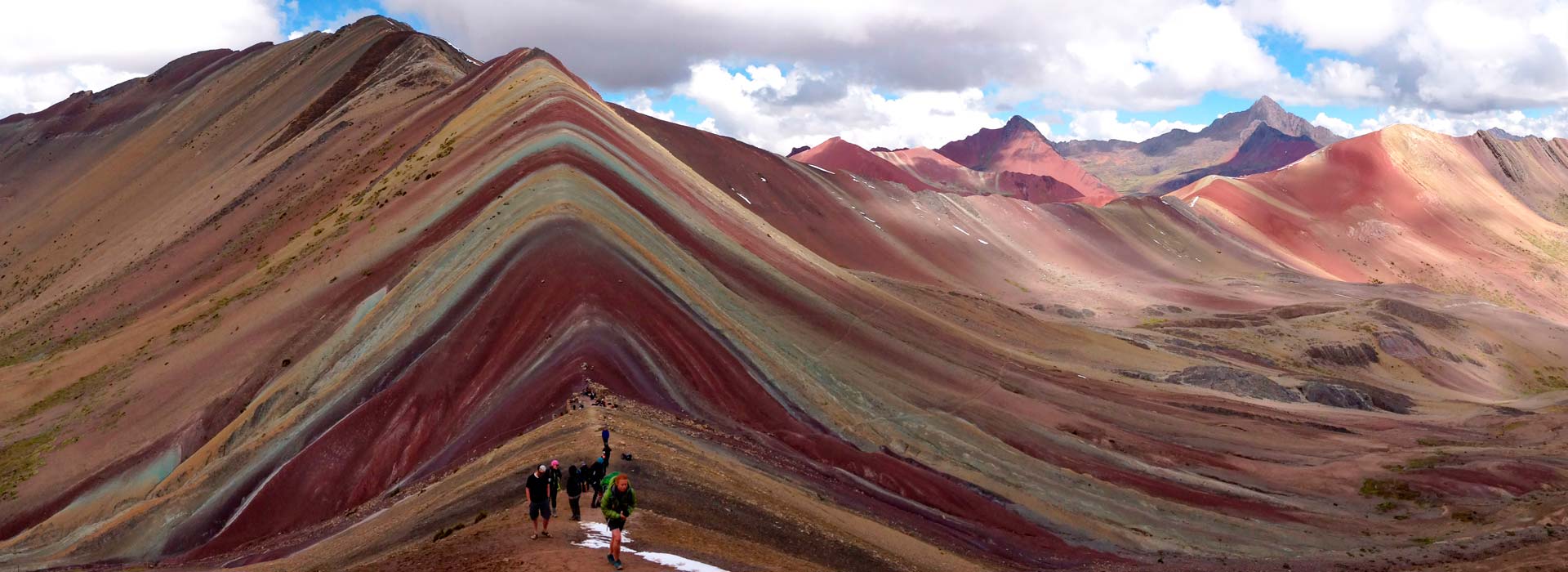
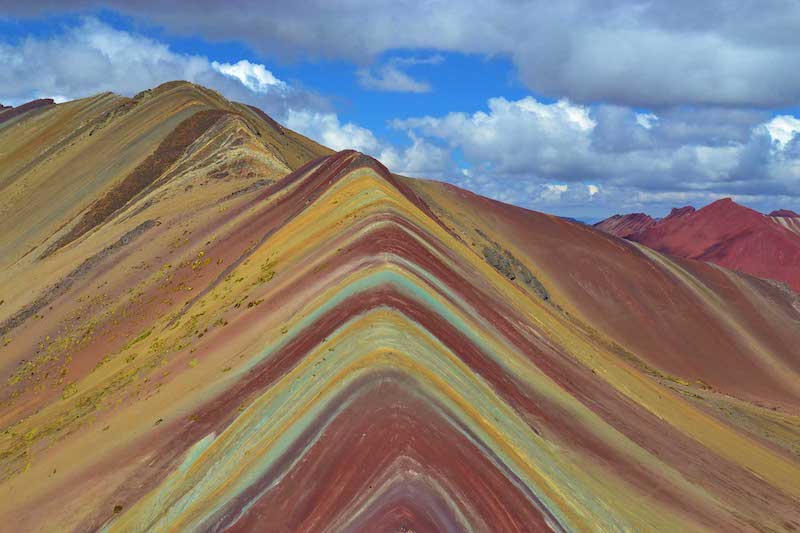
After an early breakfast we will trek to visit Rainbow Mountain. It will be a 2 hours gradual uphill trek to reach the summit. Pucapunta, the red sandstone sedimentary formations, offers such a wonderful experience and the Red Valley is located at 5200m /17060 ft elevation. 

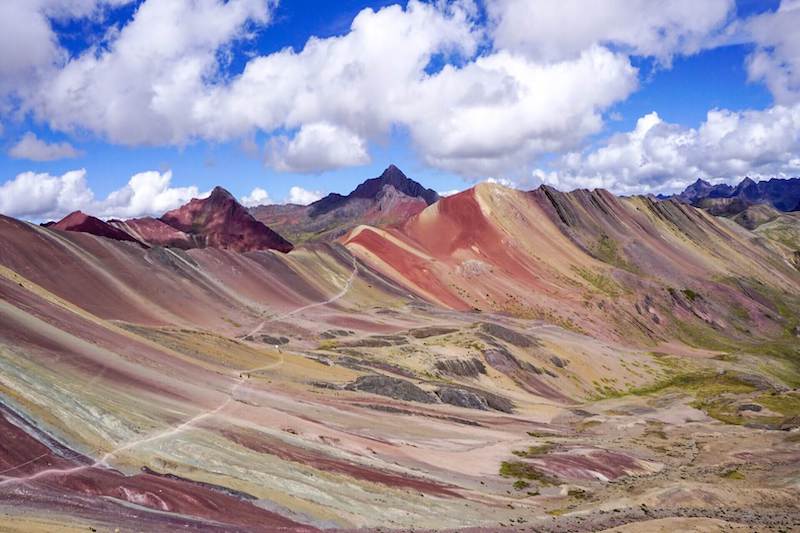
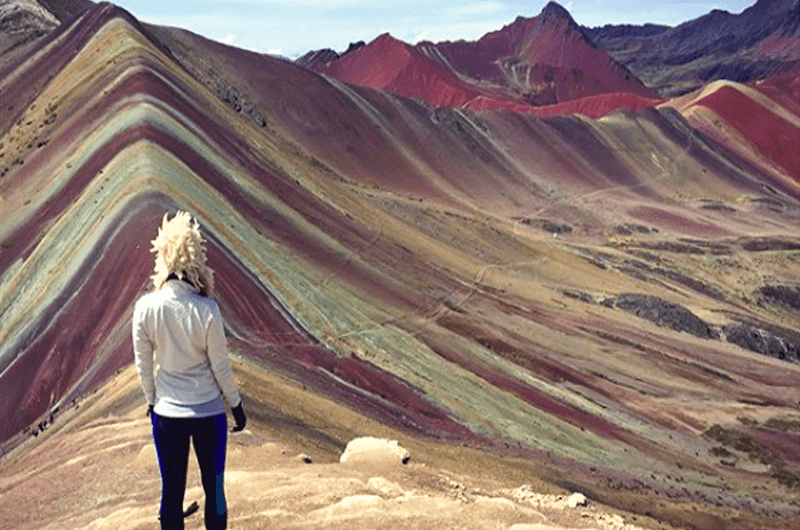
Along the way you get to see Vicuñas and Condors. Here you will see Vinicunca, a mountain of striations of colors embedded in the hillsides. Best known as The Rainbow Mountain, it speaks for itself.

After taking some pictures and enjoying the views, you will continue the expedition to the end of the trail. This is all downhill along the Valley for about 3 hours. 

At the campsite, you will enjoy your final lunch of the trek with your team. We will then drive back to Cusco. You will be arriving in Cusco around 6 to 7pm. 

Included

Includes

  • Private Happy Gringo Tours bus to Arapa– (starting of our trek.)
  • 2 people per tent (large and comfortable) and foam mattress.
  • English speaking experienced professional mountain guide.
  • 6-8 people with 1 guide, 2 Guides for a group of 9-17 trekkers.
  • 8 kilos porterage service for your personal items. A duffle bag is lent to you.
  • Full board meals 4 Breakfast, 3 Lunches, 3 Dinners. (Buffet Style Peruvian Gourmet Cuisine).(Vegetarian, vegan or special diet meals upon request).
  • Dining tent and cooking tents with tables and chairs.
  • Experienced Chef, assistants and cooking equipment and kitchen tent.
  • First-aid kit including emergency oxygen tank
  • Mules to carry tents, mattress, food, cooking equipment.
  • Hot water for washing purposes.
  • Boiled water to fill in your bottles everyday except the first day morning
  • Free storage in Cusco for your belongings at Happy Gringo Tours office.
Not included

Excludes

  • Water to drink on day 1 in the morning
  • Dinner on Day 4th
  • Travel Insurance

Explore Cusco through Our Eyes

Stories, tips & travel guides from our team on the ground

Galapagos Islands: Explore a Natural Wonder
Uncategorized
April 29, 2026

Galapagos Islands: Explore a Natural Wonder

The Galapagos Islands, a remote archipelago in the Pacific Ocean, are a mesmerizing natural wonder that captivates the imagination. Known for their unique biodiversity and as a pivotal location in Charles Darwin’s formulation of the theory of evolution, these islands offer a unique glimpse into the power of nature and time. Journey with me as we explore the unparalleled beauty and significance of the Galapagos Islands, uncovering the rich tapestry of life that calls this place home. The Galapagos Islands are not merely a destination; they are a living laboratory of evolution. This volcanic archipelago consists of 13 main islands and numerous smaller islets, each offering a distinct array of species and landscapes. From the moment you set foot on these shores, you’ll encounter an astonishing array of wildlife, from the famous Galapagos tortoises to the elusive Galapagos shark. Galapagos: Cradle of Evolution and Living Laboratory of Nature The islands’ isolation and unique environmental conditions have given rise to a plethora of endemic species found nowhere else on Earth. It was here that Charles Darwin, aboard the HMS Beagle in 1835, was inspired to develop his groundbreaking theory of natural selection. The Galapagos remain a testament to the power of adaptation and evolution, providing an invaluable window into the processes that shape life on our planet. Darwin’s observations of finches and other animals led him to consider how species adapt to their environments. This insight was revolutionary, challenging the prevailing thought of the time. The Galapagos finches, with their varied beak shapes, demonstrated how species could evolve to exploit different ecological niches. These islands continue to be a focal point for research, offering scientists a natural laboratory to study evolution in real-time. While the natural wonders of the Galapagos are undoubtedly the main draw, the islands also boast a rich cultural and historical heritage. The islands were initially discovered by Bishop Tomás de Berlanga in 1535, and their name, “Galapagos,” is derived from the Spanish word for tortoise, reflecting the abundant population of these majestic creatures. The human history of the Galapagos adds layers of intrigue to their natural allure. Early visitors included pirates and whalers, who left their mark on the islands. The Galapagos played a strategic role during World War II as a base for the United States, further entwining their history with global events. Today, the islands are a UNESCO World Heritage site, recognized for their natural and cultural significance. Conservation efforts: Conservation…