


Inca Trail in March
Hiking the Inca Trail in March
The Inca Trail in March marks the beginning of the trekking season in Peru, reopening after the annual maintenance closure in February. This month offers a unique mix of lush green landscapes, moderate weather, and fewer tourists compared to the high season. Whether you are planning to hike the Classic 4-Day Inca Trail or the Short 2-Day version, March provides one of the most authentic experiences on this legendary route to Machu Picchu.
In this detailed guide, you’ll find everything you need to know about the Inca Trail in March — including weather conditions, trail permits, preparation tips, packing essentials, and reasons why this month could be the best time to hike the most famous trail in South America.
Why Choose March for the Inca Trail?
The Trail Reopens After the Annual Closure
The Inca Trail is closed every February for environmental maintenance and conservation. In March, it reopens fresh and renewed, with clean campsites, repaired paths, and restored infrastructure. Trekking in March means being among the first hikers to enjoy a rejuvenated trail.
Fewer Crowds Compared to High Season
March is still considered the shoulder season — before the busy months of May through August. This means fewer people on the trail and at Machu Picchu, allowing for a more peaceful experience.
Lush, Green Landscapes
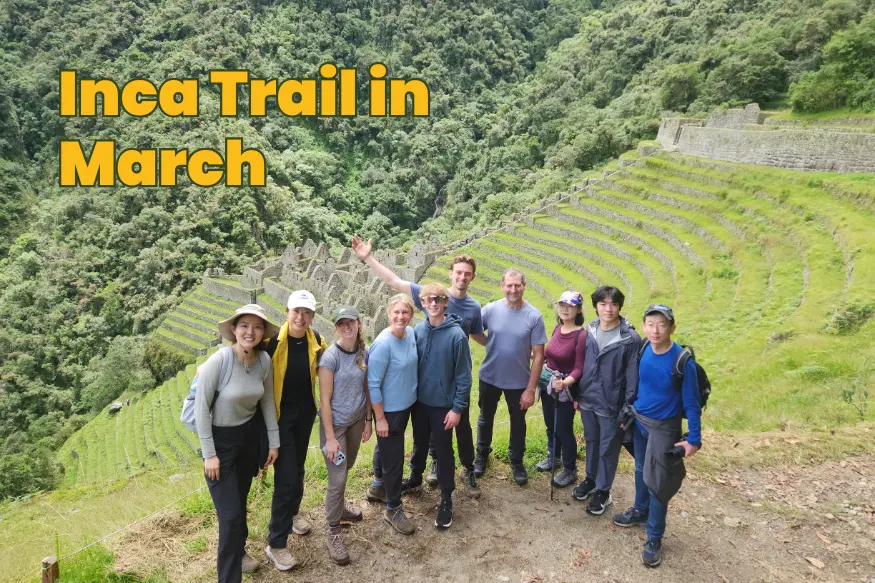
Because March follows the rainy season, the Andean vegetation is at its most vibrant. The hills are covered with wildflowers, and the air feels fresh and pure. For photographers and nature lovers, this month offers spectacular color contrasts and clear morning views after light rains.
Affordable Prices and Better Availability
Permits for the Inca Trail sell out fast, but in March you’ll usually find more availability for both the 4-day and 2-day Inca Trail tours. Some tour operators even offer early-season discounts.
[tour_ad id=”6055″]
Inca Trail Weather in March
March is a transition month between the rainy and dry seasons. You can expect mild temperatures and a mix of sunshine and occasional rain showers.
Despite the rain, March weather is far from extreme. A light rain jacket and good hiking boots are usually enough to stay comfortable.
Permit Availability and Regulations
The Peruvian government strictly limits the number of people allowed on the Inca Trail to 500 per day — including guides, porters, and cooks. This means only about 200–250 trekkers can start the trail daily.
Important Points:
Book early: Even in March, permits can sell out weeks in advance.
Non-transferable: Permits are issued in your name and linked to your passport number.
Tour required: Only licensed operators can sell Inca Trail packages. Independent trekking is not allowed.
Passport updates: If you renew your passport after booking, bring both the old and new passports for verification.
What to Pack for the Inca Trail in March
Packing smart is essential for variable March weather. Here’s a checklist:
Clothing:
Waterproof jacket or poncho
Quick-dry shirts and pants
Warm fleece or jacket for nights
Comfortable hiking boots (water-resistant)
Extra socks and underwear
Hat, gloves, and sun cap
Gear:
Rain cover for backpack
Sleeping bag (rated to 0°C or below)
Trekking poles (recommended for slippery sections)
Headlamp with spare batteries
Refillable water bottle or hydration bladder
Sunscreen and insect repellent
Documents & Essentials:
Passport (original)
Inca Trail permit and Machu Picchu ticket
Cash in Peruvian soles (for tips, snacks, etc.)
Small first-aid kit
Health and Safety Tips
Acclimatize in Cusco for at least 2 days before starting the trek to prevent altitude sickness.
Stay hydrated: Drink plenty of water throughout the hike.
Use walking poles: They reduce knee strain on steep descents.
Follow your guide’s instructions: The Inca Trail has strict regulations for safety and preservation.
Avoid plastic bottles: Bring a reusable bottle to support sustainability.
Photography and Scenery Highlights in March
March is ideal for photographers: the landscape is at its greenest, rivers are flowing, and early morning mist gives the mountains a mystical atmosphere. Some of the best spots for photos include:
Llactapata terraces (Day 1)
Dead Woman’s Pass (Day 2)
Phuyupatamarca viewpoint (Day 3)
Sun Gate (Inti Punku) at sunrise on Day 4
For the best shots, carry a waterproof camera bag and microfiber cloth to protect your lens from humidity.
Machu Picchu After the Inca Trail
At the end of your trek, you’ll reach the Sun Gate, your first magical glimpse of Machu Picchu. Most tours include a guided visit through the main sectors:
Temple of the Sun
Intihuatana (Sun Dial)
Temple of the Condor
Sacred Plaza
Optional hikes like Huayna Picchu or Machu Picchu Mountain can be added (extra ticket required). In March, availability for these hikes is usually better than in peak months.
Sustainable Trekking
March is a great month to promote responsible tourism. Trails are freshly maintained, and environmental efforts are visible. When hiking:
Leave no trace: Carry all waste back to designated collection points.
Support local porters: Choose operators who provide fair wages and proper equipment.
Avoid single-use plastics.
Tips for Booking the Inca Trail in March
Book 2–3 months in advance to secure permits.
Verify operator licenses with the Peruvian Ministry of Culture.
Choose a reputable agency offering oxygen tanks, quality camping gear, and experienced guides.
Consider travel insurance covering altitude trekking.
Bring both digital and printed copies of your booking confirmation.
Alternatives if Inca Trail Permits Are Sold Out
If you can’t find Inca Trail permits for March, don’t worry — several scenic alternatives lead to Machu Picchu:
Salkantay Trek (5 days) – High-altitude route with glaciers and jungle landscapes.
Lares Trek (4 days) – Cultural trek through Andean villages and hot springs.
Inca Jungle Trek (4 days) – Combines biking, hiking, and ziplining adventures.
Choquequirao Trek (8 days) – A remote archaeological alternative for experienced trekkers.
Is March a Good Time for the Inca Trail?
Absolutely. The Inca Trail in March combines the best of both worlds: post-rain greenery and fewer crowds. You’ll walk through freshly restored paths, encounter vibrant wildlife, and experience Machu Picchu under softer sunlight.
Just remember to prepare for variable weather — a little rain, a lot of beauty, and the timeless spirit of the Andes.
Whether you’re an experienced trekker or a first-time adventurer, March is a beautiful month to rediscover the magic of the Inca Trail.