


Pacchanta Hot Springs
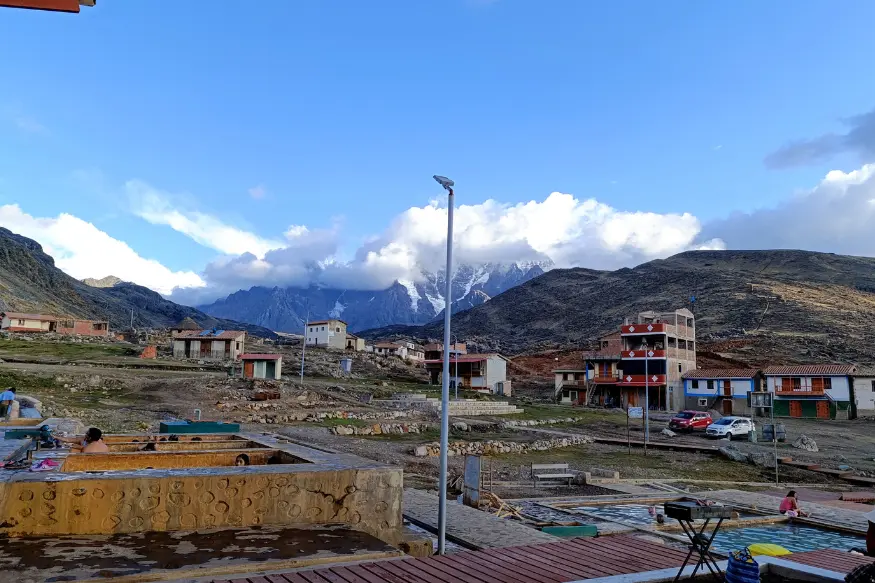
Pacchanta Hot Springs are one of the most authentic and spectacular natural hot springs in the Cusco region, located high in the Peruvian Andes at the foot of the sacred Ausangate Mountain. Surrounded by glaciers, snow-capped peaks, alpine landscapes, and traditional Andean communities, Pacchanta offers a unique blend of relaxation, culture, and adventure.
Unlike more commercial hot springs, Pacchanta remains largely untouched, making it a favorite destination for trekkers, nature lovers, photographers, and travelers seeking a genuine high-Andean experience
What Are Pacchanta Hot Springs?
Pacchanta Hot Springs are natural geothermal pools fed by underground volcanic activity beneath the Andes. The mineral-rich waters naturally emerge at high temperatures and are channeled into several open-air stone pools.
The water temperature ranges between 38°C and 44°C (100°F – 111°F), creating a perfect contrast with the cold mountain air at over 4,200 meters (13,780 ft) above sea level. Soaking in these pools while surrounded by glaciers and towering peaks is an unforgettable experience.
Where Are Pacchanta Hot Springs Located?
Pacchanta Hot Springs are located in the small Pacchanta community, in the district of Ocongate, province of Quispicanchi, in the Cusco region of southern Peru.
Key Location Facts
Approximately 100–110 km (62–68 miles) southeast of Cusco city
Altitude: ~4,200 m / 13,780 ft above sea level
Located directly at the base of Ausangate, the highest mountain in Cusco (6,384 m / 20,945 ft)
Because of the high altitude, proper acclimatization in Cusco or the Sacred Valley is strongly recommended before visiting.
Cultural and Spiritual Importance of Pacchanta
In Andean cosmology, mountains are living spirits known as Apus. Ausangate is considered one of the most powerful and sacred Apus in southern Peru. For local communities, the hot springs are not just a place to relax, but a site of healing, spiritual renewal, and balance.
For centuries, locals have used Pacchanta’s waters to relieve muscle pain, joint problems, and fatigue—especially after long journeys through the mountains with alpacas and llamas.
Visiting Pacchanta is not only a physical experience, but also a cultural immersion into Andean traditions that remain alive today.
How to Get to Pacchanta Hot Springs from Cusco
Option 1: Private Transport or Guided Tour (Recommended)
Drive from Cusco to Tinki or Ocongate via the Interoceanic Highway
Continue on a dirt road to Pacchanta village
Total travel time: ~3 to 3.5 hours
This is the easiest and safest option, especially during the rainy season.
Option 2: Public Transportation + Taxi
Take a bus from Cusco to Tinki or Ocongate (approx. 2.5–3 hours)
Hire a local taxi or mototaxi to Pacchanta (30–45 minutes)
Roads can be rough, and schedules are irregular—this option is better for experienced travelers.
What to Expect at Pacchanta Hot Springs
Natural Outdoor Pools
Pacchanta features 6 to 7 rustic stone pools, each with slightly different temperatures. There is no luxury infrastructure—just pure nature, stone walls, and open skies.
You can move between pools to find the temperature that feels best, especially helpful given the cold mountain climate.
Incredible Mountain Views
From the pools, you’ll enjoy:
Direct views of Ausangate’s glaciers
Snow-covered peaks and valleys
Alpacas grazing nearby
Stunning sunrises and sunsets
Few hot springs in Peru offer scenery this dramatic.
Health Benefits of Pacchanta Hot Springs
The mineral composition and heat of Pacchanta’s waters are believed to help with:
Muscle relaxation after trekking
Joint and back pain relief
Improved blood circulation
Stress reduction and mental relaxation
Altitude fatigue recovery
After hikes like the 7 Lakes of Ausangate or multi-day treks, soaking here feels deeply restorative.
Entrance Fees and Opening Hours
Entrance Fees (Approximate)
Foreign travelers: S/ 5 – 10
Peruvian nationals: S/ 3 – 5
Local residents: Reduced fee
Bring cash only—no ATMs or card payments available.
Opening Hours
Daily from 8:00 AM to 6:00 PM
Early mornings and late afternoons are the best times for photography and fewer crowds.
Best Time to Visit Pacchanta Hot Springs
Dry Season (Best Time)
April to October
Clear skies
Better road conditions
Ideal for trekking and photography
Rainy Season
November to March
Greener landscapes
Possible rain, snow, or fog
Roads may be muddy
If you visit during the rainy season, always check weather conditions in advance.
Things to Do Near Pacchanta Hot Springs
1. 7 Lakes of Ausangate Trek
One of the most popular day hikes in the region.
Duration: 5–6 hours
Difficulty: Moderate
Features turquoise, blue, and emerald alpine lakes
Trail starts in Pacchanta
Most tours finish with a soak in the hot springs.
[tour_ad id=”12710″]
2. Ausangate Trek (4–7 Days)
More info about: .
Pacchanta is often:
The starting point
A rest stop
Or the final day of the classic Ausangate Circuit
This trek is considered one of the most beautiful and challenging in Peru.
[tour_ad id=”5997″]
[tour_ad id=”5833″]
Accommodation Options in Pacchanta
Pacchanta is a small rural village with limited lodging, which adds to its charm.
Lodging Types
Basic family-run guesthouses
Homestays with local families
Camping near trekking routes
Expect simple rooms, shared bathrooms, and hearty homemade meals—perfect for cultural immersion.
What to Pack for Pacchanta Hot Springs
Because of the altitude and weather, pack wisely:
Warm layered clothing (very cold mornings and nights)
Down jacket or thermal jacket
Hiking shoes or trekking boots
Swimsuit and towel
Flip-flops or sandals
Sunscreen, hat, sunglasses
Water and snacks
Cash (small bills)
Optional: altitude medication
Wildlife and Nature Around Pacchanta
The Pacchanta region lies within the high-Andean puna ecosystem. You may see:
Alpacas and llamas
Vizcachas (Andean rodents)
Andean birds
Native high-altitude vegetation
Nature here feels raw, vast, and untouched.
Photography Tips at Pacchanta Hot Springs
Sunrise: Soft golden light on Ausangate’s glaciers
Sunset: Dramatic skies and reflections
Night: Astrophotography opportunities on clear nights
Use wide-angle lenses to capture scale and scenery
Early mornings often offer mist rising from the pools—pure magic.
Is Pacchanta Hot Springs Worth Visiting?
Absolutely. Pacchanta Hot Springs offer something rare in Peru:
- Untouched landscapes
- Authentic Andean culture
- Healing thermal waters
- Direct access to world-class trekking
- Fewer crowds than commercial destinations
If you’re looking for a destination that combines relaxation, adventure, spirituality, and breathtaking scenery, Pacchanta is one of the best hidden gems in Cusco.
Questions and answers about the hot springs of Pacchanta
1. What makes the hot springs of Pacchanta special compared to others in Cusco?
Pacchanta stands out for its high-altitude location, raw mountain scenery, and community management. Unlike more developed hot springs, the pools here remain natural, quiet, and surrounded by glaciers, creating a much more immersive Andean experience.
2. How many thermal pools can visitors use in Pacchanta?
Visitors will find several small outdoor pools, each naturally formed and fed by geothermal water. The pools differ slightly in size and heat, allowing travelers to alternate between warmer and cooler options.
3. In which area of Cusco is Pacchanta located?
Pacchanta belongs to a rural Andean community in the southern highlands of the Cusco region, within the Ocongate area. It lies far from urban centers, which helps preserve its authenticity and peaceful atmosphere.
4. Is Pacchanta located close to snow-capped mountains?
Yes. The hot springs are set in a dramatic alpine valley with direct views of nearby glaciers and towering peaks. One of the most impressive sights is the proximity to Ausangate, one of the most sacred and imposing mountains in southern Peru.
5. What is the average cost to enter the hot springs?
Access to the hot springs is very affordable. Visitors pay a small community fee, usually equivalent to a few US dollars, which goes directly toward local maintenance and community projects.
6. What are the usual opening hours?
Pacchanta Hot Springs are generally accessible during daylight hours, opening in the morning and closing in the early evening. Visiting earlier in the day is recommended for better weather conditions and fewer people.
7. What is the climate like in Pacchanta?
Due to its high elevation, Pacchanta experiences cold mornings and nights, while daytime temperatures can be mild under the sun. The thermal pools remain hot year-round, offering a pleasant contrast to the cold mountain air.
8. Can Pacchanta be visited together with other famous attractions?
Yes. Many travelers combine Pacchanta with nearby hikes and scenic routes, such as colorful mountain landscapes, high-altitude lagoons, and multi-day trekking circuits in the Ausangate region.
9. What is the elevation of Pacchanta Hot Springs?
Pacchanta sits at over 4,000 meters above sea level, making acclimatization important. Visitors are advised to spend time at lower elevations before coming to avoid altitude-related discomfort.
10. Is Pacchanta suitable for travelers who are not trekking?
Absolutely. Even travelers who do not hike can enjoy the hot springs, the scenery, and the cultural experience. However, due to altitude, it is best suited for travelers who are comfortable in high-mountain environments.