


Chinchero Peru: Vibrant Textile Traditions in the Andes
Up in the Andes where the air is thin and the sun hits harder than you expect, Chinchero Peru runs on color. Crimson, indigo, shades that no machine gets right. The women working there are not just making things to sell, they are doing something closer to engineering, pulling patterns from memory that most people could not write down even if they tried.
Visiting Chinchero Peru provides a necessary physical adjustment before Machu Picchu, yet the cultural immersion is equally vital. You will witness a meticulous alchemy where coarse wool transforms into storytelling masterworks through ancestral dyeing and backstrap weaving. This essential stop on a Sacred Valley tour reveals how modern cooperatives are keeping the “living ruins” of Inca heritage alive through every hand-dyed thread.
Alpaca vs. Sheep: How to Feel the Difference in Every Thread
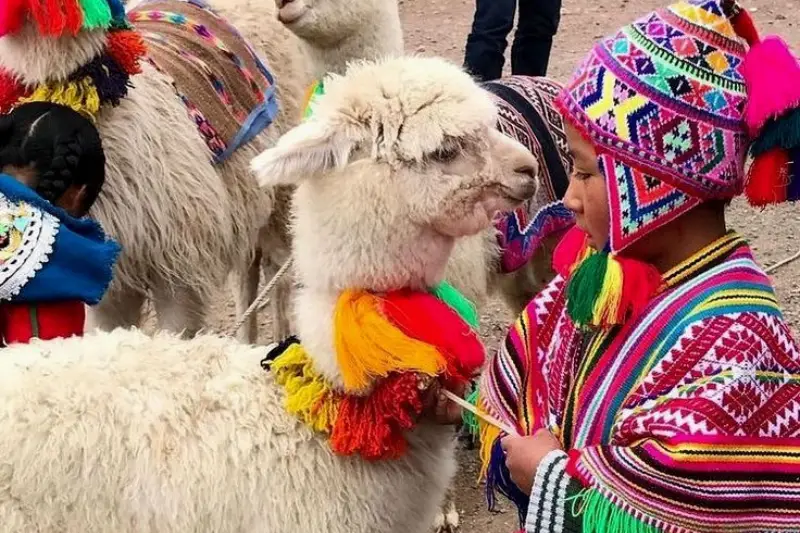
Pick up an Andean textile and just feel it for a second. Alpaca is the one that surprises people. It is light, almost silky, and there is no scratch to it at all. That comes from the fiber being hollow inside, which sounds weird but basically means it holds heat without adding weight. Pretty different from what most people expect wool to feel like.
Sheep wool is rougher and that is the whole point of it. The fibers bunch up and grip each other which makes the fabric dense and hard to wear down. That is why it ends up in rugs and bags, stuff that gets dragged around and needs to last. In Chinchero Peru a lot of weavers mix both fibers in the same piece because why pick one when you can get the warmth of alpaca and the toughness of sheep wool in the same poncho.
To figure out what you are actually holding, check these key differences:
- Alpaca: Hollow core for high warmth-to-weight ratio; feels cool, silky, and drapes heavily.
- Sheep: Solid, crimped fiber for structure; feels springy, robust, and maintains shape.
With the fiber sorted by touch and purpose, the artisans move from texture to color, preparing for a process that looks less like manufacturing and more like magic.
Kitchen Alchemy: Turning Tiny Bugs and Volcanic Salt into Rainbows
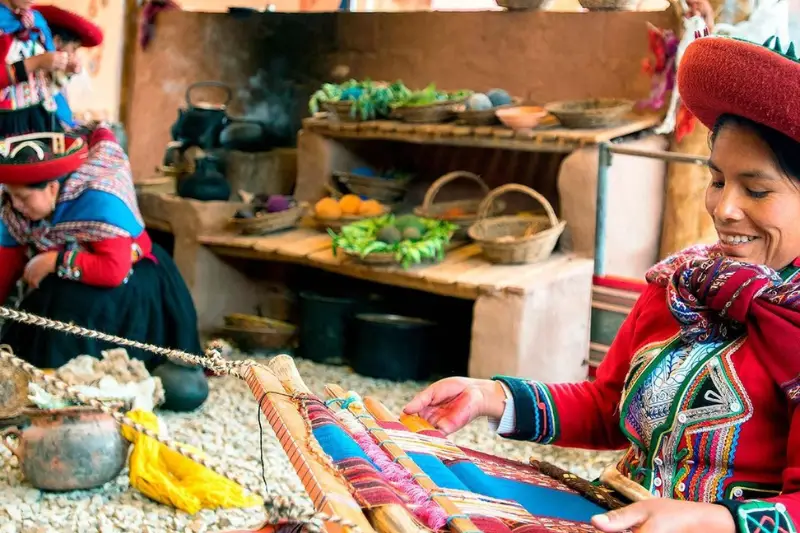
The moment that stops most people at a Chinchero Peru demo is when they pull out a dried bug. Cochineal lives on cactus and looks completely grey until you crush it, then this deep red just comes out of nowhere. Dyers have been using it for centuries and they treat it like a starting point, not a final color. Squeeze some lime juice in and the red shifts to orange right in front of you. Add certain minerals and it pulls toward purple. Same bug, totally different results depending on what you put with it.
Getting a full range of colors out of plants takes real knowledge though. Ch’illca leaves boiled down give you greens, indigo handles the blues, but none of that matters if the color washes out in a week. That is where Qollpa comes in, a volcanic salt pulled from the mountains nearby. It acts as a fixative, basically locking the pigment into the wool fiber so the color holds up against the altitude sun without irritating your skin. The dyers know exactly how much to use and when, and none of that is written down anywhere.
The result of this bubbling kitchen alchemy is a vibrant, toxin-free library of yarn that possesses a depth of color modern synthetics cannot replicate. Yet, creating the palette is merely the preparation phase for a much more mathematically demanding task. With the skeins dried and wound, the fiber is ready to be loaded onto the backstrap loom, a device that requires the weaver to function as a living computer.
The Human Computer: Why a Single Scarf Takes 500 Hours to Weave
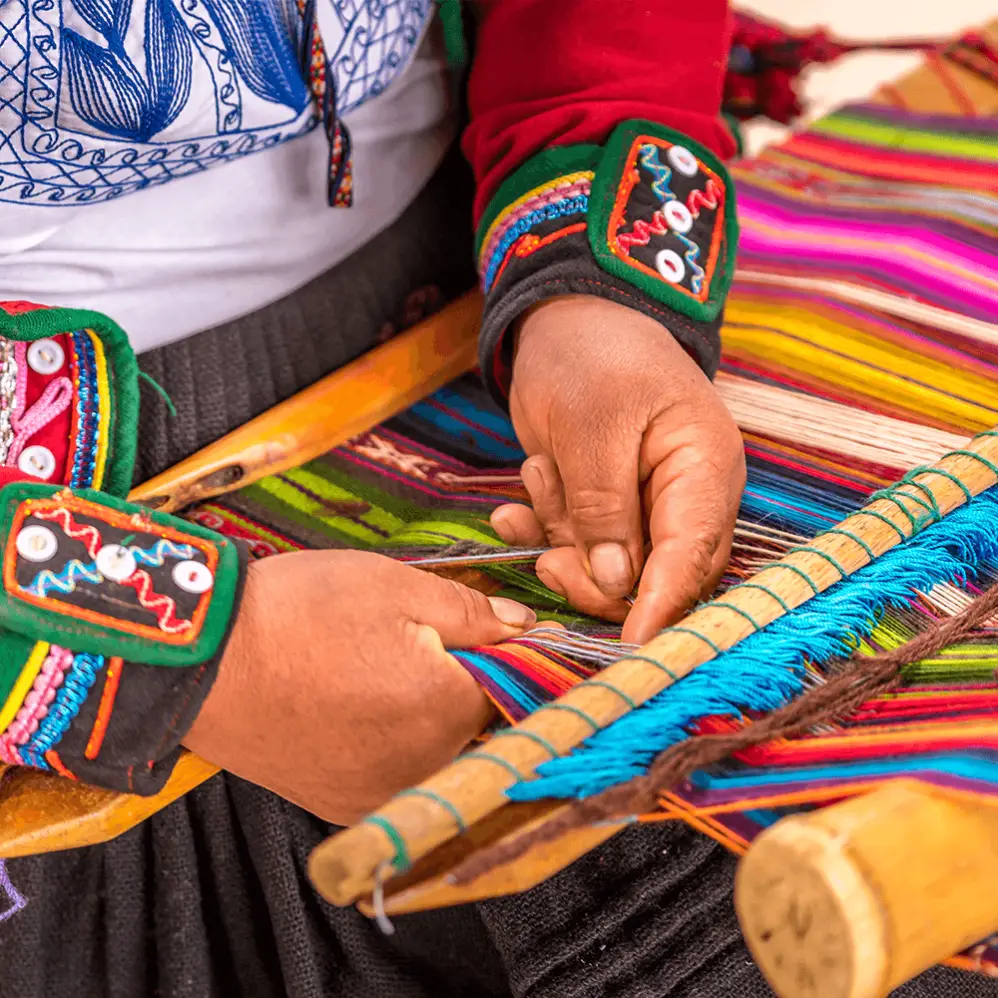
The backstrap loom has no frame, no machine, none of that. The weaver is the frame. One end ties to a post and the other wraps around her lower back, and she leans away from it to create the tension that holds everything tight. Sit with that for a second, she is holding the whole thing together with her body weight for hours at a time. Shift too far one way and the fabric goes uneven. Her fingers are working through hundreds of threads at the same time while her back and core are doing the job a machine would normally handle. It is genuinely athletic work that just happens to produce something beautiful at the end of it.
What emerges from this physical stamina is a textile “diary” written without a single page of graph paper. Drawing on the historical significance of Inca textils as a form of record-keeping, artisans memorize complex geometric sequences called Pallays. These are not random decorations but symbolic representations of the Andean worldview that allow you to “read” the landscape in a finished poncho:
- Puma Maqui (Puma’s Claw): A diamond shape representing strength and mountain spirits.
- Ch’aska (The Star): A geometric burst symbolizing guidance and the agricultural calendar.
- Mayu (The River): A zigzag line depicting the water lifelines of the Sacred Valley.
These patterns mean something. They are not just shapes someone thought looked nice. A weaver puts in years learning what each one carries and where it comes from. When you know that, picking up a cheap knockoff hits differently.
The Authenticity Test: 3 Ways to Tell Real Hand-Woven Wool from Factory Acrylic
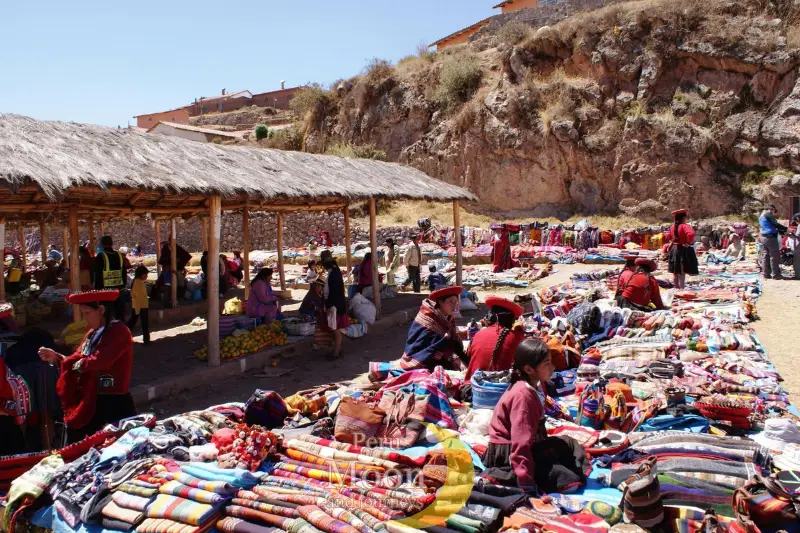
Navigating a Chinchero vs Pisac market experience is tricky when “100% baby alpaca” labels are often misleading. To avoid buying plastic masquerading as heritage, rely on the sensory “burn test.” Authentic wool acts like human hair—smelling organic when singed and crumbling to ash—while synthetic acrylic melts into a hard plastic bead. Identifying authentic handmade Peruvian textiles also involves touch; natural fibers feel cool and heavy, unlike lightweight, suspiciously warm synthetics.
Check the edges first. On a real piece the border is part of the weave itself, built in while the whole thing was being made. No cuts, no stitching added later. It holds together as one piece and that is something a factory setup just cannot pull off the same way.
But honestly the price does most of the talking. These things take months to finish by hand. If someone is selling it cheap, something about that math does not add up. Paying real money for it is not about being a generous tourist, it is just how something that has existed for 2,000 years keeps existing.
Bringing the Andes Home: How Your Visit Sustains a 2,000-Year-Old Legacy
Owning a piece of this heritage means protecting the natural dyes you now recognize. When learning how to clean alpaca wool garments, treat them like hair rather than laundry: hand-wash gently in cold water using baby shampoo. This simple act honors the weeks of labor involved, ensuring the complex patterns remain vibrant rather than fading in a machine.
Your choices directly impact the community. By engaging with sustainable textile tourism in Chinchero Peru and timing your visit for the traditional Chinchero Sunday market schedule, you help prevent these weaving dialects from vanishing. Imagine wrapping yourself in a shawl that carries the story of the mountains; you are preserving a weaver’s living memory for the next generation.
From Informed Guest to Cultural Guardian: Your Chinchero Peru Action Plan
You can no longer look at these textiles and see mere souvenirs. Instead, you now recognize the weeks of spinning, the alchemy of cochineal, and the silent mathematics mapped out on a backstrap loom. A purchase here isn’t just a transaction; it represents the survival of the Chinchero district’s living history.
Chinchero Peru is close enough from Cusco that there is no real excuse not to go. Walk into one of the cooperatives, watch how it actually gets made, and if something catches you, buy it there from the person who made it. That money stays where it should. You end up with something real and they get to keep doing what their family has done for generations.