


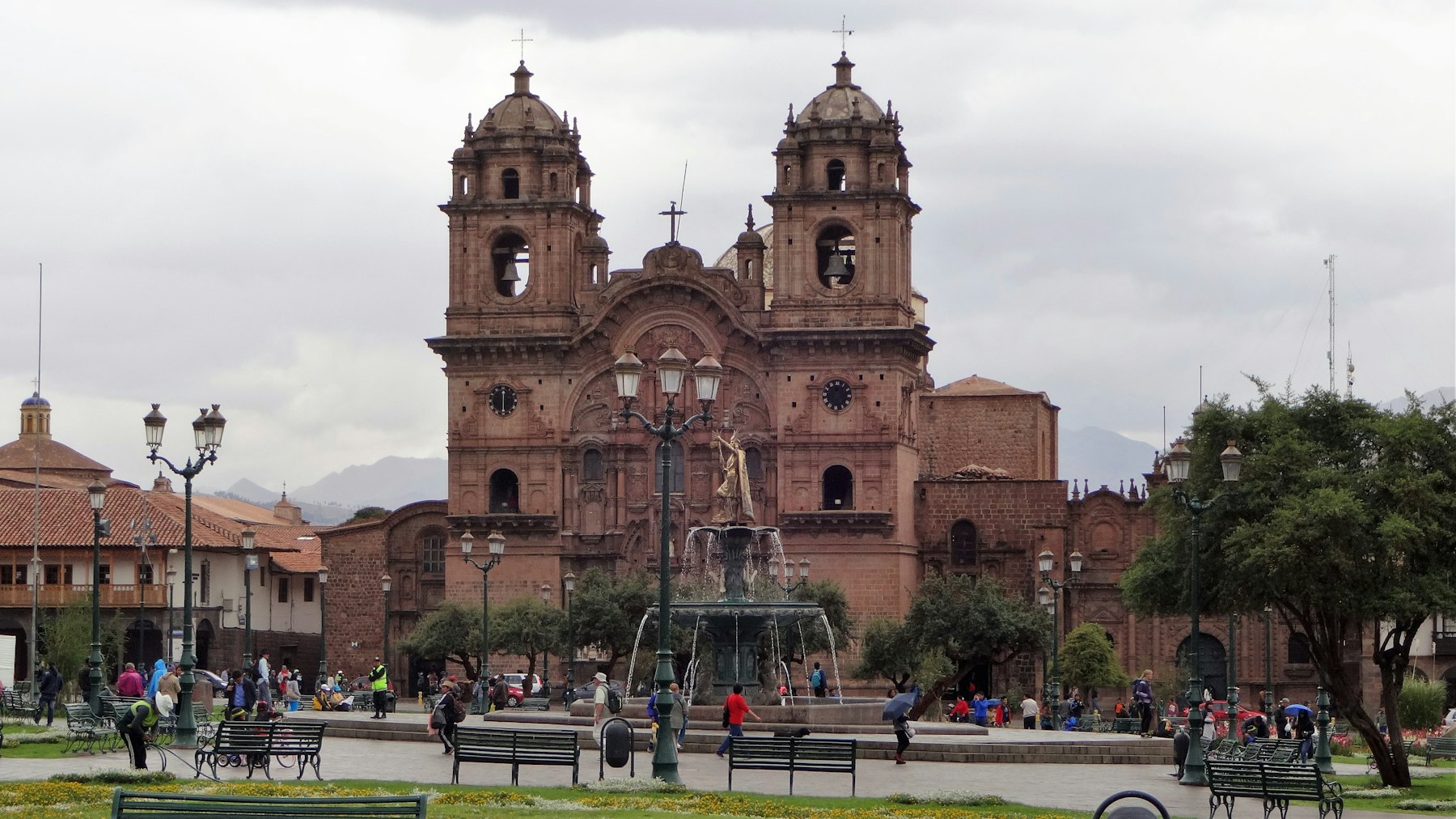
Is Peru Safe for Tourists? An Honest Guide From a Cusco Operator
Yes, Peru is safe for most tourists on the usual Lima, Cusco, Sacred Valley and Machu Picchu route, with normal big-city precautions. The real risks are petty theft, taxi crime, altitude sickness and sudden strikes. As of November 2026, the US State Department rates Peru Level 2: Exercise Increased Caution.
We run tours from Cusco, and we would rather you arrive informed than nervous. Here is what the advisories say, region by region, and what to do about each risk. For general travel tips, see how to travel in Peru.
What do the official travel advisories say about Peru?
The US State Department advisory, last reissued on 16 May 2025 and still current in November 2026, cites crime, civil unrest and kidnapping risk. Two areas are Level 4: Do Not Travel.
One is the Colombian border area of Loreto. The other is the VRAEM river valleys, including Vilcabamba, which cover parts of Ayacucho, Cusco, Huancavelica and Junín. The State Department says Cusco city, the Sacred Valley, the Inca Trail and Machu Picchu are outside them.
The UK Foreign Office (FCDO) advises against all but essential travel to parts of the same two areas, and nowhere else. Canada and Australia both say to “exercise a high degree of caution” in Peru overall.
Is Lima safe?
Lima has real crime. Lima and Callao have had crime-related states of emergency, declared and renewed repeatedly, since October 2025. The latest renewal, Supreme Decree 142-2026-PCM, runs for 60 days from 28 October 2026.
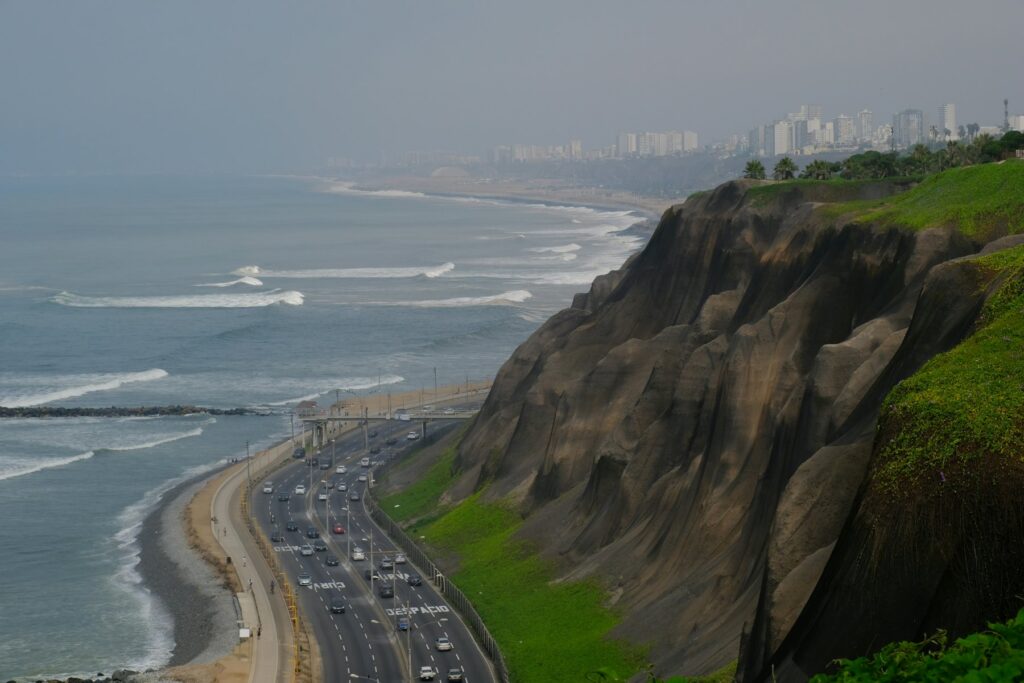
For visitors, this mostly means more police and soldiers on the streets and occasional ID checks. Carry your passport or a copy, and avoid demonstrations.
Miraflores, Barranco and San Isidro
Visitors usually base themselves in these districts, which have more police and private security. They are not crime-free, though. The FCDO reports gunpoint robberies of tourists in Miraflores and Barranco, and OSAC names Miraflores a phone-theft hotspot.
Which areas of Lima should you avoid?
The US security service OSAC found that five districts account for about 35% of reported crime in Lima. They are San Juan de Lurigancho, central Lima (Cercado), San Martín de Porres, Comas and Santiago de Surco.
The historic centre is worth a daytime visit, but the FCDO notes that Lima protests often happen there. Go by day and use a booked taxi both ways.
Is the Lima airport taxi safe?
The FCDO says fake taxi drivers and bogus tour sellers target new arrivals at the airport and bus terminals. Use an official airport taxi company or a pre-booked transfer. OSAC also warns of late-night robberies between the airport and hotels, so keep valuables out of sight.
Does extortion in Peru affect tourists?
Peru’s extortion wave mainly hits bus and mototaxi drivers, market traders and small businesses. Official figures show 28,948 extortion complaints in 2025. None of the official advisories we checked describe tourists as its targets.
The knock-on effect for visitors is transport strikes. Lima bus companies, for example, planned a stoppage and march on Congress for 10 November 2026.
Outside Lima, the State Department warns that criminals sometimes set up roadblocks to rob travellers. Flying avoids long night drives; compare options in our guide to getting from Lima to Cusco.
Is Cusco safe?
Cusco is generally relaxed, with a tourist police station and municipal patrols (serenazgo). The main problem is petty crime, which Canada’s advisory says happens frequently.
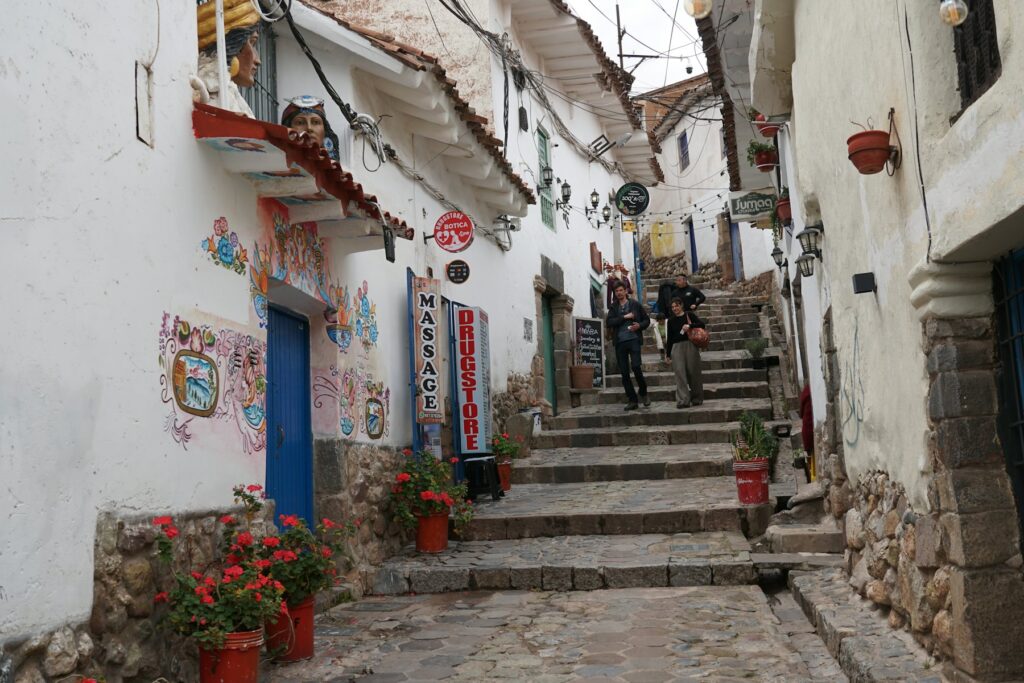
Cusco’s tourist police told the newspaper Correo in 2024 that about 60% of tourists’ complaints were thefts. About 30% were scams or services never delivered.
Pickpockets in the Plaza de Armas and San Pedro market
Thieves work crowds: the Plaza de Armas during festivals, San Pedro market, buses and stations. Wear a zipped bag in front and keep your phone in a front pocket. Leave your passport in the hotel safe and carry a copy.
Is Cusco safe at night?
Stick to busy, well-lit streets and walk in pairs. Take a taxi back if you’re staying up the steep lanes of San Blas. Watch your drink: the State Department warns that scopolamine is used in crimes, and the FCDO warns about methanol in bootleg alcohol.
Taxis and express kidnapping
Don’t hail taxis on the street. Use a ride-hailing app, a phone taxi or one your hotel calls, as both the US and UK advise.
Express kidnapping, where a victim is forced to withdraw cash from ATMs, is rare. Still, the FCDO and Canada say tourists have been targeted, especially people alone. OSAC noted kidnapping reports rose in Cusco region in 2025, even as they fell nationally.
Is Machu Picchu safe? What about the Inca Trail?
Machu Picchu is a managed site with set routes, and rangers and police enforce the rules. At 2,430 m, it sits lower than Cusco (UNESCO); see our Machu Picchu elevation guide.
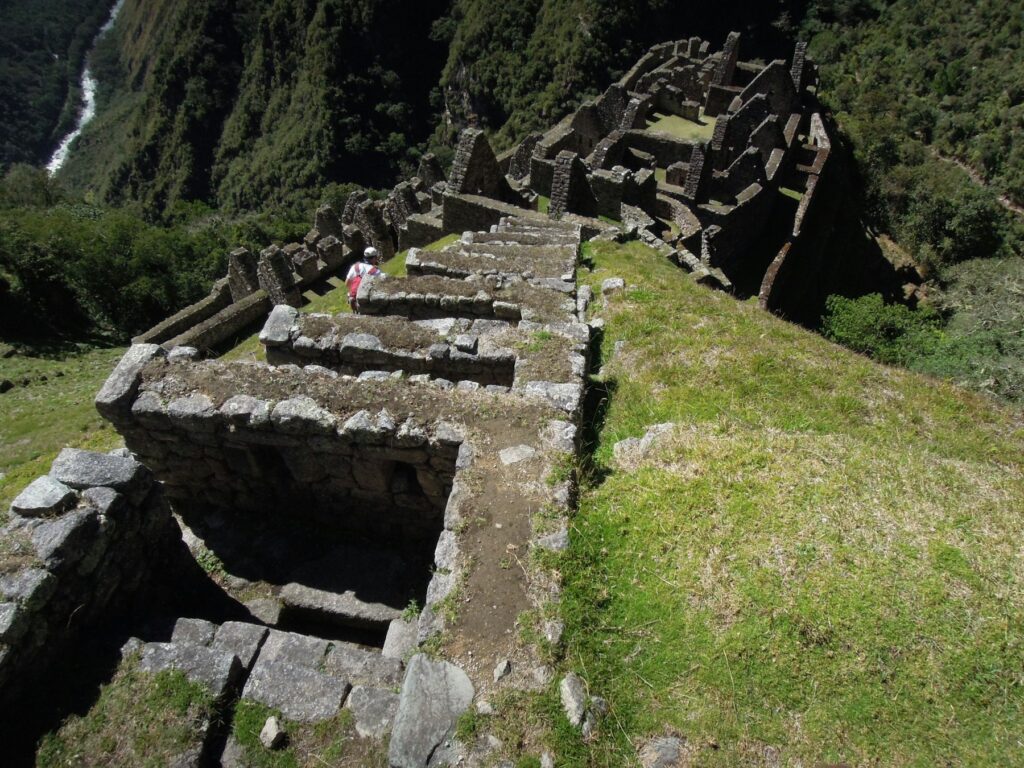
Getting there is the part that can go wrong, because protests, landslides or fires sometimes halt trains and buses. Our guide on how to get to Machu Picchu covers the routes.
Do you need a guide on the Inca Trail?
Yes. The trail’s official regulations allow hiking only with an authorised tour agency, and each group must have an official guide. Independent hikers are not allowed.
That rule is also a safety net. The State Department warns that rescue in remote areas can take hours or days. Our Classic Inca Trail groups walk with licensed guides and, as the tour page lists, carry first aid, oxygen and a satellite phone.
Trail conditions and the rainy season
The rainy season runs roughly November to May, and the trail closes every February for maintenance. Weather can close it at other times too: landslides and flooding shut the whole Inca Trail network from 19 August 2026 until early September.
Expect wet, uneven stone steps; bring boots with grip and poles.
What are the most common tourist scams in Peru?
- Fake taxis and tour sellers at Lima airport and bus terminals, according to the FCDO. Book your first ride in advance.
- Street tour touts. Correo counted over 200 tour agencies around Cusco’s main square in 2024, many informal. Book with a licensed operator that has a real office and reviews.
- Old notes and counterfeits. The FCDO reports Cusco street changers passing off old Peruvian intis, and fake dollar and sol notes circulate. Use banks or exchange offices; our Peru currency guide shows what real soles look like.
- ATM skimming. OSAC says criminals still fit skimmers, though less often than before. Use ATMs inside banks or shopping centres during business hours.
- Fake police. Canada warns that thieves sometimes pose as officers. If unsure, offer to go to the nearest police station.
- Photo charges. In August 2026, a visitor was charged S/50 for alpaca photos on a Cusco street. Agree a price first.
Is the altitude in Cusco dangerous?
For most visitors, altitude is a bigger risk than crime. The CDC says anyone sleeping at 2,450 m (8,000 ft) or higher is at risk, and Cusco’s elevation is about 3,350 m (11,000 ft).
Altitude sickness, called soroche in Peru, feels like a hangover, with headache as the main symptom. According to the CDC, it usually starts 2 to 12 hours after arrival and passes within 12 to 48 hours.
- Sleep lower first. The CDC suggests one or two nights below Cusco’s airport height. The Sacred Valley is lower, so it makes a good first stop.
- Take it slowly and skip alcohol for the first 48 hours.
- Ask your doctor about preventive medication, such as acetazolamide, before you travel.
- Coca tea is a traditional remedy in Cusco. The State Department advises US citizens not to use coca products, calling them a controlled substance that can interact with medication.
Go lower and get medical help if someone becomes confused, loses balance or is breathless at rest. The CDC warns these can signal HACE or HAPE, which can be fatal.
Rainbow Mountain tops 5,000 m, so save it for later in your trip. Read our Rainbow Mountain safety and solo hiking tips first.
Do you need travel insurance for Peru?
Yes. The State Department strongly recommends medical evacuation cover and notes that most private hospitals want payment up front. Check that your policy covers trekking at altitude.
Will protests or strikes affect my Peru trip?
Possibly, for a day or two. The FCDO says protests are unpredictable and can block roads and trains, including services to Machu Picchu. Strikes are often called with little or no notice.
In September 2025, a row over the Machu Picchu bus concession led residents to block the railway, and authorities evacuated about 1,400 tourists. In August 2026, a forest fire cancelled ten train departures between Ollantaytambo and Machu Picchu.
Big events matter too. For Pope Leo XIV’s visit on 11–16 November 2026, the FCDO flagged road closures and a Cusco airport closure on 15 November.
- Leave a spare day before your Machu Picchu date and before your flight home.
- Book trains, tickets and transfers through one local operator, so someone on the ground can rebook.
- Never try to pass a blockade, and don’t join political protests; Australia warns foreigners may be detained or deported.
Is Peru safe for solo and women travellers?
Yes, with extra care at night and with transport. The FCDO says sexual assaults are infrequent but happen, mostly in the Cusco and Arequipa areas. It also warns that dishonest tour agents have targeted young women travelling alone around Cusco.
Book tours with established operators, use app or hotel taxis, share your plans with someone at home, and buy your own drinks. Solo hikers should join a group: the State Department says simply, “Do not trek or hike alone.”
Peru safety checklist
| Risk | Where | How to avoid it |
|---|---|---|
| Pickpocketing | Plaza de Armas, San Pedro market, buses, Miraflores | Zipped bag in front; phone away in crowds |
| Fake taxis, express kidnapping | Lima airport, bus terminals, street hails | Official airport taxis, apps or hotel taxis |
| Robbery after arrival | Lima airport to hotel, late at night | Pre-booked transfer; valuables hidden |
| Fake notes, ATM skimming | Street changers, street ATMs | Banks, exchange offices, ATMs inside banks |
| Fake tours and guides | Street touts in Cusco | Licensed operator with an office |
| Drink spiking, methanol | Bars and clubs | Buy your own drinks; keep them in sight |
| Altitude sickness | Cusco, high treks, Rainbow Mountain | Sleep lower first; no alcohol for 48 hours |
| Strikes and blockades | Roads, Machu Picchu railway, central Lima | Buffer days; never cross a blockade |
| Trail accidents | Inca Trail, worst November to May | Licensed guide, good boots, evacuation insurance |
Planning your trip? Our Machu Picchu day trip from Cusco includes hotel pickup and a bilingual guide. Contact us with any safety question, or message us on WhatsApp at +51 918 885 164.
Peru safety: frequently asked questions
Is it safe to travel to Peru right now?
Yes, for the usual tourist route. As of November 2026, the US rates Peru Level 2, with only the Loreto border area and the VRAEM at Level 4. Lima and Callao are under a state of emergency.
Is Cusco safe at night?
The centre is generally fine if you stay on busy streets, watch your drink and take a booked taxi home rather than hailing one.
Is it safe to take a taxi from Lima airport?
Yes, if you use an official airport taxi company or a pre-booked transfer. Ignore drivers who approach you in arrivals.
Can I hike the Inca Trail without a guide?
No. Peru’s rules require an authorised tour agency and an official guide. Independent hikers are not allowed.
Is altitude sickness dangerous in Cusco?
It is usually mild and passes within a day or two, but it can become serious. Sleep lower first, skip alcohol for 48 hours, and get help for confusion or breathlessness at rest.
Do I need travel insurance for Peru?
Yes. The US State Department strongly recommends medical evacuation cover. Make sure your policy covers trekking at altitude.