


Visiting Queswachaka: Timing, transportation and costs
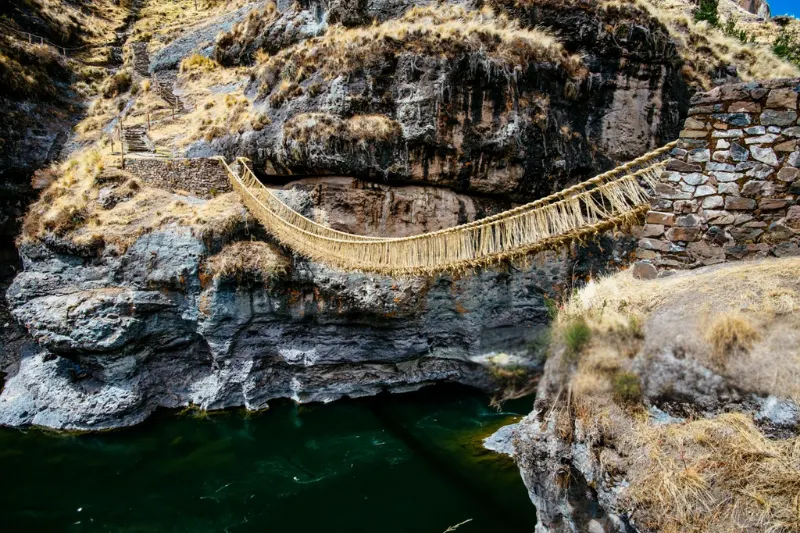
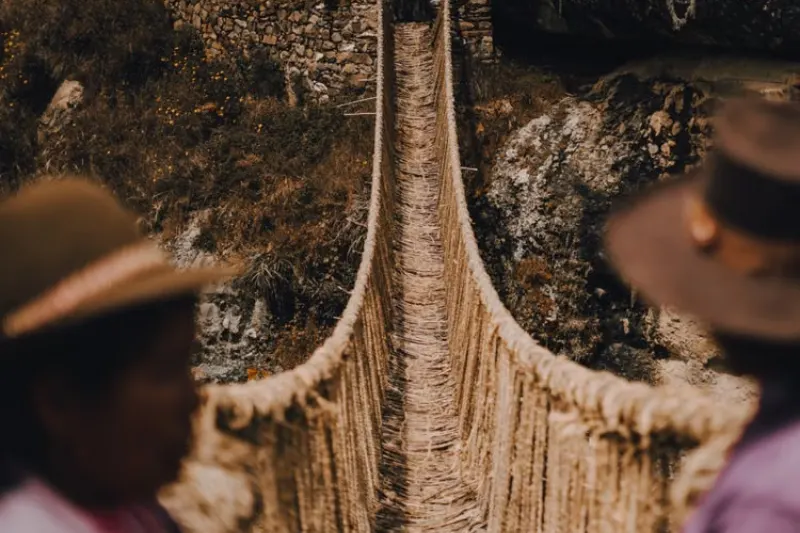
Queswachaka is the last remaining traditional Inca rope bridge still in use today. It is located over the Apurímac River in the Canas province of the Cusco region. The bridge is rebuilt entirely by hand every year using woven grass fibers, following a technique passed down through generations by four surrounding Quechua communities. This guide focuses on what matters most to a traveler: when to go, how to get there, what to pack, physical preparation, and how much it costs.
Unlike most archaeological sites in the region, Queswachaka is not a static ruin. The timing of a visit changes the experience considerably depending on whether it coincides with the annual renewal.
When to visit: Renewal period vs. rest of the year
The renewal of Queswachaka takes place every June, typically during the second week of the month, and spans approximately four days. Visitors arriving during this window can watch the harvesting and braiding of the grass ropes. They can also witness the final ceremony where the old bridge is replaced with the new one.
Outside of this specific window, the completed bridge remains accessible year-round. Visitors can still walk across it and view the surrounding canyon, though without witnessing any active construction. For travelers whose schedule does not align with the June dates, visiting during the dry season still offers clear weather. Road conditions for the trip out to the site are also easier from May through October.
Visiting during the June renewal requires booking transportation and accommodation well in advance. The event draws significantly more visitors than a typical day trip during the rest of the year. Travelers planning to attend should confirm exact dates with a tour operator a few months ahead. The specific days shift slightly year to year based on the lunar calendar used by the participating communities.
Visitors arriving specifically for the renewal should plan to arrive by early afternoon on the final day. The crossing ceremony and the accompanying celebration typically begin once the last sections of rope have been secured. Timing can shift depending on how quickly the braiding work progresses that year.
How to get there
Queswachaka is located roughly 3 to 4 hours from Cusco by road, depending on the specific route and starting point. Most visitors reach the site as part of an organized day tour. The location is somewhat remote and public transportation options are limited in this part of the region.
Independent travel is possible for those with a rental vehicle or willing to arrange transportation through local drivers. Road conditions can vary depending on the season, particularly during the wet months when unpaved sections become harder to navigate safely. Booking through a tour operator remains the more practical option for most travelers. This is especially true during the renewal period, when demand for transportation increases significantly and independent drivers become harder to find on short notice.
Day tours typically depart from Cusco early in the morning, between 5:00 and 6:00 AM. This accounts for the round-trip distance and the time needed at the site itself. Some operators offer the option to combine this excursion with stops in nearby towns along the route, which can extend the day but adds context to the broader region.

Cost of visiting
Pricing for a Queswachaka day trip varies depending on a few factors. Whether travelers book independently or through an organized tour matters, as does whether the trip coincides with the June renewal period.
- Organized day tour (regular season): generally includes transportation, a guide, and sometimes lunch, priced in the mid range for a full-day excursion from Cusco.
- Organized day tour (June renewal period): typically priced higher due to increased demand and the added length of the excursion during ceremony days.
- Independent transportation: can be less expensive if arranged directly with a local driver, though it requires more planning and Spanish or Quechua language skills to negotiate effectively on arrival.
- Entrance: the bridge itself does not require a separate ticket similar to the Boleto Turístico used at other Cusco sites. Local communities do sometimes request informal contributions at the site, though.
Booking a few weeks in advance for the regular season generally secures better pricing. For the June renewal, booking several months ahead is advisable. Group tours booked through the same operator as other Cusco excursions sometimes offer a modest discount when bundled together, which is worth asking about directly.
What to pack
Given the remote location and significant altitude of the surrounding region, packing appropriately matters more than for closer, more accessible sites near Cusco.
- Clothing layers: temperatures swing significantly between morning and afternoon in this part of the Andes, so a warm layer and a lighter one are both necessary for the full day.
- Footwear: comfortable walking shoes with good grip, since the paths near the bridge and canyon are uneven and occasionally rocky.
- Water and snacks: travelers should bring enough for a full day, since food options along the route are limited outside of what a tour provides at scheduled stops.
- Sun protection: sunscreen and a hat, given the high elevation and generally strong sun in this region even on cooler days.
- Camera: the bridge and surrounding canyon offer strong photo opportunities, particularly during the final crossing ceremony in June when the whole community gathers.
- Cash: small denominations of Peruvian soles for any informal purchases or contributions to the local communities along the way.
Motion sickness medication is worth carrying for travelers sensitive to winding mountain roads. The drive includes a considerable amount of curves through the highlands, and the return trip in the late afternoon can feel longer after a full day outdoors.
Altitude and physical considerations
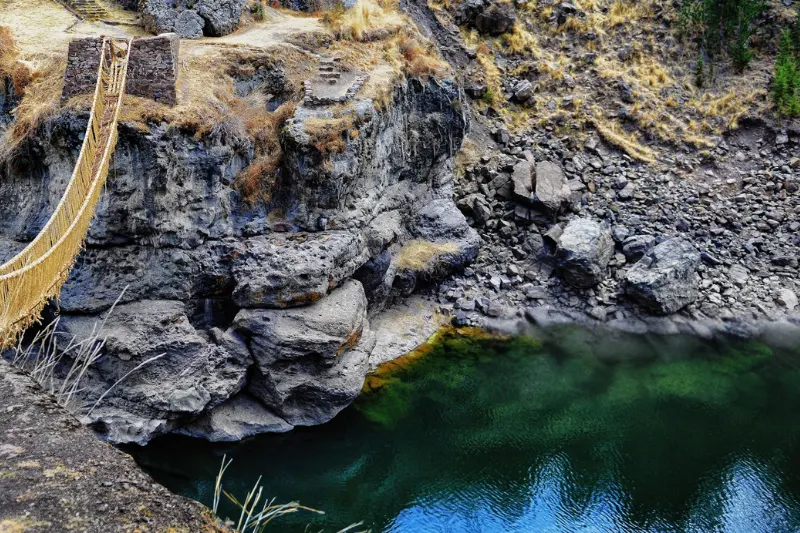
The region surrounding Queswachaka sits at high elevation, generally comparable to or slightly higher than Cusco itself. Travelers who have not yet acclimatized should spend at least one or two days in Cusco before attempting the trip. A full day of travel combined with altitude can be more tiring than expected, even without significant physical exertion.
The walk from the parking or drop-off point to the bridge itself is relatively short. It does not require significant physical fitness, though the altitude can still cause mild breathlessness for visitors not yet adjusted to elevations above 3,500 meters. Travelers with respiratory or cardiac conditions should consult a physician before planning a full day trip at this elevation, particularly one involving several hours of travel on winding roads.
What happens during the renewal ceremony
For those specifically planning around the June dates, understanding the general structure of the event helps set realistic expectations. The four days typically break down into harvesting and rope preparation on the first two days. Assembly of the main cables happens on the third day, followed by the final replacement of the bridge and community celebrations on the last day.
Visitors are generally welcome to observe the process throughout. The most visually striking moment tends to be the final crossing, when community leaders and participants walk across the newly finished bridge for the first time. Arriving on the last day alone still allows visitors to witness this key moment, even without seeing the earlier preparation stages. This is a reasonable option for travelers with more limited time.
Common mistakes to avoid
A few planning errors account for most disappointing visits to this site. Nearly all of them come down to timing and expectations set incorrectly beforehand.
- Assuming the bridge is always under construction: only the specific June renewal window offers the chance to see active building; the rest of the year shows only the finished structure.
- Booking transportation too late for the June period: tours and drivers fill up quickly during the renewal week, sometimes months in advance for the more established operators.
- Underestimating the drive: the round trip from Cusco takes a significant portion of the day. Travelers expecting a quick excursion are often surprised by the total time commitment involved.
- Skipping altitude acclimatization: arriving directly from a lower elevation without any adjustment time can make the day feel more exhausting than anticipated, even for otherwise fit travelers.
- Not confirming what’s included: some day tours include lunch and a guide while others provide transportation only. Travelers should confirm this before booking to avoid surprises on the day itself.
Practical notes before you go
Because the exact June renewal dates shift slightly each year, confirming the current schedule with a tour operator or local tourism office is worth the extra step. For visitors whose main interest is photography or simply seeing the bridge itself, any time during the dry season works well. This still delivers the same views of the canyon and structure while avoiding the larger crowds tied to the renewal ceremony.
Travelers combining this trip with other excursions in the Cusco region should plan for a full rest day either before or after the Queswachaka visit. This accounts for the length of the round trip and the physical demands of spending most of a day traveling at altitude.