


The Inca Bridge in Machu Picchu
The Inca Bridge in Machu Picchu is one of the most fascinating, mysterious, and least-visited structures within the Inca citadel. Suspended along a sheer cliff on the eastern side of Machu Picchu, this stone-and-wood bridge reveals the Incas’ extraordinary engineering skills and their advanced military and defensive strategies.
Unlike temples and plazas designed for ceremony and worship, the Inca Bridge served a strategic and defensive purpose, protecting the city from potential invasions while controlling access through one of the most dangerous sections of the mountain.
What is the Inca Bridge in Machu Picchu?
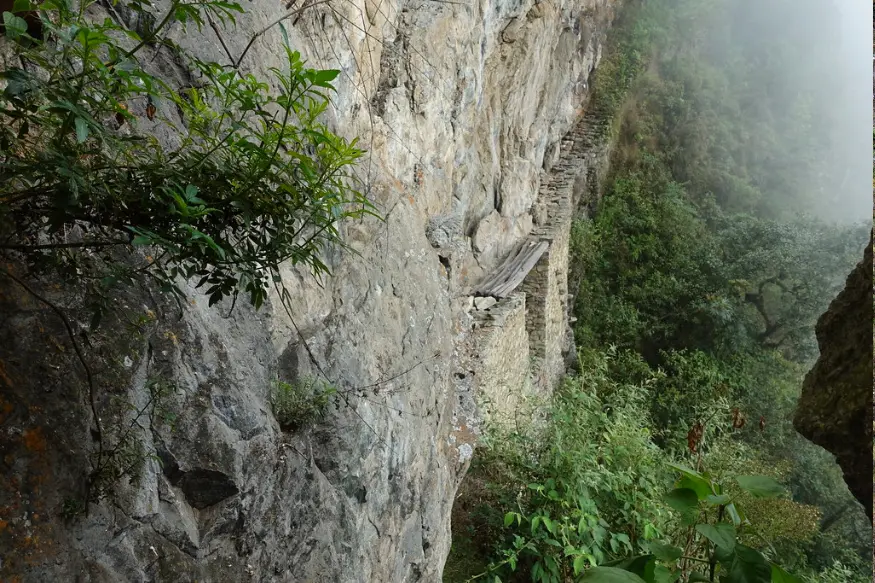
The Inca Bridge is a narrow stone path carved directly into the mountainside, ending at a removable wooden bridge built across a steep cliff gap. This bridge formed part of a secondary access route to Machu Picchu, used primarily for defense and surveillance rather than daily traffic.
Unlike suspension bridges made of rope, the Inca Bridge at Machu Picchu combines:
Solid stone pathways
Natural cliff formations
A short wooden bridge section that could be removed in times of danger
This design allowed the Incas to completely block access to the city from this side if necessary.
Location of the Inca Bridge in Machu Picchu
The Inca Bridge is located on the eastern edge of Machu Picchu, along a narrow cliffside trail overlooking the Urubamba Valley.
Sector: Eastern / Defensive sector
Elevation: approx. 2,430 meters (7,970 ft)
Access circuit: Circuit 1 or specific Inca Bridge route (varies by regulation)
The bridge is reached via a short but dramatic hike from the main urban area of Machu Picchu.
Historical Background of the Inca Bridge
The Inca Bridge was built during the reign of Pachacuti Inca Yupanqui in the 15th century, when Machu Picchu functioned as a royal estate, ceremonial center, and strategic stronghold.
Although Machu Picchu was not a fortress in the European sense, it was carefully protected by:
Steep natural terrain
Controlled access routes
Defensive paths like the Inca Bridge
The bridge allowed the Incas to monitor movement along the eastern flank of the city, an area vulnerable due to dense cloud forest rather than sheer cliffs.
Purpose and Function of the Inca Bridge
The Inca Bridge was never intended for heavy traffic. Its main functions included:
Defensive Control
The removable wooden section meant enemies could not cross if the bridge was dismantled. This made the path virtually impassable.
Surveillance and Security
Guards could monitor anyone approaching from the eastern jungle, providing early warning of potential threats.
Restricted Access
Only authorized individuals—likely military personnel or messengers—used this route.
This confirms that the Inca Bridge was part of a broader defensive system protecting Machu Picchu.
Architectural and Engineering Design

Stone Pathway Carved into the Cliff
The Incas carved a narrow stone path directly into the mountain wall. This path:
Is only wide enough for one person
Follows the natural contours of the cliff
Demonstrates advanced rock-cutting techniques
Removable Wooden Bridge
The most distinctive feature is the short wooden bridge section, originally made of tree trunks placed across a natural gap in the cliff. These beams could be:
Removed quickly
Hidden or destroyed
Reinstalled when safe
This simple yet brilliant design transformed geography into a defensive weapon.
Relationship Between the Inca Bridge and the Inca Road System
The Inca Bridge was connected to the Qhapaq Ñan, the vast Inca road network spanning over 30,000 kilometers across the Andes.
However, unlike main imperial roads used for trade and communication, this route functioned as
A controlled secondary path
A military access point
A security corridor
Its existence shows that Machu Picchu was integrated into the empire’s infrastructure while remaining carefully protected.
Can You Visit the Inca Bridge Today?
Yes, the Inca Bridge is open to visitors, but access is restricted and regulated.
Current Access Conditions
Access to the Inca Bridge is only available through Circuit 1-D, which is the only route that leads to the Inca Bridge.
Book your Machu Picchu Day Trip via Circuit 1-DA sign-in book is often required
The hike is unguided but controlled
Visitors cannot cross the bridge itself. You may only walk up to the viewing point for safety and preservation reasons.
How to Get to the Inca Bridge in Machu Picchu?
To reach the Inca Bridge:
Enter Machu Picchu with the appropriate circuit
Follow signs toward the Inca Bridge trail
Walk along a narrow but mostly flat path
Hiking time: approx. 20–30 minutes one way
Difficulty: Easy to moderate
Exposure: High (steep cliffs)
This walk offers spectacular views over the Urubamba Valley and surrounding mountains.
Safety Considerations on the Inca Bridge Trail
While the trail is not technically difficult, it requires caution:
Stay on the marked path
Do not lean over cliffs
Avoid the trail during heavy rain
Follow all staff instructions
The Incas chose this location precisely because it is naturally intimidating.
Inca Bridge vs Other Structures in Machu Picchu
The Inca Bridge stands apart as a military and strategic feature, rather than a religious one.
Symbolic Meaning of the Inca Bridge
Beyond defense, the Inca Bridge symbolizes:
Control over nature
Mastery of geography
Strategic intelligence
The Incas did not fight nature—they used it intelligently, integrating architecture with the landscape.
Best Time to Visit the Inca Bridge
Dry season (May–September): safest conditions
Early morning: fewer visitors, calmer atmosphere
Clear days: best visibility of the valley below
During the rainy season, access may be limited due to safety concerns.
Interesting Facts About the Inca Bridge
One of the most exposed trails in Machu Picchu
Designed to be easily dismantled
Not a rope bridge, unlike many Inca bridges
Demonstrates military foresight rather than ceremonial design
Importance of the Inca Bridge in Machu Picchu
The Inca Bridge in Machu Picchu proves that the site was not only a spiritual sanctuary but also a carefully protected settlement.
It highlights:
Inca military planning
Advanced cliff engineering
Strategic use of terrain
Without defensive structures like the Inca Bridge, Machu Picchu would have been far more vulnerable.