


Winay Wayna on the Inca Trail
Winay Wayna on the Inca Trail is one of the most important, emotional, and visually stunning archaeological sites along the legendary route to Machu Picchu. Built on a steep mountainside and surrounded by dense cloud forest, Winay Wayna represents the final spiritual, ceremonial, and physical preparation point before reaching the Inca citadel.
For many hikers, Winay Wayna is not just another set of ruins—it is the true heart of the Inca Trail.
What Is Winay Wayna on the Inca Trail?
Winay Wayna is a large Inca archaeological complex located near the end of the Classic Inca Trail. Its name comes from Quechua and means “Forever Young,” referring to a native orchid that blooms year-round in the area.
Within the Inca Trail network, Winay Wayna served multiple purposes:
A ceremonial and ritual center
An agricultural production site
A resting place for pilgrims and elites traveling to Machu Picchu
Its strategic position and architectural complexity make Winay Wayna one of the most significant sites on the entire route.
Location and Elevation of Winay Wayna
Winay Wayna is located inside the Historic Sanctuary of Machu Picchu, in the Cusco region of Peru.
Elevation: 2,650 meters / 8,694 feet
Inca Trail day: Day 3 of the Classic Inca Trail
Nearby sites: Phuyupatamarca (before), Inti Punku / Sun Gate (after)
Distances on the Inca Trail
Phuyupatamarca → Winay Wayna: 4–5 hours
Winay Wayna → Inti Punku: ~1 hour
Winay Wayna → Machu Picchu: ~2 hours
This placement makes Winay Wayna the last major archaeological site before Machu Picchu.
History of Winay Wayna

Archaeological evidence suggests that Winay Wayna was constructed during the reign of Pachacuti Inca Yupanqui in the 15th century—the same ruler responsible for the expansion of the Inca Empire and the construction of Machu Picchu.
Winay Wayna formed part of the royal pilgrimage route, used by priests, nobles, and messengers. Unlike many Inca sites, it was never destroyed by Spanish conquistadors, remaining hidden beneath thick vegetation for centuries.
Main Functions of Winay Wayna
Religious rituals associated with water and fertility
Agricultural cultivation using advanced terrace systems
Temporary lodging for elite travelers
Architecture and Layout of Winay Wayna

Agricultural Terraces
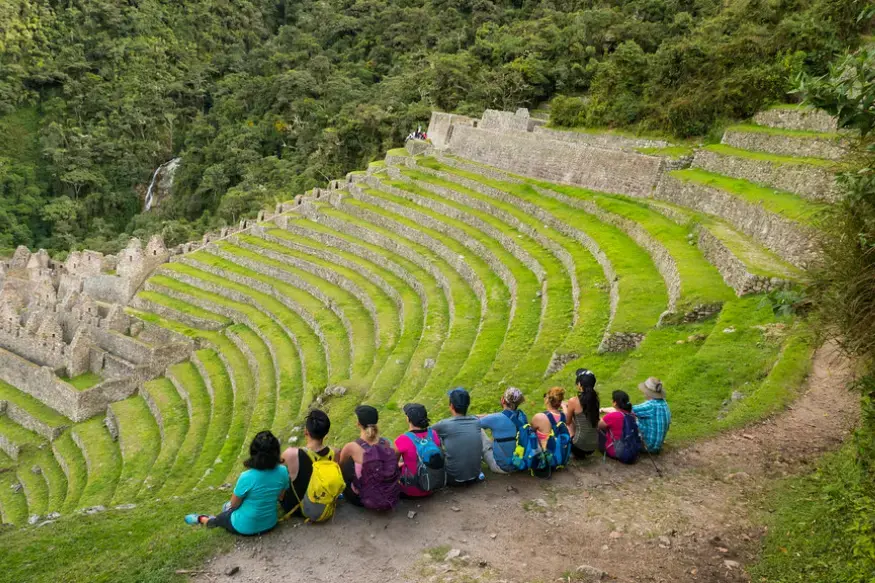
Winay Wayna features more than 20 finely engineered terraces cascading down the mountainside. These terraces:
Prevent soil erosion
Control humidity and temperature
Reflect sophisticated Inca agricultural knowledge
Urban and Ceremonial Sectors
The complex is divided into two main areas:
Lower sector: residential rooms and storage spaces
Upper sector: ceremonial buildings, temples, and fountains
Sacred Water Fountains
One of the most remarkable elements of Winay Wayna is its stone water fountain system. Narrow channels guide mountain water through a sequence of fountains, many of which still function today—over 500 years later.
Water symbolized life, renewal, and spiritual purification in Inca cosmology.
Spiritual Significance of Winay Wayna on the Inca Trail
Winay Wayna is widely believed to have been a ritual purification site. Pilgrims would stop here to cleanse themselves spiritually before entering Machu Picchu.
The combination of:
Constant flowing water
Mountain silence
Misty cloud forest surroundings
creates a powerful and meditative atmosphere. Many trekkers describe Winay Wayna as more intimate and spiritually intense than Machu Picchu itself.
Winay Wayna lies within the Andean cloud forest, one of the most biodiverse ecosystems in Peru.
Plant Life

Native orchids (including the Winay Wayna flower)
Bromeliads
Mosses and giant ferns
Dense subtropical vegetation
Wildlife
Hummingbirds
Butterflies
Andean bird species
Rare sightings of spectacled bears
How to Get from Winay Wayna to Machu Picchu
According to many historians and professional guides, the journey to Machu Picchu along the Inca Trail traditionally lasted around three days, following a carefully designed pilgrimage route. This route commonly began in the community of Piscacucho (Km 82), which remains the official starting point of the Classic Inca Trail today.
Along the way, travelers passed through important Andean communities and ceremonial sites such as Cusichaca (Km 82), Huayllabamba (Km 88), and Chachabamba (Km 104). These locations were not random stops but strategic points used for rest, agriculture, and ritual preparation before reaching the most sacred zones of the trail.
Winay Wayna was one of the final and most important stops on this journey. Located just 3 miles (4.7 kilometers) from Machu Picchu, the site served as a ceremonial and purification center before the last ascent to the Sun Gate.
Today, Winay Wayna remains an essential stop along both the Classic Inca Trail and the Short Inca Trail. The ruins are located a short walk from the official campsite and are accessible only to permitted hikers, generally between 8:00 a.m. and 8:00 p.m., under the supervision of licensed guides.
Can You Visit Winay Wayna Without Hiking the Inca Trail?
No. Winay Wayna is only accessible via the Inca Trail.
You can visit it by:
There is no road, train, or alternative public access.
Rules and Conservation at Winay Wayna
Winay Wayna is protected by the Peruvian Ministry of Culture and strict regulations apply:
No climbing on ruins
No drones
No littering
Guided access only
These measures ensure the preservation of the site for future generations.
Practical Tips for Visiting Winay Wayna
Dress in layers due to changing weather
Carry a rain jacket, even in dry season
Wear good hiking shoes (stone steps can be slippery)
Respect the silence and sacred nature of the site
Winay Wayna Compared to Other Inca Trail Sites
Interesting Facts About Winay Wayna
One of the most photographed sites on the Inca Trail
Its hydraulic system still works today
Often considered more emotionally powerful than Machu Picchu
Relationship Between Winay Wayna and Machu Picchu
Winay Wayna served as the final preparation site for pilgrims before entering Machu Picchu. The architectural similarities and ceremonial layout suggest both sites were part of the same sacred network.
Why Winay Wayna Is One of the Most Important Sites on the Inca Trail?
Winay Wayna on the Inca Trail represents:
The peak of Inca engineering
The spiritual essence of the pilgrimage
The emotional transition before Machu Picchu
It is where physical effort meets spiritual meaning.