


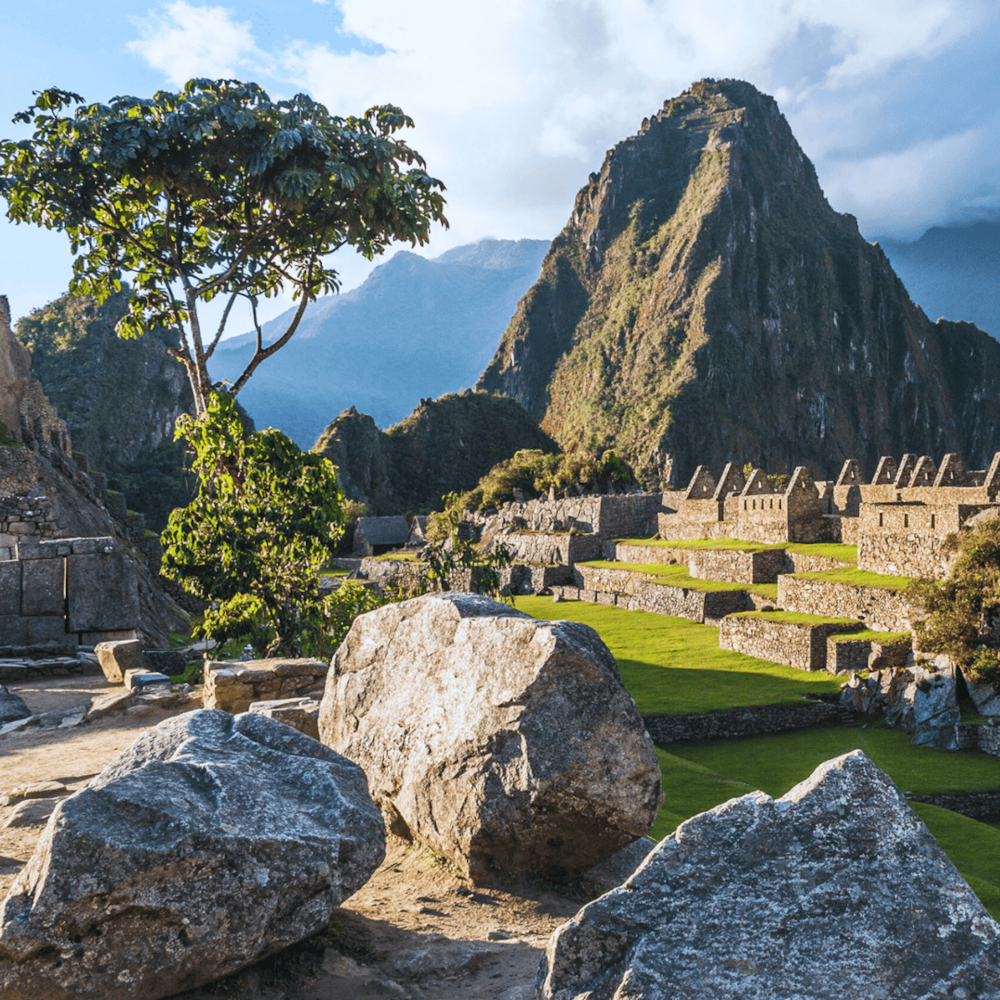
Exploring the Wonders of Machu Picchu Tours
It may be hard to plan a trip to Machu Picchu. You read about Cusco, about the Sacred Valley and about Aguas Calientes and the relation between them seems puzzling most of the time. A lot of travelers are unable to see the way the journey fits in. This is the reason why Machu Picchu Tours simplify the process. To reach Machu Picchu may appear to be a riddle, but with this guide, all will be divided into easy steps to make your ideal vacation seem clear and free of stress.
Cusco makes a good base camp at high altitude. Most of the trips start with a flight of a few hours in Lima and then in this historic city which was the former capital of the Inca Empire. Cusco is located over 11,000 feet and therefore, your takes time to abody dapt. Spend one or two days here, and then pass on. This will make it easier to have a more pleasant trip.
The route feeds into the Sacred Valley, which is situated in Cusco. There are numerous traditional villages and Inca sites in this area. The vast majority of Sacred Valley tours eventually visit a train station to Aguas Calientes. It is a small town located in the valley under Machu Picchu and it is the key access point. Here, the mountain can be climbed by a 25-minute bus ride into the entrance.
The First Big Decision: Should You Trek or Take the Train?
It all depends upon one large decision. Would you like to walk there, after spending a few days on a hike, or would you rather take a nice train ride? This choice determines how much you spend and when and how to have a good time.
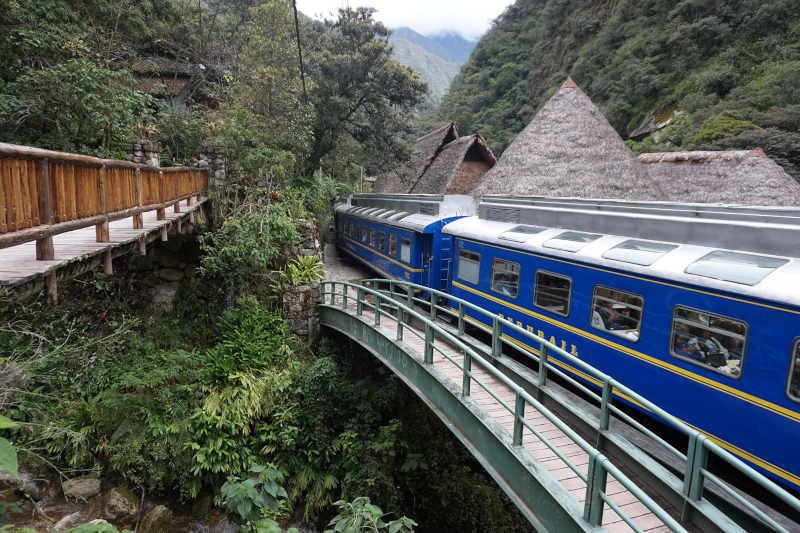
To go trekking, you will have to take part in a group hike in the Andes. You spend several days on foot and camp out. The train is a scenic and relaxing ride on the Urubamba River valley to Aguas Calientes. Then a short bus ride will leave you at Machu Picchu. Price does play, however the difference is whether you want the type of experience or not.
To help you decide, here’s a quick comparison:
- The Trek (e.g., Inca Trail, Salkantay Trek)
- Time: 4-5 days
- Fitness Level: High (needs to hike some hours daily)
- Experience: It is an adventure not to be forgotten, walk to earn your arrival here.
- Time: 1 day (or an overnight in Aguas Calientos)
- Physical condition: Low (low levels of walking needed)
- Feeling: Comfortable, calm and picturesquely spectacular.
The Legendary Hike: Inca Trail vs. Salkantay Trek
Should you have a dream tour of Machu Picchu, you will most probably become an alternate between two well-known paths the Inca trail and Salkantay Trek all which are well-known to Machu Picchu tours among active travelers. The only thing that can make up your mind is time. The Inca Trail is strictly regulated and only a number of permits are issued by the Peruvian government per day. These permits are sold out quickly and are usually 6-9 months earlier. It is like purchasing a ticket to a killer concert, and you need to schedule it long in advance.
The four day traditional Inca trail is like an adventure through history, but there is also a Short Inca Trail. These are the only trail that one walks on original Inca stone paths. On the journey, there are other smaller ruins and you ultimately enter Machu Picchu by the very famous Sun Gate. It is impossible to forget the sight of the citadel emerging out of the morning mist in this perspective. For years, this moment has been dreamt about by many hikers.
The preference for dramatic scenery is taken by the Salkantay trek or due to not getting permits for Inca Trail. This Trail goes through the very famous Salkantay Pass, which is 4,630m above sea level, then falls into rich cloudy forests. This trek is not finished at the Sun Gate but most prefer to think that keep going it is more physically challenging. It also provides an influential perspective of the Andes in their purest state.
The Scenic Route: How the Train Journey to Machu Picchu Works
A majority of the visitors to Machu Picchu use trains, as opposed to walking to the site. It can begin in Cusco, although the most effective is a taxi or van ride between the Sacred Valley and Ollantaytambo. This town is the point of departure of most trains. There, one takes a 90-minute ride by train, which passes by the Urubamba River through a sharp canyon, and arrives at Aguas Calientes, the town that is located at the feet of Machu Picchu.
This route is operated by two major companies which include PeruRail and Inca Rail. Their offerings are quite comparable, and it is not necessary to think hard about the decision. Select the plan and price that suits you. The two companies have a variety of classes. The primary option is a regular train such as Expedition and a panoramic one such as Vistadome. Panoramic trains will have bigger windows and glass cover to enable you to count on the scenery.
Whatever the type of class you may take, the ride in itself is great. The landscape is changed to thick cloud forest instead of farmland. Andean mountains in the distance heaped with snow-caps. The tour is like a picturesque prelude to the Lost city of the Incas. It only takes you a short bus ride after you are in Aguas Calientes.
The Most Important Step: Booking Your Machu Picchu Entrance Ticket
Get your Machu Picchu admission ticket in advance and then you can book tickets and hotels. This principle can be retrogressive, yet it secures your plans. Government restrictions on the number of visitors per day are in place and the tickets tend to run out several months before. Scheduling in advance will ensure that your ultimate objective is free. It does not disappoint the hope to travel to Peru without permission.
Ticket purchase is possible on the official government website. This alternative is cheaper but may be difficult. The site is not always bilingual and does not accept foreign cards. Provided you take this path, then be patient. You should have your passport information at hand, as the system will demand it in order to make the purchase.
Once you have purchased your ticket, check your time of entry. Every ticket will have one hour of entry duration. In case your time is 9: 00 AM, you have to get in between 9: 00 to 10: 00 AM. Getting late may translate to losing access. Your circuit in the citadel also is preset by your ticket, and that is your next major choice.
Decoding the Circuits: Which Path Should You Choose Inside Machu Picchu?
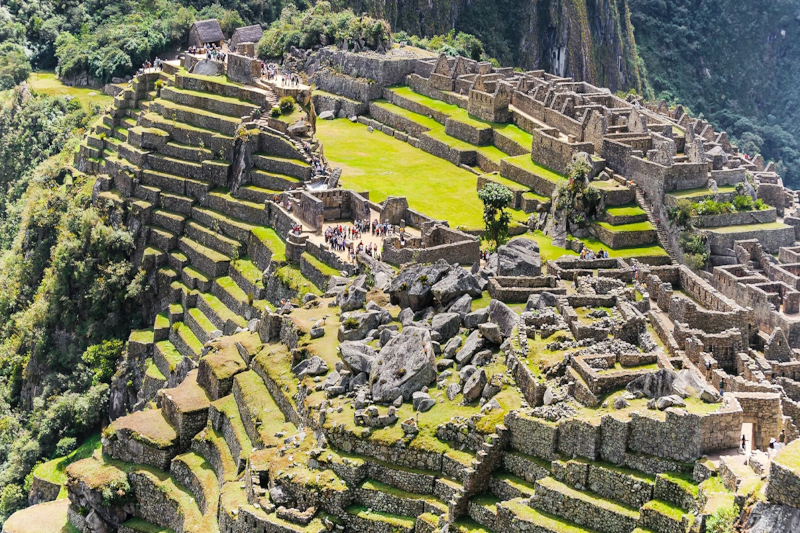
In your ticket, you will have a particular circuit in which you will be taking on most Machu Picchu tours. Tourists are no longer roaming around for more than one hour. To keep the location safe and prevent crowds, the government developed one-way streets. Imagine a blazed trail in a wildlife park. You have no time to go back or see beyond your course. It is more important than ever to pick the correct circuit before booking as this will either make or break your whole visit.
The majority of the visitors desire the traditional postcard picture. To get that well known panoramic view, you need to reserve an Upper Circuit. These paths lead to the upper terraces in the first place and comprise the primary vantage points. Lower Circuits omit these places.
The basics of the options are as follows:
- Circuit 1 (Upper): Less complete circuit around the upper platforms which offer the best panoramic photo spots.
- Circuit 2 (Upper): The most diverse circuit. It also contains the traditional photo points at the upper deck of the location and then proceeds to a more extended journey to the main works of the city at the bottom. It is the most appropriate selection in case of a first-time visitor.
- Circuit 3 & 4 (Lower): The start of these circuits is directly in the lower, the urban part of the citadel. You will have a close view of the stonework but you will not have the traditional panoramic view.
Want a Better View? The Truth About Hiking Huayna Picchu
The steep hill in the back of Machu Picchu in typical photographs is called Huayna Picchu. Yes, you can climb it. This hike is not casual. The path is sharp, winding and open. There are ladders-like stone steps in some of the sections. It is usually loved by fit hikers who dare to go up the mountain. It might be intimidating to others.
In case Huayna Picchu appears to be too difficult, then Machu Picchu mountain. It is a path located on the other side of the citadel. The increase is longer but leads on a broader road that is not so exposed. The top presents you with 360 degree views of the Andes. You are able to view Machu Picchu and Huayna Picchu as you look down. It provides enormous perspectives with a lesser degree of exposure.
You are not able to make these increases when you visit one day. The two demand special combination tickets having special daily quotas. You will want to plan months in advance, should you wish.
How to Beat the Altitude: A Simple Plan for Avoiding Sickness in Cusco
Cusco sits at 11,152 feet (3,399 meters). The air tends to be thinner, which means that it has a low level of oxygen as compared to what most travelers are accustomed to. There are those visitors whose symptoms are mild such as headaches, fatigue or nausea. This is altitude sickness. It is and it appears to be frightening but simple precautions allowed the majority of the population to adapt. Lucky people are not successful; they are well-planned.
Your first 24 hours matter most. The first step is to avoid getting into demanding tours immediately. Give attention to getting used to this checklist:
- Take it easy. Spend about two days on the large activities.
- Hydrate often. Drink water and try coca tea.
- Eat light. Stressors are heavy meals and alcohol.
The majority of passengers get on all right in one or two days. In case you feel out of sorts, take more rest and drink more. Give your body time. Using this plan, you will be able to enjoy the trip.

What to Pack for Your Machu Picchu Day Trip: A No-Nonsense Checklist
Preparation to Machu Picchu may be tricky because the weather is subject to change every minute between hot sun and cold fog. The key is in having the knack to layer. Begin with a warm fleece or sweater, a light rain jacket, or a sumptuous t-shirt. This is a basic trick that allows you to adapt comfortably to the changing temperatures that will make you feel comfortable in the process of exploring the huge stone city.
Your small daypack need not contain anything except the necessities, in addition to clothing. This is a list of indisputably perfect Machu Picchu packing items that will have you ready to visit it on a day trip:
- Your original passport (no copy) and your Machu Picchu ticket.
- A refillable water bottle in order to feel fresh.
- Sun protection: sunglasses, hat and sunscreen.
- A fast weight rain jacket or poncho.
- Worn-out, sleek walking shoes.
- Insect repellent
As significant as what you carry is what you leave behind. New rules of the visit to the site ban the presence of certain items to offer security. Store big backpacks (more than 20L), selfie sticks, tripods, drones, as well as single-use plastic bottles at your hotel. These are some of the guidelines that will make the entry process easier, hence you will be able to see the views without problems at the gate.
Day Trip vs. Overnight Stay: Which Is Best for You?
After determining what to include in your packing, it is time to determine how quickly you want to see Machu Picchu in the majority of Machu Picchu tours. A sightseeing tour of Cusco can afford a traveling day, and it usually becomes a very long and tiresome day with almost eight hours of traveling both ways. The other option is to go to Aguas Calientes the previous day and spend one night at the place, which will change the rush experience to a calmer one.
We are truly not ready to sleep over till the next morning. By reserving any one of the numerous Aguas Calientes hotels, you can get one of the earliest buses up the mountain, way ahead of the main body of trains coming up Cusco. This is a good way to experience the citadel as early as possible, when the gates open, more occasionally with dreamy morning mist, and with much less crowd. You get to see the stone city gradually come up in the soft light, a serene, near-surreal situation that most day-trippers do not get to see.
The question arises: how do you decide on a day trip or on an overnight trip? A day trip will serve even in case you have minimal time or limited budget, yet would allow you to see the highlights. However, on the condition that your schedule will permit it, it is best to spend a night at Machu Picchu, at its most quiet and most idyllic moments. You can visit it in a few hours or even in a whole morning; however, the history of the citadel can be comprehended best with the help of professional knowledge. That opens the door to another issue of concern; whether having a private guide is worth the additional expenditure.
The Guide Decision: Are Private Guides Worth the Extra Cost?
You are no longer free to roam around Machu Picchu by yourself. The government regulations specify that the visitor must be accompanied by a licensed guide. It is not merely a regulation but it enhances your visit. A sensible guide renders a stroll between ruins an adventure of the narrative. They make you know what you are looking at, of finely cultivated farm-land terraces to sacred shrines.
It is either a classical tour of the group or an individual guide. A group tour typically consisting of between 10-15 individuals is cost effective and includes the key highlights on a predetermined route. The advantage of having a personal guide is flexibility. You move at your own speed, can ask infinite questions and concentrate on what you are most interested in engineering, history or plants or photography away from the crowds.
Does a more expensive Machu Picchu guide fee justify it? A group tour is good to have a decent overview when the budget is tight. However, to have a more personal experience and the flexibility to go at your own pace, then the cost of hiring a personal guide is worth it. An excellent guide does not show buildings only, a good one tells us about the genius behind those buildings.
Why Was It Built? A 2-Minute History to Deepen Your Visit
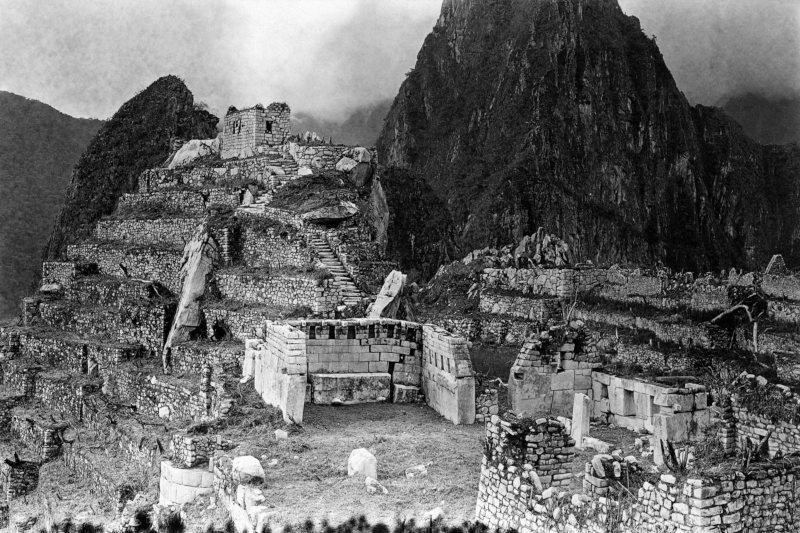
So why was this city built? Who built it? When? Although Machu Picchu has a rather mysterious appearance, the place was probably neither a fortress nor an ordinary city. The majority of archaeologists believe that it was an estate of the perpetually Inca emperor Pachacuti constructed in 1450. Imagine it as a mountain-top retreat of the ruler and his court – a seat of ceremonies and rest and governance out of Cusco.
The genius of this estate is cut out of each rock. It was constructed by Incas without iron, wheels, or mortar. Ashlar masonry technique was part of their famous technique by crafting the stones in such a way that they can fit like puzzles. Take a closer look at walls of temples and you will notice that the joints are so tight that no credit card can be slipped across stones. This accuracy is the reason why the citadel is still intact even after half a millennium.
It was then abandoned after some 100 years. The conquest by the Spanish to the empire had to be disrupted and the site was gradually reclaimed by the jungle. It never really became lost locally but was drawn into worldwide attention in 1911 when Hiram Bingham wrote about it. Being aware of this story does give a certain dimension to each of the steps you take there.
Are Machu Picchu Tours Worth the High Cost and Effort?
Visiting Machu Picchu is an investment with flights and entrance tickets as well as all the logistics associated. The fact that someone is wondering whether the experience is indeed worth the money and the well-known photographs is absolutely natural. To a large majority of the traveling people, yes is the answer. Machu Picchu is not merely a tourist attraction site, but it is a destination that continually exceeds the expectations of most people.
This price includes not only the transportation and admission, it is a way to one of the most significant heritage sites in the world. Machu Picchu is a global heritage site since it is a UNESCO World Heritage site and among the New 7 Wonders of the World. The dimensions, the accuracy of the construction, and the mood of the citadel are very striking at the real location.
Ultimately, a Machu Picchu tour does not seem like a vacation cost but a lifetime memory investment. Money is fleeting, but once you see the first clouds of the morning disappear off the mountains and see the ancient city remains with you. There are not many spots on this planet that meet their own expectations, but Machu Picchu is one of them.
Your 6-Month Machu Picchu Action Plan
That is, the symbolic picture of Machu Picchu can seem distant, and arranging the adventure may be complicated initially. However, after knowing the routes, tickets, and timing, it is easier. What used to appear complicated is transformed into a step by step process. You are no longer dreaming of the trip but you are willing to plan it.
Having the appropriate information, a trip to Peru can be planned to a large extent depending on when. Below is a functional Machu Picchu planning itinerary upon which you can follow. It is a guide that can be used in the form of a checklist to translate concepts to confirmed reservations.
Your Step-by-Step Booking Timeline
- 6-9 months later: Select your primary experience (trek or train). This would be the right time to book a trip to the classic Inca Trail, in case your goal is to hike this path, as the permits fly off.
- 4-6 Months Before: Reserve the entrance tickets to Machu Picchu and any mountain hike permits such as Huayna Picchu or Machu Picchu mountain.
- 3-4 Months Later: Book your International flights to Peru and your flights within the country to Cusco.
- 2-3 months later: Book reserve hotels in Cusco, Sacred Valley, and/or Aguas Calientes.
- 1 Month Later: Prepare and make reservations for other tours, e.g. Sacred Valley tours.
- 1 Week Before: If something goes wrong with a reservation, do it again, buy layers to pack on to go, and pick up a few Peruvian Soles to get inexpensive little things.
It is the initial reservation, your trek or primary entry ticket which makes you turn the notion into a scheme. Further along each step takes you still nearer to the Andes with its fresh air of the mountains, to the view of the old stone walls and the mist that surrounds them. That is when Machu Picchu is no longer just a picture you have seen on the Internet, but it is a tangible place to be gained after traveling a long distance and meticulously organizing the trip.