The wildlife of Machu Picchu makes it a marvellous destination for nature lovers. They can explore its low grasslands, mountain peaks, valleys, and cloud forests.
The biodiversity of Machu Picchu is widely spread and includes the Historic Sanctuary of Machu Picchu. This natural area is considered a World Heritage Site since 1983. The area offers a range of temperatures throughout the year. Here the high mountains create favourable micro-climates for the evolution of certain species.
Machu Picchu is located between the Andes and the Amazon, and forms fragile eco-systems for small species such as insects, birds, and mammals.
You can find a diversity of animals in Machu Picchu due to the existing micro-regions inside the reserve.
Here is a list of Machu Picchu animals that you can see during your visit to the Inca citadel of Machu Picchu:
Spectacled Bear (Tremarctosornatus): These are short-faced furry mammals. They are known as spectacled bears due to the rings of light fur around their eyes that appear as if they are wearing glasses.
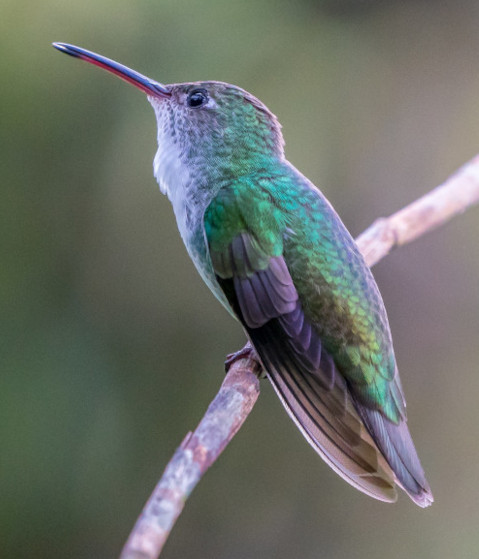
Giant Hummingbird(Patagonagigasperuviana): The largest hummingbird in the world has an average size of 8.5 inches. It was found in the Historical Sanctuary of Machu Picchu. The body of the bird is covered in greenish-grey or reddish-brown plumage with a white rump. It also has a slower wing beat when compared to other hummingbirds.
Andean Cock-of-the-Rock(Rupicolaperuviana): It is the national bird of Peru. The male Cock-of-the-rock is covered in a red-orange plumage. On the other hand, females are reddish-brown.
Camelids: Two of camelids – the Llama (Lama glama) and the alpaca (Lama pacos) have perfectly adapted to the environment. These wooly animals are a source of fibres to the local weavers and their lean meat is served as a rich source of protein and iron.
Andean Condor(Vulturgryphus): This is the largest vulture in the world with a wing span of about 10 feet wide. It has a curved beak and it can spot prey on land far below with its excellent eyesight.
Endangered Species in Machu Picchu
The spectacled bear comes under the vulnerable category globally. Its population in Peru is expected to decrease by 30% in the coming 30 years. The cock of the rock is being recovered but still comes under the category of threatened species.
The decline of these species is due to the loss of their habitats. The common reasons for the loss of the habitats of these animals include forest fires caused by human activity, and also their persecution and hunting.
Which would be the best alternative to the classic Inca trail trek?
The classic Inca Trail is a popular choice for many travelers who want to explore the stunning ruins of Machu Picchu. However, with limited permits and increasing demand, it can be difficult to secure a spot on the trail. Additionally, the trail can be physically challenging and may not be suitable for all travelers. Fortunately, there are several alternative treks that offer unique experiences and stunning scenery.
Salkantay Trek
One of the most popular alternatives to the classic Inca Trail is the Salkantay Trek. This trek takes you through diverse landscapes, from snow-capped mountains to lush rainforests. Also, it passes near the stunning turquoise waters of Lake Humantay. It’s a great option for those who want a challenging trek with stunning views.
The Salkantay Trek typically takes 4-5 days to complete, and can be tailored to suit different fitness levels. While it’s a challenging trek, the sense of accomplishment when you reach the end is unmatched. Along the way, you’ll have the chance to see traditional Andean communities and learn about the local culture, adding a cultural element to your adventure.
The highlight of the Salkantay Trek for many is the breathtaking views of the surrounding mountains. Among this mountains is the iconic Salkantay Peak. The trek also passes through the beautiful Santa Teresa Valley. In this valley, you can relax in the nearby natural hot springs and see the stunning waterfalls of Mandor. Finally, the trek culminates in the famous Machu Picchu ruins, providing a perfect end to your adventure.
Lares Trek
Another alternative to the classic Inca Trail is the Lares Trek. This trek takes you through traditional Andean villages, where you can learn about the local culture and customs. You’ll also pass by stunning alpine lakes and hot springs, making it a great choice for those who want a more relaxed trek with cultural experiences.
The Lares Trek typically takes 3-4 days to complete and is considered a moderate trek, making it a great option for those who want a more relaxed pace. Along the way, you’ll have the chance to meet the local Quechua people and learn about their way of life. You’ll see traditional clothing, taste local cuisine, and even witness weaving demonstrations.
In addition to the cultural experiences, the Lares Trek also offers stunning natural beauty. You’ll pass by alpine lakes and snow-capped mountains, as well as natural hot springs where you can relax after a day of trekking.
As with the Salkantay Trek, it’s important to choose a licensed tour operator for the Lares Trek to ensure that you are supporting sustainable tourism practices and having a positive impact on the local communities.
Huchuy Qosqo Trek
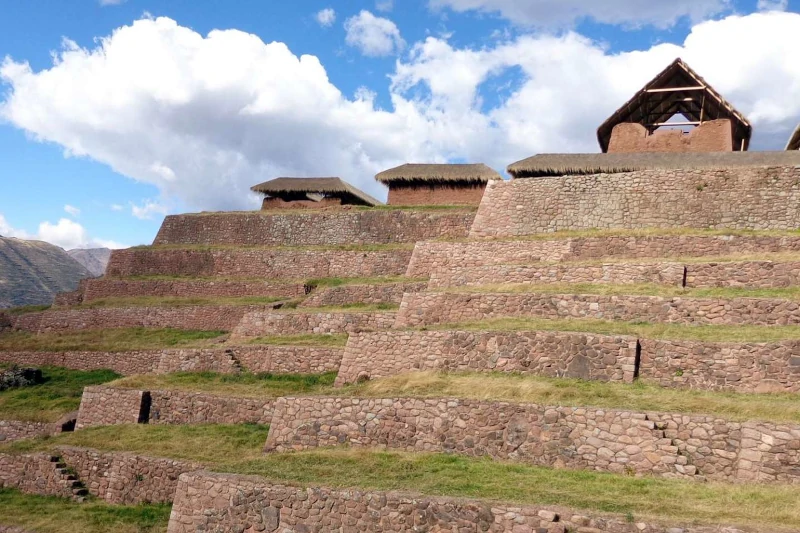
For those who want a shorter trek, the Huchuy Qosqo Trek is a great alternative to the classic Inca Trail. This trek takes you through beautiful landscapes, passing by Inca ruins and stunning views of the surrounding mountains.
The Huchuy Qosqo Trek typically takes 2-3 days to complete, making it a great option for those who are short on time or want a less physically demanding trek. Despite its shorter length, the trek still offers stunning views of the surrounding mountains, as well as the chance to see Inca ruins such as Huchuy Qosqo and Ollantaytambo.
The trek also takes you through traditional Andean villages, providing cultural experiences along the way. You’ll have the chance to see the local farming practices and learn about the unique way of life in the Andes.
As with the other treks, be sure to choose an operator that is committed to sustainable tourism practices and has a positive impact on the local communities.
Choquequirao Trek
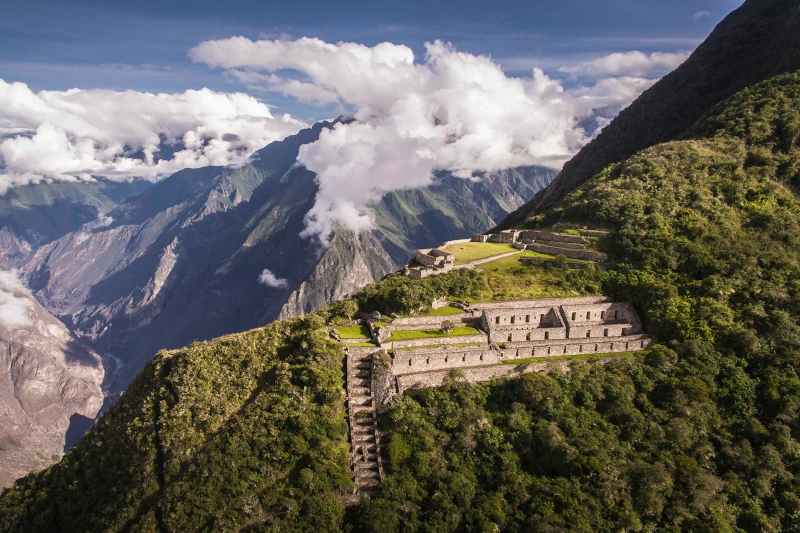
The Choquequirao Trekis another great alternative to the classic Inca Trail. This trek takes you to the impressive ruins of Choquequirao. It’s a great choice for those who want a more off-the-beaten-path experience while still getting to explore Inca ruins.
The Choquequirao Trek is a challenging trek that typically takes 4-5 days to complete. While it requires a higher level of fitness, it offers the chance to explore lesser-known Inca ruins and experience a more remote part of Peru.
The highlight of the trek is the impressive ruins of Choquequirao, which are often referred to as the “sister city” of Machu Picchu. The ruins are located high above the Apurimac River and offer stunning views of the surrounding mountains. In addition to Choquequirao, the trek also takes you through other lesser-known ruins such as Pinchaunuyoc and Raqaypata.
The Choquequirao Trek also offers beautiful natural scenery, including views of snow-capped mountains and the Apurimac Canyon. Along the way, you’ll also have the chance to see traditional Andean communities and learn about their way of life.
Why You Should Trek to Ausangate Cusco – Ausangate Mountain
An expedition to Ausangate cliff is one of spontaneous charm, living history, and archaic spirituality. The Quechua people consider Ausangate Mountain as one of the holy mountains in all of the Andes. It is the fifth tallest mountain in Peru standing at 20,945 feet above sea level.
The 6-Day high-altitude Ausangate trek while being a visually startling adventure, also it is something like a spiritual pilgrimage. This 6- day hike takes you through high passes. It is challenging and suggested to only seasonal hikers who have experience of hiking at high peaks.
Throughout this Ausangate trek, you will soar and swoop through mystical glaciers, thermal lakes, mountain ranges, green mossy passes, and immense snowy mountains. You will also come across local communities and Andean village culture. You will get a glimpse of interesting wildlife like condors, chinchillas, and so on.
The Quechua people believe that the mountain Apus has a spirit residing there to protect the local people in the highlands. Ausangate Mountain is believed to be surrounded by eleven other sacred Apus of the Cusco area.
The route of the Ausangate trek is believed to be the most heartfelt pilgrimage in the Andes and also it is one of the renowned hikes in Peru.
Difficulties in the Trekking Route
The Ausangate trek is considered challenging and arduous. It is ideal for those who have a good level of fitness in the multi-day trekking hike experience at high elevations. You need to be acclimated to avoid altitude sickness.
Another significant factor is steep sections in the route, 16000+ feet elevation passes, and the weather. The weather can be unpredictable and low temperature, cold and snowy. Your tolerance level to this weather decides your sustainability of the trek route.
The two notable mountain passes are Arapa Pass and Palomani pass.
Best Time to Go
From May to September, is a suitable time for all the Peru hiking tours. In this dry season, the weather in the Andes is sunnier and days are clear so you can enjoy the lovely scenario. During the rainy season, it gets slippery and is somewhat challenging.
Summing-up
After going through this article, we hope you have got all the necessary information about the Ausangate mountain trek. Now, you need to make up your mind when you want to enjoy the scenic and sacred beauty of Ausangate trek routes.
A person who is familiar with high elevation trek routes will be helpful for your safe journey.
When was the Inca Trail built? How long did it take?
The Inca Trail, a breathtaking network of ancient paths stretching across the rugged Andean landscape, has captivated the imaginations of historians, archaeologists, and adventure enthusiasts alike. This intricate system of trails, connecting various Inca sites, has long been a subject of fascination for those seeking to unravel the mysteries of the past.
In this article, we will explore the origins of the Inca Trail, delving into its construction timeline and shedding light on the engineering marvel that it represents. Join us as we journey through time to uncover the story of when the Inca Trail was built and the remarkable effort it took to create this enduring testament to the prowess of the Inca civilization.
Unraveling the origins: The Inca Trail and its historical significance
The Inca Trail, a symbol of the Inca Empire’s greatness, has a rich historical background. Its construction showcases the empire’s engineering prowess. Understanding when the Inca Trail was built is crucial to appreciating its significance.
The Inca Empire, existing from the 13th to the 16th century, was the largest empire in pre-Columbian America. It was a period of rapid expansion and development. The Inca Trail built during this time connected administrative centers, religious sites, and settlements.
The modern Inca Trail route was part of a larger road network known as the Qhapaq Ñan. This network spanned approximately 30,000 km (18,641 miles) and traversed various terrains. Also, it stretched across modern-day Colombia, Ecuador, Peru, Bolivia, Argentina, and Chile. The Inca Trail built during the empire’s peak facilitated communication and trade.
Many historians believe the trail’s development began during the reign of Pachacuti Inca Yupanqui (1438-1471). He was a visionary leader who transformed the kingdom of Cusco into the Inca Empire. Under his rule, the empire experienced significant growth.
Pachacuti Inca Yupanqui was also responsible for constructing Machu Picchu. This iconic citadel, perched high in the Andes, is a prime example of Inca architectural ingenuity. The Inca Trail built during his reign connected the empire’s various sites.
The Inca Trail’s historical significance extends beyond its construction. It played a vital role in the empire’s efficient administration. The trail allowed for quick movement of soldiers, officials, and messages.
The intricate network of paths also highlights the Inca civilization’s advanced engineering skills. Expert masonry, suspension bridges, and staircases carved into mountains are evident. The Inca Trail built under Pachacuti Inca Yupanqui’s rule remains a testament to their abilities.
The construction process: Techniques, challenges, and timeline
The Inca Trail’s construction involved remarkable techniques, overcoming various challenges, and spanning an extensive timeline. The Inca Trail built during the empire’s zenith is a testament to their engineering capabilities.
Inca engineers employed advanced techniques to create the intricate trail system. They used local materials such as stone, wood, and rope to build roads, bridges, and staircases. The Inca Trail built in this manner showcased their resourcefulness.
One significant challenge was the diverse terrain, including mountains, valleys, and rivers. The Inca overcame this by incorporating suspension bridges, stone-paved roads, and mountain staircases into the trail’s design.
Another challenge was the harsh Andean weather. Heavy rainfall and landslides posed risks to the trail’s integrity. Ingenious drainage systems were developed to address this issue, ensuring the trail’s longevity.
The construction timeline remains a subject of debate among historians. However, many believe that the trail’s development began during Pachacuti Inca Yupanqui’s reign. The Inca Empire flourished under his rule, with numerous infrastructural projects initiated.
The temples of Machu Picchu, an architectural marvel, were also built during this period. The citadel remains one of the most iconic and well-preserved examples of Inca engineering.
The Inca Trail’s full extent was not discovered until the early 20th century. American explorer Hiram Bingham is credited with bringing the trail to global attention. His expeditions unveiled the trail’s scope and the hidden treasures of the Inca Empire.
Today, the Inca Trail is considered an extraordinary example of the Inca Empire’s engineering expertise. The Inca Trail built during their reign remains a testament to their ability to overcome challenges and innovate.
In summary, the construction process of the Inca Trail involved remarkable techniques, addressing numerous challenges, and an extensive timeline. This iconic trail continues to be a symbol of the Inca Empire’s brilliance and perseverance.
The Inca Trail today: Preservation efforts and the legacy of an ancient civilization
The Inca Trail built centuries ago continues to captivate the world today. Preservation efforts and the legacy of the ancient civilization are key to its enduring allure.
Conservation efforts include limiting the number of visitors allowed on the trail. By restricting access, the Peruvian government aims to preserve the trail’s integrity and prevent degradation.
Additionally, regular maintenance work is carried out along the trail. This includes clearing vegetation, repairing stonework, and ensuring the safety of the trail for hikers. These efforts help maintain the Inca Trail and preserve the legacy of the Inca Empire.
The Inca Trail’s legacy extends beyond the path itself. It represents the Inca Empire’s innovative spirit, engineering prowess, and cultural heritage. The trail has become a symbol of the ancient civilization’s achievements.
Many tourists embark on the Inca Trail to experience the rich history of the ancient Inca civilization. The trek offers a glimpse into the lives of the people who built and used the trail. Thus, the Inca Trail remains a significant part of our global heritage. Preservation efforts ensure that the trail continues to inspire and captivate.
For those seeking an alternative trek to Machu Picchu, the Lares Trek is a perfect choice. This route showcases stunning landscapes, traditional Andean villages, and lesser-known Inca sites. This unforgettable journey will immerse you in the rich history and breathtaking beauty of the Andes.
Why the Lares Trek is the Perfect Alternative to the Inca Trail
The Lares Trek, the unsuspected alternative to the traditional Inca trail. Embarking on a journey to Machu Picchu is a dream for many adventurers.
This path offers a blend of natural beauty, cultural richness, and fewer crowds. It’s a route that promises an authentic Andean experience. Perfect for those seeking tranquility and connection.
Why consider the Lares Trek over the popular Inca Trail? It’s not just about avoiding the crowds. It’s about immersive cultural encounters and stunning landscapes.
Unveiling the Hidden Treasures: The Scenic Beauty of the Lares Trek
In the heart of Peru, the Lares Trek emerges as a breathtaking journey. It snakes through the Andes, revealing nature’s masterpieces. Every step on this trek promises an unforgettable scenic experience.
Unlike its famous cousin, the Inca Trail, the Lares Trek offers solitude and untouched beauty. It weaves through high mountain passes, lush valleys, and tranquil lakes. This path lets adventurers connect deeply with nature’s wonders.
The trek starts with vibrant, rolling hills that set the tone for the adventure. Soon, it introduces trekkers to the high Andean landscapes. Here, the air feels fresher, and the sky, a deeper blue.
A Tapestry of Colors and Cultures
As the journey unfolds, the Lares Trek reveals a tapestry of stunning vistas. The path stands next to glacial lakes that mirror the sky. Their turquoise waters contrast sharply with the rugged terrain.
The trek also passes through small, traditional villages. These communities maintain centuries-old ways of life. Trekkers can witness locals herding llamas and alpacas, adding a rich cultural layer to the scenic trek.
One cannot ignore the majestic peaks that accompany you along the way. These guardians of the land stand tall, covered in snow. They offer a spectacular backdrop to the vibrant landscapes below.
Nature’s Varied Palette
The diversity of the landscape is astounding. One moment, you’re navigating rocky trails; the next, you’re in blooming meadows. The Lares Trek truly showcases the varied palette of the Andes.
Crossing high mountain passes provides a sense of achievement. From these vantage points, the panoramic views are unparalleled. The feeling of standing atop the world is both humbling and exhilarating.
Wildlife sightings add excitement to the trek. From majestic condors soaring above to shy vicuñas grazing, nature’s inhabitants enrich the experience. They remind us of the wildness that still governs these lands.
Bridging Landscapes and Legends
The trek is more than just a physical journey; it’s a bridge to the past. Along the way, ancient ruins whisper stories of the Inca civilization. These historical sites are less crowded, allowing for a more intimate exploration.
Waterfalls also mark the journey, offering refreshing stops. The sound of falling water complements the landescapes. These natural showers bring a sense of peace.
Every turn on the Lares Trek presents a new wonder. The journey is a continuous dialogue with nature. It invites reflection and fosters a deep connection with the earth.
The Lares Trek: A Journey Through the Clouds
Ascending further, trekkers enter realms where clouds and land meet. This ethereal landscape feels like walking through a dream. The misty atmosphere adds a mystical quality to the trek.
This section of the Lares Trek is surreal. Cloud forests envelop the path, home to diverse flora and fauna. The moisture-laden air nurtures a rich biodiversity, making each step a discovery.
A Cultural Odyssey: Immersive Experiences Along the Lares Route
The Lares Trek is not just a journey through nature. It’s a deep dive into the heart of Andean culture. This path takes you through the Lares Valley, where the fabric of local life unfolds.
The trek is a gateway to experiences far beyond the average tourist trail. It offers a unique glimpse into the lives of local communities. Here, every step tells a story of tradition and resilience.
Starting from the Sacred Valley, the trek immediately sets a tone of cultural richness. The valley, with its fertile lands and historical sites, is the perfect introduction to the Andean way of life.
Villages Untouched by Time
As the Lares Trek winds its way through the mountains, small towns emerge. These communities live much as they have for centuries. They offer a rare opportunity to see traditional Andean life in action.
In these villages, local families open their homes and hearts to travelers. Staying with a local family is more than just a place to sleep. It’s an invitation to understand their world.
Children herd llamas and alpacas, just as their ancestors did. Weavers create textiles with patterns passed down through generations. These moments provide a profound connection to the Andean spirit.
A Tapestry of Traditions
The cultural tapestry of the Lares Trek is rich and varied. Each community along the route has its own festivals and traditions. These celebrations are vibrant displays of identity and heritage.
Music and dance are integral to these festivals. They tell stories of the community, the earth, and the cosmos. Participating in or witnessing these celebrations is a highlight of the Lares experience.
Handicraft markets along the trek showcase the artisanal skills of the locals. Each piece reflects the natural beauty and cultural stories of the Lares Valley. Purchasing these crafts supports the community and brings a piece of the journey home.
Crossing Paths with History
The Lares Trek to Machu Picchu weaves through landscapes filled with ruins. These sites are less frequented, allowing for a serene exploration. They stand as silent witnesses to the Inca’s architectural prowess.
Hiking the Lares Trail brings travelers face to face with the Urubamba Mountain Range. The range is not just a natural wonder. It’s a sacred backdrop to the lives of those who live here.
A Journey Through the Seasons
The Lares Trek is a path of discovery, regardless of the season. Dry seasons offer clear skies and stellar views, while the wet season brings lush landscapes. Each season paints the trek in a different light, offering varied experiences.
Choosing the Road Less Traveled: Advantages of the Lares Trek Over the Inca Trail
In the quest to visit Machu Picchu, many overlook the Lares Trek. Yet, this path offers unmatched experiences. It leads adventurers through the heart of the Andes, avoiding crowded trails.
The Lares Trek starts in the Sacred Valley, immediately setting a tranquil tone. From there, it winds through remote areas, offering serenity. This peace is a luxury not found on the more popular Inca Trail.
Choosing to hike the Lares Trek means embracing the road less traveled. It’s a decision to experience Peru in its most authentic form. Here, the journey to Machu Picchu becomes as significant as the destination.
A Journey Through Authentic Andean Culture
One of the Lares Trek’s unique advantages is its cultural immersion. The trail passes through small towns where traditional life continues. These encounters offer a glimpse into the daily lives of the Andean people.
In these communities, travelers can interact with local villagers. This interaction is an opportunity to learn about their traditions and lifestyles. Such experiences are rare on the more trafficked routes to Machu Picchu.
The Lares Trek also allows for overnight stays in these towns. These stays deepen the cultural exchange. Guests can share meals and stories with host families, adding a personal touch to their journey.
The Natural Wonders of the Lares Valley
The Lares Trek unveils the untouched beauty of the Lares Valley. Its landscapes are diverse, ranging from lush valleys to high mountain passes. This variety ensures that every day on the trail brings new sights.
At high altitude, the air is crisp and the views are spectacular. The trek reaches its highest point amidst breathtaking panoramas. Here, trekkers feel a sense of achievement and connection with nature.
Wildlife flourishes along this less trodden path. The absence of crowds allows for more intimate encounters with nature. This solitude is a key advantage for those seeking a genuine wilderness experience.
Advantages of Timing and Flexibility
The Lares Trek offers flexibility that the Inca Trail cannot match. It doesn’t require permits that sell out months in advance. This flexibility makes planning a trip to Machu Picchu more accessible.
Additionally, the Lares Trek is shorter and doable in less time. Day tours range from two to four days, fitting various schedules. This shorter duration allows for a focused and enriching experience.
Traveling during the dry seasons offers clear skies and stable weather. However, the Lares Trek is less affected by seasonal crowds. This makes it a viable option year-round, unlike the Inca Trail, which can get extremely busy.
The Path to Wellness and Challenge
Trekking the Lares Trail is also a journey of personal growth. It challenges trekkers physically, with its varied terrain and altitude. Yet, it rewards them with a sense of accomplishment and renewal.
The physical demands of the trek are worth it because of the landscapes. The natural beauty and quietude provide a backdrop for reflection. This combination of challenge and tranquility.
Moreover, the Lares Trek’s remote paths foster a sense of adventure. They encourage trekkers to push their limits.
The Lares Trek as a Premier Choice
Choosing the Lares Trek to Machu Picchu is opting for an authentic adventure. It’s a decision to engage deeply with Peru’s culture, nature, and history. This trek offers a unique blend of experiences that the Inca Trail cannot.
Winay Wayna on the Inca Trail
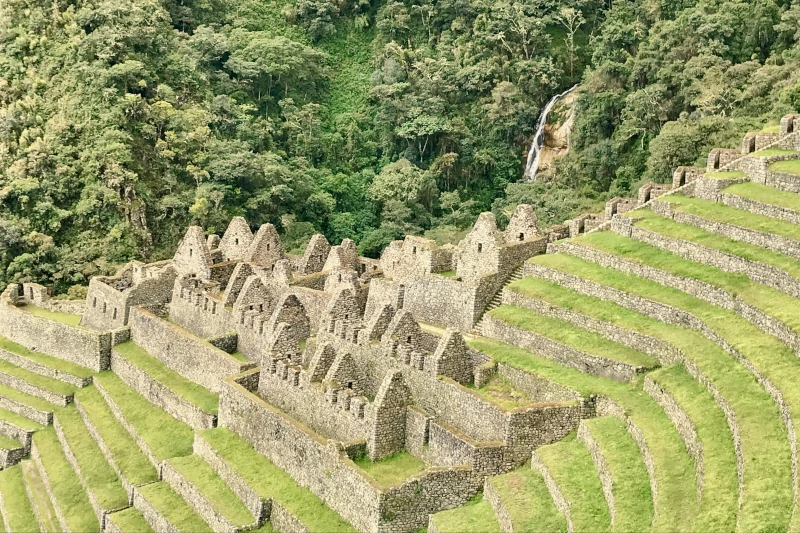
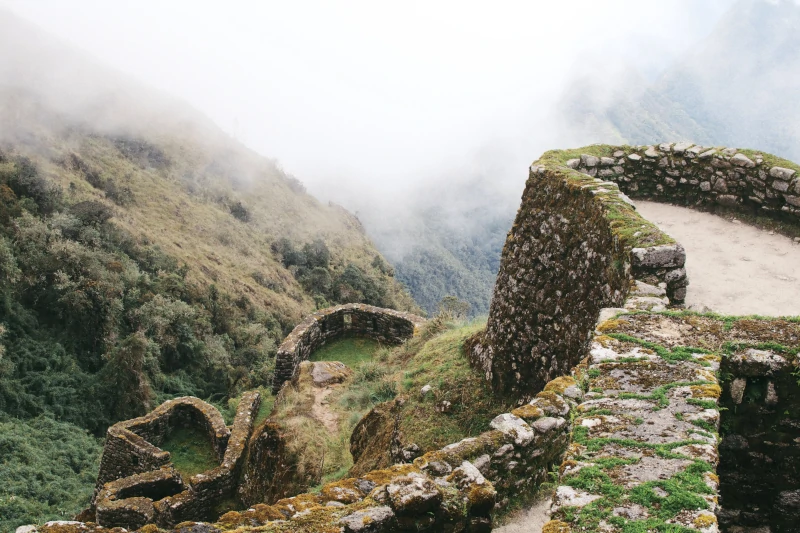
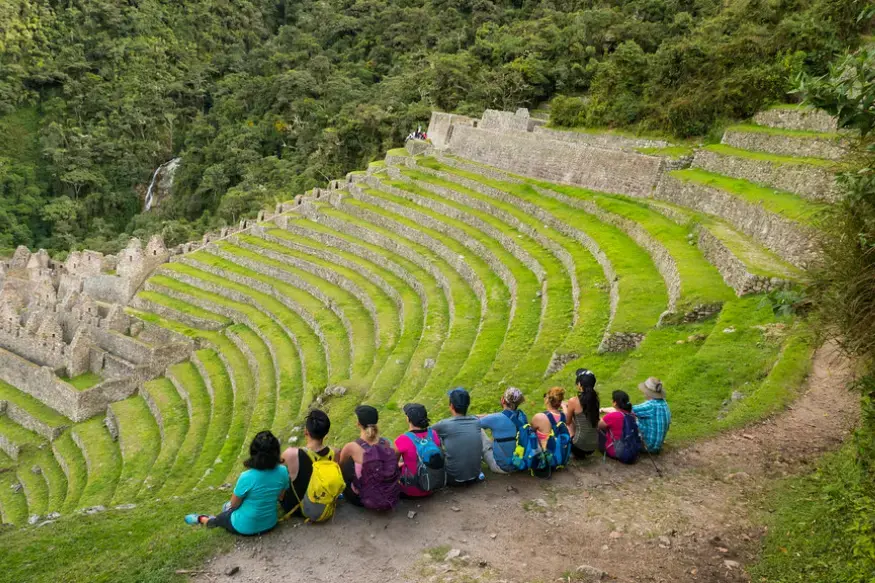
Winay Wayna on the Inca Trail is one of the most important, emotional, and visually stunning archaeological sites along the legendary route to Machu Picchu. Built on a steep mountainside and surrounded by dense cloud forest, Winay Wayna represents the final spiritual, ceremonial, and physical preparation point before reaching the Inca citadel.
For many hikers, Winay Wayna is not just another set of ruins—it is the true heart of the Inca Trail.
What Is Winay Wayna on the Inca Trail?
Winay Wayna is a large Inca archaeological complex located near the end of the Classic Inca Trail. Its name comes from Quechua and means “Forever Young,” referring to a native orchid that blooms year-round in the area.
Within the Inca Trail network, Winay Wayna served multiple purposes:
A ceremonial and ritual center
An agricultural production site
A resting place for pilgrims and elites traveling to Machu Picchu
Its strategic position and architectural complexity make Winay Wayna one of the most significant sites on the entire route.
Location and Elevation of Winay Wayna
Winay Wayna is located inside the Historic Sanctuary of Machu Picchu, in the Cusco region of Peru.
Elevation: 2,650 meters / 8,694 feet
Inca Trail day: Day 3 of the Classic Inca Trail
Nearby sites: Phuyupatamarca (before), Inti Punku / Sun Gate (after)
Distances on the Inca Trail
Phuyupatamarca → Winay Wayna: 4–5 hours
Winay Wayna → Inti Punku: ~1 hour
Winay Wayna → Machu Picchu: ~2 hours
This placement makes Winay Wayna the last major archaeological site before Machu Picchu.
History of Winay Wayna
Archaeological evidence suggests that Winay Wayna was constructed during the reign of Pachacuti Inca Yupanqui in the 15th century—the same ruler responsible for the expansion of the Inca Empire and the construction of Machu Picchu.
Winay Wayna formed part of the royal pilgrimage route, used by priests, nobles, and messengers. Unlike many Inca sites, it was never destroyed by Spanish conquistadors, remaining hidden beneath thick vegetation for centuries.
Main Functions of Winay Wayna
Religious rituals associated with water and fertility
Agricultural cultivation using advanced terrace systems
Temporary lodging for elite travelers
Architecture and Layout of Winay Wayna
Agricultural Terraces
Winay Wayna features more than 20 finely engineered terraces cascading down the mountainside. These terraces:
Prevent soil erosion
Control humidity and temperature
Reflect sophisticated Inca agricultural knowledge
Urban and Ceremonial Sectors
The complex is divided into two main areas:
Lower sector: residential rooms and storage spaces
Upper sector: ceremonial buildings, temples, and fountains
Sacred Water Fountains
One of the most remarkable elements of Winay Wayna is its stone water fountain system. Narrow channels guide mountain water through a sequence of fountains, many of which still function today—over 500 years later.
Water symbolized life, renewal, and spiritual purification in Inca cosmology.
Spiritual Significance of Winay Wayna on the Inca Trail
Winay Wayna is widely believed to have been a ritual purification site. Pilgrims would stop here to cleanse themselves spiritually before entering Machu Picchu.
The combination of:
Constant flowing water
Mountain silence
Misty cloud forest surroundings
creates a powerful and meditative atmosphere. Many trekkers describe Winay Wayna as more intimate and spiritually intense than Machu Picchu itself.
Winay Wayna lies within the Andean cloud forest, one of the most biodiverse ecosystems in Peru.
Plant Life
Native orchids (including the Winay Wayna flower)
Bromeliads
Mosses and giant ferns
Dense subtropical vegetation
Wildlife
Hummingbirds
Butterflies
Andean bird species
Rare sightings of spectacled bears
How to Get from Winay Wayna to Machu Picchu
According to many historians and professional guides, the journey to Machu Picchu along the Inca Trail traditionally lasted around three days, following a carefully designed pilgrimage route. This route commonly began in the community of Piscacucho (Km 82), which remains the official starting point of the Classic Inca Trail today.
Along the way, travelers passed through important Andean communities and ceremonial sites such as Cusichaca (Km 82), Huayllabamba (Km 88), and Chachabamba (Km 104). These locations were not random stops but strategic points used for rest, agriculture, and ritual preparation before reaching the most sacred zones of the trail.
Winay Wayna was one of the final and most important stops on this journey. Located just 3 miles (4.7 kilometers) from Machu Picchu, the site served as a ceremonial and purification center before the last ascent to the Sun Gate.
Today, Winay Wayna remains an essential stop along both the Classic Inca Trail and the Short Inca Trail. The ruins are located a short walk from the official campsite and are accessible only to permitted hikers, generally between 8:00 a.m. and 8:00 p.m., under the supervision of licensed guides.
Can You Visit Winay Wayna Without Hiking the Inca Trail?
No. Winay Wayna is only accessible via the Inca Trail.
There is no road, train, or alternative public access.
Rules and Conservation at Winay Wayna
Winay Wayna is protected by the Peruvian Ministry of Culture and strict regulations apply:
No climbing on ruins
No drones
No littering
Guided access only
These measures ensure the preservation of the site for future generations.
Practical Tips for Visiting Winay Wayna
Dress in layers due to changing weather
Carry a rain jacket, even in dry season
Wear good hiking shoes (stone steps can be slippery)
Respect the silence and sacred nature of the site
Winay Wayna Compared to Other Inca Trail Sites
Interesting Facts About Winay Wayna
One of the most photographed sites on the Inca Trail
Its hydraulic system still works today
Often considered more emotionally powerful than Machu Picchu
Relationship Between Winay Wayna and Machu Picchu
Winay Wayna served as the final preparation site for pilgrims before entering Machu Picchu. The architectural similarities and ceremonial layout suggest both sites were part of the same sacred network.
Why Winay Wayna Is One of the Most Important Sites on the Inca Trail?
Winay Wayna on the Inca Trail represents:
The peak of Inca engineering
The spiritual essence of the pilgrimage
The emotional transition before Machu Picchu
It is where physical effort meets spiritual meaning.
Which is better Manu or Tambopata Jungle?
Which is better Manu or Tambopata Jungle?
Are you planning to travel to Peru to see its amazing wildlife? Then you could find it difficult to decide between Manu and Tambopata.
Both are equally fascinating, but depending on your needs. One may offer certain advantages over the other. So, which is better Manu or Tambopata Jungle?
Accessibility:
Because of its isolation, Manu National Park is regarded as one of the planet’s biodiverse locations. Even wildlife researchers can reach it that easily! You must take a 40-minute flight to Boca Manu before taking a 5–6-hour boat ride to the jungle lodges where you will be staying to reach the Manu jungles.
Since Tambopata is not as secluded as Manu, you should be ready for some crowds. Although it is not a lot, Tambopata receives a lot more daily visits. This is because it is so easily accessible; all it takes is a 30-minute flight from Cusco to Puerto Maldonado. You can then travel to the jungle lodges by boat along the Tambopata River.
Wildlife Spotting:
With more than 1200 plant species, 200 mammal species, 150 reptiles, and amphibian species, and 1000 butterfly species, the Manu National Park is one of the best places in Peru to watch wildlife. It will undoubtedly be one of the greatest life experiences you will ever have. River otters, black caimans, capybaras, Brazilian tapirs, giant armadillos, scarlet macaws, Andean cock-of-the-rock, and black spider monkeys are among the animals that are frequently spotted.
Tambopata Jungle is especially excellent for wildlife viewing, particularly birdwatching expeditions, with around 1200 plant species, 160 mammal species, 100 reptile and amphibia species, 650 bird species, and 1200 butterfly species. The Chuncho Macaw Clay Lick, which feeds more than 100 macaws, parrots, and parakeets every day, is the most visited site in the Tambopata.
Costs of the Tours:
The Manu wildlife excursions are suited for visitors who intend to stay in Peru for longer than 2 weeks because they need a lot of time and effort. The wildlife tour alone will take anything from 4 to 9 days, depending on your needs. It is more interesting than Tambopata, but it is also more expensive because you need a budget of $300 to $400 every day.
Tambopata is more suitable for visitors who intend to stay in Peru for less than a week. This is because it is not a particularly difficult place to visit and practically all wildlife excursions last for approximately 4-5 days. Because of the crowds, it is less entertaining but also the least expensive, costing only approximately $100 to $200 per day.
Which is better Manu or Tambopata Jungle?
The dry season of Peru, lasts from April to September. It is the best time to visit the jungles of Manu and Tambopata since it increases the chance of spotting wildlife.
Whatever place you decide to go, it will be equally fascinating and leave a lasting impression on you. It all comes down to your preferences, such as the number of days you want to spend in Peru, how much budget you have, and what kind of species you want to see!
The Best Carnivals in Peru
Celebration of Carnivals Starts during Which Month of the Year in Peru?
Where are These Carnivals in Peru?
1. Carnivals in Cajamarca
2. Carnivals in Cusco
Tambopata Chuncho Macaw Clay Lick
Tambopata Chuncho Macaw Clay Lick
The Tambopata Chuncho Macaw Clay Lick is one of the best places in the world to see macaws, parrots, and parakeets.
This comprehensive guide will help you know everything about the Tambopata Chuncho Macaw Clay Lick. It includes tips on what to expect, the best times to visit, what to pack, and much more.
What is the Chuncho Macaw Clay Lick?
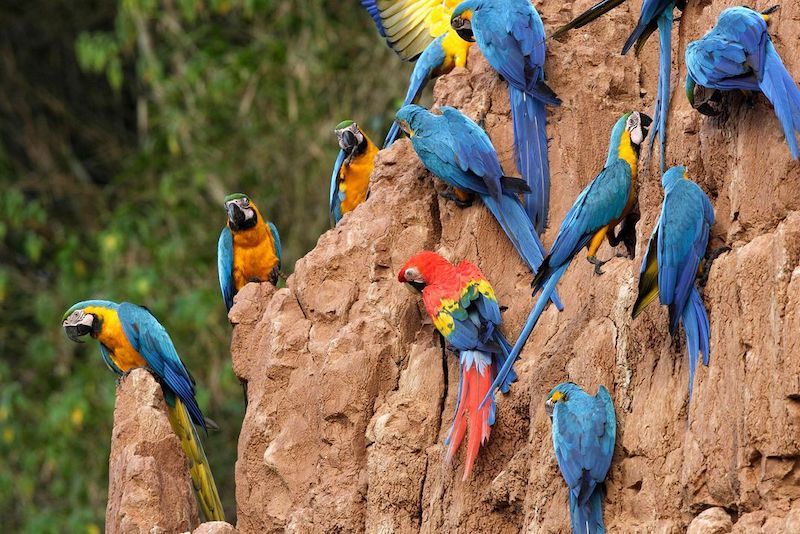
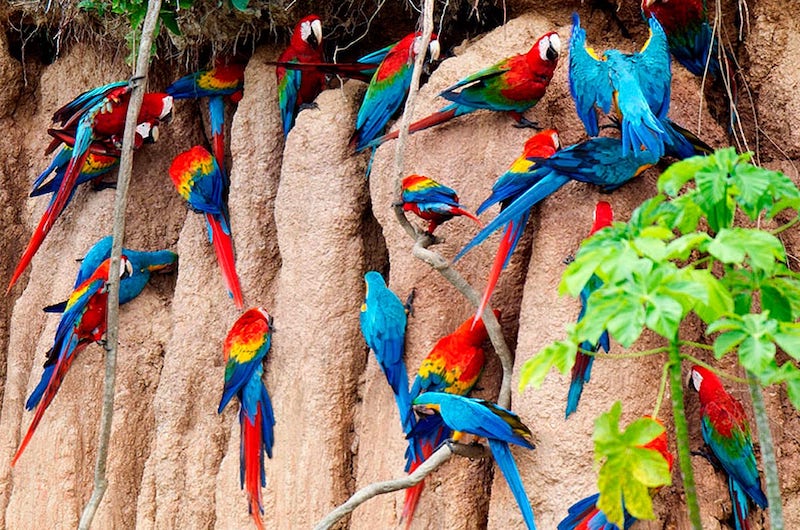
The Chuncho Macaw Clay Lick is the largest in the world. It feeds about hundreds of macaws, parrots, and parakeets in a single day making it the bird lover’s paradise!
There are about eight species of macaws reportedly seen in the Chuncho Macaw Clay Lick . This includes the Blue & Yellow Macaw, Scarlet Macaw, Red & Green Macaw, and the Blue-headed Macaw.
The reason why these macaws and other parrots visit the clay licks is because of the high salt content. Researchers believe that salt helps to remove toxins from the birds’ bodies.
What to expect in a Chuncho Macaw Clay Lick Tour?
A Chuncho Macaw Clay Lick Tour is usually for 3 days and 2 nights. The costs being about USD 400-500 depending on your requirements.
When you arrange for a tour of the Chuncho Macaw Clay Lick, you will be picked up from the airport or the bus terminal as well. Then you will be taking a boat ride (1 hour) to the forest lodge in Tambopata National Park. After having lunch in the forest lodge, you will have the chance to see different animals in Tambopata through a wildlife excursion. You will also be provided with dinner at the forest lodge.
On the second day, you will have to wake up early in the morning and get ready to go to the Chuncho Macaw Clay Lick. A boat ride (1.5 hours) will take you to the Chuncho Macaw Clay Lick from the forest lodge. When you are there, you will see hundreds of macaws, parrots, and parakeets eating clay, while communicating with each other.
After that, you will head back to the forest lodge and will be served breakfast. There will be another wildlife excursion, and after that lunch will be served. You will also get the chance to see nocturnal animals after dinner.
On the third day, you will be heading out early in the morning to see the animals in Tambopata. After coming back to the forest lodge, you will be served breakfast. Then you will be taken back to the starting point via a boat ride, and if time permits, you will be dropped off at the airport or the bus terminal.
What is the best time to visit the Chuncho Macaw Clay Lick?
The best time to visit the Chuncho Macaw Clay Lick is in the dry season of Peru, which is from April to September because there are many fruits and seeds during this season.
Sometimes these macaws and parrots eat toxic fruits/seeds, then they eat the clay which is rich in salt content from the clay licks, and remove the toxins from their bodies.
Remember to visit early in the mornings because that is when you can see more than hundreds of macaws, parrots, and parakeets in the Chuncho Macaw Clay Lick.
What should you pack for Chuncho Macaw Clay Lick?
If you arrange for a tour most of the essentials will be provided by your tour operator. However, make sure to pack warm comfortable clothing, hats, sunscreen, socks, cameras, binoculars, mosquito repellents, and flashlights for your trip.
Spanish conquest of the Inca Empire
The Spanish conquest of the Inca Empire remains a defining moment in the annals of history. It marked the downfall of a mighty civilization and the beginning of an era of European colonization in the Americas. This dramatic episode unfolded between 1532 and 1572. This historical event brought together two distinct worlds, culminating in an unparalleled clash of cultures, beliefs, and military prowess.
In this article, we delve deep into the myriad factors that contributed to the Spanish conquest. Thus, we will examine the political, social, and economic context of the Inca Empire, as well as the motives and strategies employed by the Spanish conquistadors. As we journey through the intricate web of alliances, battles, and betrayals that defined this tumultuous period, we aim to shed light on the enduring legacy of the Spanish conquest, its impact on indigenous populations, and the subsequent transformation of the Andean region.
Prelude to conquest: Inca society and the Spanish motivations
The Inca Empire was the largest and most sophisticated pre-Columbian civilization in the Americas. Stretching along the Andes from modern-day Colombia to Chile, the empire was renowned for its remarkable achievements in agriculture, architecture, and governance. One of its most impressive feats was the construction of the Qhapaq Ñan. The Qhapaq Ñan was a vast network of roads and bridges that connected distant provinces. Thus, it facilitated trade, communication, and military expansion. This extensive infrastructure allowed the Incas to build breathtaking cities like Machu Picchu, a testament to their extraordinary engineering skills.
Inca society was organized around a strict hierarchical system. The Sapa Inca or emperor was at the hierarchy’s top, followed by the nobility and then the commoners. Agriculture formed the backbone of the Inca economy. Terraced fields provided sustenance for the population and tributes to the state. Also, religion played a central role in Inca life. The Incas had a pantheon of gods and rituals that intertwined with every aspect of their existence.
On the other side of the Atlantic, Spain was emerging as a major global power. The Spanish forces were driven by the ambition to explore new territories, amass wealth, and spread Christianity. The successful conquest of the Aztec Empire in Mexico by Hernán Cortés in 1521 fueled the Spanish appetite for further expansion.
The Spanish motivations for the conquest of the Inca Empire were a potent mix of greed, ambition, and religious zeal. Thus, it set the stage for a brutal and relentless campaign that would ultimately lead to the downfall of a great civilization. The Spanish conquistadors were poised to exploit the vulnerabilities of Inca society. Thus, they unleashed a torrent of change that would reshape the Andes forever.
A collision of cultures: Key battles and turning points
The Spanish conquest of the Inca Empire was marked by a series of pivotal battles and events. The initial contact between the Spanish conquistadors, led by Francisco Pizarro, and the Incas occurred in 1532. During that time the Inca Empire was weakened by internal strife. This strife followed the death of Emperor Huayna Capac and a bitter civil war between his sons, Atahualpa and Huáscar.
The first major turning point came with the capture of Atahualpa, the newly crowned Sapa Inca, during the Battle of Cajamarca. Pizarro and his men numbered around 168. However, this small Spanish army lured Atahualpa into a trap by inviting him to a meeting under the guise of friendship. The Spanish were armed with advanced firearms and horses. Thus, they launched a surprise attack on the unsuspecting Inca forces, who were largely unarmed. In the ensuing chaos Atahualpa was taken hostage.
Holding Atahualpa captive, the Spanish demanded an enormous ransom in gold and silver, which the Incas dutifully provided. Despite fulfilling the ransom terms, Atahualpa was ultimately executed by the Spanish in 1533. The Spanish then installed a puppet ruler, Manco Inca Yupanqui. However, Manco Inca eventually rebelled against Spanish control, leading to a series of unsuccessful uprisings.
The Spanish conquest was further facilitated by the support of various indigenous groups. These native allies played a crucial role in the Spanish campaigns, providing invaluable intelligence, manpower, and logistical support.
Then, the Spanish continued to consolidate their control over the Inca heartland. Thus, the empire’s once-mighty cities and fortresses fell, one by one, to the relentless advance of the conquistadors. The last bastion of Inca resistance, Vilcabamba, was finally captured in 1572, marking the end of the Inca Empire and cementing the Spanish conquest as a brutal and transformative moment in the historyof the Americas.
The aftermath and lasting impacts of the Spanish conquest
The Spanish conquest of the Inca Empire had profound and long-lasting consequences for the indigenous populations, the Andean region, and the world at large. The immediate aftermath was marked by a rapid decline in the native population. This happened primarily due to the spread of Old World diseases such as smallpox, measles, and influenza, to which the indigenous people had no immunity. These epidemics ravaged entire communities, drastically reducing their numbers and leaving them vulnerable to exploitation by the Spanish colonizers.
The conquest also led to significant cultural, political, and economic transformations in the Andean region. As the Spanish Crown sought to consolidate its control, traditional Inca institutions and practices were dismantled. These ancient traditions were replaced by a colonial administration that favored Spanish customs and norms. The Catholic Church played a central role in this process, actively seeking to convert the indigenous population to Christianity and eradicate their traditional beliefs and rituals.
Economically, the Spanish conquest disrupted the Inca’s sophisticated agricultural systems. This event redirected resources towards the extraction of precious metals such as gold and silver. The infamous mita system, a forced labor regime, was introduced to exploit the native population in mines and plantations, further exacerbating the decline in their living conditions and well-being.
Despite these devastating consequences, the legacy of the Inca Empire endured in the form of cultural and architectural remnants that continue to captivate the world. The descendants of the Incas have preserved many of their ancestral traditions, languages, and customs, ensuring that their unique heritage is not entirely lost to history.