You do not have to wait until the last moment and we are taking reservations already for the next season; once you unsure your preferred start date, choose a date and we can adjust this until the end of the year. Depending on availability; after this we need to close off reservations to make sure we will be well organized and ready for the release of permits of 2021.
No worries, we await you and are always so excited to go with you on this beautiful and sacred journey to Machu Picchu and will do everything possible to make this your best vacation in Peru.
Why Hiking Inca Trail is high demand of Peru?
Most travellers are not aware of the 500 permits/day limit in the Inca trail expeditions. In addition, most travellers do not know that this limit applies not only to trekkers entering the trail each day but also to all support staff required tour guides, chefs and porters.
To preserve the integrity of this famous part of what the Inca called the Qhapaq Ñan, no hooved pack animals are allowed along the majority of Inca path. We, therefore, have to rely on people (Inca tours – support staff) to help us carry camping gear, food, sleeping and cooking supplies. Better known as Runners = Chaskis in ancient times and well renowned for their lightning running speed along the paths to relay messages across the vast expanse of the Inca Empire, support staff is vital to the operating of treks on the Inca Trail.
Due to such regulation, the permits required for any one group of trekkers, requires double if not triple the permits (of that of the number of hikers) just for the support staff.
Now that you know the reason behind the Inca Trail´s high demand, you will perhaps feel a bigger need to book your permits sooner than later!
Reserve your Inca Trail Tours Permit 2020-2022
Booking with Gringo Tours is very easy! You only need to complete our Booking Form with all required details and send us your USD $200 booking deposit per participant throughPaypal. Once both aspects of your reservation are received, our booking team will process your reservation, book your permits and confirm your Inca trail tours.
For the booking form, please make sure you send us complete and accurate information. Below are the details you will need on hand to complete the reservation form.
Full names (just as they appear on your original passports).
Passport number
Date of Birth
Nationality
Gender
If you are in the process of renewing your passport, send us your old passport information and we can later update it with your new passport number. If you do not have a passport number (being renewed), please send us your valid Driver’s License Number and update us with the correct passport number once available.
Inca Trail Booking Confirmation
After we receive both your Booking Form and booking deposit via Paypal, we will put your reservation in queue for your requested preferred date. Once permits are released, we will be ready with all required information to secure your Inca Trail permits before they sell out. Although, we cannot guarantee the successful reservation of your Inca Trail permits for a particular date at this point, we can rely on our 99% efficiency of securing our clients´ first date preferences as in previous years.
Below are some tips on how to maximize your chances of obtaining yourInca trail permit for your preferred dates:
Provide all required details via our Booking Form. We must have 100 % accurate passport information for all travellers in your party. If you are in the process of renewing your passport, send us your old passport information and we can later update it with your new passport number.
Provide us with your first (preferred), second (alternative) and third (alternative) date choices on which to start your inca trail hike
Be flexible regarding trek starting dates and wait to make all other travel plans and arrangements for after your Inca trail tours is 100% confirmed.
The most important aspect of this process is obtaining your Inca Trail permits. Additional arrangements pertaining to additional tours, extra nights, upgrade services, equipment rental or dietary restrictions may all be confirmed once we have your Inca Tours permit in our hands!
Important Note: once we secure an inca path permit under your name and details, it is 100% non-refundable and non-transferable. The Ministry of Culture (regulating body of the Inca Trail) does not allow for any name, passport number or date changes.
Important: Personal Extra porter included in the package – Up to 7 kilos per hiker with a duffel bag where you put your personal belongings.
For more information about this unique trek in South America, check our detailed article about the Inca Trail.
Hiking the Inca Trail to Machu Picchu – Classic Inca Trail Hike
Hiking the Inca Trail to Machu Picchu tops the bucket list of many travellers in South America. Infact, it is the most preferred option to most for visiting Machu Picchu.
The reason: apart from being one of the best trails in the world, this four day trek to Machu Picchualso runs through one of the world’s most beautiful terrain and offers you a chance to explore lesser known Inca ruins.
Classic Inca trail hike goes through the snow capped peaks of the Andes Mountain range and winds to the lush Amazon jungle. Moreover, the trail also offers an enchanting view of Machu Picchu from the Sun Gate.
Classic Inca Trail Trek
4 Day Classic Inca Trail Tour to Machu Picchu being one of the renowned trails, it tends to sell out soon. So make sure to book your trek at least six months in advance to get the most of your trip to Peru.
The highest point of the Inca Trail is the dead woman’s pass at 4,215m (13,828 ft). The dead woman’s pass is at 1,800m (5,905 ft) higher altitude than the world heritage site, Machu Picchu.
Here are the best five reasons to hike Inca Trail to Machu Picchu with Happy Gringo Tours, a local tour company:
#1. Healthy Organic Food:
When you experience the four days’ Classic Inca Trail to Machu Picchu with Happy Gringo Tours, you will be relishing on exclusive Peruvian food. Our local chef’s who join the trek are known to cook mouth watering authentic Peruvian food. Our meal plan includes local dishes such as Mango Ceviche, Lomo Saltado, Quinoa, Rainbow Trout etc.
All these meals are freshly cooked. We serve Mango Ceviche throughout the trek.
We at Happy Gringo Tours are proud to be the only tour operator to offer the renowned Peruvian dish, Mango Ceviche on our excursions.
Our chefs also prepare the best vegetable soup.
# 2. Simply Walk, Eat & Sleep:
As you would start your trek our local expert who will be guiding you, will offer you some great insights on the way of life of Incas, their culture, traditions and customs.
With our friendly and experienced team of guide, chefs and porters, we intend to offer a memorable experience to our trekkers. Our team tends to make your experience as relaxing as it could be.
Our team would take care of everything from setting your tents to serving you mouth watering nutritious meals to make your experience an unforgettable one.
On the last day of your trek we will be accommodating you in a comfortable ensuite hotel room in Aguas Calientes.
Want to hike Huayna Picchu? Simply let us know at the time of booking and our team will get you the permit.
#3. Our Goal keepers load all camping gears:
Without the presence and assistance of the Andean porters whom we refer to as goalkeepers, the journey to Machu Picchu could not be achieved in four days. Back in the 80s and 90s trekkers had to carry all their gears.
Somewhere before the year 2000 the porters used to carry upto 50 Kgs/ 100 LBS. However, the regulations have changed and now the goalkeepers are restricted to carry not more than 25 kgs/ 50 LBS (including sleeping bags).
So do take a look at our Inca Trail Packing Listwhich highlights the essentials you may need during the trek.
# 4. Travel with kitchen and dining tents:
Many trekkers are often in doubt on how they would be served their meals during the trek. All our treks and trails include a portable kitchen with professional chefs and dining tents with tables and chairs. What more? We serve one of the best meals on our treks.
#5. Boiled Water included:
Be sure to carry a bottle of water or camelback. After the first lunch you can always refill your bottle or camelback for more than 2-3 litres, depending on your necessity.
The best way to purify water is to boil it for seven minutes. Make sure to carry a bottle or camelback with enough quantity to refill them while trekking in the Andes.
Hiking the Inca Trail to Machu Picchu
One of the most famous hikes in South America; Peru’s Inca Trail is absolutely an experience of a lifetime. Built by the Incas 600 years ago, the 4 day hike to Machu Picchu is the most popular stretch of Inca road system. Consisting of 50, 00 kilometers in the whole Andes mountains from Ecuador to Patagonia Chile.
You can hike Inca Trail at any time of year, except February when the trail is closed for maintenance. Please note that this is a high altitude experience, we highly recommend you to spend a few days in Cusco before the trek to avoid altitude sickness. You can even visit Sacred Valley of Incas and get an introduction to Inca civilization.
Inca Trail Food
The Inca Trail food – Peruvian food has been gaining popularity globally. Especially because it is prepared using the unique ingredients found across the country.
On the Inca Trail the porters carry all fresh food, camping equipment, chairs, tables, and the chef prepares the amazing meals. On the other hand, we want to let you know that Happy Gringo Tours takes pride in serving delicious Peruvian cuisine. Join our team to experience the legendary Inca Trail to Machu Picchu!
Would you like to read full information on Inca trail hike? We have an article where many of our customers get important facts beforehiking the Inca Trail.
Choquequirao Peru – Choquequirao Trail Peru
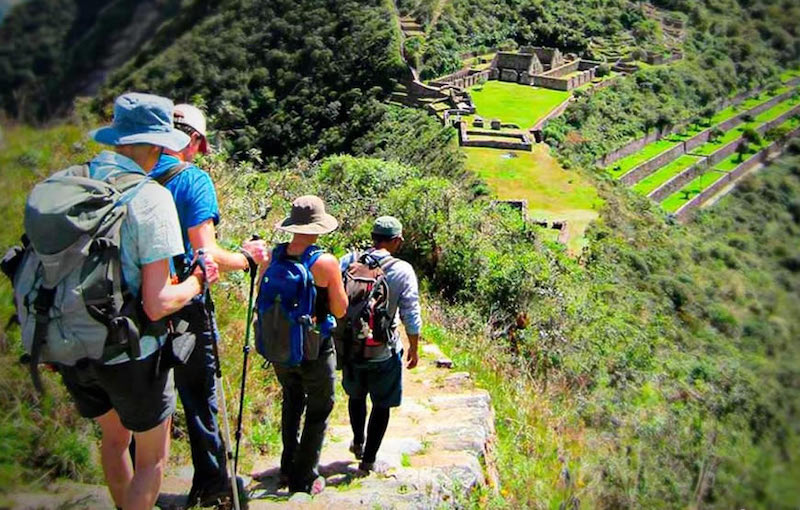
Thinking of visiting South America? Choquequirao Peru deserves all your attention. The Choquequirao Tail Peru is a great trek for travel enthusiasts.
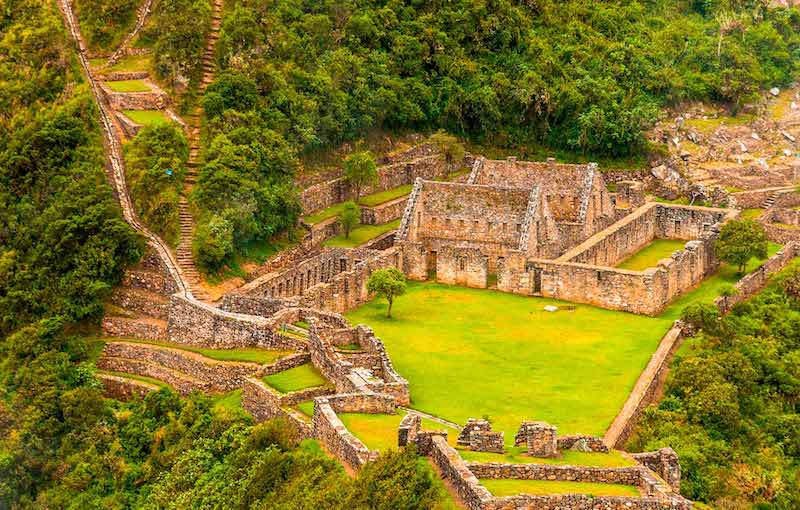
The Choquequirao Trail Peru will take you to a large stretch of Inca ruins. These ruins nestles on top of a hill on the outskirts of Cusco.
Where is Choquequirao Trek?
Sitting high in the Vilcabamba mountain range, it mainly ranges between 2500m – 2700m above sea level. The most elevated point is at a height of around 3150 m. Choquequirao Trail Peru is amongst the least known and least hiked.
Choquequirao Peru is at an adequate distance from Machu Picchu and Sacred Valley. This lost city of Incas carries a lot of discussions regarding its period of construction and the justification behind it. It is so huge that it stretches out over an entire city. Several regions of these ruins are still unknown.
About Choquequirao:
Locals refer to both Inca cities as Sacred Sisters Choquequirao and Machu Picchu were built in the same era by the Inca emperor, Pachacutec. When the Spanish invaded Peru, due to its remote location, they could not discover its exact location. Just as Machu Picchu, the Incas left this abandoned too.
Choquequirao Trail Peru is a high altitude experience. It is highly recommended to acclimate well in Cusco City, before the trek to avoid altitude sickness. Machu Picchu attracts over 5000 visitors a day, Choquequirao however, sees 7-8 visitors a day. This is because of its remote location.
The only way to reach the ruins is by doing a 4 day hike. Although it is possible to do the trek without a guide, it is highly worth signing up for a guided tour. Primarily because most sections of the trek are through remote and secluded regions. It is always advisable to hike with someone who is well aware of the trail.
In order to enhance tourism, local authorities are planning on installing a cable car from the neighbouring village. This is will attract over 5000 daily visitors.
Amazing Spots in Choquequirao Trek “the Cradle of Gold”
The Main Square – This is where you will reach and excavate the ruins of the building in the shadows of trees.
LIama Wall – These nicely structured steep terraces are sophisticatedly designed.
The Mirador – It was thought to be a ceremonial site. This is the area where you would wish to click as many pictures as you want.
Plaza Hanan – Hanan can be related to high in Quechua. You can see contours and incredible colours of the day.
What is the Best Time for Choquequirao Trek?
April, May, September, and October are ideal for Choquequirao Trek. The weather conditions are pleasant.
It hardly rains during these months. The nights are warmer. The best part about this trek is that it is very affordable.
The winters start from June to August. You would not get a heavy pour of rain. The nights are extremely cold and the days are warm.
The trek starts in Cachora, a little town around 3 hours outside of Cusco. It then takes you down the hill to Playa Rosalina and then a full day uphill hike will get you to the complex.
Final Words
The Choquequirao trial is generally interestingly distinguished from other trips in Peru. Choquequirao has courts, porches, aqueducts, sanctuaries, and temples. The trek is not very easy. You must know that the difficulty is worth the amazing adventure that this trek awaits you.
It is highly recommended to have travel insurance. The minimum age allowed for this trek is 8 years. Therefore, you can come with your family if your children are grown up. Escape the crowd of the city and enjoy amazing days in the lap of nature.
Choquequirao: The Other Machu Picchu
Views and Scenarios in Choquequirao
Mules to Carry the Loads
Tons of Epic Rewards
Striking Features
Cable Car Installation
Everything You Need to Know About Peru’s Sacred Valley
Located high in the Andean Mountains of Peru, the Sacred Valley of the Incas unfolds as a vast, stunning, and mystical region filled with history, culture, and natural beauty. Shrouded in the enchantment of the ancient Incan civilization, it offers an awe-inspiring window into Peru’s rich and complex past. This article will serve as your comprehensive guide to this region, opening the gateway to a journey that effortlessly weaves history, archaeology, and the irresistible allure of untouched natural splendor.
Encompassing remarkable archaeological sites, traditional Andean villages, bustling markets, and landscapes that will leave you breathless, the Sacred Valley holds an allure that has captivated travelers for centuries. From the intricate stone terraces of Pisac and the iconic, to the towering peaks of the Vilcanota Mountain Range, we will traverse the length and breadth of the Valley, revealing its unique character, treasures, and traditions.
History and mysteries: Unraveling the Inca legacy in the Sacred Valley
Unraveling the Inca legacy within the Sacred Valley of the Incas presents a remarkable journey through time. It’s a region steeped in ancient stories. One place where this history is evident is Pisac. This small, picturesque village is home to one of the most important Inca sacred sites.
The ruins at Pisac offer a glimpse into the grandeur of the Inca Empire. Terraced hillsides, fortifications, and temples reveal their architectural prowess. They also reflect a deep understanding of nature and astronomy. These ancient constructions align with celestial bodies, marking solstices and equinoxes.
It is in the Sacred Valley of the Incas that the past intertwines with the present. The Valley’s fertile soil continues to sustain local communities. Inherited agricultural techniques still shape the landscape. In turn, this land fosters growth of maize, a vital crop in Incan times.
But the mysteries of the Inca civilization are far from being completely unraveled. Archaeologists continue their explorations, piecing together this intricate past. Hidden sites are still being discovered, further enriching our understanding of this ancient culture.
The Sacred Valley’s cultural richness extends beyond physical remnants. The Quechua language, once the Inca Empire’s lingua franca, echoes through the valley. Tradition, expressed in vibrant festivals and customs, keeps the Inca spirit alive.
Through the Sacred Valley, we start to grasp the Inca civilization’s complexity. Its legacy is not just in ruins, but in a living culture. A culture still thriving amidst the high peaks and verdant terraces. Exploring this region is truly a journey through the ages.
A journey through landscapes: From snow-capped peaks to verdant terraces
The Sacred Valley’s landscapes offer a fascinating mix of rugged beauty and verdant fertility. Snow-capped peaks of the Andes frame the Valley, their majesty captivating the observer.
These peaks are not mere backdrops, but the guardians of the valley. They stand as symbols of the Andean people’s connection to the natural world. Below the mountain tops, the terrain shifts dramatically, offering a diverse ecology.
The steep slopes soften into undulating hills, terraced by the Inca. These terraces, shaped by hand, reflect the Inca’s ingenuity in adapting to the rugged landscape. They ripple down the valley sides, like the folds of a green velvet cloak.
Among these terraces, a rich variety of crops thrive, including maize, quinoa, and potatoes. This agricultural abundance underscores the Sacred Valley of the Incas’ fertility. It is a testament to the harmonious balance between man and nature that defines the region.
In the heart of this diverse terrain, hidden amidst the verdant foliage, lies Machu Picchu. This city in the clouds is a gem within the Sacred Valley, its location adding to its enigmatic allure. The meticulous stonework harmonizes with the mountainous landscape, showing an appreciation of nature’s beauty.
A journey through the Sacred Valley of the Incas is an adventure for the senses. From the crisp, cold air of the Andean peaks to the warm, fertile terraces, every turn offers a new perspective. Here, in the heart of the Andes, the sacred landscape sings a song of timeless beauty and resilience.
Living culture: Experience the vibrant traditions and modern life in the Sacred Valley
The Sacred Valley is not just an open-air museum of Inca heritage, but a vibrant center of living culture. This culture thrives amidst ancient ruins and modern life. A trip to the Valley immerses you in a world where past and present meet harmoniously.
The lively markets of Pisac and Chinchero bear witness to this. Here, Quechua-speaking locals trade colorful textiles and handcrafts, as their ancestors did centuries ago. They weave intricate patterns, each telling a unique story.
Music and dance are vital parts of Andean life. Traditional festivals fill the streets with color, sound, and energy. One such festivity is Inti Raymi, the Festival of the Sun, celebrated annually on June 24th.
Yet, modern influences have also found a place here. You’ll see children playing soccer in fields next to centuries-old terraces. Modern cafes stand alongside traditional chicherias, where locals share chicha, a corn beer.
The gastronomy of the Sacred Valley offers a blend of traditional and contemporary flavors. You’ll find traditional dishes like cuy (guinea pig) and modern fusions, such as quinoa salad.
Visitors are invited to engage with the living culture. Participate in a traditional weaving workshop. Savor a pachamanca meal, cooked in the ground just as in Inca times. In the Sacred Valley, the Inca’s enduring legacy comes to life. It’s a place where the ancient past vibrates in harmony with the present. You are not just an observer, but an active participant in this living culture.
To truly understand the valley’s heartbeat, why not follow the ancient Inca Trail to Machu Picchu? It is an unforgettable journey, taking you through cloud forests and ancient ruins. Alternatively, challenge yourself with a hike to the Vinicunca Rainbow Mountain. Its unique colors are a sight to behold.
Earth Payments in Peru: Connecting with Pachamama
In the heart of Peru, a deep-seated bond between man and Earth thrives. This bond, nurtured for centuries, is a form of respect. An intriguing ritual, ‘Earth Payments’, embodies this.
Honoring Pachamama, the Earth Mother, the people perform these payments. It’s an act of appreciation for life’s gifts and blessings. Ancient tradition meets modern sustainability here.
This article explores this compelling practice, providing a lens into Peru’s unique cultural fabric. Delve into the philosophical underpinnings of Earth Payments. Discover how Peru connects with Pachamama.
The sacred tradition of Earth Payments in Peru
The sacred tradition of Earth Payments in Peru is deeply rooted in the country’s ancient history. The practice is a ritual, steeped in symbolic importance. At its core, it represents a tribute to Pachamama.
Pachamama meaning in the Andean culture is profound. She is Mother Earth, revered and cherished by the locals. Her gifts—food, water, and life—are recognized through Earth Payments.
The rituals are carried out with love and reverence. Traditional offerings include coca leaves, seeds, and grains. These are bundled together, symbolizing abundance and fertility.
This action signifies returning what Mother Earth has given. It’s an act of gratitude and respect.
These Earth Payments in Peru are integral to the Andean World and Cosmovision. This worldview understands the universe as a connection, living entity. It places humans, Earth, and cosmos in a harmonious relationship.
The ritual embodies this cosmovision, reflecting a balance between giving and receiving. The act of offering ensures Pachamama’s continual benevolence. It is seen as a pact of mutual care and sustenance.
This balance is not just spiritual, it’s ecological too. Earth Payments in Peru demonstrate a sustainable attitude towards the environment. The tradition urges respect for resources and promotes conscious consumption.
In the hustle of modern times, this practice stands resilient. It’s a poignant reminder of our roots and connections. Earth Payments in Peru echo the enduring harmony between man and nature.
Exploring the rituals of Earth Payments
The rituals of Earth Payments in Peru bear the mark of an ancient civilization. Inca Cosmology, with its deep reverence for the Earth, underpins these ceremonies. Let’s delve into the intricacies of this practice.
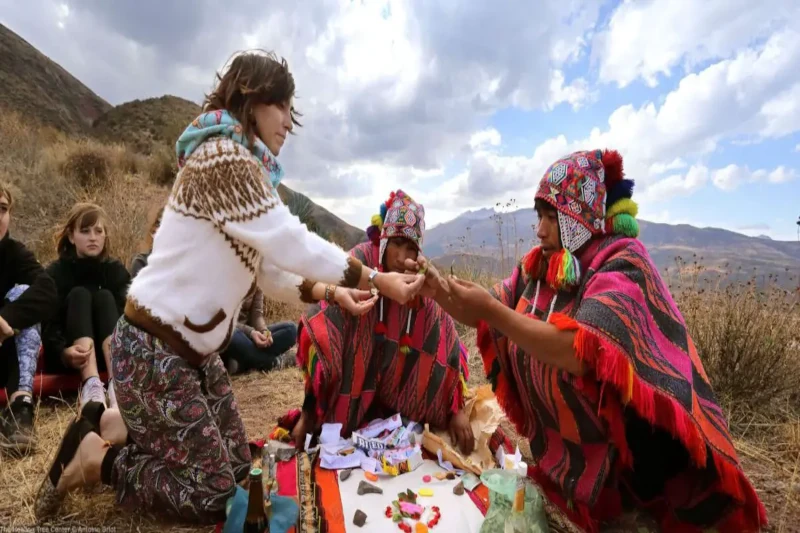
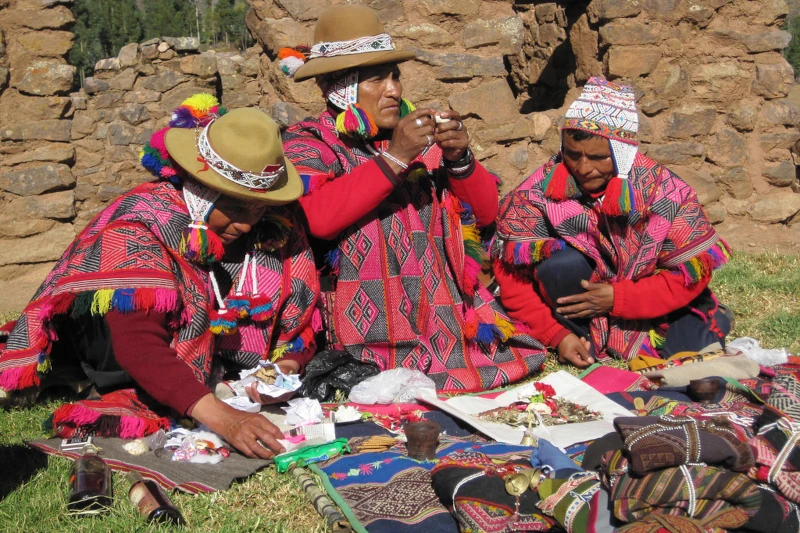
The Earth Payments begin with preparation. Communities gather items symbolic of prosperity: coca leaves, grains, and seeds. These offerings, meant for Pachamama, are assembled into a bundle known as ‘Despacho’.
Choosing the location for the ritual is crucial. Often, these ceremonies happen at sacred sites. These could be mountain peaks, springs, or ancient ruins—places where nature’s power is palpable.
The spiritual leader ‘Paco’ or ‘Shaman’ leads the ceremony . He invokes the spirits, seeking their blessings. The community participates, adding their prayers and wishes to the Despacho.
Once ready, Pachamama receives the Despacho by burning, burying, or immersing it in water. The method chosen varies, dictated by the ritual’s purpose and location.
Through this process, the Earth Payments in Peru establish a cycle of reciprocity. The community gives back to Mother Earth, thanking her for her bounty. The act is a symbolic restoration of balance, an embodiment of gratitude.
These Earth Payments in Peru are more than just tradition. They represent a profound respect for nature, a lesson in sustainability. It’s a testament to the idea that we are all interconnected.
Interestingly, the ritual transcends spiritual boundaries. It appeals to anyone who wishes to connect with Mother Earth. Earth Payments in Peru, thus, invite us all to participate in a global community of respect and reciprocity.
Connecting with Pachamama: The Spiritual Essence of Earth Payments
Connecting with Pachamama goes beyond a simple act of tradition. It delves into the spiritual core of the Peruvian people. The payment to the Earth play a crucial role in this connection.
These rituals act as a bridge between humans and the natural world. They create an intimate link with Pachamama. Earth Payments are a dialogue, a mutual exchange between the man and Mother Earth.
This connection is more than a mere symbolic act. It carries spiritual significance for the participants. The ritual is a path to gratitude, to recognizing the blessings we receive from the Earth.
Participating in Earth Payments encourages mindfulness. It makes us pause, reflect on our actions, our place in the world. It fosters a sense of responsibility towards the planet.
Engaging in these rituals, people experience a transformative journey. They come to understand their role in the grand scheme of life. The connection with Pachamama becomes a journey of self-discovery.
As we immerse in these practices, we realize that the Earth is not just a provider. She is a mentor, teaching us about unity, balance, and respect. These lessons echo in the hearts of the participants.
To experience this spiritual journey, why not plan a visit? A 4 Day Inca Trail to Machu Picchu can be your pathway to Pachamama. The trail, nestled in the stunning Andean landscape, will lead you to her.
If short on time, a Machu Picchu Day Trip from Cusco could be your answer. The ancient city, standing tall amidst the clouds, has seen centuries of Earth Payments. It’s an opportunity to connect with Pachamama, in the heart of the Andes.
Humantay Packing List: Prepare for Your Adventure
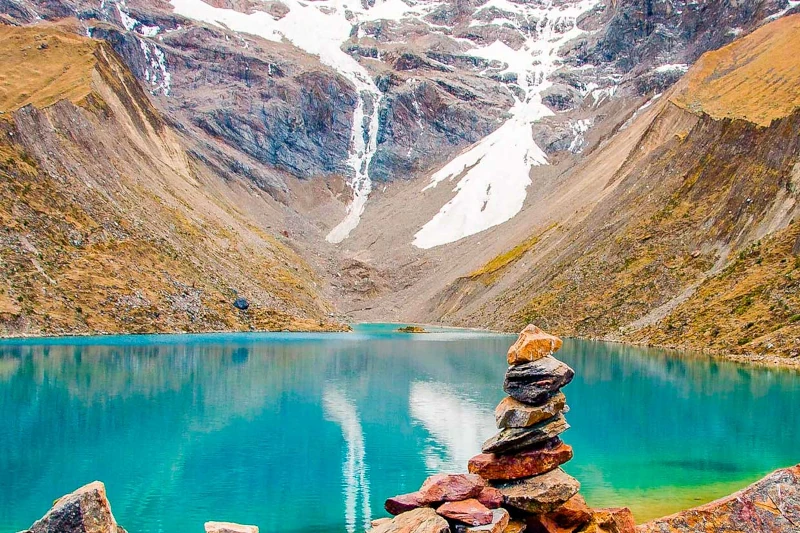
Embark on a journey to the stunning Humantay Lake, a gem nestled in the Peruvian Andes. This article offers an essential Humantay packing list for the adventure. Prepare to traverse diverse terrains and witness breathtaking landscapes.
The right gear ensures a comfortable and safe trek. From sturdy hiking boots to weather-appropriate clothing, every item counts. We’ll cover the essentials, making your packing process streamlined and efficient.
Consider the altitude and weather variations of Humantay. Layering is key for the changing temperatures. Don’t forget essential items like sunscreen and a hat for protection.
Remember, hydration is crucial at high altitudes. Bring a refillable water bottle to stay hydrated. Also, pack energy-boosting snacks to maintain your stamina throughout the hike.
Capture the beauty of Humantay Lake with a reliable camera. But, balance your pack’s weight; overpacking can hinder your trek. A well-thought-out packing list enhances your experience, focusing on enjoyment rather than discomfort.
The art of packing for Humantay: Setting the stage for adventure
Embarking on the trek to Humantay Lagoon in Cusco requires thoughtful preparation. A well-crafted Humantay packing list sets the adventure’s foundation. This guide helps you pack smartly, ensuring a memorable journey.
Firstly, check the Humantay Lake weather forecast. This step is crucial for selecting appropriate attire. Incorporate a base layer, a long-sleeved shirt, and a warm jacket in your Humantay packing list. These items protect against cold, especially as temperatures drop in the evening.
Include a reliable pair of hiking boots, designed for rugged terrain. Pair them with comfortable hiking socks to prevent blisters. Don’t bring shoes that lack proper grip or support for this challenging trek.
Carry a lightweight, durable water bottle. Staying hydrated is vital in the high-altitude environment. Alongside water, pack snacks like nuts and energy bars to maintain your energy levels.
Invest in a quality backpack, preferably from a trusted brand like North Face. Ensure it has enough space for essentials but remains easy to carry. Include a sleeping bag for overnight treks, focusing on compact and warm options.
Remember to bring trekking poles. They offer stability and reduce strain on knees during the hike. Trekking poles are especially helpful on steep or uneven paths.
Add essentials like sunscreen, sunglasses, and bug spray to your list. These protect against the sun and insects, enhancing comfort during the hike. If visiting Machu Picchu, adapt your Humantay packing list accordingly to include specific requirements for that trek.
Lastly, prepare for unexpected weather changes. A rain poncho or waterproof jacket can be a trek-saver. Pack light, but smart, balancing between preparedness and mobility. This art of packing transforms your Humantay adventure into an unforgettable experience.
Essentials for a day in the Andes: A detailed Humantay Packing List
When planning to visit Humantay Lake, a detailed Humantay packing list is essential. This list ensures a successful day in the Andes. Each item plays a crucial role in your adventure.
First on the Humantay packing list: appropriate clothing. Layering is key because of the changing weather conditions. Include a base layer, a fleece, and a waterproof jacket for versatility.
Footwear is vital for visiting Lake Humantay. Choose sturdy, comfortable hiking boots to navigate the rugged terrain. Pair them with moisture-wicking socks to keep your feet dry.
Next, focus on hydration and nutrition. Bring a durable water bottle and include snacks like nuts and fruit. Snacks and water are indispensable for maintaining energy levels throughout the hike.
A lightweight backpack is important to carry your essentials. Ensure it’s comfortable and has enough compartments for easy organization. Don’t overpack; prioritize necessities to avoid unnecessary strain.
A high-quality sun hat and sunglasses are must-haves. They provide protection against intense Andean sun rays. Similarly, apply and carry sunscreen to shield your skin.
In your Humantay packing list, include a camera or smartphone for capturing breathtaking views. A portable charger can be a lifesaver for keeping devices powered. However, focus more on the experience than electronics.
For safety, pack a small first-aid kit. Include basics like band-aids, pain relievers, and altitude sickness medication. This preparation is essential for any unforeseen issues.
Lastly, consider environmental responsibility. Bring a trash bag to carry out any waste, preserving the natural beauty. Respect local guidelines and cultural norms during your visit.
This comprehensive Humantay packing list prepares you for an unforgettable day in the Andes. Each item contributes to a safe, enjoyable, and responsible trekking experience.
Smart packing strategies: Tips and insights for a seamless excursion
Smart packing is crucial for a seamless excursion. Is about carrying essentials while maintaining comfort and mobility. This guide offers tips and insights for effective packing.
Start by listing must-have items based on your destination and activities. This approach prevents overpacking and ensures nothing vital is left behind. Research your destination to understand specific needs and restrictions.
Choose a backpack that fits your frame comfortably. It should have enough compartments for organization but not be too bulky. A good backpack distributes weight evenly, reducing strain on your shoulders and back.
For clothing, adopt the layering principle. This method allows you to adjust to changing weather conditions easily. Include lightweight, breathable fabrics that offer both warmth and ventilation.
Footwear is paramount. Select shoes suitable for the terrain and break them in before your trip. Pair them with quality socks to prevent blisters and discomfort.
Pack a compact first-aid kit. Include basic medications, band-aids, and any personal prescriptions. Always prepare for minor injuries or health issues.
Minimize electronics to essentials. A phone, camera, and possibly a GPS device should suffice. Remember chargers and power banks for longer trips.
For longer treks, pack a lightweight sleeping bag and mat. Choose ones that are compact yet offer sufficient warmth. Remember, the goal is to balance comfort with portability.
Hydration is key. Carry a reusable water bottle and consider a water purification method if necessary. Stay hydrated to maintain energy and avoid altitude sickness.
Don’t forget sun protection. Sunscreen, a hat, and sunglasses are indispensable, especially in high-altitude areas. Protecting your skin and eyes is vital for a safe trip.
Lastly, pack with respect for the environment. Use reusable containers and avoid single-use plastics. Leave no trace to preserve the natural beauty.
Now, apply these smart packing strategies for your next adventure. Consider taking a Lares Trek to Machu Picchu or a Two Day Inca Trail to Machu Picchu. Both offer unique experiences and stunning vistas, perfect for testing your packing skills.
Cusco Nightlife: Best Bars and Clubs in the City
Cusco is the heart of Peru’s nightlife. The city offers diverse bars and clubs. Each spot has its unique charm in the Cusco nightlife.
Visitors can explore ancient streets for hidden gems. Local and international drinks are plentiful. Music ranges from traditional to modern beats.
The best bars offer stunning views. Clubs pulsate with energy until dawn. There’s something for every taste.
Safety is a priority in Cusco. Tips for a great night are easy to find. Make memories in the city’s vibrant scene.
Discover the Vibrant Pulse of Cusco: Top Nightlife Spots to Experience
Cusco, a city steeped in history, transforms at night. The streets buzz with energy, inviting travelers and locals alike. Here, Cusco nightlife takes center stage, offering experiences unlike any other.
As dusk falls, the city’s ancient architecture lights up, setting the stage for unforgettable nights. Bars and clubs open their doors, each promising a unique adventure. From cozy pubs to bustling nightclubs, Cusco has it all.
Where History Meets Modern Beats
The blend of Inca heritage with contemporary entertainment defines Cusco nightlife. Pubs and bars often showcase local art and culture. Meanwhile, DJs keep the dance floors alive with global hits.
One must-visit is a bar built within Inca ruins. Here, history and modernity dance together. The ambiance is magical, making it a favorite among visitors.
Another spot offers rooftop views of Cusco’s twinkling lights. Sipping cocktails here feels like touching the stars. These venues highlight the city’s ability to marry the old with the new.
Local Flavors and Global Tunes
Cusco’s nightlife isn’t just about the locations; it’s about the experiences. Tasting local beverages becomes a journey through Peruvian culture. Pisco sours and chicha morada are must-tries.
Music plays a crucial role in setting the mood. Clubs in Cusco cater to diverse musical tastes. From Andean folk music to international electronic beats, there’s a rhythm for everyone.
Dance Till Dawn
For those who love to dance, Cusco offers clubs that stay open until the early hours. These places are where friendships are formed and memories are made. The energy is contagious, making it impossible not to join in.
Safety and Enjoyment Go Hand in Hand
While exploring Cusco’s nightlife, safety remains a priority. Well-lit streets and friendly locals help ensure a secure environment. Always stick with friends and stay in familiar areas.
Cusco nightlife is more than just partying; it’s a cultural immersion. Engaging with locals and fellow travelers enriches the experience. Each night offers a new story to tell.
Plan Your Nightlife Adventure
To fully enjoy Cusco nightlife, planning is key. Start your evening with a sunset view from a terrace bar. Then, dive into the heart of the city’s nightlife.
Exploring with a guide can also enhance the experience. They know the best spots and can share insights into Cusco’s history and culture. This way, you get the full flavor of the city’s night scene.
Cusco nightlife offers something for every traveler. Its unique blend of history, culture, and modern entertainment is captivating. Whether you seek a quiet evening or a night of dancing, Cusco welcomes you.
Remember, the best nights often start unplanned. Let the city’s energy guide you. Discover the vibrant pulse of Cusco, and create memories that will last a lifetime.
Best Time to Visit Peru: Month’s Weather and Festivals
Planning a trip to Peru? Selecting the best time to visit Peru is crucial for the perfect travel experience. Peru’s diverse climate and cultural festivities vary greatly throughout the year.
Weather patterns in Peru range from sunny days to chilly nights. Coastal regions differ markedly from highland and rainforest climates. Understanding these variations can help you choose the best month for your visit.
Moreover, Peru’s calendar is dotted with vibrant festivals. Each region boasts its unique celebrations. Timing your visit with these events can enhance your travel experience.
In this post, we’ll guide you through the best times to visit Peru, highlighting optimal weather conditions and must-see festivals. Whether you’re looking to explore ancient ruins or experience lively local traditions, we’ve got you covered. Get ready to pack your bags for the adventure of a lifetime in Peru!
Weather Patterns and Ideal Months for Visiting Peru
Peru’s geography creates varied climates across the country. The best time to visit Peru often depends on your destination within the country. From the arid coasts to the lush Amazon rainforest, timing is everything.
In the coastal regions, you’ll find a desert-like climate with very little rainfall. Lima, the capital, offers mild temperatures year-round. The dry season from April to October is generally the best time to visit Peru’s coast.
As you move inland, the Andes present a different weather scenario. Here, the dry season is also the best time to visit Peru, especially for hiking. The Inca Trail, leading to Machu Picchu, is most accessible and enjoyable from May to September.
Trekking the Inca Trail in Optimal Conditions
Hiking the Inca Trail is a bucket-list experience for many. This trek becomes challenging during the wet season. The best months to undertake this adventure are during the dry season when paths are safer.
Machu Picchu itself sits high in the mountains, where weather can change suddenly. The peak season to visit Machu Picchu is from June to August. You’ll enjoy clear skies and stunning views, making it worth the crowds.
To avoid the peak season while still enjoying good weather, consider visiting in the shoulder season. April and October typically offer good conditions with fewer tourists. This period can offer a more tranquil experience at major sites.
Exploring the Amazon Rainforest
Heading east, the Amazon rainforest covers a large part of Peru. This region experiences a very distinct rainy season. The best time to visit Peru’s Amazon is during the dry season, from June to October.
During these months, lower water levels make jungle paths more accessible. This is also an excellent time for wildlife spotting as animals frequent water sources. The weather is also more conducive to forest hikes, making it a prime time for exploration.
However, if you’re interested in riverboat tours, the wet season has its advantages. Higher water levels from November to May allow deeper penetration into the forest. Each season in the Amazon offers a unique experience, making it a year-round destination.
Shoulder Season Advantages Across Peru
Shoulder seasons in Peru bring their own set of benefits. You’ll encounter fewer tourists and often find lower prices for accommodation and tours. This makes the shoulder season a great time to explore more extensively.
Cities like Arequipa and Cusco also have their peak and off-peak seasons. Visiting these places in the shoulder season can offer a more authentic experience. You’ll enjoy the local atmosphere without the crowds.
Moreover, many cultural festivals occur outside of the peak tourist season. These events provide deep insights into the rich Peruvian culture. Attending these festivals can be the highlight of your trip.
Best Time to Visit Peru: A Comprehensive Overview
Understanding the varied climates and seasons in Peru is key to planning your trip. Whether you’re exploring ancient ruins or trekking through the rainforest, timing your visit can make a significant difference. The dry season in Peru often offers the best overall conditions for a wide range of activities.
However, the best time to visit Peru might vary depending on what you want to see and do. The Amazon rainforest and Andean highlands each have their ideal visiting times. Balancing weather preferences with your travel goals is essential.
Finally, while the dry season is generally the best time to visit Peru, don’t overlook the unique opportunities each season presents. From vibrant festivals in the shoulder season to the lush beauty of the rainy season, Peru offers rich experiences all year round.
Celebrating Peru: A Guide to Festivals and Cultural Events by Month
Peru’s cultural calendar bursts with vibrant festivals and events, reflecting its rich history and diverse communities. Each month offers unique celebrations, marking the best times to immerse yourself in Peruvian culture. Deciding on the best time to visit Peru often aligns with these colorful festivities.
Starting the Year with Color and Faith
January in Peru kicks off with the Festival de la Marinera in Trujillo. This festival showcases Peru’s national dance, la Marinera, through spirited competitions. Crowds gather in this northern city, enjoying performances and cultural exhibitions.
Come February, the Virgin of Candelaria festival transforms Puno into a vibrant spectacle. Thousands of dancers and musicians participate in this religious and cultural festivity. It is one of the largest festivals in the southern hemisphere, drawing spectators from around the globe.
In March, the wine harvest festival, or Vendimia, celebrates Peru’s wine and pisco production. Ica hosts this event, featuring grape stomping, parades, and plenty of tasting opportunities. This period marks a festive yet less crowded time to visit Peru, with a good chance of favorable weather.
Experiencing Holy Week and Beyond
April’s Holy Week, or Semana Santa, presents dramatic and solemn processions throughout Peru. Cusco’s celebrations are particularly renowned, blending Catholic and Andean traditions. It’s a profound time to visit, providing insight into the deep religious heritage of the region.
Moving into May, the Festival of the Crosses, or Fiesta de las Cruces, lights up the country with decorated crosses. In many towns, these crosses are paraded through the streets accompanied by dancers and music. This festival is a colorful testament to Peru’s syncretic religious practices.
June boasts one of the most iconic events: Inti Raymi in Cusco. This ancient Inca festival celebrates the winter solstice and the sun god, Inti. Reenactments, elaborate costumes, and large gatherings make it a peak season highlight in Peru.
Mid-Year Festivities
July continues the festive spirit with Peru’s Independence Day celebrations on July 28th. Parades, fireworks, and concerts fill every city, but Lima takes center stage. It’s a patriotic time that unites the nation in festivity and pride.
August brings the Arequipa Foundation Festival, where the city’s founding is celebrated with week-long activities. Parades, folk dances, and traditional food create a lively atmosphere. It’s another high season event that attracts both locals and tourists.
September and October offer the Lord of Miracles, a significant religious procession in Lima. This centuries-old tradition involves thousands of devotees dressed in purple carrying a revered icon through the streets. The event is a profound display of faith and community, making it a unique time to visit Lima.
Cultural Richness in the Closing Months
November’s All Saints Day sees Peruvians visiting cemeteries to honor their deceased loved ones. It’s a day of quiet reflection mixed with community gatherings. Traditional dishes are prepared and shared at grave sites, showing the blend of mourning and celebration.
December might bring a chance of rain, but it also hosts Santuranticuy in Cusco. This Christmas market, one of the largest in Peru, offers crafts, food, and holiday decorations. It’s a festive time to visit Machu Picchu and enjoy Cusco’s vibrant holiday atmosphere.
Lake Titicaca also offers unique celebrations throughout the year. Watching the sunrise during solstice events from the lake’s serene waters is unforgettable. Whether in the bustling high season or the quieter times, each month holds something special.
Why Festivals Should Influence Your Travel Plans
When planning your trip, consider how these festivals can enhance your experience. The best time to visit Peru isn’t just about weather but also about cultural immersion. Each festival offers a window into the soul of Peru, making any time a good time to travel.
However, if you want to avoid the crowds while still catching great events, aim for the shoulder months like September and October. These months still buzz with activity but with fewer tourists. This makes it a perfect time to explore more freely and perhaps even participate in local celebrations.
Lastly, remember that while the festivals are spectacular, they are just one aspect of what Peru has to offer. The landscapes, the people, and the history are equally compelling reasons to visit. Whether you come for the festivals or the natural beauty, the best year to visit Peru is the year you decide to go.
My name is Marko Andinauta, (I’m Machu Picchu & Inca Trail Guide), I have hiked more than 500 times the famous INCA TRAIL in more than ten years (2007 – 2019); and I have survived the highest point of the Inka Trail “dead woman’s pass at 4215 M – 13780 Ft”; also more than 500 times. Unfortunately, my knee cartilages could not support more to keep hiking The Legendary Inca trail to Machu Picchu. Therefore; I created Happy Gringo Tours Channel to keep working in the same industry; giving information on YOUTUBE about the Inca Trail hike and inviting you to travel to Machu Picchu with us. I got enough knowledge to give you concrete information for unforgettable tours in Peru. We are Official Inca Trail, Machu Picchu tours, and alternative treks Operator.
Art of Inca Pottery: Its History and Significance
The Inca Empire, known for its unique art and architecture, also boasted a rich tradition of pottery. These ceramic pieces were not just functional; they held cultural and religious significance. Today, Inca pottery is celebrated for its intricate designs and symbolism.
Inca artisans crafted pottery that reflected their society’s values and beliefs. Each piece was often a symbol of the owner’s status and identity. The techniques they developed have influenced many modern ceramicists.
Understanding the history and significance of Inca pottery offers insights into their advanced societal structures. It helps us appreciate the depth of Inca craftsmanship. This blog post explores the art of Inca pottery, shedding light on its historical context and lasting impact.
Some of the ceramic’s pictures shown here are pre Inca. So, this content include all types of influences.
Exploring the Techniques and Materials of Inca Ceramics
The art of Inca pottery holds a mirror to the rich tapestry of Inca culture. Inca potters employed local materials to shape vessels that were both functional and symbolic. Clay, sourced from the abundant deposits along river valleys, was the primary medium.
Inca ceramics showcase a variety of forms, each serving a specific purpose. Common shapes included bowls, cups, and large urns, often used in daily life and ceremonial contexts. The skill of Inca potters was evident in their mastery of these diverse forms.
The most iconic Inca pottery features the long neck bottles and dual-spouted vessels. These pieces often bore images of Pachamama, the earth mother, revered in Inca culture. The imagery served not only as decoration but also as a spiritual invocation.
Techniques of Craftsmanship
Inca potters utilized a coiling technique to construct their pottery. This method involved rolling clay into long, thin ropes and layering them to form the vessel’s shape. The coils were then smoothed to create a seamless surface.
Decorations were applied before the firing process, using slips of different colors. Inca pottery often featured red, black, and white hues derived from natural minerals. These colors added a vibrant contrast to the earthen backgrounds.
Firing of the pottery was conducted in open pits or simple kilns. The temperatures achieved were enough to harden the clay but varied enough to create unique effects on the finishes of each piece. This variability lent a distinctive character to Inca pottery.
Symbolism in Design
Inca pottery was deeply imbued with symbols relevant to their cosmology and social structure. Geometrical designs, representing the orderly nature of the Inca state, were common. These patterns often mirrored the precision seen in Inca architecture, like that of Machu Picchu.
Pottery also depicted scenes from daily life, emphasizing the communal and agricultural practices of the Inca. These scenes acted as a narrative thread, connecting the present with mythical and historical pasts. The human had a stylistic simplicity, yet conveyed a deep connection to community and environment.
In ceremonial contexts, pottery items were used as offerings. These offerings appease deities and ensure bountiful harvests. Such practices highlight the spiritual significance that Inca potters infused into their creations.
Materials and Their Meanings
The choice of materials in Inca pottery went beyond mere availability. Each material held specific meanings and purposes. The use of gold and silver, for example, was for pieces associated with the elite and the divine.
Clay was the most common material, cherished for its earthy qualities and its link to Pachamama. This connection underscored the Inca’s reverence for nature and their dependence on its cycles. It also reflected their sophisticated understanding of their environment.
Beyond the aesthetic and functional, the materials chosen by Inca potters reinforced the cultural and spiritual ethos of their society. The act of creating pottery was, therefore, deeply intertwined with the broader currents of Inca life. Pottery wasn’t just crafted; it was a profound act of expression.
The Legacy Continues
Today, Inca pottery remains a significant aspect of study for archaeologists and historians. It provides insight into the social structures, daily routines, and spiritual practices of the Inca. The techniques and materials used by Inca potters tell a story of a deeply interconnected society.
Museums around the world display Inca ceramics, allowing people to connect with this ancient art form. Through these exhibitions, the legacy of Inca potters continues to inspire awe and respect. Their work remains a testament to the sophistication and depth of Inca culture.
The exploration of Inca pottery techniques and materials not only illuminates the past but also enriches our understanding of this formidable civilization. As we study these artifacts, we gain a greater appreciation for the artistry and ingenuity of the Inca potters. Their legacy, captured in clay, continues to echo through the ages.
The Cultural Impact of Inca Pottery on Modern Art
The legacy of Inca pottery extends beyond ancient artifacts; it influences modern art significantly. Artists around the world draw inspiration from the geometric precision and symbolic richness of Inca designs. This cross-temporal dialogue enriches contemporary artistic expressions.
Inca pottery’s integration into modern art is present in the adoption of its motifs and techniques. For instance, the replication of Inca textile patterns in ceramic works highlights a blend of old and new artistic visions. These patterns carry the spiritual and historical narratives of the Inca into today’s aesthetic language.
The influence is also palpable in educational spheres where art students study Inca pottery for its unique form and content. They explore how the ancient potters used natural materials to achieve various textures and colors. This study promotes a deeper understanding and appreciation of Inca cultural contributions.
Bridging Times Through Art
Modern artists often reflect on how Inca pottery used the human form to convey cultural ideals. These depictions inspire contemporary works that explore identity and community through similar stylistic representations. The continuity of this thematic exploration shows the lasting relevance of Inca artistic principles.
The resurgence of traditional techniques among modern potters also underscores the influence of Inca ceramics. Many artists now employ the coiling and pit-firing methods once used by Inca artisans. This revival of ancient practices is a testament to their enduring appeal and functionality.
In galleries and exhibitions, Inca motifs contrast with modern forms and materials. This blend creates a dialogue between past and present, highlighting the timeless nature of Inca artistic innovations. Such displays attract art lovers who appreciate the fusion of historical depth with contemporary creativity.
Modern Marketplaces and Inca Inspirations
The impact of Inca pottery is visibly strong in places like the Pisac Market. Here, artisans sell modern ceramics that echo the aesthetics of ancient Inca crafts. Tourists and collectors alike seek these items, drawn by their historical and artistic value.
Souvenirs to buy in Cusco often feature replicas of Inca pottery. These pieces serve not only as mementos but also as carriers of cultural heritage. They allow individuals from different parts of the world to own a piece of the Inca legacy.
Furthermore, the Lares trek and the Inca Trail offer experiences highlighting the natural landscapes that influenced Inca pottery. Trekkers see firsthand the environments from which the clay and mineral pigments were from. This deepens their appreciation of the art form’s organic origins and inspirations.
Continuity and Change in Artistic Expressions
Contemporary Peruvian artists particularly embody the ongoing influence of Inca pottery. They meld traditional Inca styles with modern techniques and themes, creating artworks that speak to both heritage and modernity. This fusion is present in local and international art scenes.
Workshops and artistic residencies along the Inca Trail often focus on traditional ceramic techniques. These programs attract artists eager to learn about the historical context and craftsmanship of Inca pottery. Participants leave with enhanced skills and a greater respect for Inca artistic traditions.
Art festivals in Peru and abroad frequently feature sections dedicated to Inca-inspired art. These events showcase the global impact of Inca pottery and promote ongoing interest in its study and preservation. They serve as platforms for cultural exchange and artistic innovation, inspired by the Inca’s legacy.
Inca pottery remains a vibrant influence in the world of modern art. Its techniques, forms, and symbols continue to inspire artists across the globe. The cultural impact of these ancient practices is a testament to their profound significance and enduring appeal.
Through exhibitions, markets, and educational programs, the essence of Inca pottery lives on. It bridges the past and present, providing a rich source of inspiration for contemporary artists. As we explore these connections, we keep the Inca creativity alive and relevant in today’s artistic landscape.