


Chinchero Market: The Ultimate Guide to Sacred Valley Textiles
Quick outline (so you know where we’re headed)
- Why Chinchero feels different (even if you’ve done markets before)
- Chinchero market days + hours (and the “don’t show up late” reality)
- Getting there from Cusco without turning it into a logistics project
- Textiles: what you’re seeing, what it means, and what’s worth buying
- Haggling, but make it respectful
- Chinchero market vs Pisac market (the honest comparison)
- What else to do in town + what to eat when your nose leads the way
Chinchero sits high in the Andes, in the Sacred Valley, and it has this calm-but-busy energy that’s hard to fake. People often plan Peru like a project timeline: Cusco, Sacred Valley, Machu Picchu—done. But markets are where the “real life” part shows up. The Chinchero market isn’t a museum display. It’s a weekly rhythm. Local people come to sell, trade, catch up, and yes, make a living.
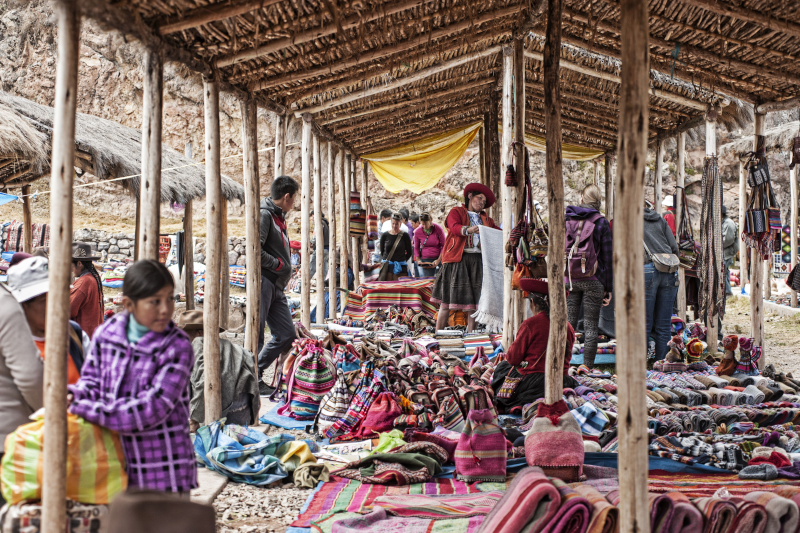
And if you’re wondering whether it’s worth your time when you could be staring at ruins or chasing the perfect postcard view… well, why pick? Chinchero gives you culture, color, and a very practical bonus: you can buy something that you’ll actually use again, not just a souvenir that lives in a drawer.
First impressions: why Chinchero grabs you fast
You walk into the main square and it hits you—reds, deep pinks, bold stripes, and patterns that look like they were designed with zero fear. It’s lively, but not frantic. And here’s the thing: in Chinchero Peru, a lot of people wear traditional clothing because it’s normal, not because a tour bus is watching.
Sometimes travelers say, “I want something authentic.” Fair. But let’s be real: the market is still a business. Money changes hands. Photos get taken. The difference is that in Chinchero, the tradition doesn’t feel like a performance. It feels like a Tuesday.
Chinchero market days and hours (aka: don’t overthink it, but don’t wing it)
Chinchero market days are commonly Tuesday, Thursday, and Sunday, with Sunday usually being the busiest. That’s when more families from nearby communities show up with produce and supplies, not only crafts. If you want the biggest, most energetic version of Chinchero market Peru, Sunday is your day.
Chinchero market hours aren’t posted like a mall schedule. In general, vendors start setting up early—think around 7:00 AM—and the action tapers off around 2:00 PM. If you arrive late, you’ll still see plenty, but you’ll miss the best browsing window. Also: weather and local events can shift things, so if you’re on a tight plan, ask your hotel or guide the day before.
One small, not-so-glam detail: altitude. Chinchero is around 3,700 meters. If you just flew in, your body might be running a slow background update. Go easy. Drink water. If coca tea is offered, try it. And if you feel off, listen to that feeling. No scarf is worth a headache that ruins your day.
Getting there from Cusco (simple choices, real trade-offs)
Chinchero is about 30 km from Cusco. Close enough for a day trip, far enough that you’ll want a plan that matches your style.
- Colectivo (shared van): Cheap, frequent, and usually quick. It’s also a little chaotic, which is kind of the point.
- Taxi or private driver: More control, more comfort. If you’re traveling with a group, the cost often makes sense.
- Tour day: If you’re doing Moray, Maras, or Ollantaytambo anyway, Chinchero slots in neatly. Think of it as stacking stops on one route.
One pro tip from the “I’ve been burned before” department: keep small bills. Markets run on cash. ATMs are not the vibe here. And card readers? Sometimes. Often not.
Textiles: the main event (and why it’s more than shopping)
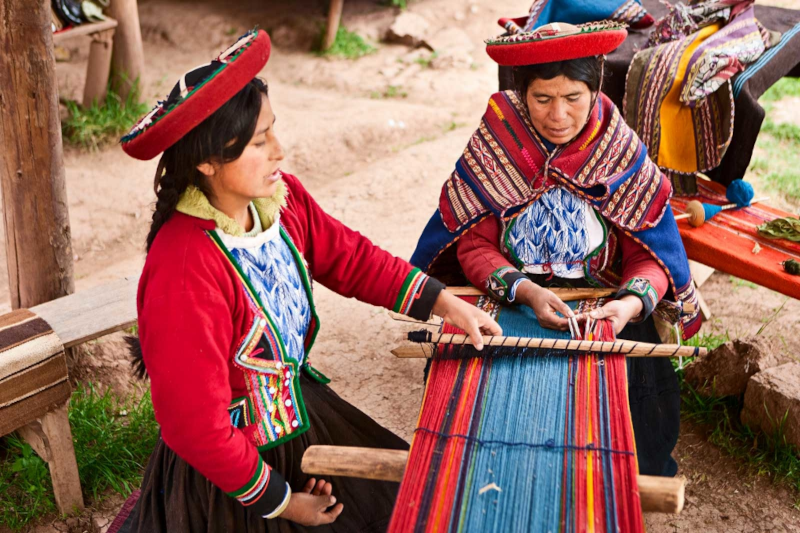
Let’s talk about what you’re actually seeing. Chinchero is known for weaving, and not in a “cute craft corner” way. Weaving here is skill, family knowledge, and income—rolled into one.
You’ll often see a loom demo at a nearby workshop or co-op. It’s worth stopping. Not because you’re required to buy (you’re not), but because once you watch someone spin yarn, set up a pattern, and keep tension with their own body position, you start reading the textiles differently. They stop looking like “a blanket.” They start looking like hours.
Natural dye talk can sound a bit like marketing, but it’s also real. You’ll hear about cochineal (a tiny insect used for reds) and plants, minerals, and even ash used to shift shades. It’s like a color lab—just without fluorescent lights and spreadsheets.
Okay, but is it real alpaca?
This is where a little buyer awareness helps. A lot of stalls will say “alpaca,” and some items are 100% alpaca, some are blends, and some are basically acrylic in disguise. That doesn’t make anyone a villain. It’s just the market.
- Feel: Alpaca tends to feel smooth and warm quickly. If it’s scratchy, it may be a rougher fiber or a blend.
- Drape: Better wool hangs with a soft weight. Acrylic can feel stiff.
- Label reality: If it has a factory tag, read it. If it doesn’t, ask directly. Simple questions work.
Here’s a mild contradiction, and I mean it kindly: you can’t “test” alpaca perfectly in five seconds… but you can get a lot better at guessing once you’ve touched a few pieces side by side. Your hands learn fast.
How to haggle without being that person
Yes, you can negotiate. And yes, you should still be respectful. Think of it like a business chat, not a game show.
A friendly greeting goes a long way. Even a simple Buenos días sets a good tone. Then you can ask the price, pause, and make a counteroffer that feels fair. Often, 10–20% is a normal range. If you try to cut it in half, the vibe gets weird fast.
Also, here’s the part people don’t say out loud: you’re not only paying for an object. You’re paying for time, skill, and a supply chain that looks nothing like Amazon. If you want a “deal,” buy more than one item. That’s a win-win that doesn’t feel stingy.
Chinchero market vs Pisac market: which one wins?
If you’re comparing Chinchero market vs Pisac market, you’re not alone. They’re both famous. They’re both in the Sacred Valley. They both have textiles. And they feel very different.
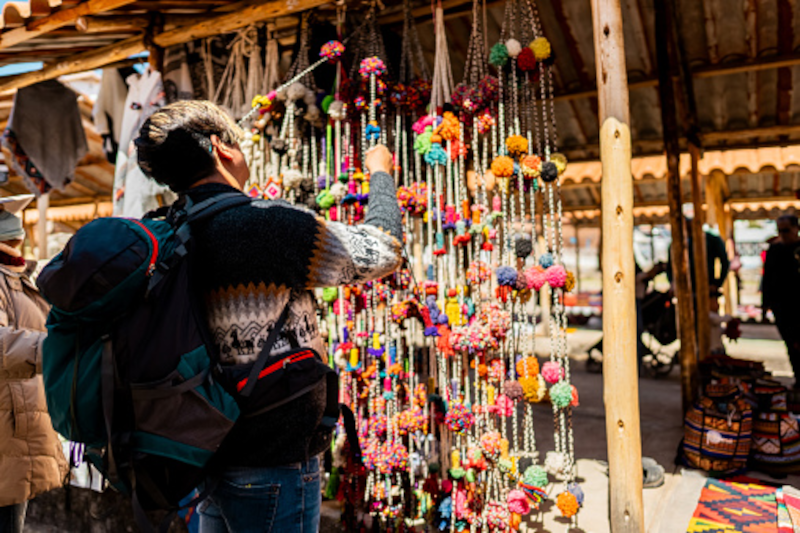
Pisac is larger and tends to have more variety—especially jewelry and mass-made souvenirs. It’s also more crowded, more tour-heavy, and sometimes a bit louder in the “sales pitch” sense.
Chinchero market Peru feels smaller and more focused, especially if textiles are your priority. You’re more likely to talk with the person who made the piece (or someone close to the making of it). That direct connection is the whole point for many travelers.
So which should you choose? If you want variety and scale, Pisac. If you want weaving culture and a more local feel, Chinchero. If you can do both, do both—and then laugh at yourself for thinking you’d buy “just one scarf.”
Don’t leave right away: Chinchero has a second act
Once you’ve wandered the stalls, take 30–60 minutes to walk around town. Chinchero has Inca terraces and stonework nearby, and they’re not usually packed. It’s a nice shift. Market noise fades, and suddenly you’re looking at engineering that still makes modern people nod with respect.
There’s also a colonial church near the square, built over Inca foundations. It’s a beautiful, complicated symbol of history—two worlds layered in one place. If you like art, look for the painted walls and ceiling details. They’re the kind of thing you don’t notice at first, and then you can’t stop noticing.
What to eat (because you’ll smell it before you see it)
Markets make you hungry. It’s science.
Try choclo con queso: big Andean corn with salty cheese. It’s simple and oddly comforting. You’ll also see empanadas, soups, and sometimes sweet treats like picarones (fried rings with syrup). If you’re cautious about street food, start with something hot and freshly cooked. And keep hand sanitizer in your daypack—practical travel is still travel.
A quick tangent that matters: if you’re traveling in the rainy season (roughly November to March), pack a light rain shell. Not because you’ll melt—because the market gets slippery, and nobody looks cool sliding on stone steps. Dry season has its own personality: sunny days, cold mornings, and dust. Layering solves both.
Final thoughts: what you’ll remember later
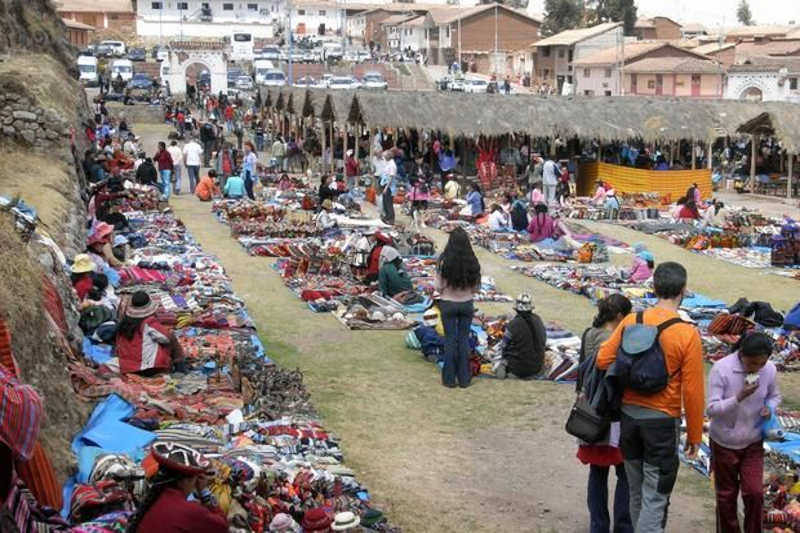
The Chinchero market isn’t only about buying. It’s about seeing how a place works when it’s not trying too hard to impress you. You’ll hear Quechua and Spanish mixed together. You’ll see kids helping, elders bargaining, and visitors trying to keep up. It’s normal life, on display—without being staged.
If you go with curiosity, a little patience, and some small bills, you’ll do great. And when you get home and pull that woven scarf out of your closet months later, you’ll probably feel it again—the thin mountain air, the sharp colors, the quiet pride in the hands that made it. That’s the real takeaway. The rest is just stuff.