


Exploring the Stairs of Death Peru at Huayna Picchu
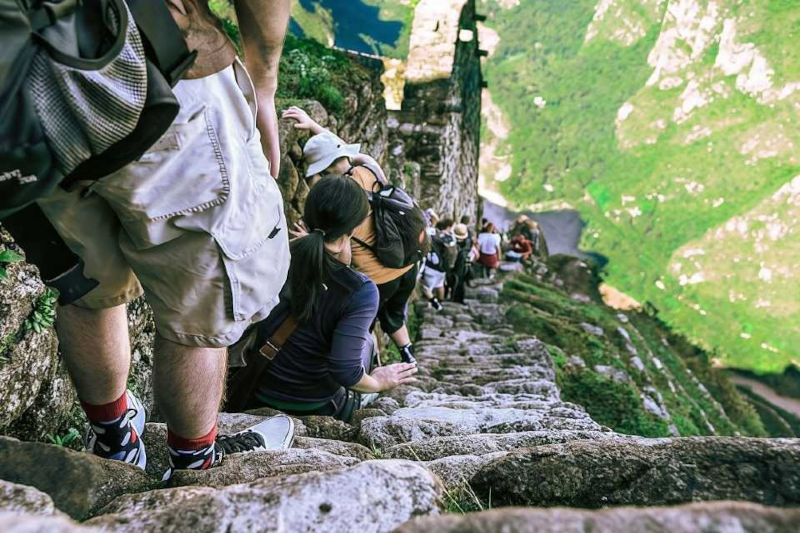
First it suggests a dangerous path full of threatening elements, but it is nothing so deadly. Visitors who have been studying the Stairs of Death in Peru for some time have explored the design of this site in relation to death, and recently searched it online as ‘stairs of death peru,’ ‘the stairs of death peru,’ or ‘peru stairs of death’—but this route doesn’t really have anything to do with death.
If you compare almost any picture of the classic view of this city of Machu Picchu, you’ll see a green thumb looking out of place, almost like it is pointing up. It’s Huayna Picchu. It is not located inside the primary citadel, but is one of the mountains that rises about 1,000 feet above the sanctuary and the misty dancing waves of the Urubamba River below.
Why the Huayna Picchu Stairs Are So Steep
Why have steps in the large ramp made 60 degrees? They created these footpaths to lead up to the summits of the hills, fitting stones into the side of the hill at such an angle that it seems more like walking up an over-high ladder. As a result, the Huayna Picchu hike becomes extremely difficult, and many climbers must hold onto the rock with their hands just to maintain grip on the sheer granite face.
Today’s safety statistics by the park officers in Peru indicate that this route is not a “death-trap,” but rather a carefully-monitored track. Motorized machinery is currently driving rock stands and cables into the rock to provide visitors with a safe grip – turning this once terrifying Incan scouting route into a safe (although challenging) bucket list item.
Why the Incas Built a ‘Ladder into the Sky’: Engineering vs. Drama
In the course of looking up at the near-vertical slope of Huayna Picchu one might ask, “Why would anyone have constructed such a terrifying staircase?”. We aren’t searching for action on the part of the Incas, we’re searching for commanding control.
This peak provided an unbeatable vantage point to guard Machu Picchu. Furthermore, the grueling path connected sacred sites, tying into the history of the great cavern ruins hidden within the mountain below. To reach these high-altitude sanctuaries safely, engineers had to conquer gravity.
Constructing steps in dirt was not enough, builders tied their paths to the mountain.In fact, engineers can describe the notorious Stairs of Death as an engineering school for slope and structure stabilization. The Inca builders designed them as arduous retaining structures that actively support the entire mountainside, preventing it from washing away.
The Engineering Behind the Stairs of Death

This 500 year longevity is based on three aspects of the masonry of the Incas, which are still apparent on the structures today:
- The granite is finely cut and blocks fit together tightly without any mortar called ashlar.
- Drainage channels: The channel structures, which are provided as a built-in effect, so that heavy rainfall from the Andes can be diverted from the foundations.
- Interlocking joints: Stones tightly placed in the bedrock to ameliorate the impacts of an earthquake.
Imagine these high steps as an enormous drainage stone! The Incas learned how to control the flow of water to make its trails not liable to collapse in mud slides by understanding trial hydrology, or how water flowed down the steep ridge. This is not a walk along a trail, this is a journey up a super-smart water management system. It’s an invisible armor and the act of recognizing it is infinitely rewarding; however, the task is not the only hard task which awaits visitors to the tower. Deciding on the different goals of all the mountains to climb requires taking the physical requirements of each trail into consideration.
Choosing Your Peak: Huayna Picchu vs. Machu Picchu Mountain
Sitting in the ancient citadel, you’ll have to make your choice of Huayna Picchu vs. Machu Picchu Mountain: which form of exhaustion are you looking for? The path known as the “Stairs of Death” is a fast and swift scramble up vertical rocks and steel scaffolding that requires a good head for heights. The other mountain, however, is a good go-to take-it-easy endurance run. Your gain adjusts accordingly: Huayna Picchu places you almost directly above the ruins, delivering that famous bird’s-eye view, while the taller peak gives you a panoramic overview of the entire river valley.
Trying to determine the fitness needed for Peru treks is best done by comparing the hard data. These two trails require totally different type of energy reserves from hikers:
- The total distance & elevation of the Huayna Picchu trail is about 950 feet over the course of one steep mile, while the other mountain trail has its elevation rose to 2100 feet in 2 mile hike.
- Trail Style: Huayna has a narrow two-step path with often hand-over-hand climbing, its neighbor, however, involves a prolonged two-hour hike up paths that are wider and made of stones.
Finally, it is up to your personal preference if you choose to take a thrilling journey towards the top or burnt out legs hiking gently upwards. Posting your stone steps booking on either of the two sets entails some very limited modern-day booker system.
Bureaucracy: Circuit 4 Tickets and Permit Secrets
Modern foresight is needed to access these ancient steps. Travelers favor May to October as the best period to trek Huayna Picchu because the stones stay solid and dry instead of slippery and wet. During this peak season, authorities limit daily entry to preserve the ruins, so travelers must book 4–6 months in advance. Treat the process like buying front-row tickets to a show—if you wait too long, the mountain sells out.
The official government website is your next hurdle, where you must specifically select Machu Picchu Circuit 4 entrance tickets combined with the mountain. Circuit 4 acts as your designated pathway through the lower ruins, leading directly to the trailhead. A reliable permit booking guide will remind you these passes are timed and strictly non-transferable. Rangers meticulously check passports and enforce entry windows to prevent dangerous overcrowding on the ancient stairs.
Once past the checkpoint, the paperwork quickly fades into a very physical reality. Rangers mandate a strict one-way traffic flow, meaning there is no turning back once you commit to the narrowest sections. This system prevents dangerous bottlenecks on ledges plunging hundreds of feet into the valley below. You do realise as you’ll approach that you’re unlikely to be able to pull back quickly, adding to the psychological challenge of trying to climb back up. Which is their one-way trip and a different mindset towards dealing with the sheer vertical and the thickness of going up.
Conquering Verticality: Managing Fear of Heights and Altitude
A stone staircase of 60° descend is a brave person’s challenge for the bravest traveler. The “three points of contact” rule is used at Machu Picchu as a way of countering their fear of heights. When working up a steep attic ladder, grasp and take only two hands and one foot at a time—or two feet and one hand. This realistic and practical exercise allows you to concentrate on the solid rock in front and get onto it, rather than the dizzying plunge down into the valley.
How to Handle Altitude and Steep Terrain
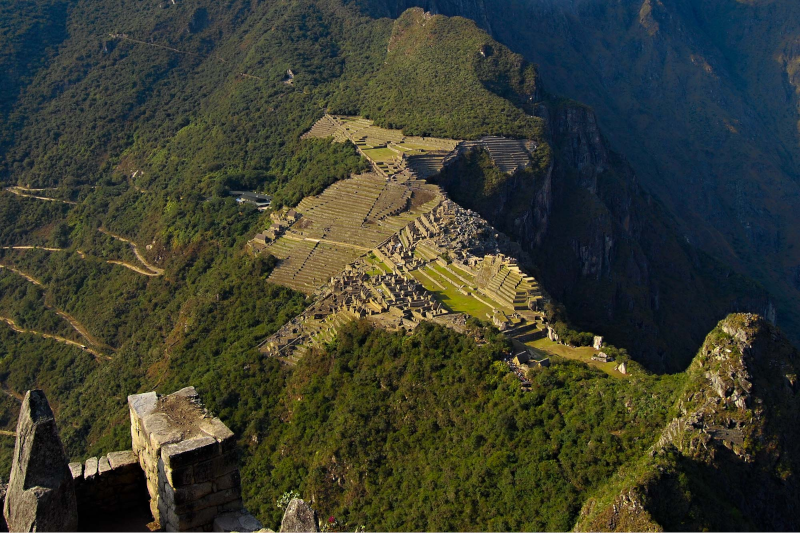
But atop almost 9,000 feet, there’s another unseen battle going on in your body. Active hypoxia management, as opposed to passive measures, is essential to effective altitude illness prevention in Peru hikes. During hypoxia (or low oxygen) your tissues require oxygen but you don’t, and your heart begins to pound upon standing up! You can control this by taking intentional, rhythmic breaths and stepping gently on the ground, coordinating your breathing with your steps up the terraces instead of running.
The last layer of physical stability comes from your equipment. The key pieces of equipment for successful summits are those which allow for agility… and are close to the mountain, that is the centre of gravity:
- Non-slip hiking boots: The ancient polished granite demands deep rubber footwear for comfortable grip.
- Light daypack: A compact and secure pack allows you to have both your hands free for the climb.
- A continuous supply of water: The need for 2 liters capacity for water to get rid of the symptoms at the heights efficiently.
A consistent pace and select gear can make the ascent of a mountain seem like a walk in the park! Once you understand how to safely navigate the verticality, the next crucial decision dictates your view from the top, hinging on weather and timing.
The Morning Choice: Early vs. Late Climbing Slots
The selection of an early or late morning climb can determine your whole mountain days experience physically and visually. The Andean mountains form a special micro-climate at sunrise which is characterized by frequent cloud covering of the mountains. The 7:00am entry is through hearty cool fog. It can build a “wall of white clouds” from the summit if you are looking for the famous valley views from the summit, but it may give a mysterious look to the ruins as well.
The 10:00 AM group wants an intense equatorial sun with the sacrifice of that morning chill.It’s a tradeoff between an intense, equatorial sun and the morning chill for the 10:00 AM group! When the mist clears, hard, intense light floods the ruins and enhances that famous “Machu Picchu” shot that belongs on magazine covers. Given the dramatic quality of the exposure, some people asked themselves if it is dangerous for visitors to walk by the “Inca steps” in the Full Sun. The heat of the day will make climbing a lot harder on the lungs, but the morning dew WON’T be as slippery as the stones baked dry by the sun during the day, and that’s a good thing.
In the end it’s a choice between cool and enigmatic mountains and panoramic views pouring down the sun. If you’re looking for a picture with a perfectly hit landscape, then you might prefer the latter. You’ve conquered the mountain and in many ways experienced the incredible beauty of this remarkable landscape, but now the descent reveals the one thing you might not have thought to look for: an incredible but lesser-known detour.
Beyond the Summit: Finding the Great Cavern and Temple of the Moon
For the trail up, there is a concealed option on the down side which could make it a very different hike. A faint fork just below the peak takes visitors off onto the shadowy side of the mountain which leads to the Temple of the Moon. This is a very ambitious route that takes a considerably longer detour (an additional hour of scrambling down followed by an intense climb back on the way to the start) so do be careful to consider your leg endurance when undertaking this trail.
Why construct a building within the shadowed overhang? The Great Cavern ruins have a rich historical and spiritual link with Incan spirituality and binding with the underworld. In contrast to the buildings built on the surface and designed to reflect the light of the sun, this underground location recognized the earth’s unique energies from within. Incan engineers incorporated sculpted stone altars into the natural rock face to help form a connection between the physical world and the spiritual world below.
Why the Temple of the Moon Is Worth the Detour
For the tourist, it’s a great way to explore routes to the Temple of the Moon. This challenging way is rewarded by three possibilities:
- Spanning double doorways: This kind of entrances, each with its own 2-jamb, denoted high rank and are still gorgeous in this instance.
- Acoustics of the ‘Great Cavern’ – the stone takes the form of a bend, which helps to amplify every sound and gives off a ‘temple atmosphere’ effect.
- Less crowds: Many people miss out on this exhausting extra so you can enjoy exploring the ancient masonry near you.
To move away from those cool shadows it will take yet one more, deep-breathing effort to get up the granite stairs to the main exit path. This is your mystical detour to strengthen you physically and mentally on the way to its ultimate heartwarming stoking.
Final Ascent: Integrating the Experience into Your Travel Story
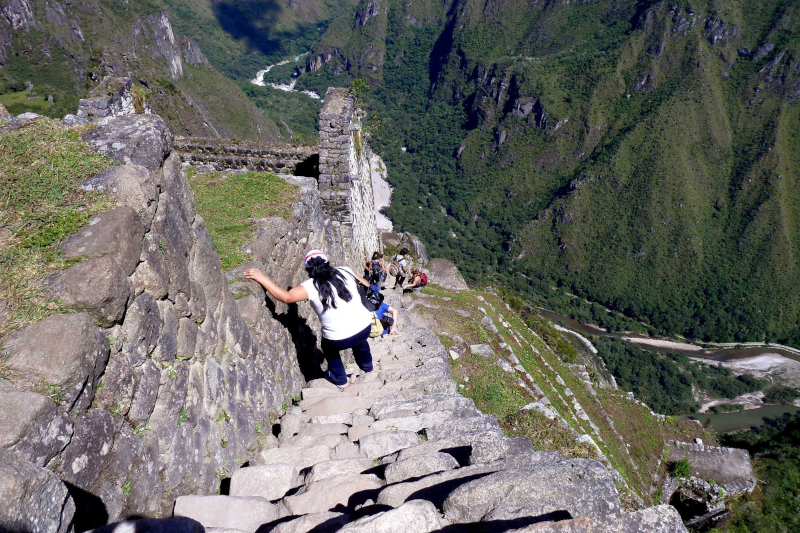
It’s no longer a sensationalised myth on the internet that you have to face Peru’s infamous stairs of death. Now, this high, steep granite ascent is a demonstration of ancient engineering and human effort. Climbing Huayna Picchu is not only about physical fitness; it is about physically connecting with the skill and craftsmanship of the Incan builders who, centuries ago, shaped and carried these stones by hand.
How to Prepare for the Huayna Picchu Climb
Taking this historical information and creating your own summits requires careful planning; you may need to perform significant physical work to climb this trail. When taking this bucket-list trip, walk through the following, factual time line:
- Book four months ahead: Obtain your mountain permits in advance – only a certain number are available for each day!
- 2 day acclimatization period in Cusco or Sacred Valley: Let your lungs acclimatize before taking the tough climb.
- Wear shoes that grip stone like razors: Get quality hiking shoes with stepped / crisscrossed soles that will have enough traction to walk safely on the narrow and moist stone stairs.
The “deadly” part of the term is an exaggeration for well-prepared modern travelers, but “demanding” of course means very little. With your preparation you will take a frightening climb on a hill, make it a bridge that puts you right into the Incan’s heart of resilience. Each grievous inhale and all sorts of assiduous footsteps mimic the fidelity of the state that fashioned it from the heavens.
As you make that final step over the last terrace, and onto the pinnacle, the ancient world is revealed below. It’s easy to see exactly why they built upwards when you take in the extensive ruins of Machu Picchu from the exact same point the Incan priests once used to view from. This is the big eyeshot, it’s not a mere marvelous picture, it’s a right view taken which forever alters the manner in which you perceive the horizon of human capacity.
Frequently Asked Questions
Are the “Stairs of Death” at Huayna Picchu Actually Dangerous?
Although people use the nickname, it exaggerates the risk. Steel hand cables secure sections of the trail, one-way signs manage traffic on narrow stretches, and ranger-controlled timed entry regulates access. The route rises steeply, feels exposed, and demands effort at nearly 9,000 feet, but it does not become reckless or dangerous for reasonably fit and cautious.
Why Did the Incas Build Such a Steep Staircase?
The trail links religious locations and provides a strategic vantage point from which the Incas watch over Machu Picchu.These stone steps provide the mountain with additional stability, by precisely masonry built and included with proper drainage and stones which ensure they are strong enough and capable to support heavy rains and earthquakes.
Which Hike Should You Choose: Huayna Picchu or Machu Picchu Mountain?
Narrow stairs, dramatic views overlooking the ruins, Huayna Picchu is short, steep and exciting. Overall, there is more elevation and resistance to the hike at Mountain of Machu Picchu, with the paths being wider and views posted across the neighboring valleys.
How Do Permits and Circuit 4 Work?
Permits are likely to be sold out 4-6 months before the peak season. Over to Huayna Picchu can be hiked only with the Machu Picchu Circuit 4 (Huayna Picchu pass included). Passport checked, access limited and in terms of time so that no overcrowding takes place.
Should You Choose the Early or Late Morning Slot?
Early entries are cooler and quieter, with often times views being restricted by fog and stones that can be slippery. Subsequent entries tend to be less cloudy and drier, although they may prove to be more challenging due to the brighter sun.