


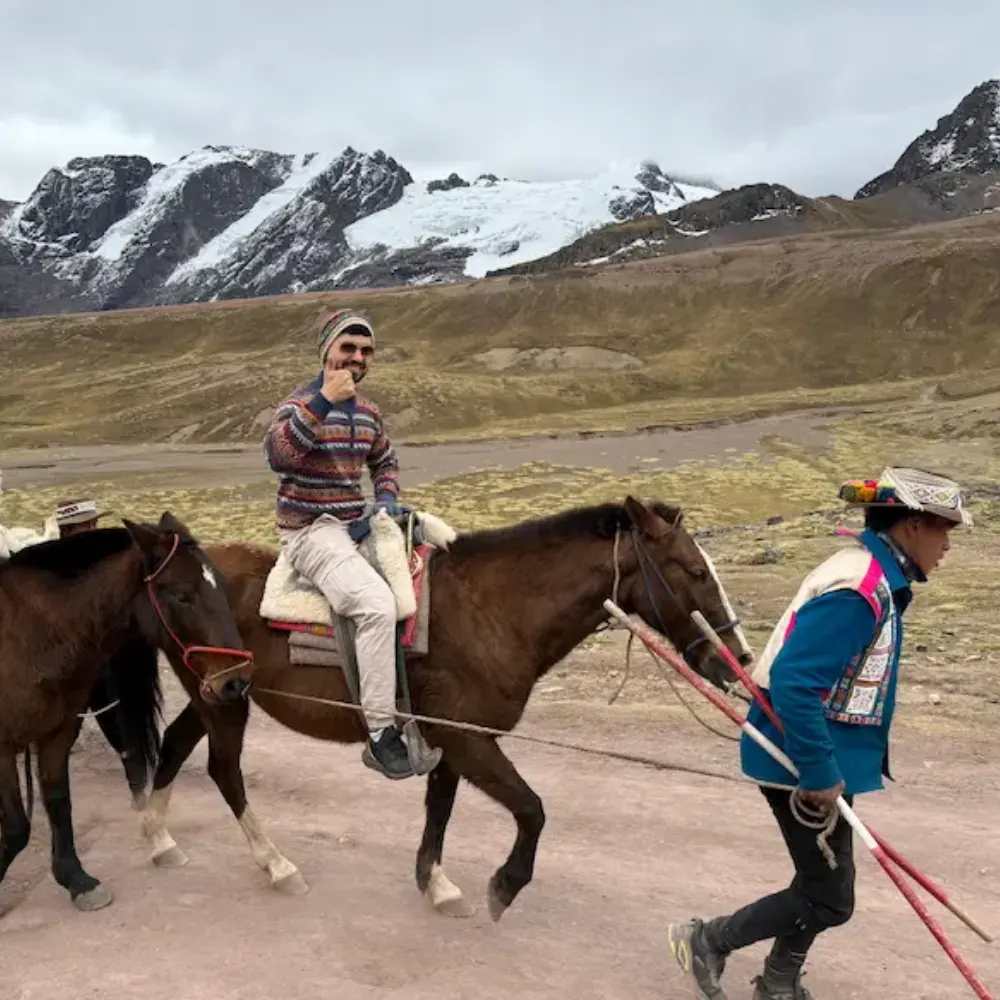
Exploring Rainbow Mountain: A Horseback Adventure
The photos do not show the breathing part. Vinicunca looks stunning on a screen. What screens do not capture is what happens to the lungs at 5,000 meters. The air is thin in a way that surprises people regardless of how much they read about it beforehand. Sea level fitness does not transfer. The body operates by different rules up there.
Roughly 70% of visitors use a horse for part of the ascent according to local guide data. Rainbow mountain by horse is not the easy option for unprepared travelers. It is an oxygen management decision that most people make after understanding what the elevation actually costs the cardiovascular system. How high is rainbow mountain? The summit is 5,200 meters, 17,060 feet. The trailhead starts at 4,600 meters. That 600-meter vertical gain is where the altitude makes itself known most aggressively.
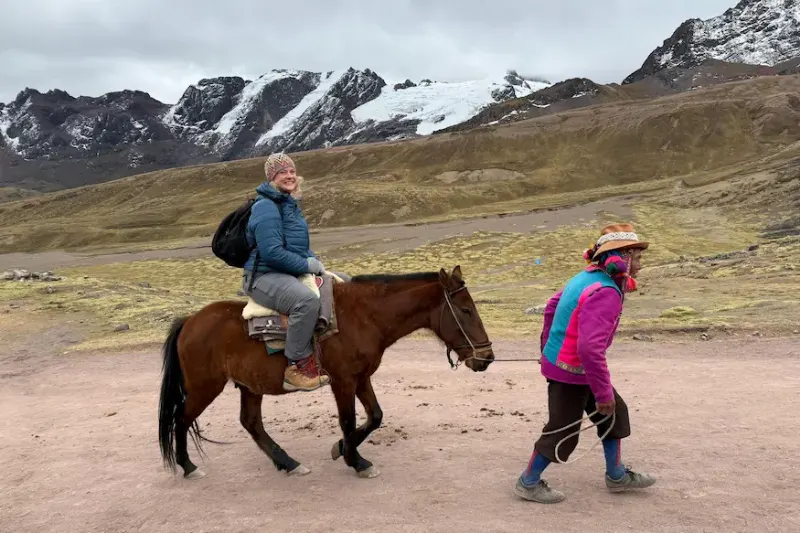
Why a Horse Ride Is a Smart Strategy, Not a Shortcut
At 16,000 feet the cardiovascular math changes. Hiking at this elevation is not muscle fatigue. It is respiratory distress. The lungs pull oxygen from each breath but there is less of it per breath than the body expects. Heart rate goes up and stays up. That sustained load over the length of the ascent is where altitude sickness develops for most people.
Putting a horse between the rider and that load during the long steady sections keeps heart rate in a manageable zone. Oxygen demand drops by roughly half. The upper sections of the trail arrive with reserves still intact instead of depleted.
Numbers at extreme altitude:
- Hiking: Heart rate above 140 bpm, 600 or more calories burned per hour just walking.
- Riding: Heart rate stays in resting zone, oxygen demand cut substantially throughout.
Rainbow mountain by horse changes what the body has left when the horse stops and the final section begins on foot.
Navigating the Logistics: Vinicunca Horse Rental Prices and Booking
City agencies in Cusco sell rainbow mountain packages. None of them control the horses. The animals belong to arrieros, local handlers from Andean communities surrounding the trailhead, who run a daily rotation on site. Paying for a horse in Cusco before arriving at the trailhead does not guarantee an animal is there. It often does not even reach the handler.
Cash only. Soles. Small bills specifically. The muleteers service at the trailhead runs on a no-change basis. A 100-Soles note for an 80-Soles ride means 20 Soles gone. That is a consistent pattern, not an occasional inconvenience.
Tour rainbow mountain by horse packages from Cusco cover transport, guide, and trailhead breakfast. Horse hire is not included. That transaction happens separately, directly with the arriero, on arrival. Knowing this before booking avoids the confusion that happens when the arriero asks for payment and the visitor assumes it was already covered.
2026 pricing at the trailhead:
- One-way ascent: S/ 70 to 130.
- Round trip: S/ 140 to 250.
- Emergency mid-trail hire: S/ 40 to 50, negotiated on the path.
The horse riding adventure covers the long steady sections. It stops before the summit. That is intentional, not a logistics gap.
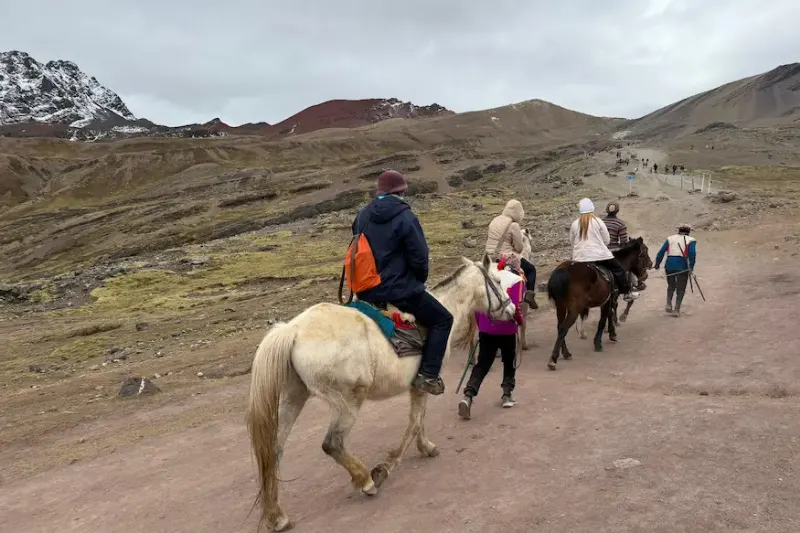
The Altitude Reality: Why the Horse Does Not Solve Everything
Two hundred vertical meters below the summit, everyone dismounts. The steepest terrain is off limits for the horses and that final section is on foot for every visitor regardless of how the rest of the ascent was handled. At 5,000 meters, 200 vertical meters walked slowly still requires real effort. Short distance does not mean easy at that elevation.
Riding keeps cardiac load lower. It does not stop the body from responding to reduced oxygen availability. Soroche (altitude sickness) develops in the saddle for some people. A headache that builds during the rainbow mountain by horse ascent, nausea that arrives while seated, dizziness without exertion, these are not signs that the horse failed as a strategy. They are signs that the altitude is winning regardless of effort level.
Coca tea is sold at the trailhead and at vendor stops along the route. Worth drinking before the ascent starts and again mid-trail. The mild stimulant effect takes the edge off early altitude symptoms without pharmaceutical side effects. Hot liquid at that temperature also keeps hydration going when cold makes water feel unappealing.
Signals that mean stop and assess:
- Headache getting worse rather than holding steady.
- Nausea not clearing after five minutes of rest.
- Dizziness while seated and stationary.
- Breathlessness without any physical exertion.
Oxygen is available at guide checkpoints and vendor stations along the Cusipata trail. Locations worth confirming at the trailhead before starting.
Ethical Equestrian Travel: Animal Welfare and Community Impact
The arriero cooperative structure distributes income across indigenous families and rotates animals to prevent overwork. Both outcomes depend on the payment going directly to the handler rather than through an intermediary. Paying the arriero at the trailhead is how the system functions as designed.
Thirty-second check before mounting:
- Eyes: Alert and clear. Dull eyes indicate stress or illness.
- Breath: Not labored while standing at rest.
- Skin: No saddle sores visible, coat condition acceptable.
A rainbow mountain trek that starts with this check adds nothing to the time and gives a baseline on the animal before the ascent.
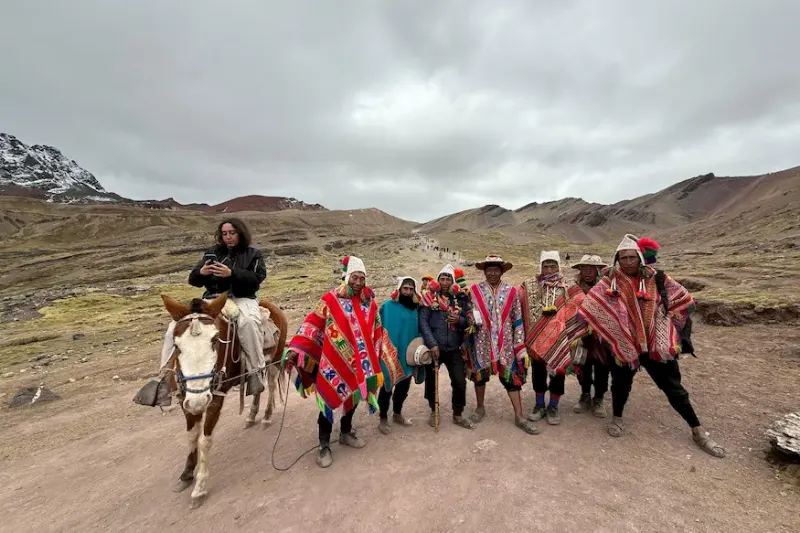
Gear Up for the Summit: Essential Packing for the Ride
What to bring to rainbow mountain comes down to two things people consistently underpack for: cold while stationary and UV at extreme altitude. Hikers generate heat. Riders do not. The temperature difference between walking and sitting on a horse at 5,000 meters in the early morning wind runs about 10 degrees. The coldest part of the day and the longest riding section overlap completely on this trail.
Footwear has to work in stirrups and grip rock for the final section. UV exposure at this elevation is 40% stronger than sea level. Early start time does not reduce that once the sun is up.
Non-negotiable items:
- Trekking boots with ankle support.
- Windproof gloves.
- Fleece neck gaiter.
- High-SPF sunscreen.
- UV-blocking sunglasses.
Your Action Plan for a Successful Rainbow Mountain Adventure
The best time to visit rainbow mountain is May through October. Dry season gives the highest probability of clear summit visibility. Outside that window cloud cover arrives fast and frequently covers the colored mineral layers that make the destination worth the effort. January through March is wettest and least reliable.
Essential tips for visiting that apply before the trailhead: hydrate heavily the day before, sleep at lower elevation the night prior, carry small Soles bills, eat light before departure. Four points that resolve the most common problems before the trail starts.
Faqs about rainbow mountain that come up consistently: horses are hired at the trailhead not in Cusco, tour packages do not include horse hire, two days of prior acclimatization in Cusco makes a measurable difference at the summit elevation.
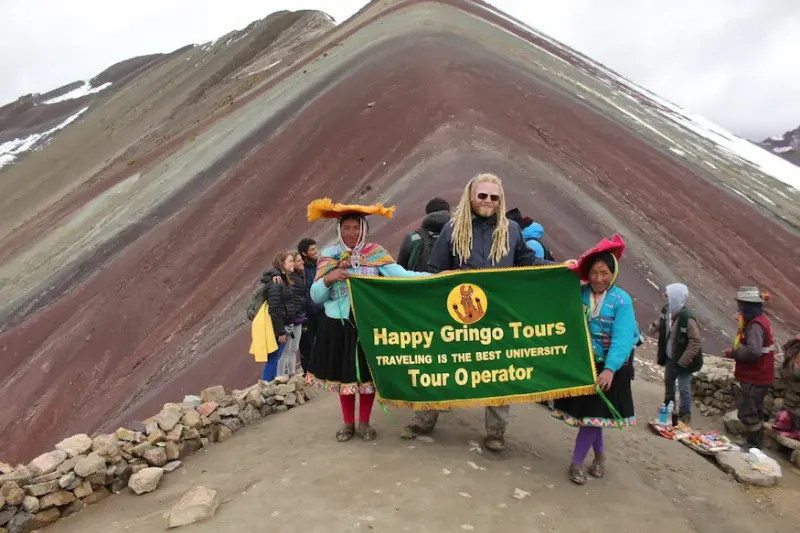
Rainbow mountain peru by horse covers the long sections. The final 200 meters is on foot. That part requires the same pacing and breathing discipline regardless of how the rest of the ascent was handled.
The rainbow mountain tour leaves Cusco between 3:00 and 4:00 AM. Distance and afternoon weather patterns determine that timing. Neither is negotiable. Sleep and hydration the night before matter more than most people plan for.