


A Guide to Ausangate Mountain Trekking
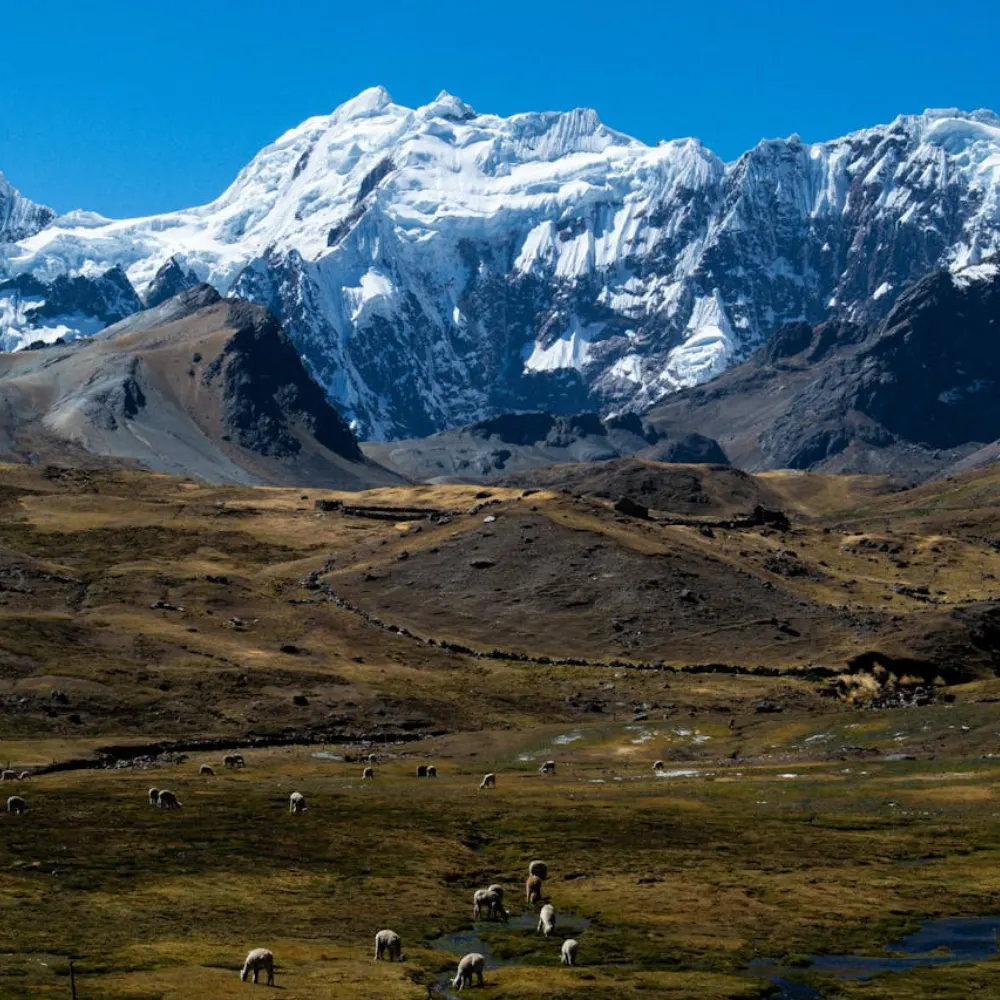
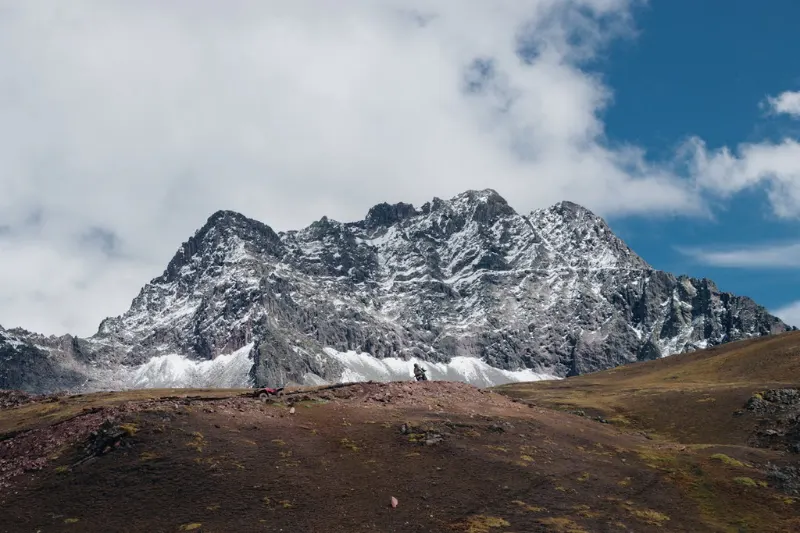
People land in Cusco thinking about one thing. Machu Picchu. The train, the citadel, the photos. Nobody blames them. But there’s a morning, usually the first clear one, where someone looks up from their coffee and sees something on the horizon that doesn’t quite register. A white mass sitting above everything else, catching light that hasn’t hit the city yet. That’s Ausangate mountain. Most people who see it have no idea what they’re looking at.
6,384 meters. Highest peak in the Cusco region and it’s not close. Stack twenty Eiffel Towers and you’re somewhere in the neighborhood. It anchors the Vilcanota range, which is not gentle terrain by any stretch. And unlike the ruins an hour away by train, almost nobody comes here on purpose. That’s honestly most of what makes it worth the effort. Why you should trek to Ausangate trek comes down to one simple thing: it’s the version of the Andes that hasn’t been packaged yet.
Summary
Ausangate mountain hits 6,384 meters and carries real spiritual weight in Andean tradition as a major Apu. Trek options go from a single day at the Seven Lakes to a full 5 or 6 day circuit around the massif. Rainbow Mountain sits inside the same landscape. Acclimatize in Cusco before starting, hire local guides, layer for serious weather swings, and plan the trip between May and September.
What the mountain means to people who live near it
For Quechua communities around Ausangate Peru, this peak is not a backdrop for photos. It’s a living entity. One of the most powerful Apus in Andean spiritual tradition, a mountain spirit that protects water, livestock, the whole chain of survival at this altitude. That’s not poetic language. The glacier feeds the rivers, the rivers feed the animals, the animals feed the people. The relationship is literal and people here understand it better than any guidebook explains it.
The arrieros are the ones who carry that knowledge most practically. Local muleteers who have worked these trails their whole lives. Before any journey starts they do three things, every single time, not for the tourists watching:
- Building an Apacheta: Stones stacked at high passes, a quiet request for safe crossing.
- Offering a K’intu: Three coca leaves arranged with care, breath blown softly toward the peak.
- Pouring a Tribute: A few drops of traditional drink onto the ground. Thanks to Pachamama. Always done.
Watching that happen on the first morning changes how the rest of the trek feels. Hard to explain exactly, but it does.
Rainbow Mountain and the lakes
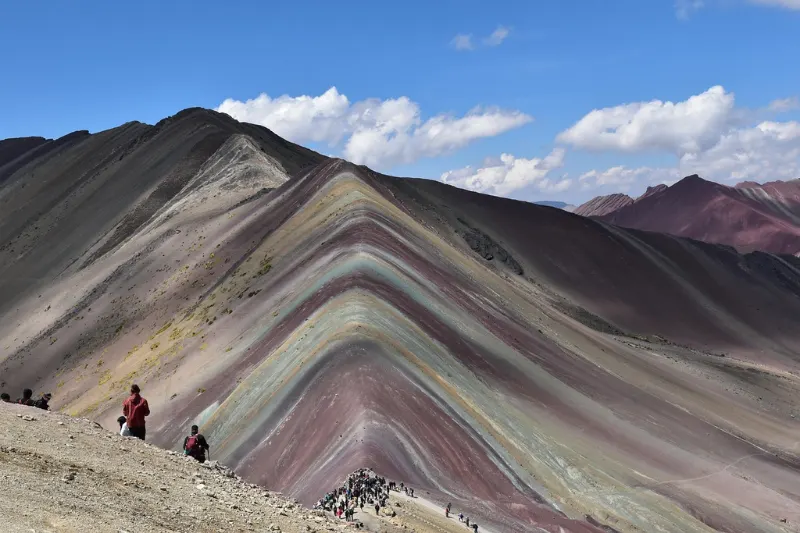
The striped ridge photos go viral regularly. Rainbow Mountain is the one formation everyone recognizes, but almost nobody realizes it sits inside a much larger landscape. The ausangate and rainbow mountain trek covers both because they occupy the same massif. Vinicunca is not a separate attraction that got discovered. It’s one piece of something older and bigger that most visitors never see beyond.
Can you see Ausangate from the Rainbow Mountain? On a clear dry season morning, yes. Ausangate mountain sits on the horizon past Vinicunca, unmistakable, bigger than everything around it. The geology that painted the ridges produced everything else out here too.
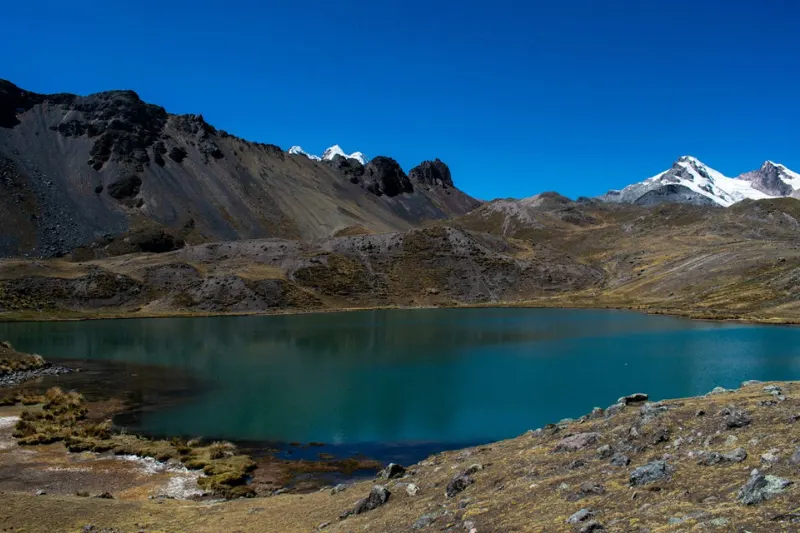
Down in the valleys below those ridges sit the Seven Lakes. Each one holds a different color because glacial melt carries fine rock powder into the water and minerals catch light differently depending on what’s dissolved. Walking between them is a strange experience in the best possible sense:
- Laguna Puca Cocha: Reddish-brown from iron bleeding out of the clay banks surrounding it.
- Laguna Azul Cocha: Deep blue, mirrors the sky so cleanly the surface reads wrong at first glance.
- Laguna Otorongo: Emerald green from copper and algae, named after the jaguar for reasons that make sense once someone sees it.
The altitude and what it actually does
Nobody adjusts to 16,000 feet right away. Fitness level is largely irrelevant at first. The pressure drops, each breath delivers about half the expected oxygen, and a mild incline starts feeling like something considerably worse. The body needs time to produce more red blood cells. That’s acclimatization, and it can’t be forced or skipped without paying for it later.
Altitude sickness hits differently depending on the person. Locals call it soroche. The distinction between normal exhaustion and soroche matters practically. Burning legs and heavy breathing on a steep section is just physics. A headache that won’t let up, nausea, dizziness, that’s soroche and the answer is to stop ascending. How to acclimatize in Cusco before the trek is straightforward: three full days minimum, gentle walks, no alcohol, drink coca tea consistently because it genuinely helps with the adjustment at elevation, and sleep as much as possible those first nights.
On the trail three daily habits cover most of the risk:
- Hydrate constantly: Three to four liters minimum. Altitude pulls moisture out faster than the body signals thirst.
- Pace deliberately: Slow, rhythmic, half-steps on steep sections. Managing heart rate matters more than covering distance quickly.
- Fuel smartly: Carbohydrates digest with less oxygen than protein. That difference matters at this elevation more than it sounds like it should.
Which route makes sense
A good Ausangate guide asks early how many days someone actually has and how honest they’re being with themselves about fitness. The routes cover a genuine range:
- Day Trip (1 day): Tops out around 15,000 feet. Moderate. Seven Lakes, serious views, achievable for most people who’ve spent a few days in Cusco first.
- Pacchanta Hot Springs (2 to 3 days): Around 16,000 feet. Challenging. Shorter alpine loop finishing at the Pacchanta hot springs, a natural thermal bath in a remote village that earns its place completely after two days at altitude.
- Full Circuit (5 to 6 days): Up to 17,000 feet. Strenuous. Complete loop around the massif, multiple high passes. This is the Ausangate trek people mean when they’re talking seriously about it.
For travelers weighing how much time to commit, the tour Ausangate trek 4 days covers the essential highlights including the Seven Lakes and base camp views without the full physical demand of the complete circuit. Those with more flexibility find the tour Ausangate trek 7 days covers everything, Rainbow Mountain, the lakes, the high passes, the Pacchanta thermal finish, and leaves enough buffer for weather delays or slower acclimatization days.
The Ausangate trek vs Salkantay trek debate comes up often among people planning a longer Peru trip. Salkantay is more established, more trafficked, better infrastructure along the route. Ausangate is rawer, higher, less visited, and the cultural layer runs deeper. Neither is the wrong choice but they’re genuinely different experiences.
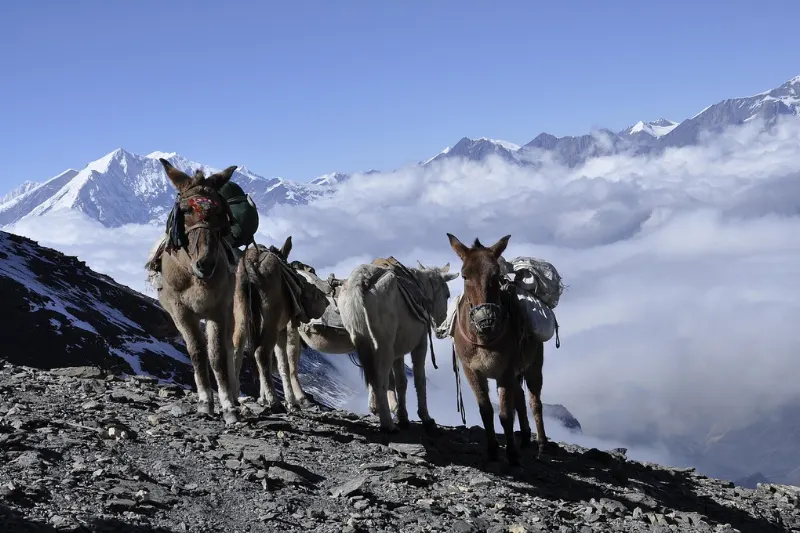
Going independent means carrying everything. Tent, food, safety gear over every pass. Hiring arrieros means mules take the weight and the walk stays enjoyable. It also puts money into Quechua communities directly, which matters more than it reads as a footnote.
What to actually pack
Mornings start cold in a way that surprises people who read about it but still weren’t quite expecting it. By midday the sun at this elevation is doing real damage because thin air filters almost nothing in terms of UV. By late afternoon the temperature has dropped again sharply. This cycle runs daily without exception. The layering system isn’t a recommendation, it’s just the only approach that works.
Moisture-wicking base layer. Fleece for insulation. Waterproof shell for wind and rain. Five things that go in the bag regardless:
- High-SPF sunscreen and polarized UV-blocking sunglasses
- Sleeping bag rated to 15°F or lower
- Wide-brimmed hat covering face and neck
- Waterproof boots broken in before arriving, not during the trek
- Trekking poles for the descents, which punish the knees more than the climbs
Timing
May through September. Dry season, clear skies, stable conditions, visible glaciers, safe passes. Ausangate mountain in those months looks like what it actually is. The photography works, the logistics cooperate, the risk profile drops to something manageable.
December through March the rain arrives heavy and stays. Trails go to mud, fog covers everything worth seeing, lightning hits exposed passes regularly enough that no local guide puts clients on them during a storm. The rainy season isn’t a slightly worse version of the dry season. It’s a different situation entirely.
Three things before leaving Cusco
- Build endurance: Long walks with a weighted pack at home before flying. Consistent, not intense.
- Allow time: Extra acclimatization days in Cusco built into the schedule from the start, not cut when things get tight.
- Connect locally: A Quechua guide who understands the mountain traditions is a meaningfully different experience than someone handling logistics. Worth finding the right one before booking anything.
Q&A
Best time to go?
May through September. Dry season, clear conditions. Skip December through March without exception.
Altitude sickness?
Three days in Cusco minimum before starting. Hydrate, slow the pace, eat carbs. Know what soroche feels like before it becomes a real problem on trail.
Which route?
Day trip for moderate fitness. Pacchanta loop for two to three days. Full circuit for five to six days and genuine commitment.
Guide or independent?
Arrieros carry the weight. Local guides know the land and the traditions. Worth it on every practical level.
What to pack?
Layering system, UV protection, cold-rated sleeping bag, broken-in waterproof boots, trekking poles.