


Planning your trek through Km 104 Inca Trail
Four days on cold ground isn’t the only path into Machu Picchu on foot. The km 104 Inca Trail cuts straight to the best section without the camping commitment. Train stops briefly at a distance marker in the middle of cloud forest, hikers step off onto gravel, cross a bridge, ancient stone starts immediately. No gradual buildup. Route begins the moment the carriage door opens.
What is the Inca Trail? Stone paths connecting Incan communities, ceremonial sites, and guardposts through the Andes into a functioning empire road network. When was the Inca Trail built? Archaeological evidence points to the 15th century under Pachacutec, likely incorporating older pre-Incan paths absorbed and extended as the empire expanded. The km 104 Inca Trail accesses the most visually concentrated section of that whole network inside a single day.

Why the Km 104 Hike Beats the Classic 4-Day Trek for Casual Adventurers
Twelve kilometers against forty-two. That gap isn’t just distance. Logistics simplify, gear drops, hotel bed waits at the end instead of cold tent on hard mountain ground. The inca trail from km 104 compresses the best parts without asking four days of endurance from people who didn’t fly to Peru for an expeditionary ordeal.
The comparison lands simply:
- Accommodation: Hot shower and hotel bed in Aguas Calientes versus sleeping on mountain ground in cold air.
- Pacing: One active hiking day versus multi-day endurance across unpredictable weather.
- Gear: Simple daypack versus full camping kit with sleeping bags and tent equipment.
The inca trail from km 104 still earns the Sun Gate arrival. That part doesn’t get abbreviated. The four days just don’t come with it.
Securing Your Spot: The Truth About Short Inca Trail Permits
Inca Trail permits aren’t standard entrance tickets. Separate restricted pass, government cap at 500 people daily across all Inca trails combined, that number including porters and guides. No gate purchases. No last-minute availability. The system doesn’t allow for either.
May through July requires booking four to six months out. April and October move faster than most people anticipate. Vacation itinerary needs this locked before anything else gets confirmed. Independent hiking is illegal on this route. Registered operator with an official inca trail guide handles government checkpoints and paperwork that first-time planners consistently underestimate.

Starting Your Journey: The Train from Ollantaytambo to Chachabamba
Early alarm, early train. Arid highlands visible through panoramic windows first, then dense misty cloud forest taking over as elevation drops toward the hidden entrance. Where is the Inca Trail? Peru’s Cusco region running through the Sacred Valley and Andean cloud forest. That transition plays out in real time through the train window before the hike even begins.
Conductor needs reminding about km 104. Stop is brief, unscheduled, easy to miss if attention drifts. Off the carriage, across a swinging suspension bridge over the Urubamba River, Chachabamba ruins within minutes. Ancient spiritual checkpoint, brief stop, then the path tilts sharply upward and holds that angle for hours without apology.
Mastering the Ascent: Navigating Elevation and Physical Demands
The km 104 Inca Trail elevation climbs from 2,100 to 2,700 meters in a few hours. Fifty-story building outdoors in jungle heat is the honest comparison. Uneven stone carved into steep mountainside centuries ago, foot placement demanding constant attention rather than automatic movement.
Following 7 tips to avoid altitude sickness changes how the second half of the day feels. Acclimatize in Cusco two to three days before the trek. Drink more water than feels necessary. Skip alcohol the night before. Move slow early rather than pushing hard and fading. Eat light carbohydrate-rich meals.
Use the rest-step technique, back knee briefly locked on each step so the skeleton carries load instead of muscles. Drink coca tea through the day. Coca tea addresses altitude headaches and fatigue specifically, guides carry it because it consistently works rather than as cultural habit.
Wiñay Wayna: The Crown Jewel of the Short Inca Trail
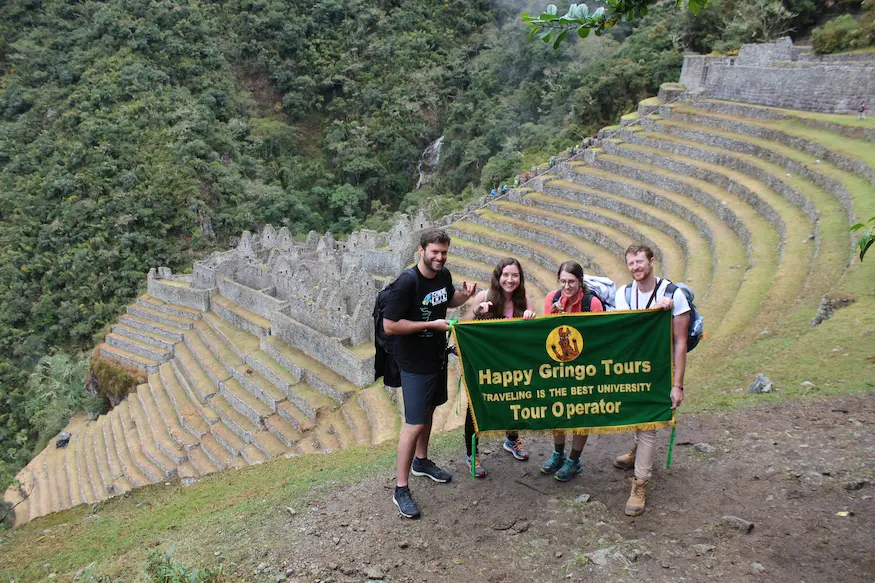
Ascent finishes and Wiñay Wayna appears on a steep mountain spine without warning. Forever Young is the translation, orchids blooming through stonework year-round in colors that make grey ancient stone look alive. Site sits empty compared to what waits at Machu Picchu later. That contrast alone is worth the timing.
Three things worth stopping for:
- The Terraces: Curved agricultural steps sweeping down the cliffside, preventing landslides while growing food at cloud elevation.
- The Urban Sector: Stone houses and ceremonial baths where ancient nobles lived and conducted ritual.
- The Waterfall: Audible before visible on the approach, framing the ruins with moving water and sound.
Upper tiers give the photography position. Clear sightlines, no crowds, warm light if timing works. Trail flattens after Wiñay Wayna and points toward the Sun Gate.
The Movie Reveal Moment: Entering Through the Sun Gate (Inti Punku)
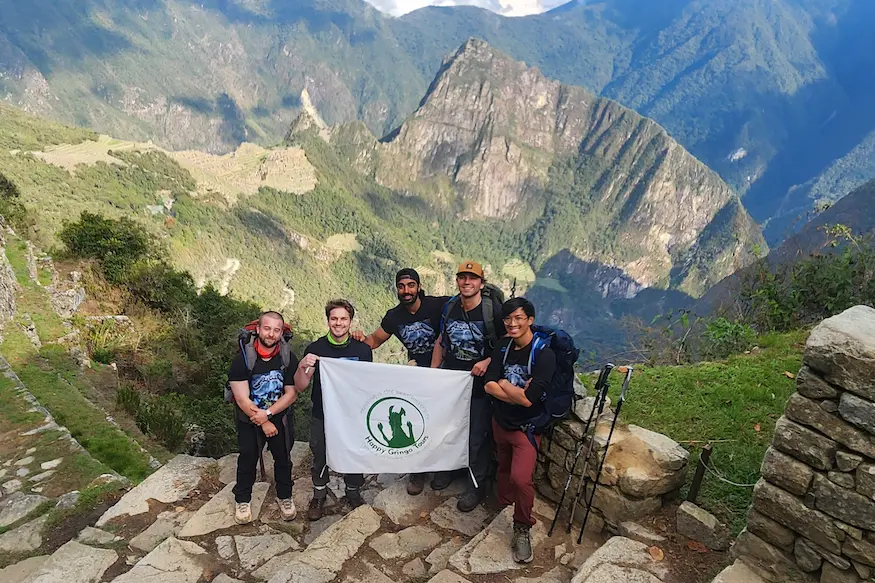
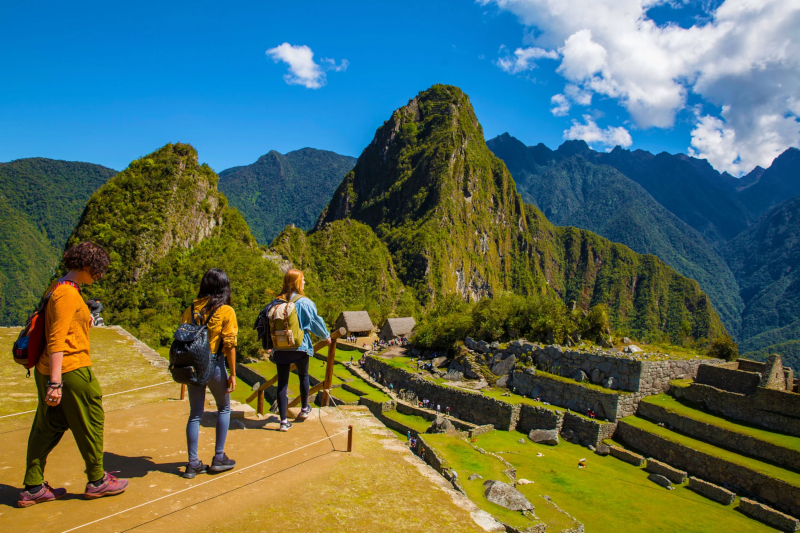
The inca trail km 104 to sun gate finishes at Inti Punku, ancient checkpoint built to control access and deliver the citadel view from above. Train tourists who rode straight to Aguas Calientes miss this angle entirely. Top-down perspective engineered by the Incas for arriving visitors is only accessible to people who walked up to it.
Arriving between 3:00 PM and 4:00 PM changes everything visually. Morning fog sits over the citadel consistently and burns off through the afternoon. Late arrival produces warm amber light, long shadows, stone terraces glowing in conditions that make photographs look deliberately planned when they actually just required showing up at the right hour.
Packing Light but Right: Essential Gear for Your Two-Day Trek
25-liter daypack limit on the train makes packing decisions for people who don’t make them early. Main suitcase travels separately to the hotel. Single-use plastics banned inside the sanctuary. Knowing things to carry on the Inca Trail before arriving at the station removes morning stress:
- Original passport for entrance checkpoints
- Reusable water bottle, 2-liter minimum
- Emergency rain poncho
- Sunscreen and insect repellent
- Lightweight zip-up fleece
- Fully charged camera or smartphone
- Basic blister kit
Mornings cold, afternoons hot, dry season the best time for Peru hiking. Layers that come on and off handle that range without unnecessary weight.
Recovering in Aguas Calientes: Where to Eat and Sleep
Bathrooms on the Inca Trail appear at designated rest stops and at Wiñay Wayna, but facilities are basic and spacing requires managing fluid intake deliberately. Worth knowing before the first hour rather than discovering it mid-trail.
Consettur bus runs down switchback road to valley floor in 25 minutes. Aguas Calientes is car-free, daypack gets replaced with a real bed. Three levels:
- Budget: Hostels with bunks and backpacker meals.
- Mid-range: Boutique inns with hot showers and river views.
- Luxury: Eco-resorts with spa treatments and gourmet dining.
Shower first, food after. Wood-fired pizza or traditional Peruvian meal in the town square. Sleep matters because the citadel runs in the morning.
FAQs
What is the Inca Trail?
Ancient stone path network through the Andes connecting Incan communities, ceremonial centers, and guardposts into an empire road system that moved people and goods across the mountains for centuries.
Where is the Inca Trail and how long is the Inca Trail?
Peru’s Cusco region running through the Sacred Valley and Andean cloud forest. Classic route 42 kilometers. The inca trail from km 104 covers 12 kilometers with hiking concentrated in one active day.
Is the Inca Trail from Km 104 the same as the Short Inca Trail?
Yes. Inca trail from km 104 is how the 2-day itinerary gets referenced. Main hiking day begins at the km 104 checkpoint where the train makes its brief cloud forest stop.
Do you need a permit for the Inca Trail?
Yes for both routes. Inca Trail permits required, registered operator mandatory, official inca trail guide present at all government checkpoints. No independent hiking on either route.
Your 5-Step Action Plan for a Perfect Km 104 Adventure
Preparing for the short Inca Trail starts months before the train leaves Ollantaytambo. Inca Trail permits sell out fast, legs need conditioning on actual stairs, gear needs testing before the trailhead. The km 104 Inca Trail delivers Wiñay Wayna, the Sun Gate, and on-foot Machu Picchu arrival without camping. Early action is what makes it real.
- 6 Months Out: Book the inca trail guide immediately. Inca Trail permits are date-specific and don’t come back once gone.
- 3 Months Out: Stairs, local hills, uphill leg strength specifically. The km 104 Inca Trail elevation gain rewards preparation and punishes the absence of it clearly.
- 1 Month Out: Broken-in walking shoes, reliable rain poncho, original passport. Three items, all non-negotiable at the trailhead checkpoint.
Step off the train into jungle and the planning disappears. Ancient stone, cloud forest, citadel waiting at the end.