


Top Must-Visit Tourist Sites in Cusco
Most travelers fly into the Andes and leave for Machu Picchu the next morning. The train station becomes the only landmark that matters. What gets skipped in that rush is a city that rewards the people who actually stop and look at it.
Cusco tourist sites are not secondary to the Inca Trail or Machu Picchu. Several of them are among the most architecturally significant things in South America. The walls tell you immediately that something different happened here.
Bottom half of most buildings in the historic center: 500-year-old Inca stone, fitted without mortar, earthquake-resistant, still standing. Top half: Spanish colonial plaster and balconies built directly on those foundations. Two civilizations in one wall. That visual is everywhere and most people walk past it.
The Inca called this place Qosqo — Navel of the World. The capital was designed in the shape of a puma, with cosmological intention behind every major district. Saqsaywaman forms the teeth and head. The central plaza sits at the heart. That plan still dictates modern traffic flow.
Cusco sightseeing done properly takes at least three days. Not because the distances are large, but because the density of what is here demands time to process.
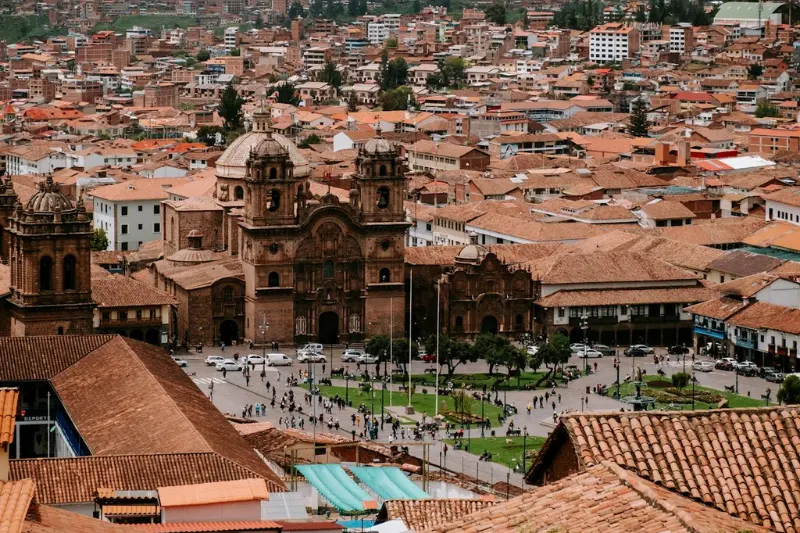
How the Plaza de Armas Blends Two Worlds
The plaza is where the collision is most obvious. Spanish conquerors built on top of Inca foundations rather than clearing them. The original structure here was a royal cancha, a walled enclosure. The colonial buildings sit directly on those original bases.
Look at the bottom meter or two of the surrounding structures and the transition between carved volcanic stone and colonial masonry is visible without effort.
Cusco’s cathedral interior holds something worth finding. A Last Supper painting where the central dish is a roasted guinea pig. Indigenous artists worked Andean customs into Catholic imagery throughout. That painting is the most documented example but not the only one.
The fountain at the center is an active gathering point for locals daily. Mid-morning on a weekday the plaza operates as a functioning social space that has been running continuously since before the Spanish arrived.
Cusco tourist sites in the plaza area can be covered on foot in a morning. The cathedral, the church of La Compañía de Jesús directly adjacent, the arcade of restaurants and shops running the perimeter. None of it requires transport.
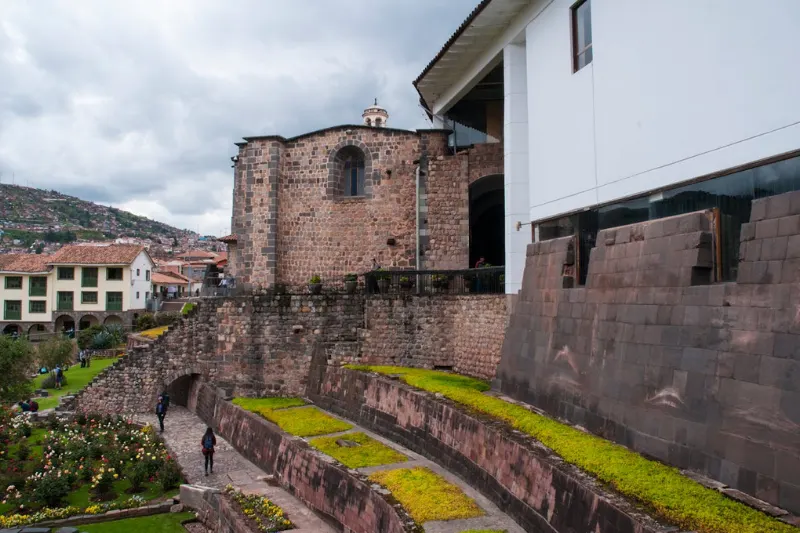
The Golden Secrets of Qorikancha
Before the conquest this was the wealthiest temple complex in the Americas. Walls covered in gold plate. Life-sized gold and silver figures in the courtyard. All of it stripped within years of Spanish arrival and melted into ingots.
What remained was the stonework. Ashlar masonry so precisely fitted that no mortar was needed. The standard demonstration is a credit card test — the card does not fit between the blocks. After five centuries and multiple major earthquakes, the joints are still tight.
The Santo Domingo Catholic convent was built directly above the original temple structure. The Inca foundations support it. This is one of the most significant cusco attractions for people interested in construction and engineering. The contrast between the Inca lower section and the colonial upper section is abrupt and visible from the courtyard.
Qorikancha includes an on-site museum with artifacts recovered during restoration work. The alignment of the temple’s main chamber with the winter solstice sunrise is documented and still observable.
Navigating San Blas
Steep. That is the first thing. San Blas requires climbing cobblestone alleys that gain elevation faster than most visitors expect, particularly arriving from lower altitude.
The 12-Angled Stone on Hatun Rumiyoc street is the standard starting point. Original Inca construction, demonstrating the fitting technique used throughout the empire — each block shaped to interlock with every adjacent block, no two joints the same angle.
San Blas is where working artisans actually operate. Not reconstructed craft demonstrations. Mendivil Workshop produces the elongated-neck religious figures the neighborhood is known for. Textile producers work on backstrap looms, a Quechua technique using body weight to create tension in the weave. The fabric is denser and heavier than anything machine-produced.
Cusco travel guide recommendations for San Blas consistently include the Mirador de San Blas for the view back over the historic center. The rooftop café options here are also consistently better than what is available at plaza level.
Decoding Saqsaywaman
The scale is the thing that does not photograph accurately. Standing beside the largest blocks, some weighing above 100 tons, the size registers differently than any image communicates. The zigzag wall pattern is visible from the city below and from the air.
No iron tools. No wheel. The engineering debate around how these blocks were quarried, shaped, transported, and positioned without those technologies remains active among researchers. The precision is comparable to Qorikancha despite the much larger block size.
Inti Raymi in June transforms the site into the largest annual Inca ceremonial reenactment. Tickets sell well in advance. The archaeological park requires separate entry that the Boleto Turistico General covers.
Cusco tourist sites outside the city center like Saqsaywaman, Qenqo, Puca Pucara, and Tambomachay are all accessible by taxi from the plaza in under 20 minutes. Combining them in a single half-day circuit is the efficient approach.

Mastering the Cusco Tourist Ticket
The general tourist ticket covers 16 locations across the city, the Sacred Valley, and the southern circuit. Every cusco tours operator and every serious cusco travel guide treats it as the baseline document for navigating the region’s entry fees.
Three partial circuits exist for shorter visits:
- Circuit 1: Inca ruins outside the city limits.
- Circuit 2: City museums and South Valley monuments.
- Circuit 3: Sacred Valley terraces and fortresses.
The full 10-day pass makes financial sense for anyone spending a week or more. The partial circuits work for focused single-day visits. Buying at the main Boleto Turistico office on Avenida El Sol rather than at site entrances avoids lines and availability issues.
A Sensory Escape to San Pedro Market
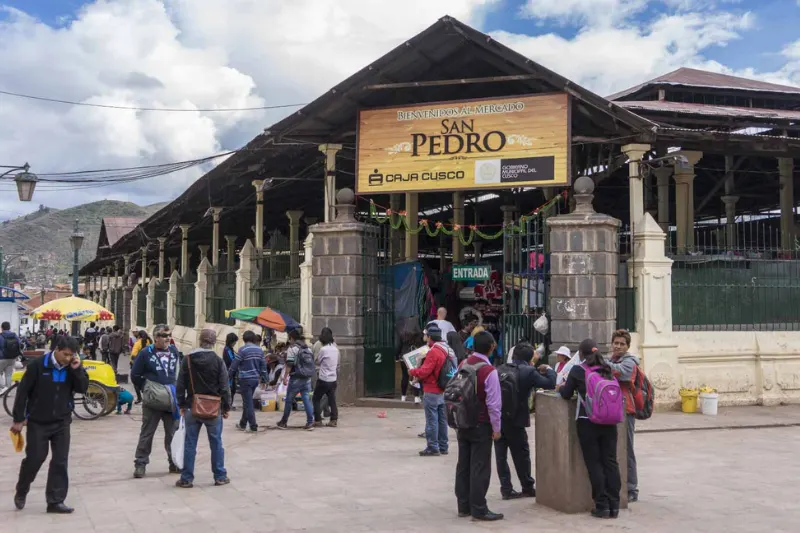
The iron canopy structure of the San Pedro market was designed by Gustave Eiffel’s firm. What descriptions underemphasize is the noise level and density inside during peak hours. Mid-morning is the practical window — produce is fresh, vendors are fully set up, and the soup section is running.
The chicken broth served here is the local recommendation for altitude adjustment, taken hot before exertion. Lucuma and maracuya are the most photographed produce items and both are worth trying.
The textile section sells both mass-produced synthetic items and genuine handmade alpaca products. The weight and texture test distinguishes them: real alpaca is heavier and cooler to the touch, synthetic feels warm and light. Haggling is expected and the opening price is not the transaction price.
Exploring the Maras Salt Mines and Moray Terraces
Moray first. The circular agricultural terracing here is unlike anything else in the Inca archaeological record. The concentric rings drop in elevation from the outer rim to the center, creating temperature differentials of up to 20 degrees Celsius between top and bottom. The interpretation is that this functioned as a controlled environment for testing crop varieties before deployment across the empire.
Maras is immediately nearby. Over 3,000 individual salt evaporation pools fed by a subterranean saline spring, still actively harvested by local families using centuries-old methods. The view from the hillside above is one of the more distinctive landscapes in the Cusco region.
Cusco tourist sites in the Sacred Valley combine well logistically. Moray and Maras together take a half day. Adding Chinchero on the same circuit covers the weaving tradition alongside the agricultural and salt extraction sites without excessive driving.
Conquering Rainbow Mountain and Humantay Lake
Both require early departure from Cusco. Both sit at elevations where the body’s response to altitude is the primary planning variable.
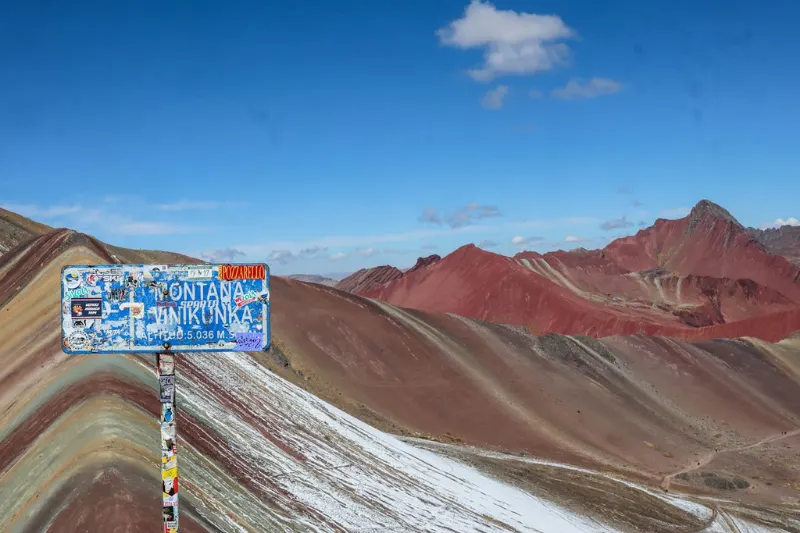
Humantay Lake at 4,200 meters involves a steep direct ascent from the trailhead — short distance, significant gradient. The lake sits in a glacial cirque and the color of the water on a clear day is the reason people make the climb.
Rainbow Mountain at 5,200 meters is a longer approach with more gradual gradient but higher final elevation. The colored mineral stripes require dry conditions and morning light to appear at their most saturated. Afternoon cloud cover frequently obscures the summit. Dry season, May through September, gives the highest probability of clear visibility.
Both require acclimatization in Cusco beforehand. Two days minimum in the city before either trek changes the outcome significantly.
Strategizing Your Sacred Valley Day Trip
The valley is large enough that trying to cover everything in one day produces exhaustion without depth. Three sites worth choosing between based on interest:
Chinchero at 3,800 meters has the weaving cooperatives where backstrap loom production is demonstrated and the colonial church built directly on Inca palace foundations. The seam between the two construction methods is visible in the walls. Sunday market is the most local-facing in the Sacred Valley circuit.
Pisac has the agricultural terracing visible from the road and ruins above the town accessible by trail or taxi. The Sunday market in town is heavily tourist-oriented compared to Chinchero.
Ollantaytambo is where most Machu Picchu trains depart. The fortress demonstrates Inca military positioning and the Temple of the Sun shows the same precision stonework visible at Qorikancha. Worth time independent of the train connection.
Finalizing Your Cusco Plan
Three days minimum for the city. One additional day for the Sacred Valley circuit. One day for either Rainbow Mountain tour or Humantay Lake tour but not both without a rest day between. Machu Picchu adds one or two days depending on whether Huayna Picchu or Machu Picchu Mountain is included.

Cusco tourist sites do not require a guide for most locations. The Boleto Turistico General covers entry. A guide adds context that signage alone doesn’t provide, particularly at Qorikancha and Saqsaywaman where the engineering history is the main interest.
Transport between sites:
- Within the city: taxis.
- Sacred Valley circuit: colectivos or private transport.
- Rainbow Mountain and Humantay Lake: organized tour vehicles given the early departure times and distance involved.
The city rewards the people who slow down in it. The architecture, the market, the neighborhoods above the plaza. None of it requires rushing and most of it loses something when rushed.