


Elevate Your Journey: Dead Woman’s Pass Guide
Suppose you were up on top of the clouds and the air is so thin that your heart thumps nearly out of your chest. On ascending, you head towards Warmiwañusca, as most refer to it, Dead Woman of Peru, where there is an impressive geographic pass. To be more precise, it is the lowest passable saddle on the walkable path that is located on the way between two high mountains on the Inca Trail.
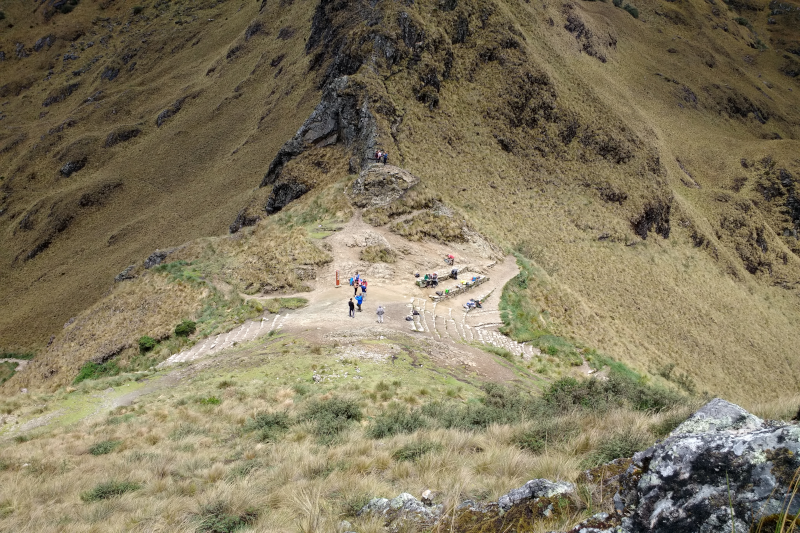
Climbing this centuries-long stone path may be like walking up an infinity staircase in a room half the size of oxygen. The highest point in the trek is this windswept ridge to the Dead Woman’s pass of 4,215 meters (13,828 feet). That is why trekking guides refer to Day Two as the most challenging part of the way towards the holy city.
However, surmounting Dead Woman Pass can instigate a change of mind. After you have conquered this dreadful Machu Picchu pass, months of anxiety in the lead up to the trip are usually forgotten. Rather, a keen personal sense of accomplishment sets in. What started as a fierce battle, is empowerment, as you have the greatest climb behind you.
Summary
The highest point of the Inca trail is Dead Woman’s Pass (Warmiwañusca) which lies 4,215 meters high. It is famous for having the tiring Day Two ascendancy, but it is glorified with the success it brings. Notably, it is ominously named because of the womanlike shape of the ridgeline, and not by tragedy. Victory lies in stepwise acclimatization, maintaining a slow pace with the rest-step and intelligent choices of the gear such as supportive boots, trekking poles, and layered clothes. Also, the road not only points to Inca spiritual purpose but it also points to clever drainage engineering. Training and timing during the dry-season allows trekkers to summit the pass and descend to the cloud forest safely.
Why ‘Dead Woman’s Pass Isn’t as Scary as Its Name Suggests
Its title is almost like a ghost story warning. This makes many trekkers question whether some tragedy happened in these high Andean tilted slopes. Luckily, the Dead Woman’s Pass Inca Trail trail route received a haunting name only after being observed and not by tragedy. Warmiwañusca is literally translated as Warmiwañusca meaning dead woman. Not a casualty, however, the name describes the landscape.

An observer standing on the valley side can see that the crest of the mountain assumes a cloudless form in the clouds. The silhouette is that of a woman lying on her back. She tilts her head upwards, and her ribs bend in on the mountains. You do not need a vivid imagination to spot this sleeping figure. Instead, the contours trace her profile with surprising clarity.
Recognizing this visual trick adds a poetic layer to your grasp of Inca Trail history. It also shows how tightly the empire linked pathways to nature’s forms. Nevertheless, the climb is still breathless, even in the cases when the plot seems not so ominous. Finally, the intimidation is the wavering oxygen.
Survival Science: What Happens to Your Body at 13,828 Feet
Stepping upward at this elevation triggers a profound physical shift. The true Warmiwañusca altitude challenge is not only the steep stone stairs. It is also the fact that oxygen at thirteen thousand feet drops to roughly 60% of sea-level levels. Inhaling can feel like sucking air through a straw. Heavy panting and a pounding heart are normal. However, sudden dizziness, a throbbing headache, or nausea can signal altitude sickness (hypoxia), not ordinary fatigue.
Preventing altitude sickness on the Inca Trail relies on smart pacing and a classic mountaineering rule: “climb high, sleep low.” In practice, your body adjusts by pushing into thinner air during the day. Then it drops into lower, oxygen-richer valleys to sleep. As a result, you recover while still gaining acclimatization benefits.
To survive the ascent without burning out, trekkers use a slow, rhythmic movement called the “rest-step.” This technique shifts workload from muscles to bones:
- Step forward with your leading foot.
- Lock your rear leg completely straight.
- Pause for a micro-second, letting your skeletal frame bear your body weight.
- Inhale deeply, then gently swing the back foot forward to repeat the cycle.
Consequently, a breathless struggle becomes far more manageable.
The Day Two Itinerary: Mapping the 1,200-Meter Vertical Climb
- On the second day, in the morning trekkers encounter the most famous part of the course. Day Two has a punishing 1,200-meter (almost 4,000-foot) vertical gain. Hence, what is perceived as a hike may be perceived as an endurance test. The average human being can go to the crest within five to seven hours. Instead of going straight up the mountain, the seasoned hikers make use of switchbacks and patience. That low speed retains energy in the thinning air.
- At Llulluchapampa, a lofty mead, the last convenient resting-place, relief momentarily comes into view. There it ascends like one of the stairs made out of stone cut in the sky. In addition, the scene alternates rapidly: green wood is replaced by impeccable rock. Outer layers can be bitten through by the wind above the meadow. That is why, rest-step has an added value.
- When you are at the top, then that is the victory, but the task is not concluded. Then to come next is a horrendous, two-hour tumble down muttering, old-fashioned steps. The ride finally culminates at the Pacaymayo campsite and the emerald mountains. The key, however, in keeping your knees safe is the appropriate equipment and proper footing.
Essential Gear for the Andes: Why Your Choice of Boots and Poles Dictates Your Success

The secret to surviving the descent is often in your hands. For example, trekking poles can act like shock absorbers on long stair-like drops. The downhill force can make knees absorb multiple times body weight with every strike. By engaging your upper body, poles reduce joint impact by up to 25% and improve balance. As a result, you stay steadier when your legs turn to jelly.
Surviving the 4,000-meter altitude also means managing temperature swings between sunny valleys and the freezing pass. Accordingly, a basic layer strategy should include:
- Moisture-wicking base layer (prevents chilling sweat)
- Insulating mid-layer fleece (traps crucial body heat)
- Windproof outer shell (blocks biting summit gusts)
When prepared in these elements the subject of the way in which a people without modern equipment acquired the mastery of this terrain becomes more readily to be admired.
Ancient Engineering: Why the Incas Built a Highway Over a Mountain Peak
The incline often makes hikers wonder why the empire did not build around the mountain. Crossing Dead Woman’s Pass was a deliberate spiritual and physical checkpoint. Moreover, the summit served as a transition zone linking Cusco to the Amazon. Building this high-altitude highway required immense labor. Workers hauled granite blocks into freezing air to pave a road closer to their mountain gods.
Still, preserving stone for five centuries took more than brute force. The genius of Inca engineering lies beneath your boots, where drainage protects the path. High mountain storms can unleash torrents that would destroy ordinary dirt trails. Therefore, ancient architects angled steps and built subterranean channels to redirect rain. In effect, they converted erosion into managed flow.
To experience this marvel today, hikers must prepare for a severe drop in oxygen. The thin atmosphere means that oxygen is in limited supply; hence, steep mountain passes are necessary to train. Also, cardiovascular conditioning eases you to maintain a gradual and steady motion. You have much-sturdier legs and lungs; and you are much better prepared to make the pass.
Standing on the Crest: Your Roadmap to Conquering the Pass
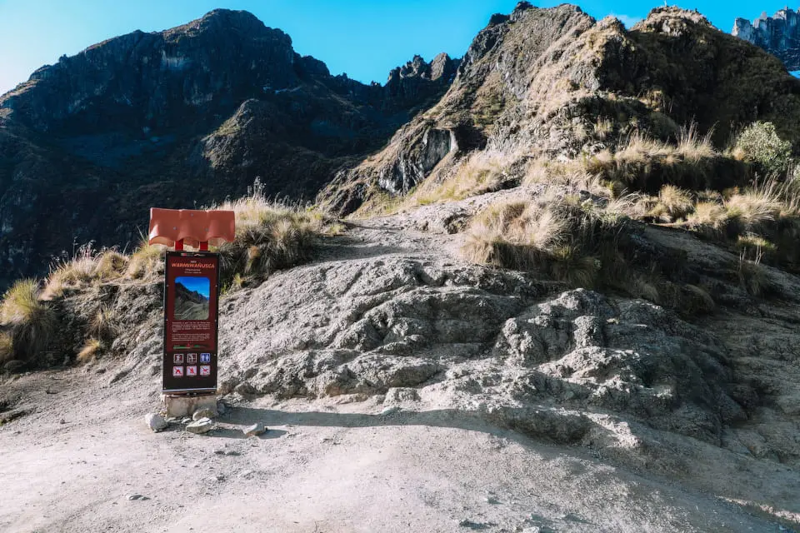
- To convert such a peak into a feasible objective, one will have to start their preparation three months beforehand. Work on stair climbers and heart exercises to develop lung capacity. This closely replicates the relentless stone steps you will face.
- To maximize success, target the best time of year for Peru trekking—the dry season from May to October—for secure footing. Additionally, this window usually brings clearer views.
- Once at the bottom of Dead Woman’s Pass, you should have a slow mentality. This is not a race-climb. Rather, each conscious breath and rhythmic rest-step lifts you up.
- The worst is really over when you are over the crest. Then the reward arrives quickly: a descent into an oxygen-richer cloud forest. In the end, you enter the glittering valley since you, yourself, were transported through the primeval world on your two feet.
Q&A
Why is it called “Dead Woman’s Pass”?
The title is inspired by the shape of the mountain and not a tragedy. Warmiwañusca means dead woman in Quechua. It is mentioned as a ridgeline that to the valley appears a woman lying on her back. The face and the chest of the figure are in the natural lines of the peaks. Therefore, this name has been used poetically to describe the landscape.
How hard is the Day Two climb, and how long does it take to reach the top?
It is the steepest part of the trek: 1200-meter (almost 4000 ft) uphill to 4215 meters (13828 ft). The majority of hikers spend 5-7 hours on the summit. Every step may be more difficult, as 60% of oceanic oxygen is present in the air. Thus, a lot of citizens save energy by using switchbacks and rest-step. Llulluchapampa offers a final comfortable rest before the steep push. Then post summit; a very steep descent to Pacaymayo. Nonetheless, such a descent also adds up to the fact that the toughest ascent is past.
What does altitude do to my body at 13,828 feet, and how can I manage it?
It may be hard to breathe, and heavy laboring in an achy heart is to be expected. Be aware of dizziness, aching headache or nausea as indicators of altitude sickness (hypoxia). Use acclimatization and short bouts of sleep high and low strategies in managing risk. That is, drag up at daytime, and rest at lower camps. Controlling the rest-step can slow down effort, going slowly. Consequently, the rise turns out to be more viable.
What gear makes the biggest difference on Dead Woman’s Pass?
Hiking boots in the middle and high range offer more stability to the ankle on uneven Inca rock and are more weight oriented in favor of safety. Trekking poles are particularly important on the downhill side as it enhances balance and lessens the impact of knees. Moreover, the problem of layered clothing is due to extreme variations in temperature. Wear a moisture wicking base, an insulating fleece and windproof coat to be dry and cozy.
Why did the Incas build over such a high pass, and how has the trail lasted so long?
The pass was a spiritual and logistical passage between Cusco and the Amazon. In addition to the work involved in getting stone to height, water runoff is enduring through drainage. Particularly, angled channels and steps catch and divert heavy rain. As a result, the path will not be subject to erosion and can be held.