


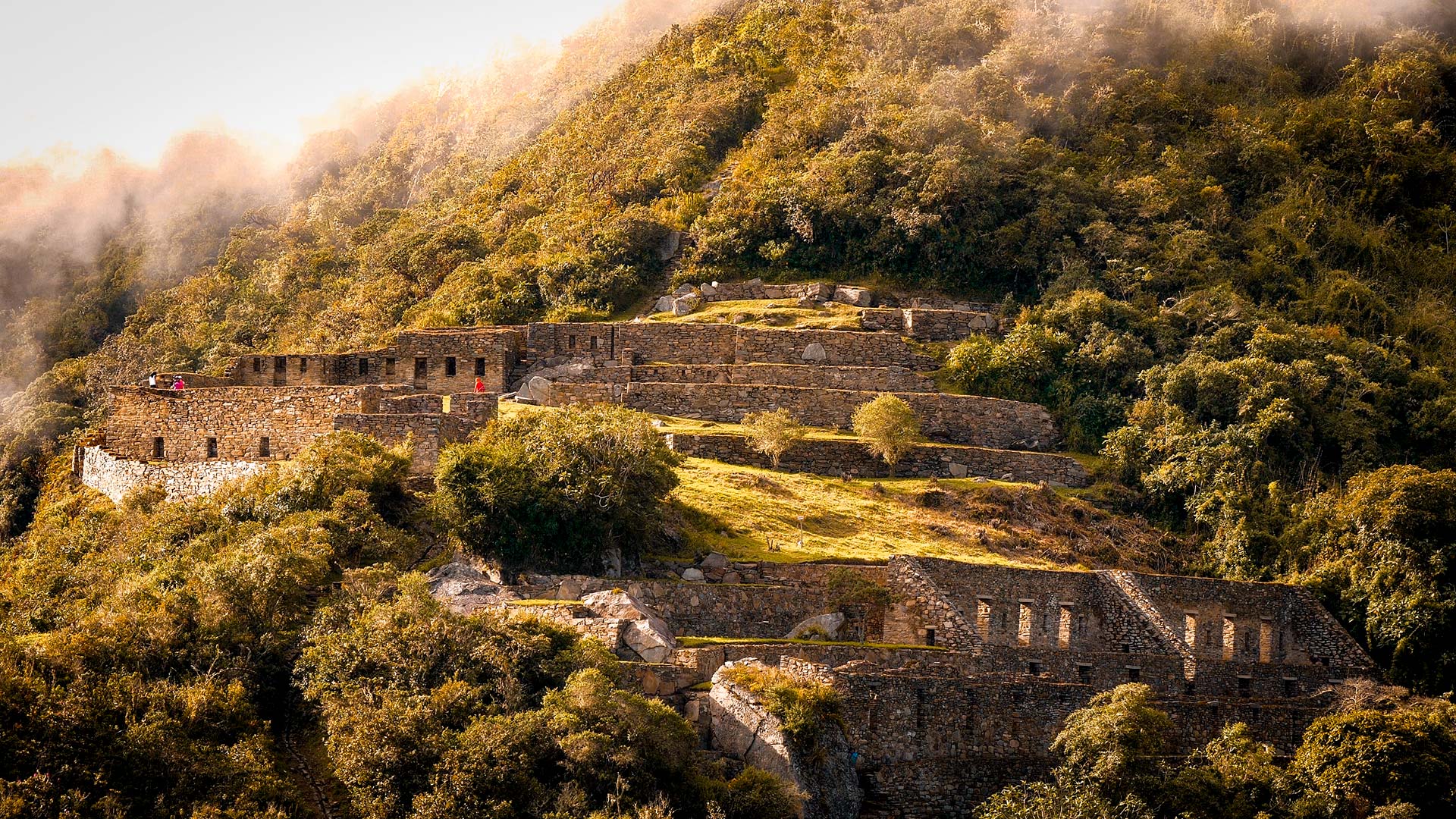
Choquequirao Trek Peru: The Epic Alternative to Machu Picchu
Peru gets millions of visitors every year and the vast majority never hear about Choquequirao. They book the train, walk around Machu Picchu for a few hours, head back to the hotel. Nothing wrong with that trip. But four or five days walk from the nearest road, inside the same mountain range, sits a site just as old and just as significant where some mornings the only people there are the ones who walked in with you.
The choquequirao trek peru is not a well-kept secret exactly. It is just a trip that filters itself. The people who end up doing it are the ones who kept asking questions after the first answer.
What Is There
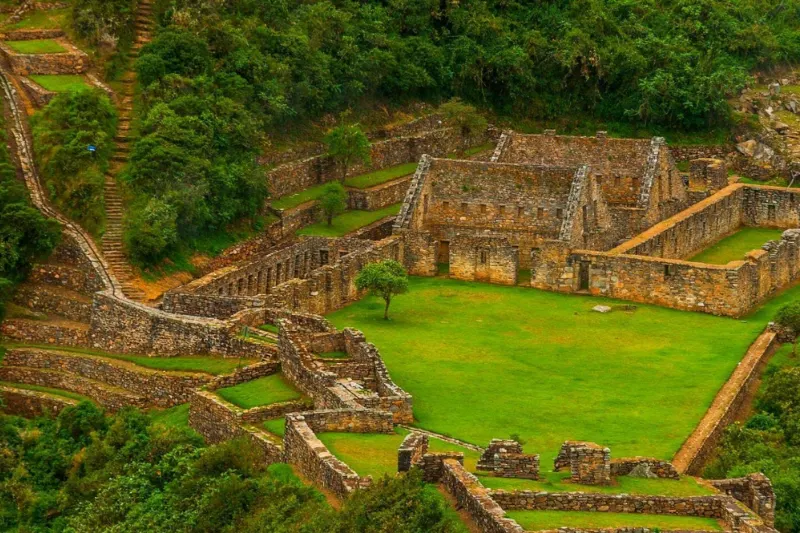
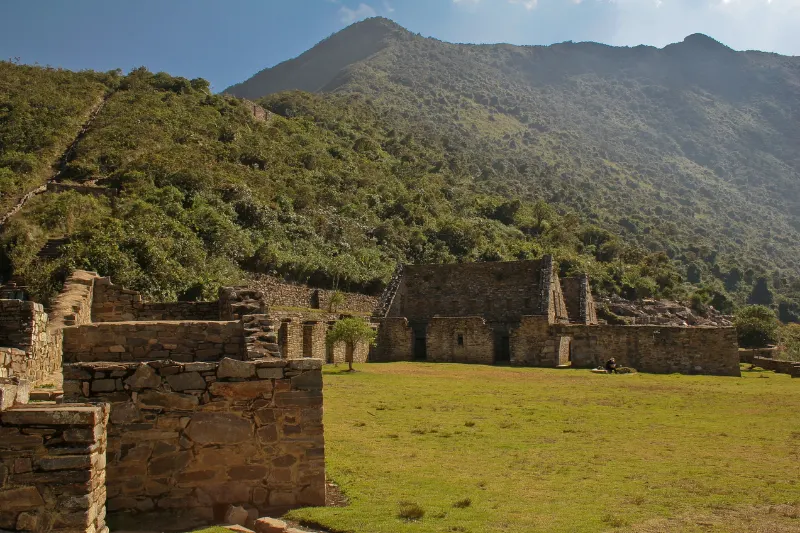
The choquequirao ruins cover more than 1,800 hectares around 3,050 meters. Most of it is still jungle. What has been cleared shows terraces, temples, ceremonial platforms, stone construction as precise and deliberate as anything the Inca built anywhere. The thing that separates it from other sites is that archaeologists are still working here. Still finding things each season that change what researchers thought they understood about the place.
Walking somewhere still being figured out lands differently than walking through a site where everything has a sign next to it. The incompleteness is genuine and it changes the quality of attention you bring.
Choquequirao the other Machu Picchu is what people call it, and the comparison holds up. Same historical and architectural weight, same Inca engineering logic, none of the infrastructure mass tourism builds around a place once it gets discovered. No buses outside. No ticket queues. No shops selling postcards in four languages.
Who Built It and Why
Most of the construction happened during Pachacuti’s reign in the 15th century. Agricultural terracing, religious platforms, administrative control over regional trade routes, possibly a retreat point when the Spanish arrived given how deep inside the Vilcabamba range it sits. The geography that made it strategically useful back then is the same geography that kept it off the tourist map for centuries afterward.
Still largely off it now. A few dozen people on a busy day. Sometimes far fewer than that.
Only a fraction of the total site has been properly excavated. The jungle covering the rest has actually preserved it better than exposure would have. New structures keep showing up each field season. The place is still becoming what it fully is and that is the honest condition of it, not marketing language dressed up to sound appealing.
The Trek Itself
The choquequirao trek peru covers around 60 kilometers over four to five days. Fifteen to twenty kilometers each day on terrain that goes steeply up or steeply down with almost nothing flat in between. The Apurímac Canyon is where the route makes itself felt most directly, roughly 1,500 meters of descent and then the climb back out the other side.
When people compare the choquequirao trek vs salkantay trek they are comparing two physically serious trips that feel completely different from each other. Salkantay has dramatic high mountain scenery and a well-worn network of camps and checkpoints. Choquequirao has almost nobody on it. The trail feels like it belongs to the mountain rather than to the industry that grew up around trekking in this region.
Among the best trekking trails in cusco this one sits apart because of what waits at the end. The inca trail is worth doing for its own reasons. Salkantay is spectacular. Neither ends at a site still being actively excavated with the majority of it still sealed under vegetation and genuinely unknown.
People who finish the choquequirao trek peru almost always say the same thing afterward. The difficulty was not something to push through. It was inseparable from what made arriving mean something.
What You Walk Through
Lower sections run through cloud forest, wet and thick and loud with birds, moss on everything. Higher up the vegetation thins and the trail opens into harder more exposed ground. That shift happens fast enough to feel like stepping from one world into another rather than a slow drift between them.
The choquequirao llamas grazing around the terraces are one of those details photographs do not carry well. These animals were central to Inca transport, ritual, and textile production for centuries. Watching them move through the ruins without any performance or staging attached feels like a thread of continuity between what the site was and what it still is. They belong there in a way that reads as accurate.
The canyon drops away below exposed trail sections in a way the body registers more than the eyes do. Legs on the descent. Lungs on the climb back up. People doing the choquequirao trek peru for the first time rarely describe the canyon as beautiful in the moment. They use words like brutal and then beautiful later, usually from the other side of it.
Solitude
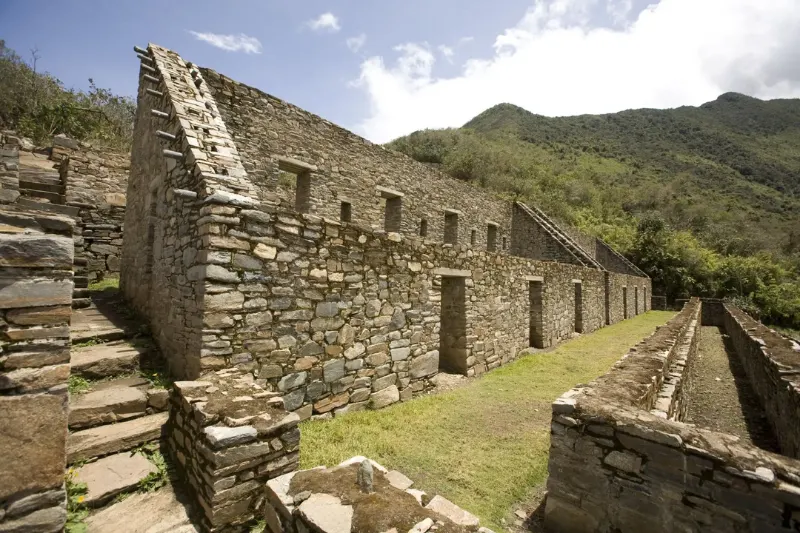
The tour classic inca trail caps at 500 people per day including support staff. The choquequirao trek peru does not get close to those numbers on its busiest days. Most groups pass a handful of other trekkers across the whole route and at the ruins themselves it is entirely possible to sit somewhere alone for as long as you want.
No crowd noise. No queue at the viewpoint. No other cameras in the frame when you are trying to actually look at something rather than photograph it.
The site exists in something close to the condition it was in before mass tourism found this part of the Andes. That is genuinely rare to say about any significant archaeological site left in peru and it will not stay true indefinitely. The cable car proposal has been floating around for years and when that happens the experience changes permanently.
Most people who finish describe it as more meaningful than more famous trips. Nobody else was standing there when they arrived. That matters more than most people expect it to before they feel it.
What a Good Guide Does Here
The paths at Choquequirao are the same ones Inca farmers and administrators walked in the 15th century. The terrace orientation, the spatial relationship between ceremonial and agricultural zones, the quality variation in stonework across different buildings, none of it is accidental. All of it follows an integrated logic applied consistently across Inca construction.
Good guides on a tour choquequirao trek explain the agricultural calendar embedded in how the terraces face the sun, what the hierarchy of stonework tells you about social structure, the cosmological reasoning behind spatial decisions. That context turns the choquequirao ruins from impressive old buildings into something a person can actually read and think about rather than just move through.
Early morning at a ceremonial platform with the canyon below and nobody else around produces a kind of experience that busy sites make structurally impossible. People doing the choquequirao trek peru carry that moment home and still bring it up years later without being fully able to explain why it stuck.
Preparation
Two to three days in Cusco before starting is not negotiable at this altitude. The city sits at 3,400 meters and the body needs genuine time before additional elevation gain gets added on top. Altitude sickness on day one of a multi-day route with no easy exit is a serious problem without a clean solution.
Physical preparation matters just as much. The elevation changes stack across consecutive days in ways that catch people off guard, people who are fit but have not done back-to-back mountain days before. Running and cycling build the base. Loaded hiking on actual hills is the most specific preparation for what the trail asks.
Gear worth sorting out before leaving:
- Boots: Broken in and waterproof. Not fresh from the box that morning.
- Clothing: Lightweight layers, waterproof shell, sun protection for the exposed canyon sections.
- Hydration: Enough capacity for long gaps between water sources.
- Health: First aid kit, altitude medication discussed with a doctor before leaving home, blister prevention starting day one not day three when it is already too late.
- Navigation: Maps or GPS as backup regardless of whether a guide is coming.
When to Go and How to Book
May through September gives stable trail, manageable river crossings, and clear views across the canyon. Wet season brings mud and higher water to a route demanding enough without either of those added. Some experienced trekkers prefer the wet months for the extra emptiness but it is not where someone new to the choquequirao trek peru should start.
A licensed local operator handles logistics in ways that matter when something goes wrong two days from the nearest road. Good ones know current trail conditions, run local guides and porters, coordinate campsites, and carry enough experience that problems turn into manageable situations rather than emergencies.
Everything carried in comes back out. Communities along the route depend on visitors who spend locally and treat the place with some basic respect. The site is in the condition it is in because relatively few people have come through. That is worth maintaining deliberately.
Arriving
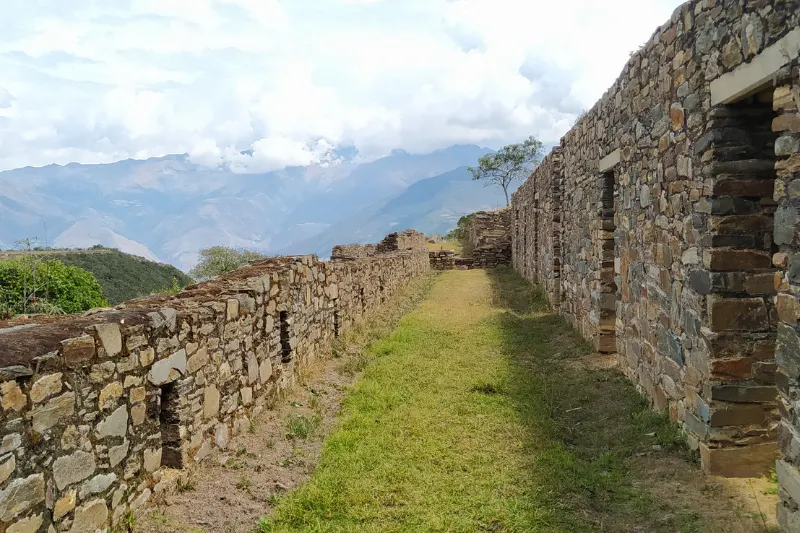
The site reveals itself in stages. Waterfalls first, then cloud forest, then terracing visible through the trees, then the full scale of it opening up as the lower sectors come into view.
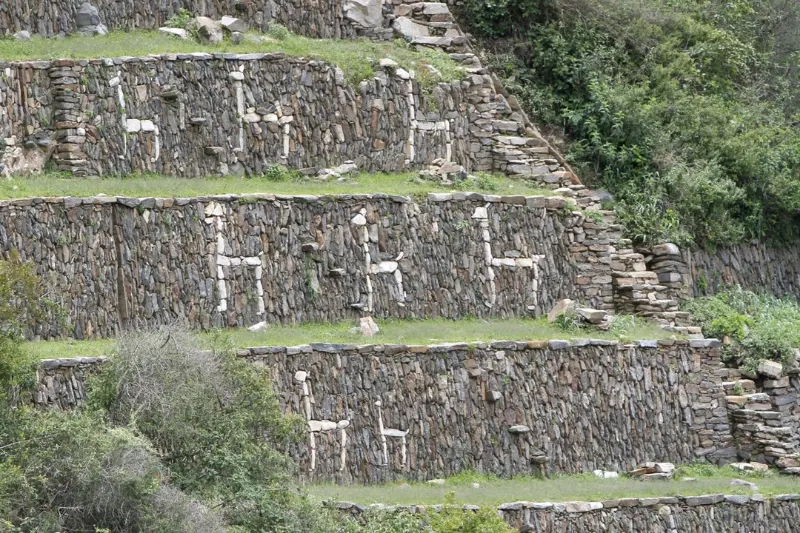
Terraces first. Ceremonial platforms above them. Then the white quartz choquequirao llamas inlaid into the dark slate walls of the terrace sector, 24 figures that exist nowhere else in the Inca world, after four days walking through the Apurímac on the choquequirao trek peru. They look exactly as striking as every description says and nothing like a photograph manages to show.
The hidden quality is not just about low visitor numbers. The site is still becoming known to archaeology. Still sitting mostly under jungle while the exposed section already shows something extraordinary was built here. That combination of what is visible and what is still covered underneath is what keeps it feeling genuinely unfinished in the best possible sense.
FAQ
How hard is the choquequirao trek peru and how long does it take?
Around 60 kilometers over four to five days with steep daily elevation changes through the Apurímac Canyon. Real acclimatization and real physical preparation are both necessary before starting. People who treat either as optional feel that decision clearly by day two with no easy way back to the road.
Why is it called the other Machu Picchu?
Same Inca engineering and historical significance, a fraction of the visitors. More than 1,800 hectares of terracing, temples, and administrative structures, most still unexcavated, built during Pachacuti’s reign in the 15th century and preserved by the remote location that kept it largely unknown until recently.
Choquequirao trek vs salkantay trek, what is the actual difference?
Fewer people, no permit caps anywhere near inca trail levels, and a site at the end shared with almost nobody. The route is harder with less infrastructure along the way, which is specifically what most people choosing it are after.
What gear and what time of year?
Broken-in waterproof boots, layered clothing, waterproof shell, solid hydration capacity, first aid kit, altitude medication confirmed with a doctor before leaving. Acclimatize properly in Cusco first. May through September gives the most reliable conditions.
What about the choquequirao llamas?
They graze near the terraces and pathways the way Andean communities have kept them for centuries. Watch from a respectful distance, skip feeding them, do not crowd them for photos. Let them do what they are doing and the scene takes care of itself.