


Llactapata Ruins: A Hidden Gem Along the Inca Trail
Quick outline (so the story stays on track)
- Where Llactapata fits on Day 1 of the Classic Inca Trail
- What you’ll see at the ruins (and what you won’t)
- How the day actually feels: KM 82 Llactapata Ayapata
- Smart logistics: permits, packs, weather, pacing
- A few respectful habits that keep the trail special
Llactapata is one of those places that surprises you. Not because it’s huge (it’s not). Not because it’s flashy (also not). It surprises you because it shows up early on the Inca Trail and quietly sets the tone. Like, Okay- we’re really doing this.
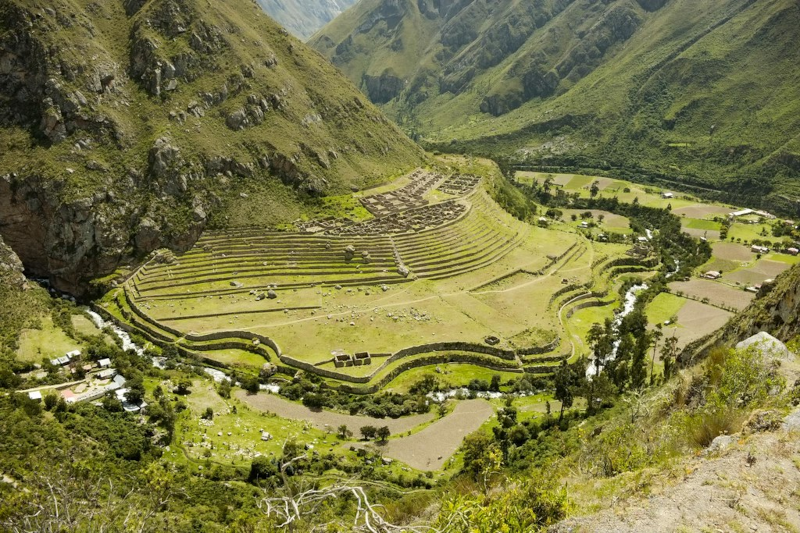
Most people think the Inca Trail is all about the grand finale at Machu Picchu. Fair. But the first day has its own magic, and Llactapata is a big reason why. It’s often the first major Inca site you explore after you start at KM 82 (Piskacucho), and it makes the trek feel less like a long walk and more like stepping into a living timeline.
First things first: which Llactapata are we talking about?
There are a few places in Peru that get called Llactapata (or Llaqtapata). So let’s pin it down: this article is about the Llactapata on the Classic Inca Trail– the one most trekkers reach on Day 1, after the early sites and before the climb toward the first campsite area (often Ayapata).
If your operator says Day 1 looks like Cusco Ollantaytambo KM 82 Llactapata Ayapata, you’re in the right place.
Day 1 starts early
The morning usually begins in Cusco while it’s still dark. You roll out of bed, grab a jacket, and hope your coffee kicks in fast. Then comes the drive through the Sacred Valley toward Ollantaytambo and on to KM 82, the official trailhead.
It’s a pretty drive- terraces on the hillsides, small villages, that big Andean sky. It also works as a mental warm-up. Your brain is shifting from trip mode into trek mode.
At KM 82, your crew typically gathers: guide, porters, and cooks. This is where the operation starts to feel like a well-run field project. Gear gets sorted. Duffel bags get handed off. And you check, double-check, then check again what stays in your daypack.
A tiny but important reality check about your daypack
Once you start hiking, you don’t have easy access to your duffel. So treat your daypack like your on-hand essentials kit. Water, rain layer, sun protection, snacks, meds- that kind of thing. If you’ll get cranky without it, keep it close.
Permits and passports: the least romantic part (but it matters)
Before you walk through the gate, authorities check permits against your original passport. It’s quick, but it’s strict. No passport, no entry. That’s not drama; that’s policy.
Then your guide usually runs a safety briefing. This is where the professional talk shows up: pacing, hydration, trail etiquette, and what to do if you feel off. It’s a little like a pre-flight briefing, just with more mountains.
The early miles: gentle trail, big scenery
The first stretch is often fairly mellow. You walk along the Urubamba Valley with open views and a comfortable grade. For a couple of hours, it can feel almost too easy- and that’s fine. Let it be easy. Day 1 is about finding rhythm, not proving something.
And then: Llactapata (the quiet high city)
After those early stops, the trail tends to climb more steadily for a few hours. This is where you start to feel the work. Your breathing gets louder. Your steps get more deliberate. And then you reach Llactapata.
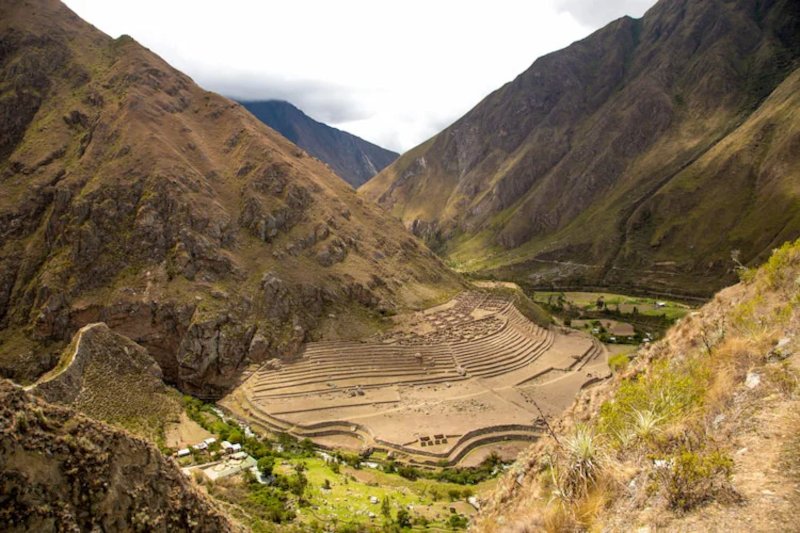
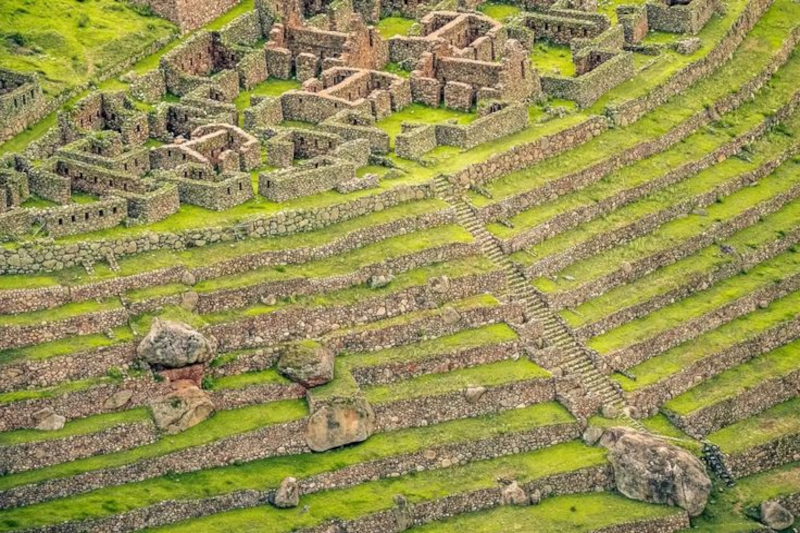
Llactapata is often translated from Quechua as High City. The label fits. Set around 2,840 meters (9,317 feet), the site gives you a first-hand look at Inca stonework and terracing without the crowds and choreography of the big headline ruins.
What do you do there? You slow down. You listen to your guide. You look at how the stones sit, how the terraces hold the slope, how the site relates to the valley. It’s not a long visit for most groups, but it sticks with you. Why? Because it’s your first real We are walking through history moment.
Also- and this is easy to miss- Llactapata is a mood setter. It reminds you that the Inca Trail is not a single destination. It’s a sequence. One place leads to the next. One effort buys the next view.
A small digression: altitude isn’t a villain, but it’s not your buddy either
At around 2,800 to 3,300 meters on Day 1, some hikers feel fine and some feel weird. Light headache. Low appetite. That faint, foggy why am I tired already? feeling. If that’s you, you’re not failing. You’re adjusting.
This is why guides often offer coca tea at breaks and camps. It’s traditional, it’s comforting, and it can help some people feel steadier. The practical move is still the boring one: hydrate, snack often, and keep your pace steady.
From Llactapata to Ayapata: the day keeps going (but you’re ready now)
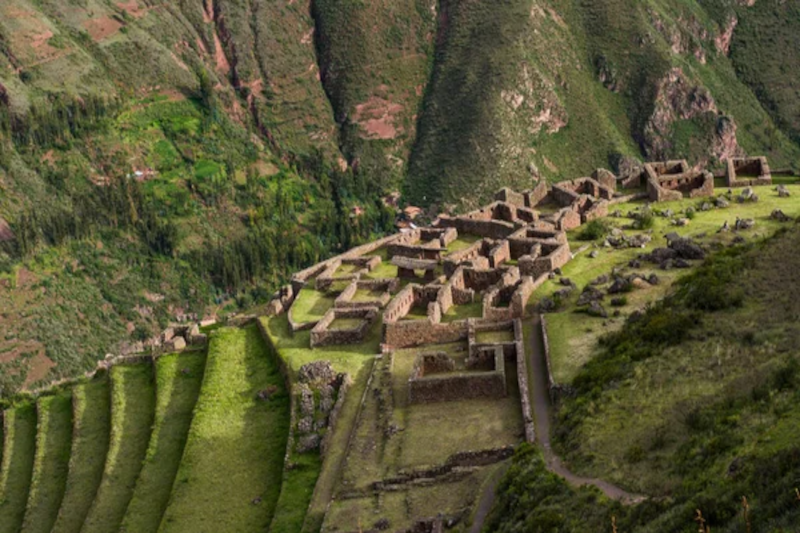
After Llactapata, most itineraries push on toward lunch and then continue to the first campsite, often Ayapata, around 3,300 meters (10,827 feet). The afternoon can include passing small communities where you can buy basics- maybe a drink, maybe a snack- and then the trail climbs again.
You’ll notice something: the group energy changes late in the day. People talk less. Feet shuffle more. And then camp appears, and everyone perks up like someone flipped a switch.
By evening, there’s usually a routine: wash up (as best you can), snack, warm drink, then dinner. If your crew is good, dinner feels almost unfairly nice for being in the mountains. Then you crawl into your tent and let the day shut down. Stars overhead. Legs humming. Tomorrow waiting.
Day 1 hiking stats (typical, but always varies)
- Distance: about 14 km / 8.7 miles
- Time: about 67 hours of hiking
- Difficulty: moderate
- Elevation gain: about 993 m / 3,257 ft
- Camp altitude: about 3,300 m / 10,827 ft
What to pack for this day (keep it simple, keep it smart)
You don’t need a massive kit. You need a useful one. A few basics that make the day smoother:
- Rain layer
- Sun hat + sunscreen
- Water (and a way to refill if your group supports it)
- Snacks you’ll actually eat
- Light warm layer for the evening
- Blister care (because blisters don’t care about your plans)
If you like a little structure, ask your guide a simple question in the morning: What’s the hardest hour today? It frames the day, and it keeps you from wasting energy worrying about everything at once.
How to be a good guest on the trail
Llactapata and the Inca Trail aren’t theme parks. They’re protected places, and they’re meaningful to living communities. So the basics matter:
- Stay on the trail and don’t climb on walls.
- Keep noise reasonable near sites (let other groups have their moment too).
- Pack out trash- even the tiny stuff.
- Respect the crew. They’re not background characters; they’re the reason the trek runs.
Final thought: Llactapata is small on paper, huge in the story
Llactapata won’t be the biggest ruin you see. It won’t be the most photographed. And that’s exactly why it works.
It’s the first stop that feels like the Inca Trail is opening up. The first place where history stops being something you read about and starts being something you walk through. And when you leave Llactapata and head toward Ayapata, you’ve got momentum. Real momentum.
Day 1 is only the beginning. But it’s a strong beginning. Strong, strong.