How to Choose the Perfect Llama or Alpaca Garment at Cusco
When shopping for traditional Peruvian pieces in Cusco, choosing the right llama or alpaca garment can be overwhelming. The rich history and quality of these textiles make each garment unique. Understanding what to look for will help you find the perfect item.
Llama and alpaca wool offer warmth and softness, ideal for various weather conditions. Each fiber has its own distinct properties and benefits. Knowing these differences will guide you in making an informed choice.
In this guide, we’ll cover essential tips for selecting high-quality llama and alpaca garments. From understanding the types of wool to evaluating craftsmanship, we’ve got you covered. Follow these insights to enhance your shopping experience in Cusco.
Understanding Llama vs. Alpaca Wool: Key Differences and Benefits
When choosing between llama and alpaca garments, knowing the differences in their wool is essential. Both types of wool are popular in South America for their unique qualities. However, each fiber has distinct characteristics that affect warmth, softness, and durability.
Key Characteristics of Llama Wool
Llama wool is known for its durability and strength. It is coarser than alpaca wool but still provides good warmth. Llama wool garments are often used for outerwear due to their ruggedness and resilience.
Llamas have been used as pack animals in South America for centuries, which contributes to the robustness of their wool. The wool’s natural oils make it water-resistant and ideal for harsher climates. This makes llama wool a practical choice for colder weather.
Advantages of Alpaca Fiber
Alpaca fiber is softer and finer compared to llama wool. It provides a luxurious feel against the skin and excellent insulation. Alpaca garments are lightweight yet warm, making them ideal for a variety of climates.
Alpacas are prized for their high-quality wool, which is often hypoallergenic. Unlike some wools, alpaca fiber does not contain lanolin, reducing the risk of skin irritation. This makes alpaca garments a popular choice for those with sensitive skin.
How to Choose the Perfect Garment
When selecting a llama or alpaca garment, consider the intended use. For outerwear and colder conditions, llama wool’s durability is advantageous. For softer, everyday wear, alpaca fiber’s comfort and warmth may be preferable.
Both types of wool have their benefits depending on personal preference and practical needs. Understanding these key differences will help you make an informed decision. Whether you choose a llama or alpaca garment, you’ll be investing in a high-quality piece of South American craftsmanship.
Evaluating Quality and Craftsmanship
To ensure you’re purchasing a high-quality garment, check the craftsmanship and the fiber’s fineness. Authentic llama and alpaca wool garments should feel soft and not scratchy. Look for well-made seams and finishing to guarantee durability.
Consider the garment’s source and production methods. Garments made from sustainably sourced wool often offer better quality and ethical production practices. By choosing carefully, you ensure that your purchase is both beautiful and responsibly made.
Understanding the differences between llama and alpaca wool will help you choose the perfect garment. Both types of wool offer unique benefits suited to different needs and preferences. By considering these aspects, you can select a garment that provides both comfort and style.
Evaluating Craftsmanship: What to Look for in High-Quality Peruvian Textiles
When shopping for high-quality Peruvian textiles, attention to craftsmanship is crucial. Whether you are selecting a llama or alpaca garment, details matter. These garments are not just souvenirs to buy in Cusco; they are pieces of cultural heritage.
Key Features of High-Quality Textiles
First, inspect the quality of the natural fiber used. A well-crafted llama or alpaca garment should use soft, durable wool. Look for smooth, even texture without noticeable lumps or irregularities.
Check the garment’s stitching and seams. High-quality textiles have even, strong stitching that won’t easily unravel. A well-made llama or alpaca garment should show precision and skill in its construction.
Pay attention to the dyeing process. Traditional Peruvian textiles often use natural dyes, which should be vibrant and well-applied. Garments with inconsistent coloring may indicate lower quality.
Authenticity and Origin
Verify the authenticity of the garment. Genuine Peruvian textiles, including llama and alpaca garments, often come with certificates or labels. These indicate that the item is handcrafted and sourced responsibly.
Consider the source of the textile. Authentic items often reflect traditional techniques passed down through generations. This cultural significance adds value to your llama or alpaca garment.
Craftsmanship and Design
Evaluate the design and patterns of the garment. Intricate designs and traditional motifs usually signify high craftsmanship. For example, patterns inspired by Rainbow Mountain or the Inca Trail are indicative of genuine craftsmanship.
Look for garments that reflect the region’s artistic heritage. Items inspired by famous landmarks like Machu Picchu often feature detailed and culturally significant designs. This enhances the garment’s uniqueness and value.
When choosing a llama or alpaca garment, focus on the quality of the fiber, stitching, and design. High-quality Peruvian textiles should exhibit excellent craftsmanship and authentic cultural elements. By paying attention to these details, you ensure that your purchase is both beautiful and meaningful.
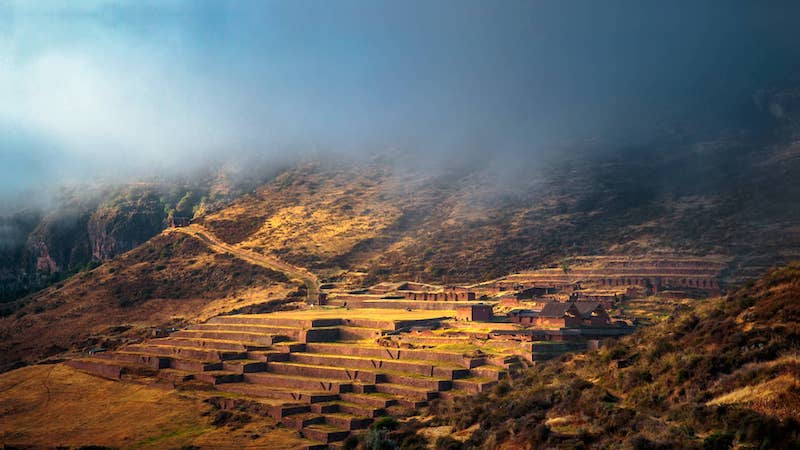
Inca Terrace Farming: A Sustainable Agriculture Model
In the heart of the Andes, a testament to human ingenuity and resilience unfolds. This is the story of Inca terrace farming, an ancient agricultural system that sustained one of the greatest civilizations in pre-Columbian America.
Built on steep slopes, these terraces were not just feats of engineering. They were a lifeline, a means to harness the harsh Andean landscape and transform it into arable land.
Inca terrace farming was more than just a method of food production. It was a sustainable model of agriculture, a testament to the Inca’s deep understanding of their environment and their ability to adapt.
Today, these terraces remind us of the Inca people. They show their advanced ways and inspire modern farming that is good for the earth.
Let’s explore Inca terrace farming. We’ll look at its history, its importance in Inca culture, and its relevance today.
The Historical Significance of Inca Terrace Farming
The Inca Empire, one of the largest in pre-Columbian America, was a civilization of remarkable complexity. Despite having no written language, the Inca built a vast empire, connected by an intricate system of roads.
At the heart of this empire was an amazing agricultural system – terrace farming Inca civilization. The terraces, built on the slopes of the Andes, maximized arable land in this mountainous region. This efficient method of food production allowed the Inca civilization to thrive.
Inca farming was not just about survival. It was a reflection of the Inca’s deep understanding of their local ecosystems. Each terrace had its own microclimate, allowing the cultivation of a diverse range of crops at various altitudes.
This system also showcased the Inca’s advanced engineering skills. The terraces were engineered with a sophisticated drainage system, preventing soil erosion and landslides.
The historical significance of Inca terrace farming extends beyond agriculture. It is a testament to the Inca’s adaptation to their environment, their communal labor system, and their respect for Pachamama (Mother Earth). Today, these terraces are a living testament to the Inca’s ingenuity and resilience.
Engineering Marvels: Constructing the Terraces
The construction of the Inca terraces was a feat of engineering. Built on the steep slopes of the Andes, these terraces required careful planning and execution. The Inca used local materials, shaping the landscape to create flat, arable land.
Each terrace had a sophisticated drainage system. This system prevented water from pooling on the surface, reducing the risk of landslides. It also conserved water by reducing runoff, a crucial factor in the arid Andean environment.
The terraces were filled with rich soil, often transported from lower elevations. The Inca enriched this soil with organic matter, creating a fertile ground for their crops. This attention to soil health was a key aspect of Inca terrace farming.
The enduring nature of these terraces is a testament to the Inca’s engineering skills. Some terraces are still in use today, hundreds of years after they were built. They stand as a symbol of the Inca’s mastery over their harsh and varied landscape.
Crops of the Andes: What the Inca Cultivated
The Inca cultivated a variety of crops on their terraces. These crops were carefully selected to thrive in the diverse microclimates of the Andes. Each terrace had its own microclimate, allowing the Inca to grow a range of crops at different altitudes.
The main crops cultivated by the Inca included:
Maize
Potatoes
Quinoa
Kiwicha (amaranth)
Beans
Maize was a staple crop, used in food and drink. Potatoes, native to the Andes, were grown in large quantities and stored for future use. Quinoa, a grain rich in protein, was another important crop. Amaranth and beans were also part of the Inca diet.
Crop rotation was a key aspect of Inca terrace farming. The Inca understood the importance of rotating crops to prevent soil depletion. This practice, combined with their use of organic matter to enrich the soil, ensured the sustainability of their farming system.
The diversity of crops grown by the Inca is a testament to their understanding of local ecosystems. They were able to maximize their food production by making the most of the varied conditions on their terraces.
Terrace Farming and Biodiversity
Inca terrace farming contributed significantly to the high biodiversity in Inca agriculture. The terraces, with their varied microclimates, allowed for the cultivation of a wide range of crops. This diversity was key to the Inca’s food security and resilience.
The terraces also played a role in preserving the natural biodiversity of the Andes. By farming on the terraces, the Inca minimized their impact on the surrounding ecosystems. They were able to produce food without disrupting the natural habitats of local flora and fauna.
Inca terrace farming is a model of sustainable agriculture that respects biodiversity. It demonstrates how humans can produce food while maintaining harmony with nature. This ancient practice offers valuable lessons for modern agriculture, which often struggles to balance productivity with environmental conservation.
Water Management and Soil Conservation
The Inca were masters of water management. Their terrace farming system was engineered with a sophisticated drainage system. This system conserved water by reducing runoff and preventing soil erosion.
The terraces were built with stone walls, which helped to retain water. This was crucial in the arid Andean climate, where water was a precious resource. The walls also prevented the fertile topsoil from being washed away by rain.
In addition to their engineering skills, the Inca used organic matter to enrich the soil. They understood the importance of maintaining soil fertility for sustainable agriculture. This practice, combined with their crop rotation system, helped to prevent soil depletion.
Inca terrace farming is a testament to the Inca’s deep understanding of their local ecosystems. Their practices of water management and soil conservation were integral to their sustainable agriculture model. These practices continue to inspire modern sustainable farming techniques.
The Cultural Heritage and Tourism of Inca Terraces
Inca terrace farming is a significant part of Peru’s cultural heritage. The terraces are a testament to the Inca’s advanced civilization and their adaptation to the harsh Andean environment. They are a symbol of the harmony between humans and nature that the Inca civilization embodied.
Today, the terraces are a popular tourist attraction. They are often found near Inca ruins, like the famous Machu Picchu. Visitors are awed by the scale and sophistication of these ancient agricultural systems. The terraces offer a glimpse into the daily life of the Inca people and their remarkable achievements.
You can pass by them by taking the Lares Trek to Machu Picchu. If you choose to experience the Inca farming on the physical, is a great way to recognize the terraces.
Modern Lessons from Ancient Practices
Inca terrace farming offers valuable lessons for modern sustainable agriculture. The system’s resilience and sustainability are testament to the Inca’s deep understanding of their local ecosystems.
Incas farmed well without modern tools. They used natural materials to make the soil better. They also built clever drainage systems to save water.
The terraces also demonstrate the potential of traditional knowledge in resource management. The Inca used a variety of crops and practiced crop rotation to prevent soil depletion. Each terrace had its own microclimate, allowing for a high biodiversity in their agriculture.
Inca terrace farming is a potential solution for modern food security issues. It shows how we can maximize arable land in mountainous regions and combat climate change through sustainable agriculture. The terraces are a living laboratory for studying ancient agriculture and a source of inspiration for sustainable development projects.
The Inca’s respect for the Pachamama (Mother Earth) is a reminder of the importance of a sustainable relationship between humans and the land. This ancient wisdom can guide us in our quest for sustainable development and food sovereignty.
Preserving Inca Terrace Farming for the Future
Preserving Inca terrace farming is crucial for both cultural heritage and sustainable agriculture.
The terraces show the skill of the Incas. They are an important part of Peru’s history and culture. The terraces are a source of national pride and an important part of the Andean cultural identity.
The terraces also highlight the need for sustainable tourism practices in Peru. They attract eco-tourists and cultural travelers and show daily life of the Inca people. They also show how land can be used sustainably.
Legacy of Inca Terrace Farming
Inca terrace farming is an impressive form of ancient agriculture. It shows how skilled the Inca were in using their challenging land. It shows how people and land can work well together. Also reflects the Inca civilization’s success in farming.
The terraces are a focal point for discussions on food sovereignty and agroecology. They remind us of the importance of preserving ancient agricultural techniques for future generations. They are a testament to the adaptability and ingenuity of the Inca people, and a source of inspiration for sustainable development projects.
Inca Empire Facts for Visitors and History Lovers
The Inca Empire’s rise was a gradual process that involved strategic expansion and assimilation of neighboring cultures. Starting in the early 13th century, the Incas began consolidating power in the Cusco region, eventually extending their influence across a vast territory.
This expansion was often achieved through a combination of military conquest and diplomatic alliances, allowing the Incas to incorporate diverse groups under their rule. By the 15th century, the empire had grown into the largest in pre-Columbian America, showcasing its remarkable ability to manage a multi-ethnic and geographically diverse domain.
Cusco: The Spiritual Heart of the Empire
Cusco, the capital of the Inca Empire, was more than just a political center; it was the spiritual heart of civilization. The city’s layout was meticulously planned to reflect its sacred status, with streets and buildings aligned with astronomical events. The Incas believed Cusco was the navel of the world, a place where the earthly and divine intersected. Today, visitors to Cusco can explore ancient structures like the Coricancha, the Temple of the Sun. In effect where the Incas paid homage to their deities and conducted important ceremonies.
Architectural and Engineering Mastery
The engineering prowess of the Incas is evident in their architectural achievements, which continue to inspire awe. They mastered the art of stone construction, using precisely cut stones that fit together without mortar. This technique, known as ashlar masonry, allowed their structures to withstand earthquakes. This is testament to their understanding of the natural forces at play in the Andean region. The legacy of Inca engineering can still be seen in the surviving walls and ruins that dot the landscape.
Social Structure and Governance
The Inca society was highly organized, with a clear social hierarchy that ensured the smooth functioning of the empire. At the top was the Sapa Inca, considered a living god, who wielded absolute authority. Below him were nobles and administrators who governed various regions, known as suyus.
The Incas implemented a centralized system of governance that facilitated efficient resource management and communication across vast distances. This hierarchical structure was key to maintaining stability and unity within the empire.
The Mita System: Communal Labor
The mita system exemplified the communal nature of Inca society, where citizens contributed labor to state projects. This system was not only a means of taxation but also a way to reinforce social bonds and mutual responsibility.
It ensured that essential infrastructure, such as roads and agricultural terraces, were maintained, benefiting the entire community. The sense of collective duty fostered by the mita system was integral to the empire’s success and cohesion. Highlighting the Incas’ emphasis on community and cooperation.
Language and Communication: Quechua and Quipus
Quechua, the lingua franca of the Inca Empire, played a crucial role in unifying the diverse peoples within its borders. Despite the lack of a written script, the Incas developed quipus a complex system of knotted strings used for record-keeping and communication.
Each knot and string color conveyed specific information, enabling administrators to manage everything from census data to agricultural production. This innovative communication method underscored the Incas’ adaptability and resourcefulness in overcoming linguistic challenges.
Agricultural Innovations: Terrace Farming and Irrigation
The Incas’ agricultural innovations transformed the challenging Andean terrain into productive farmland through the use of terracing. By constructing stepped terraces along mountainsides, they prevented soil erosion and maximized arable land. This technique not only increased crop yields but also created microclimates suitable for growing diverse crops. The terraces stand as a testament to the Incas’ understanding of sustainable agriculture. Therefore showing their ability to adapt to their environment and ensure food security.
In addition to terrace farming, the Incas developed sophisticated irrigation systems to support their agricultural endeavors. They constructed canals and aqueducts to channel water from mountain streams to their fields, ensuring a consistent water supply even during dry seasons. These irrigation systems were carefully engineered to distribute water efficiently across vast distances, demonstrating the Incas’ mastery of hydraulic engineering and their commitment to maximizing the potential of their land.
Crops and Diet
The Incas cultivated a wide variety of crops, each suited to different altitudes and climates within their empire. Potatoes, maize, and quinoa were staple foods that formed the backbone of their diet, providing essential nutrients. The Incas’ ability to grow diverse crops in different ecological zones allowed them to sustain a large population and support their empire’s expansion. This agricultural diversity not only ensured food security but also contributed to the richness of Inca cuisine.
Religion and Festivals
Inti Raymi, the Festival of the Sun, was a cornerstone of Inca religious life, symbolizing the renewal of life and the power of the Sun God, Inti. Held during the winter solstice, the festival involved elaborate ceremonies, dances, and offerings to ensure a bountiful harvest. Today, the reenactment of Inti Raymi in Cusco attracts thousands of visitors, offering a vibrant glimpse into the spiritual and cultural heritage of the Inca Empire and its enduring significance.
The Incas’ religious beliefs were deeply intertwined with their natural environment, particularly the towering Andes. They constructed many of their sacred sites at high altitudes, believing these locations were closer to the heavens and their deities. Sites like Machu Picchu and Sacsayhuamán served as places of worship and reflection, where the Incas sought to strengthen their spiritual connection with the gods. The importance of altitude in their religious practices underscores the Incas’ reverence for nature and their desire to harmonize with it.
Inca religious practices were rich with rituals and offerings, designed to appease the gods and ensure the empire’s prosperity. Ceremonies often involved the sacrifice of animals, and occasionally humans, to seek divine favor. Offerings of food, textiles, and precious metals were made at temples and sacred sites. These rituals reflected the Incas’ deep spiritual beliefs and their understanding of the interconnectedness between the natural and divine worlds.
Iconic Sites: Machu Picchu and the Sacred Valley
The Machu Picchu Mountain, perched high in the Andes, is a symbol of the Inca Empire’s architectural and engineering brilliance. Its discovery in 1911 by Hiram Bingham unveiled a city that had remained hidden for centuries, preserving its mystique. The site’s intricate stone structures, terraces, and panoramic views offer a window into the advanced skills of the Incas. Visitors marvel at the citadel’s harmonious integration with its natural surroundings, experiencing firsthand the ingenuity of this ancient civilization.
The Sacred Valley of the incas, stretching between Cusco and Machu Picchu, is a treasure trove of archaeological wonders and breathtaking landscapes. Sites like Ollantaytambo and Pisac reveal the Incas’ mastery of urban planning and agriculture. The valley’s fertile lands supported a thriving agricultural community, and its strategic location facilitated trade and communication. Today, visitors can immerse themselves in the valley’s rich history, exploring ancient ruins and vibrant local cultures that continue to thrive in this remarkable region.
While Machu Picchu and the Sacred Valley are the most famous, numerous other Inca sites offer unique insights into the empire’s history. The ruins of Choquequirao, often referred to as the sister city of Machu Picchu, remain largely unexplored and provide a glimpse into the Incas’ architectural prowess. The ancient city of Vilcabamba, the last refuge of the Incas, holds secrets of their resistance against Spanish conquest. Exploring these lesser-known sites offers a deeper understanding of the Inca Empire’s vast reach and enduring legacy.
Inca Cuisine and Culinary Heritage
Inca cuisine was a reflection of their rich agricultural diversity, relying on locally sourced ingredients like quinoa, potatoes, and maize. These staples were prepared in various ways, offering a nutritious and balanced diet. Guinea pig and llamas provided essential protein, while spices and herbs added flavor to traditional dishes. Today, Quechua cuisine is celebrated for its unique flavors and cultural significance, offering a taste of the Inca Empire’s culinary heritage to modern palates.
Peruvian cuisine, deeply influenced by Inca traditions, offers a delightful fusion of ancient and contemporary flavors. Dishes like ceviche and lomo saltado showcase the region’s rich agricultural heritage and creativity. Travelers can indulge in a culinary journey through the Andes, savoring the blend of traditional Quechua ingredients with modern culinary techniques. This fusion not only highlights the enduring legacy of Inca cuisine but also reflects the dynamic evolution of Peruvian gastronomy.
For those eager to explore the culinary heritage of the Inca Empire, numerous tours and experiences offer immersive opportunities to learn and taste. Cooking classes and food tours in Cusco and the Sacred Valley allow visitors to engage with local chefs and communities. These experiences provide insights into traditional cooking methods, ingredient sourcing, and the cultural significance of Inca dishes. Engaging in these culinary adventures enhances the appreciation of the Inca Empire’s lasting influence on modern Peruvian cuisine.
Preservation of Inca Heritage
The preservation of Inca archaeological sites is crucial for safeguarding the empire’s cultural legacy. Conservation efforts focus on maintaining the integrity of ancient structures and preventing damage from environmental factors and tourism. Organizations and local communities work together to implement sustainable practices that balance preservation with accessibility. These efforts ensure that future generations can continue to explore and learn from the rich history of the Inca Empire.
Quechua, the language of the Incas, remains a vital part of Andean identity. Educational initiatives and cultural programs aim to promote Quechua language learning and preserve its oral traditions. Festivals, music, and storytelling play a significant role in keeping the language alive, providing a platform for cultural expression and exchange. The promotion of Quechua language and culture is essential for maintaining the connection to the Inca Empire’s heritage and fostering cultural pride among indigenous communities.
Traditional festivals are a vibrant expression of Inca heritage, celebrating the customs and beliefs passed down through generations. Events like Inti Raymi and other regional festivals draw locals and tourists alike, offering a glimpse into the spiritual and cultural life of the Incas. These celebrations serve as a reminder of the empire’s enduring influence and the resilience of its cultural traditions. By participating in these festivals, visitors can experience the living legacy of the Inca Empire and contribute to its preservation.
The Lasting Legacy of the Inca Empire
In conclusion, the Inca Empire’s legacy is a testament to human ingenuity and resilience. For travelers and history lovers alike, exploring the remnants of this remarkable civilization offers an enriching experience that deepens our appreciation for the cultural tapestry of the Andes. Whether through visiting iconic sites, savoring traditional cuisine, or engaging in cultural celebrations, the Inca Empire continues to inspire and captivate those who seek to understand its enduring impact.
Inca Jungle Trail vs Salkantay Trek
Choosing between the Inca Jungle Trail and Salkantay is a common question for travelers. They want an alternative trek to Machu Picchu.
Both routes are popular. They both violate the Inca Trail permit rules. They also provide amazing views, but they offer very different experiences.
This comparison shows the real differences between the Inca Jungle Trail and the Salkantay Trek. It covers difficulty, scenery, cost, altitude, accommodation, activities, and the type of traveler each route suits best.
What Is the Inca Jungle Trail?
The Inca Jungle Trail is an adventure route to Machu Picchu. It includes mountain biking, trekking, optional rafting, and ziplining.
This trek focuses on action, nature, and meeting local communities. It takes place in the jungle and highlands. We will not be visiting ancient ruins.
The route goes from the Andes into the cloud forest and jungle. It offers warmer weather, green valleys, rivers, and farmland.
Maximum altitude: ~4,300 m / 14,108 ft (Abra Málaga)
Accommodation: Local hostels or basic hotels
Permits: Not required
Main focus: Adventure and flexibility
What Is the Salkantay Trek?
The Salkantay Trek is one of the most scenic and challenging high-altitude treks in Peru.
It takes hikers deep into the Andes. They pass glacial lakes, dramatic valleys, and snow-capped peaks. This includes the sacred Salkantay mountain.
The Salkantay Trek is one of the best alternative routes to Machu Picchu. It is renowned for its rugged terrain, high passes, and stunning mountain views.
[tour_ad id=”6044″]
Key Facts About the Salkantay Trek
Duration: 4 or 5 days (most common: 5 days)
Activities: Trekking only
Maximum altitude: 4,650 m / 15,255 ft (Salkantay Pass)
Accommodation: Campsites, mountain lodges, or glamping
Permits: Not required
Main focus: Nature, mountains, and endurance
Inca Jungle Trail vs Salkantay – Main Differences Explained
Type of Experience
The Inca Jungle Trail is designed for travelers who want variety and adrenaline. Each day feels different thanks to biking, hiking, and optional adventure sports, combined with cultural stops and jungle landscapes.
The Salkantay Trek is a pure trekking experience, focused on long hiking days through remote mountain terrain. It is quieter, more immersive, and deeply connected to Andean nature.
Verdict:
Adventure & variety → Inca Jungle Trail
Remote mountain trekking → Salkantay Trek
Difficulty and Physical Challenge
When comparing the Inca Jungle Trail and the Salkantay, physical demands are one of the biggest differences.
The Inca Jungle Trail is considered moderate, with less walking overall and more manageable elevation changes. However, mountain biking requires basic coordination and confidence.
The Salkantay Trek is moderate to challenging, with long hiking days, cold nights, and high-altitude passes. The Salkantay Pass is one of the highest trekking passes in Peru.
Verdict:
Easier and more flexible → Inca Jungle Trail
More demanding and intense → Salkantay Trek
Altitude and Acclimatization
Altitude is a key factor in the Inca Jungle Trail versus the Salkantay Trail.
Inca Jungle Trail max altitude: ~4,300 m / 14,108 ft
Salkantay Trek max altitude: 4,650 m / 15,255 ft
The Salkantay Trek exposes hikers to higher altitudes for longer periods, making acclimatization more important.
Verdict:
Better for beginners → Inca Jungle Trail
Better for experienced hikers → Salkantay Trek
Landscapes and Scenery
The Inca Jungle Trail offers lush jungle scenery, rivers, valleys, coffee and fruit plantations, and warm climates.
The Salkantay Trek offers stunning views in Peru. You will see snow-capped mountains, turquoise glacial lakes such as Humantay Lake, and wide-open valleys.
Verdict:
Jungle & tropical landscapes → Inca Jungle Trail
Epic mountain scenery → Salkantay Trek
Accommodation Style
Accommodation is another key difference between the Inca Jungle Trail and the Salkantay.
Inca Jungle Trail: Local hostels or basic hotels with beds, showers, and electricity.
Salkantay Trek: Camping, mountain lodges, or luxury glamping, depending on the operator.
Verdict:
Comfort and beds → Inca Jungle Trail
Outdoor immersion → Salkantay Trek
Cost Comparison
The Inca Jungle Trail is generally more affordable, making it a popular option for budget travelers.
The Salkantay Trek costs more due to longer duration, higher logistics, and camping equipment.
Verdict:
Budget-friendly → Inca Jungle Trail
Higher value, higher cost → Salkantay Trek
Inca Jungle Trail vs Salkantay Trek – Comparison Table
Inca Jungle Trail vs Salkantay Trek: Which Trek Is Better for Machu Picchu?
Choose the Inca Jungle Trail if you want:
Adventure activities and variety
Lower cost and flexibility
Warmer climates and jungle scenery
A social, dynamic atmosphere
Choose the Salkantay Trek if you want:
Epic Andean mountain landscapes
A challenging, rewarding hike
Fewer crowds and remote terrain
A true high-altitude trekking experience
Best Time to Do The Inca Jungle Trail or The Salkantay
The best season for both routes is April to October, during the dry season.
The Inca Jungle Trail operates year-round but may adjust activities during heavy rain.
The Salkantay Trek is best avoided in peak rainy months (January–February).
Top Must-Visit Tourist Sites in Cusco
Most travelers fly into the Andes and leave for Machu Picchu the next morning. The train station becomes the only landmark that matters. What gets skipped in that rush is a city that rewards the people who actually stop and look at it.
Cusco tourist sites are not secondary to theInca Trail or Machu Picchu. Several of them are among the most architecturally significant things in South America. The walls tell you immediately that something different happened here.
Bottom half of most buildings in the historic center: 500-year-old Inca stone, fitted without mortar, earthquake-resistant, still standing. Top half: Spanish colonial plaster and balconies built directly on those foundations. Two civilizations in one wall. That visual is everywhere and most people walk past it.
The Inca called this place Qosqo — Navel of the World. The capital was designed in the shape of a puma, with cosmological intention behind every major district. Saqsaywaman forms the teeth and head. The central plaza sits at the heart. That plan still dictates modern traffic flow.
Cusco sightseeing done properly takes at least three days. Not because the distances are large, but because the density of what is here demands time to process.
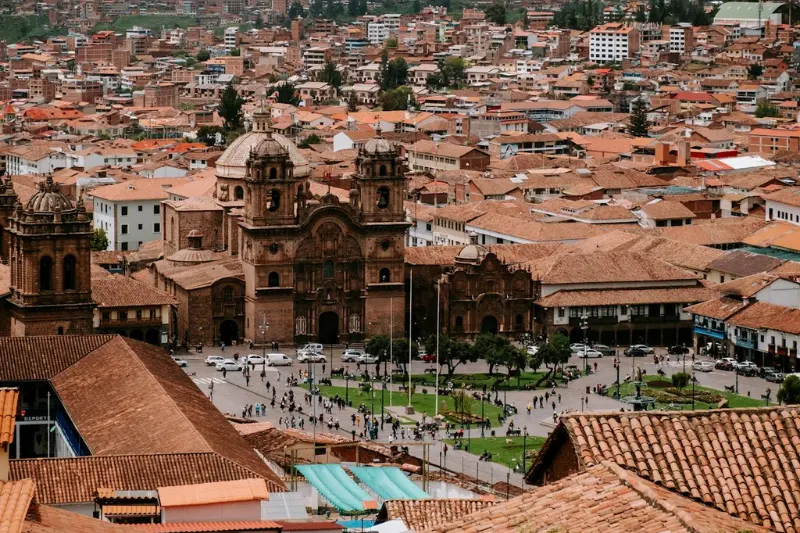
How the Plaza de Armas Blends Two Worlds
The plaza is where the collision is most obvious. Spanish conquerors built on top of Inca foundations rather than clearing them. The original structure here was a royal cancha, a walled enclosure. The colonial buildings sit directly on those original bases.
Look at the bottom meter or two of the surrounding structures and the transition between carved volcanic stone and colonial masonry is visible without effort.
Cusco’s cathedral interior holds something worth finding. A Last Supper painting where the central dish is a roasted guinea pig. Indigenous artists worked Andean customs into Catholic imagery throughout. That painting is the most documented example but not the only one.
The fountain at the center is an active gathering point for locals daily. Mid-morning on a weekday the plaza operates as a functioning social space that has been running continuously since before the Spanish arrived.
Cusco tourist sites in the plaza area can be covered on foot in a morning. The cathedral, the church of La Compañía de Jesús directly adjacent, the arcade of restaurants and shops running the perimeter. None of it requires transport.
The Golden Secrets of Qorikancha
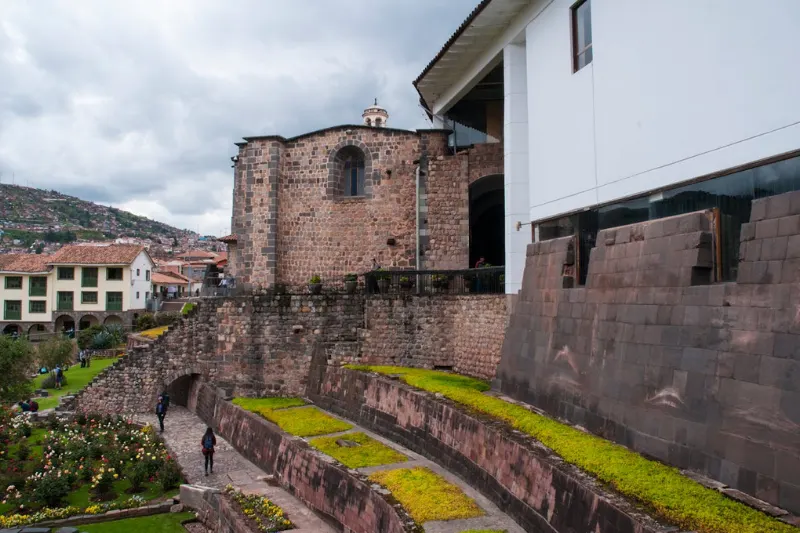
Before the conquest this was the wealthiest temple complex in the Americas. Walls covered in gold plate. Life-sized gold and silver figures in the courtyard. All of it stripped within years of Spanish arrival and melted into ingots.
What remained was the stonework. Ashlar masonry so precisely fitted that no mortar was needed. The standard demonstration is a credit card test — the card does not fit between the blocks. After five centuries and multiple major earthquakes, the joints are still tight.
TheSanto Domingo Catholic convent was built directly above the original temple structure. The Inca foundations support it. This is one of the most significant cusco attractions for people interested in construction and engineering. The contrast between the Inca lower section and the colonial upper section is abrupt and visible from the courtyard.
Qorikancha includes an on-site museum with artifacts recovered during restoration work. The alignment of the temple’s main chamber with the winter solstice sunrise is documented and still observable.
Navigating San Blas
Steep. That is the first thing. San Blas requires climbing cobblestone alleys that gain elevation faster than most visitors expect, particularly arriving from lower altitude.
The 12-Angled Stone on Hatun Rumiyoc street is the standard starting point. Original Inca construction, demonstrating the fitting technique used throughout the empire — each block shaped to interlock with every adjacent block, no two joints the same angle.
San Blas is where working artisans actually operate. Not reconstructed craft demonstrations. Mendivil Workshop produces the elongated-neck religious figures the neighborhood is known for. Textile producers work on backstrap looms, a Quechua technique using body weight to create tension in the weave. The fabric is denser and heavier than anything machine-produced.
Cusco travel guide recommendations for San Blas consistently include the Mirador de San Blas for the view back over the historic center. The rooftop café options here are also consistently better than what is available at plaza level.
Decoding Saqsaywaman
The scale is the thing that does not photograph accurately. Standing beside the largest blocks, some weighing above 100 tons, the size registers differently than any image communicates. The zigzag wall pattern is visible from the city below and from the air.
No iron tools. No wheel. The engineering debate around how these blocks were quarried, shaped, transported, and positioned without those technologies remains active among researchers. The precision is comparable to Qorikancha despite the much larger block size.
Inti Raymiin June transforms the site into the largest annual Inca ceremonial reenactment. Tickets sell well in advance. The archaeological park requires separate entry that the Boleto Turistico General covers.
Cusco tourist sites outside the city center like Saqsaywaman, Qenqo, Puca Pucara, and Tambomachay are all accessible by taxi from the plaza in under 20 minutes. Combining them in a single half-day circuit is the efficient approach.
Mastering the Cusco Tourist Ticket
The general tourist ticketcovers 16 locations across the city, the Sacred Valley, and the southern circuit. Every cusco tours operator and every serious cusco travel guide treats it as the baseline document for navigating the region’s entry fees.
Three partial circuits exist for shorter visits:
Circuit 1: Inca ruins outside the city limits.
Circuit 2: City museums and South Valley monuments.
Circuit 3: Sacred Valley terraces and fortresses.
The full 10-day pass makes financial sense for anyone spending a week or more. The partial circuits work for focused single-day visits. Buying at the main Boleto Turistico office on Avenida El Sol rather than at site entrances avoids lines and availability issues.
A Sensory Escape to San Pedro Market
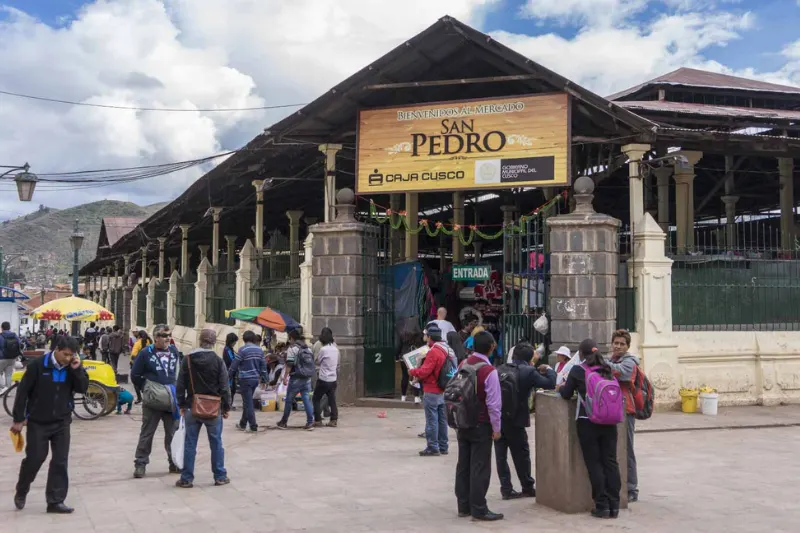
The iron canopy structure of the San Pedro market was designed by Gustave Eiffel’s firm. What descriptions underemphasize is the noise level and density inside during peak hours. Mid-morning is the practical window — produce is fresh, vendors are fully set up, and the soup section is running.
The chicken broth served here is the local recommendation for altitude adjustment, taken hot before exertion. Lucuma and maracuya are the most photographed produce items and both are worth trying.
The textile section sells both mass-produced synthetic items and genuine handmade alpaca products. The weight and texture test distinguishes them: real alpaca is heavier and cooler to the touch, synthetic feels warm and light. Haggling is expected and the opening price is not the transaction price.
Exploring the Maras Salt Mines and Moray Terraces
Moray first. The circular agricultural terracing here is unlike anything else in the Inca archaeological record. The concentric rings drop in elevation from the outer rim to the center, creating temperature differentials of up to 20 degrees Celsius between top and bottom. The interpretation is that this functioned as a controlled environment for testing crop varieties before deployment across the empire.
Maras is immediately nearby. Over 3,000 individual salt evaporation pools fed by a subterranean saline spring, still actively harvested by local families using centuries-old methods. The view from the hillside above is one of the more distinctive landscapes in the Cusco region.
Cusco tourist sites in the Sacred Valleycombine well logistically. Moray and Maras together take a half day. Adding Chinchero on the same circuit covers the weaving tradition alongside the agricultural and salt extraction sites without excessive driving.
Conquering Rainbow Mountain and Humantay Lake
Both require early departure from Cusco. Both sit at elevations where the body’s response to altitude is the primary planning variable.
Humantay Lake at 4,200 meters involves a steep direct ascent from the trailhead — short distance, significant gradient. The lake sits in a glacial cirque and the color of the water on a clear day is the reason people make the climb.
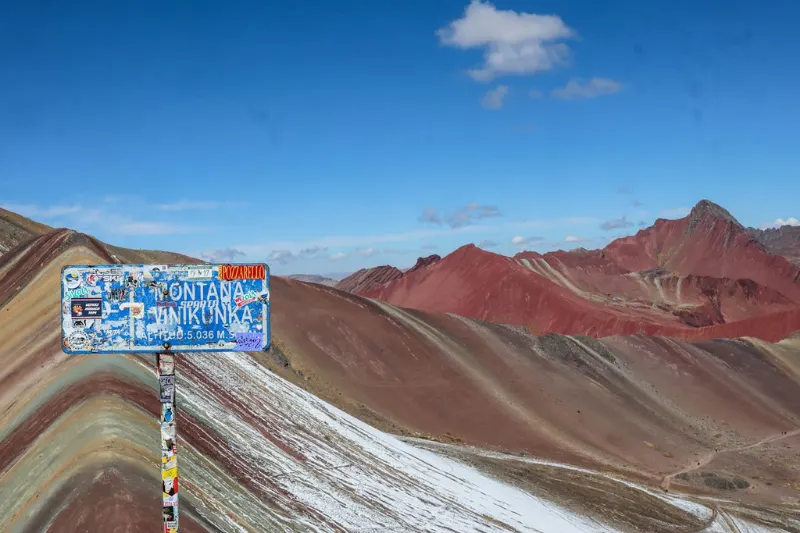
Rainbow Mountain at 5,200 meters is a longer approach with more gradual gradient but higher final elevation. The colored mineral stripes require dry conditions and morning light to appear at their most saturated. Afternoon cloud cover frequently obscures the summit. Dry season, May through September, gives the highest probability of clear visibility.
Both require acclimatization in Cusco beforehand. Two days minimum in the city before either trek changes the outcome significantly.
Strategizing Your Sacred Valley Day Trip
The valley is large enough that trying to cover everything in one day produces exhaustion without depth. Three sites worth choosing between based on interest:
Chinchero at 3,800 meters has the weaving cooperatives where backstrap loom production is demonstrated and the colonial church built directly on Inca palace foundations. The seam between the two construction methods is visible in the walls. Sunday market is the most local-facing in the Sacred Valley circuit.
Pisac has the agricultural terracing visible from the road and ruins above the town accessible by trail or taxi. The Sunday market in town is heavily tourist-oriented compared to Chinchero.
Ollantaytambo is where most Machu Picchu trains depart. The fortress demonstrates Inca military positioning and the Temple of the Sun shows the same precision stonework visible at Qorikancha. Worth time independent of the train connection.
Finalizing Your Cusco Plan
Three days minimum for the city. One additional day for the Sacred Valley circuit. One day for either Rainbow Mountain tour or Humantay Lake tour but not both without a rest day between. Machu Picchu adds one or two days depending on whetherHuayna Picchuor Machu Picchu Mountain is included.
Cusco tourist sites do not require a guide for most locations. The Boleto Turistico General covers entry. A guide adds context that signage alone doesn’t provide, particularly at Qorikancha and Saqsaywaman where the engineering history is the main interest.
Transport between sites:
Within the city: taxis.
Sacred Valley circuit: colectivos or private transport.
Rainbow Mountain and Humantay Lake: organized tour vehicles given the early departure times and distance involved.
The city rewards the people who slow down in it. The architecture, the market, the neighborhoods above the plaza. None of it requires rushing and most of it loses something when rushed.
History of a Lesser Known Inca Ruin, Huchuy Qosqo Peru
The Inca archaeological site Huchuy Qosqo (sometimes spelled Yuchuy Cuzco) is located north of Cuzco, Peru. Quechua for “Little Cuzco” is its name. It is located at a height of 3,650 meters (11,980 feet), overlooking the Sacred Valley and 3 kilometers (1.9 miles) west of Lamay. It is at an elevation of 2,920 meters (9,580 ft).
The place was previously known as Caquia Xaquixaguana (variant spelling Kakya Shakishawana) or Kakya Qawani. It was given its current name in the twentieth century.
Settlement at Huchuy Qosqo Peru’s Archaeological Ruin
The town of Huchuy Qosqo Peru is home to an archaeological ruin. It is dated from about 1000 and 1400 CE. According to the Spanish historian Pedro de Cieza de León, the semi-mythical Viracocha (c. 1410-1438). He was the eighth Inca king. Huchuy Qosqo became a royal estate in the early 1400s.
The Inca Empire did not tax its inhabitants’ income or productivity as was customary at the time. Instead of controlling land and labor. As a result, Inca kings bought huge royal estates in order to increase their power and fortune, as well as that of their heirs. Royal estates also served as attractive rural mansions and, on occasion, fortresses to stave off power rivals. As a result, a royal estate or administrative center patterned after the Inca city is known as Huchuy Qosqo Peru, or “Little Cusco.”
Viracocha and his descendants needed a vast workforce to construct, operate, and maintain their estate. Under its system, citizens of the Inca Empire were to donate labor to the empire rather than being taxed on their income or productivity.
Although specialists and craftsmen may have been imported, the impressed mit’a labor was most likely found among local ethnic groups.
Policy on Incas
Mitma, another Inca policy, was most likely utilized to gather labor for the royal domain. Mitmaqkuna were families or ethnic groups. They were transferred to different regions within the empire or settled in enclaves among the area’s original people.
The goal was to disperse various ethnic groups. This was by dividing possible troublemakers and minimising the likelihood of coordinated resistance to the Incas. Mixing with local ethnic groups was forbidden for the mitmaqkuna.
The Estate’s Third Source of Labor
The Yanakunas, the Incas’ permanent employees, were the third source of work for the estate. The Yanakunas, like the mitma, rose to high positions in the Empire and were ruled directly by the Incas.
The aqllakuna sequestered women who lived together and made textiles. It was a key source of Inca riches, and chicha, the fermented drink served at feasts, were still the fourth source of labor for the royal estates.
The allakuna were frequently married to men who had excelled in the Empire’s service.
Best Time To Hike And Climb Huayna Picchu
Best Time To Hike And Climb Huayna Picchu
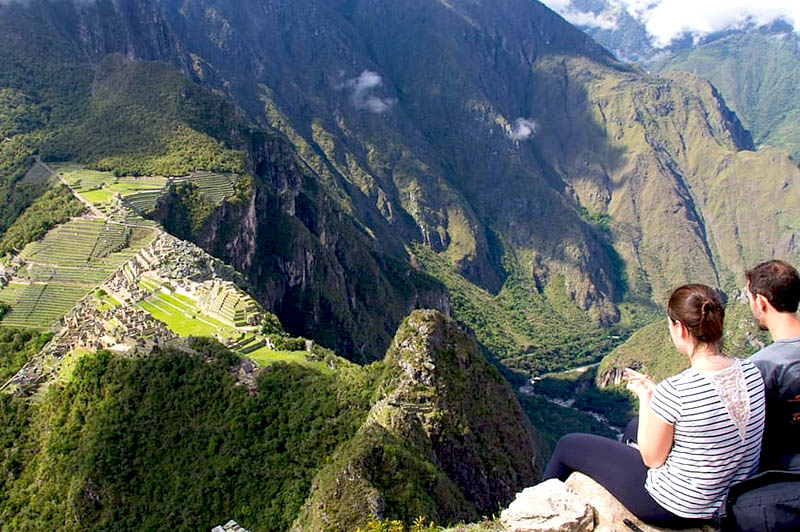
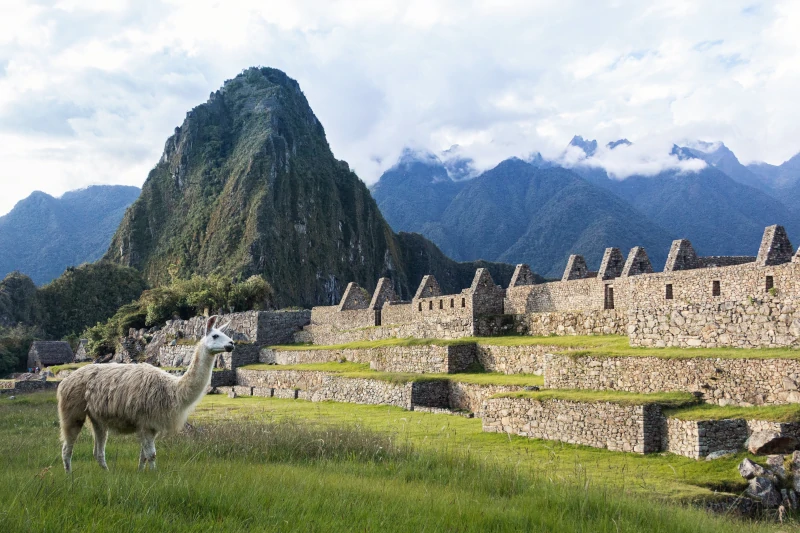
Huayna Picchu is the towering peak in the background of the most famous Machu Picchu shots, the traditional postal photos. To walk this peak, you must purchase your admission tickets early.
The entry point is on Machu Picchu’s north side; it takes around 1 hour to reach the peak plus 45 minutes to return down the way. The “steps of death” are high and steep stairs found within Huayna Picchu mountain. You’ll also be able to visit hillsides, monasteries, and flowers, as well as take in the breathtaking views that this amazing location has to offer.
The walk to the peak of Huayna Picchu is gaining popularity among travelers all over the world! We’ll advise you when the Best Time To Hike And Climb Huayna Picchu is!
Hike during the rainy season:
This occurs in the Cusco area from November through March. There will be pourings, but they will be brief and infrequent. However, if it’s raining, ascending to the Huayna Picchu top becomes a considerably more difficult task, reserved exclusively for the most adventurous and expert hikers who prefer challenging weather.
If it isn’t pouring, the ground will most likely be sloppy and damp. Those who have scaled Mount Kilimanjaro and have vacation days in the first quarter of the year, for example, would not object and will even seek out similar situations throughout the world.
So it truly varies on when you believe the greatest time is; the rain period might be great for some, but not so much for others. Regardless, if it hasn’t snowed, the famed 360° vista of the castle, slope, and canyon will be incredibly clear, broad blue, & lush! And the balmy tropical weather will continue!
Hiking during the dry season:
From April to October, there is no rain at all. The climate can be chilly, particularly from June – to August, but because the Machu Picchu location is so close to the Peruvian forest, the sky can be gloomy on occasion.
However, it is far more probable that the sky will be brightly colored with cotton-white fog, and hot temperatures, which are always greater than in Cusco City.
The trail may be a little busy, but that would only be an issue if you were a lone soldier; generally, people mingle and have a great time. You might not like the notion of putting all of your belongings into watertight backpacks and bags, but some like these difficulties!
How difficult is the 4 day hike on the Inca trail?
The 4 day hike on the Inca trail is a popular trekking route in Peru. It attracts thousands of visitors every year. This iconic trail is renowned for its spectacular views, ancient Inca ruins, and challenging terrain, making it an exciting adventure for hikers seeking a unique experience.
But how difficult is the 4 day hike on the Inca trail, and what challenges can hikers expect to face along the way? Let’s take a closer look at what this trek entails.
It requires a reasonable level of fitness
Firstly, it’s important to note that the 4 day hike on the Inca trail is a strenuous trek. It requires a reasonable level of fitness. Hikers should be prepared for steep inclines, uneven terrain, and high altitudes that can make breathing difficult. The trail reaches an elevation of 4,200 meters at its highest point, so acclimatization is crucial to prevent altitude sickness.
In addition to the physical challenges, hikers should also be mentally prepared for the 4 day hike. The trail requires early starts, long days of walking, and camping in basic conditions. Hikers must carry their own equipment, including a tent, sleeping bag, and food, for the duration of the trek. However, most tour companies offer a porter service to carry the hikers’ equipment.
Is it worth it to take the Inca Trail?
Despite these challenges, the 4 day hike on the Inca trail is a rewarding and unforgettable experience. Hikers are rewarded with stunning views of the Andes Mountains, lush forests, and ancient Inca ruins, including the famous Machu Picchu.
To make the most of the 4 day hike, hikers should ensure that they are well-prepared for the trek. This includes training beforehand, acclimatizing to the altitude, and packing appropriate gear and supplies. It’s also important to book the trek well in advance, as permits are limited and demand is high.
During the 4 day hike on the Inca trail, hikers will also have the opportunity to learn about the history and culture of the Incas. The trail passes through several ancient Inca ruins, including Llactapata, Runkurakay, Sayacmarca, and Wiñay Wayna. Hikers can explore these fascinating sites and learn about the customs and beliefs of the Incas.
The 4 day hike on the Inca trail is also a chance to connect with nature and disconnect from the hustle and bustle of modern life. The trail passes through diverse ecosystems, from high-altitude mountain passes to lush cloud forests. Hikers can enjoy the fresh air, stunning scenery, and peaceful solitude of the trail.
Final thoughts
It’s important to note that the popularity of the Inca trail has led to issues with overcrowding and environmental degradation. In order to protect the trail and preserve its beauty for future generations, it’s important for hikers to follow responsible tourism practices. This includes packing out all trash, staying on designated paths, and respecting the local culture and customs.
In recent years, alternative treks have been developed that offer similar experiences to the Inca trail to Machu Picchu. These treks include the Salkantay trek, the Lares trek, and the Choquequirao trek. Also, these treks may not offer the same level of historical significance as the Inca trail. However, they provide hikers with an opportunity to explore the stunning natural beauty of the Andes Mountains and connect with local communities.
The 4 day hike on the Inca trail is a challenging but rewarding adventure that is well worth the effort. Hikers should be prepared for the physical and mental demands of the trek, but with the right preparation and mindset, they can enjoy the stunning natural beauty, rich cultural history, and peaceful solitude of this iconic trail. If you are up for a challenge and seeking a unique adventure, the 4 day hike on the Inca trail is an experience that should not be missed.
Colors of Culture: The Meaning and History of the Cusco Flag
Cusco, the heart of the Inca Empire, radiates history. With it, a flag deeply embedded in its culture emerges. This symbol carries tales of power, identity, and resistance.
Colors often transcend mere aesthetics. They become emblems of shared memories, values, and traditions. The Cusco flag, with its vibrant bands, is no exception.
In this article, we’ll explore its roots. We’ll decode the significance behind each hue. And we’ll journey through time, unveiling the flag’s transformative narrative.
Unfurling the colors: Exploring the visual symbolism of the Cusco Flag
The Cusco Flag is a vibrant testament to history. Its colorful stripes aren’t mere decorations; they convey deep meanings. Each color narrates a unique story of the city’s past.
To the untrained eye, it might resemble a rainbow. Yet, every hue has its own significance to the people of Cusco. Red stands for the blood and life.
Yellow pays tribute to the rich solar deity, Inti. Orange evokes life’s sustenance and healing. The green represents the lush, verdant Andean Plateau.
Blue denotes the sacred skies and the cosmic equilibrium. Sky blue due the water. Violet, the last stripe, symbolizes Andean dualism.
Curiously, many confuse the Cusco Flag with the LGBT+ pride rainbow flag. However, their origins and meanings differ substantially. The Cusco Flag celebrates the city’s Inca roots and its enduring traditions. The pride flag, on the other hand, advocates for LGBT+ rights and inclusivity.
For those curious about the flag’s history, the best time to visit Cusco is during festivals. During these events, the Cusco Flag waves prominently, echoing its significance. It’s not just a piece of cloth but a symbol of identity. It’s a reminder of Cusco’s resilience against colonial forces.
The Cusco Flag serves as a bridge to the past. But it’s also a beacon, lighting the way for future generations. Every time the Cusco Flag flutters in the wind, it tells tales of legends, beliefs, and a city’s undying spirit.
Historical threads: Tracing the evolution and origins of the Cusco Flag
The Cusco Flag tells a captivating story. This vibrant banner did not appear overnight. Its origins span back to the ancient Inca civilization.
In the heart of the Andes, the Inca Empire thrived. Their influence remains visible, especially in the Cusco Flag. Every stripe and hue nods to an era, event, or deity. It’s a living canvas of Inca lore and local traditions.
Many believe the flag’s colors hail from the Tawantinsuyo era. This was the time when the Inca Empire reigned supreme. Some historians argue the flag’s design draws inspiration from Wiphala, an indigenous Andean emblem.
Others suggest a different narrative. They trace its origins to a 20th-century resurgence of local pride. No matter its true beginnings, the Cusco Flag stands as an emblem of identity. It’s more than a symbol; it’s a historical compass.
Getting lost in the streets of Cusco is a journey itself. Every corner whispers tales of conquests, culture, and resistance. The flag, often seen fluttering above rooftops, is a guide to this past. Its presence beckons visitors to dive deeper into the city’s history.
For a deeper understanding, many turn to Cusco Tours. Expert guides unravel the mysteries behind every hue. Through their narratives, the Cusco Flag comes alive. It ceases to be mere cloth and morphs into a timeline.
The Cusco Flag is not just about colors or designs. It’s a tapestry woven with memories, resilience, and pride. Every time it dances in the Andean winds, it echoes centuries of stories. And, as always, the Cusco Flag continues to inspire, unite, and remember.
Cultural significance and contemporary relevance: The Cusco Flag’s role in identity and pride
Flags often serve as symbols of unity and identity. The Cusco Flag, with its vivid stripes, plays this role beautifully. It’s not just a regional emblem; it resonates with deeper sentiments.
In Cusco, heritage runs deep. The city’s rich tapestry interweaves tales of Inca dominance and cultural resilience. The flag epitomizes this legacy. Every hue echoes stories of gods, emperors, and natural elements revered by the Inca.
For locals, it’s a point of pride. This flag celebrates their ancestral roots while shining in the modern world. Its presence at festivals, rallies, and events amplifies Cusqueñan identity.
Moreover, it serves as a bridge between generations. Elders narrate its tales, passing traditions to young Cusqueños.
In today’s globalized era, retaining cultural identity is crucial. The Cusco Flag plays an indispensable part in this quest. While modernity sweeps the world, this banner stands tall, echoing the importance of heritage.
Its contemporary relevance isn’t just limited to Peru. Across borders, it inspires indigenous communities to embrace their history. Its colors proclaim a message: “Celebrate your roots, but also adapt and grow.”
The flag’s prominence in Cusco piques travelers’ curiosity. As they explore the city’s cobblestone streets, its historical significance becomes palpable. The flag serves as an entry point to delve deeper into Inca lore.
If you’re enticed by Cusco’s vibrant history, there’s more. Embark on a Machu Picchu Day Trip from Cusco. Witness the majestic ruins and let the past envelop you.
Or, for a more immersive experience, consider the 4 Day Lares Trek to Machu Picchu. As you trek through Andean landscapes, let the flag’s spirit guide your journey.
Cusco’s Chocolate Treasures: Tasting Cacao
Nestled high in the Andes, Cusco boasts a rich history. Yet, many overlook its lesser-known treasure: Cusco’s Chocolate. This ancient city offers a unique chocolate experience.
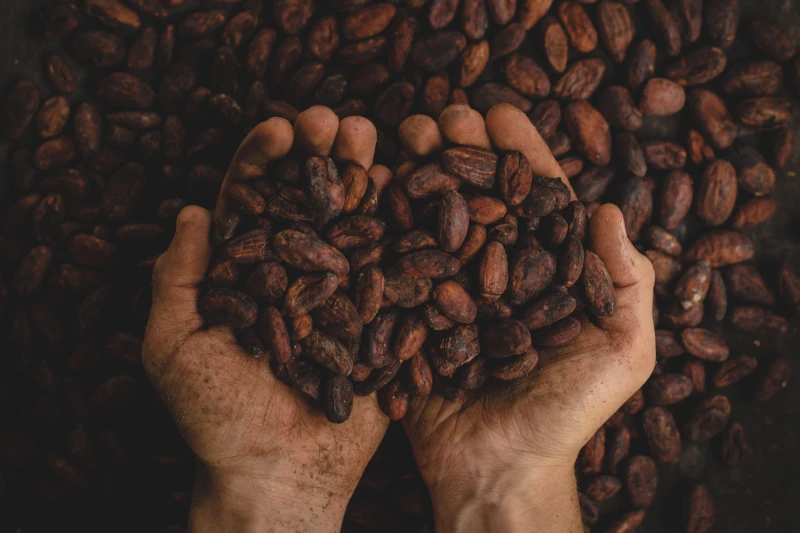
The Sacred Valley nurtures cacao beans of exceptional quality. As a result, Cusco has birthed chocolate that’s truly divine. Join us as we delve into this tantalizing journey.
From farm to table, the cacao’s tale in Cusco is captivating. Every bite narrates a story of tradition and passion. Ready to embark on a sweet adventure?
Cusco, a city famed for its Incan ruins, has another gem: its chocolate. The cacao tree thrives in the region’s unique climate. This has allowed to evolve with a distinct flavor.
Peru as a Culinary Destination has always been on the shelf. It boasts a spectrum of dishes, drinks, and desserts. Cusco’s chocolate stands out even in this culinary haven. This chocolate is more than just a sweet treat.
It embodies centuries of cultivation, tradition, and passion. The cacao bean’s journey, from pod to chocolate bar, is fascinating.
Locals know the secrets behind Cusco’s chocolate prominence. They’ve mastered the art of harvesting and processing. This mastery ensures every bite is flavorful and rich.
But what’s chocolate without a companion? Enter Cusco Coffee. This aromatic brew pairs perfectly with Cusco’s chocolate.
Together, they offer an unparalleled sensory experience. The beans, both cacao and coffee, share the land’s essence.
Visitors to Cusco find more than historical landmarks. They discover a chocolate legacy that’s deeply rooted. Tours around cacao farms are a favorite.
They shed light on the entire chocolate-making process. From bean selection to tempering, it’s all laid bare.
Cusco’s chocolate is not just for tasting. Many local shops craft souvenirs infused with this delicacy. Think chocolate-infused teas or cacao-scented candles. The influence of Cusco’s chocolate goes beyond the palate.
In conclusion, Cusco offers an unforgettable chocolate adventure. The city intertwines its rich history with cacao mastery. Dive in and let Cusco’s chocolate tantalize your senses.
The art of Cusco Chocolate tasting: A sensory journey
Tasting Cusco’s chocolate is an art. More than just a nibble, it’s a profound sensory experience. This journey awakens all five senses.
Cusco’s chocolate bears a rich history. Its flavors transport you to ancient times. You feel the dedication of the artisans.
The visual allure is undeniable. Glistening dark browns and creamy hues entice the eyes. They whisper of the flavor intensity within.
Touching Cusco’s chocolate, you sense its smooth texture. It softly melts, leaving a velvety feel.
When you snap a piece, listen. Cusco’s chocolate produces a satisfying break. This sound indicates its quality and craftsmanship.
Now, bring it to your sense of nose. The aroma is a dance of complexities. Notes of fruits, nuts, and woods blend seamlessly. It’s a preview of the upcoming taste fiesta.
Finally, the tasting begins. Let the piece linger on your tongue. As it melts, layers of flavors unfold.
Some chocolates carry a hint of citrus. Others boast a deep earthy taste. Each is unique, just like a fingerprint.
Peruvian Gastronomy embraces this art of tasting. With every dish and drink, they engage the senses. And Cusco’s chocolate is no exception.
The Pisac Market showcases this chocolate diversity. Wander the stalls, and you’ll encounter Cusco’s chocolate galore. Some vendors even offer tasting sessions. They guide you in discerning different flavor profiles.
Pairing is another art form. Fresh fruits, local wines, and nuts complement Cusco’s chocolate beautifully. They elevate the tasting to another level.
In essence, tasting Cusco’s chocolate is enlightening. It offers a deep dive into the heart of Peruvian culture. So, the next time you savor a piece, embark on this sensory journey.
Discovering Cusco’s Chocolate makers: Masters of sweet alchemy
Cusco, with its Andean charm, offers more than ancient wonders. Hidden within its streets are masterful chocolate artisans. They transform cacao beans into delightful treats.
These artisans respect their craft deeply. To them, chocolate-making is not just a profession. It’s a passion, a calling.
Each cacao bean tells a story. From the sun-kissed farms to the bustling city workshops. The journey matters just as much as the destination.
The process begins with careful bean selection. Only the finest beans are for the products. They undergo meticulous fermentation and drying.
Roasting follows next. This step unlocks the bean’s potential. The aroma fills the air, promising delectable outcomes.
The grinding process reveals the chocolate’s texture. Silky smooth or rustic, every choice holds significance. The chocolate’s identity starts taking shape here.
Conching and tempering perfect this identity. Hours pass, as chocolate reaches its final form. Through patience and skill, the transformation completes.
The result? Cusco’s exquisitely crafted chocolates. Each bite contains the alchemy of tradition and innovation. You taste the expertise, the love.
But discovering these sweet alchemists offers another surprise. As you traverse Cusco’s cobbled streets and chocolate havens, there’s more to explore. The region beckons with other adventures.
Imagine walking ancient paths. The same ones the Incas trod centuries ago. Lush landscapes, historical sites, and breathtaking views await.
So, after indulging in Cusco’s chocolate wonders, step out. Embrace the mountains, the history. Merge the sweetness of chocolate with the majesty of the Andes.