


Inca Jungle Trail Activities
You know that feeling when a trip is almost too famous? Like, you’re excited… but you don’t want four straight days of the samething. That’s where the Inca Jungle Trail shines. It’s the “variety pack” way to reach Machu Picchu: biking, rafting (season-dependent), hiking, ziplining, hot springs, and a few very real moments of, “Wait, how did the weather change that fast?”
In one minute, you are bundled up on top of a high pass, and gazing at snow-capped peaks. After a few hours you will be surrounded by warm green air, with a scent of wet leaves and coffee plants. It’s a fast slide from Andes to jungle edge, and that contrast is kind of the point.
Also, a quick reality check: this isn’t a luxury retreat. It’s an adventure itinerary with logistics, helmets, and group timing. But it’s fun logistics—like a well-run project sprint where the deliverables are views, stories, and sore calves.
A tiny outline first (so we don’t wander off a cliff)
- Day 1: Downhill bike from Abra Málaga, then (often) rafting in Santa María
- Day 2: Cloud forest hike + old Inca paths + coffee stop that tastes way better than it “should”
- Day 3: Zipline near Santa Teresa + Cocalmayo hot springs + the “we’re close now” buzz
- Day 4: Machu Picchu morning + the practical stuff (tickets, timing, and tired smiles)
Okay—now we can get into the good parts.
The bike day: your brakes get a workout
Abra Málaga (approx. 4,300m / 14,100ft) is where the majority of the Inca Tours start from the jungle. The hard climb is the vans responsibility, and you begin at the thin (cold digging fingers) air to begin. Hokey though it may initially sound, it’s a reason that lots of people who don’t want to stick to people on a nonstop uphill climb are able to feel.
The trip involves mostly downhill, depending on stops, road conditions and elevation, typically 2-3 hours. You’re not “crushing miles” like a road cyclist. You’re doing controlled speed management. Translation: you’ll be squeezing the brakes, leaning into turns, and keeping your eyes up because the scenery is distracting in the most inconvenient way.
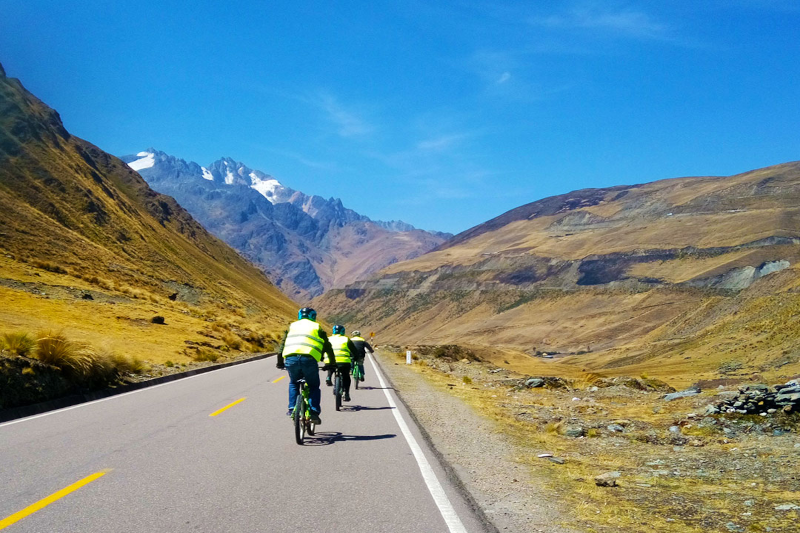
Your guide will usually give you all the safety equipment: a full-face helmet, gloves and some body protection. It can start off a little dramatic in the beginning. Next you come to a windy part and then it’s just simple risk management and nothing like drama.
Little pro tip that sounds boring but saves the day: ask for a quick brake check before you roll out. It’s like checking your laptop charger before a flight. Not exciting—just smart.
What the landscape does while you ride
The scenery changes in layers. High-altitude grasslands and big, open views up top… then cloudier slopes… then greener, thicker vegetation as you drop into the ceja de selva (the “eyebrow of the jungle”). It’s a microclimate mashup. You’ll feel it in your skin before you fully notice it with your eyes.
And yes, you might start the morning shivering and end it sweating. That’s not you being “bad at packing.” That’s just the Andes doing Andes things.
Rafting on the Vilcanota/Urubamba: thrilling, but not always on the menu
After biking, many groups head toward Santa María for rafting. The Urubamba river section guides use depending on water level and season. Here’s the mild contradiction: people sell this as a guaranteed activity, but a responsible operator will cancel or change the plan if conditions aren’t right. This is much better than to be disappointed; this is a good sign.
It will typically provide you with Class II – III rapids during the dry season within the range of getting the “ju-ju”, “dry off” and still beginner friendly when done with good guidance. But thanks to wetter months, the river can get far more serious, and that briefing may not sound quite the same anymore as much as a pep talk, but more like a safety briefing (because it should be).
Expect the standard setup: helmet, life jacket, paddle, and a quick run-through of commands. You’ll hear things like “forward,” “back,” and “hold on,” and it’ll sound simple… until you’re trying to coordinate with strangers while water is smacking the raft from the side. It’s teamwork in the funniest way.
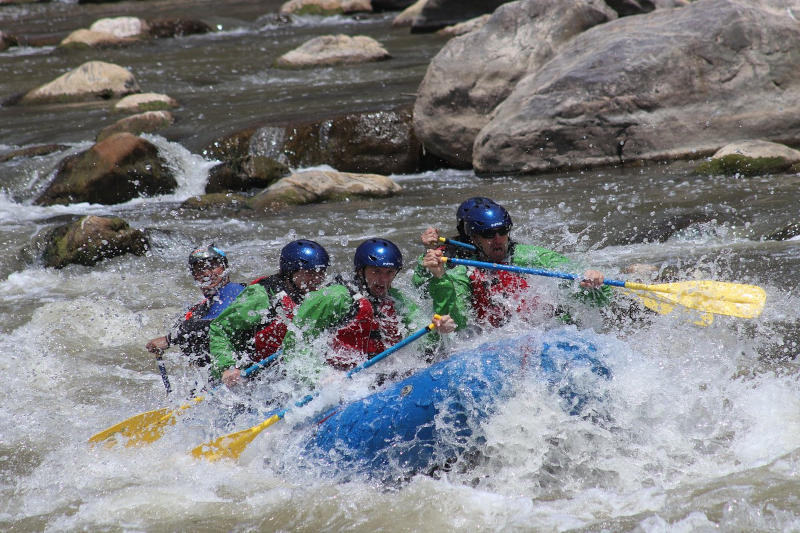
If you’ve ever been on a work call where everyone talks at once, rafting is the opposite. One person calls. Everyone acts. It’s oddly refreshing.
Day 2 hiking: the cloud forest has its own mood
Now the trek shifts gears. You’re on foot, moving through humid paths, small villages, and farmland that feels lived-in—because it is. The word “moderate,” a term which does much heavy lifting, is used to describe the hike. It’s very hilly, with dense air even though yesterday you rode downhill, and your legs were killing you.
Much of the original Inca trail stones will be walked (part of a wider Qhapaq Ñan road network). It is not the permit-only “Classic Inca Trail,” but it’s still in your brain. Someone built this. Someone maintained it. And it still works.
Coffee stops: the most satisfying “side quest”
A lot of routes include a visit to a family coffee farm. If you’re a coffee person, you’ll be happy. If you’re not, you’ll probably become a coffee person for an hour. The process is hands-on and simple in a way that makes you respect every café barista back home.
You’ll typically see the basics:
- Picking ripe red cherries
- Pulping to separate the beans
- Drying on trays or patios
- Roasting over a small fire
- Grinding (sometimes by hand) and brewing
And then you taste it. No fancy marketing. No latte art. Just fresh coffee with a clear, earthy sweetness. It’s one of those moments that’s quietly emotional—like, “Oh. This is what ‘local’ really means.”
Little side note, but relevant: If you have been struggling to sleep properly due to altitude (Soroche) in Cusco, Coca tea can feel like a helpful boost at altitude. Many travelers enjoy it, but it’s not a substitute for hydration and proper acclimatization.
Ziplining near Santa Teresa: the “why am I smiling so hard?” section
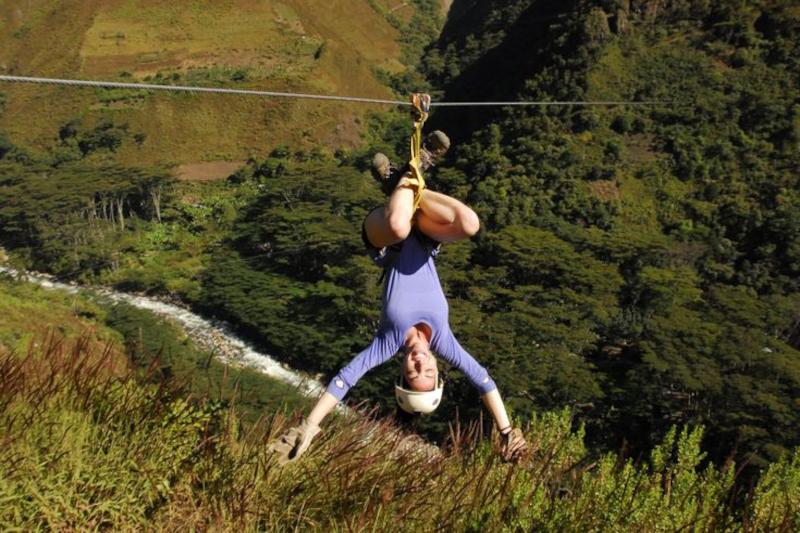
Many tours include a zipline tour near Santa Teresa by day 3. A harness, gloves and briefing will be provided. Well but it’s structured, a bit procedural and then you are flying through the canyon with your feet dangling and your brain saying “Oh, that’s real.”
Some lines let you ride seated; others offer a face-forward position that feels like flying. You don’t need to be fearless. You just need to listen, clip in correctly, and let the system do its job. It’s engineered fun.
If you’re the type who likes gear details: bring sunglasses with a strap. Wind plus speed plus loose sunglasses equals a sad little story later.
Cocalmayo hot springs: not fancy, but absolutely perfect
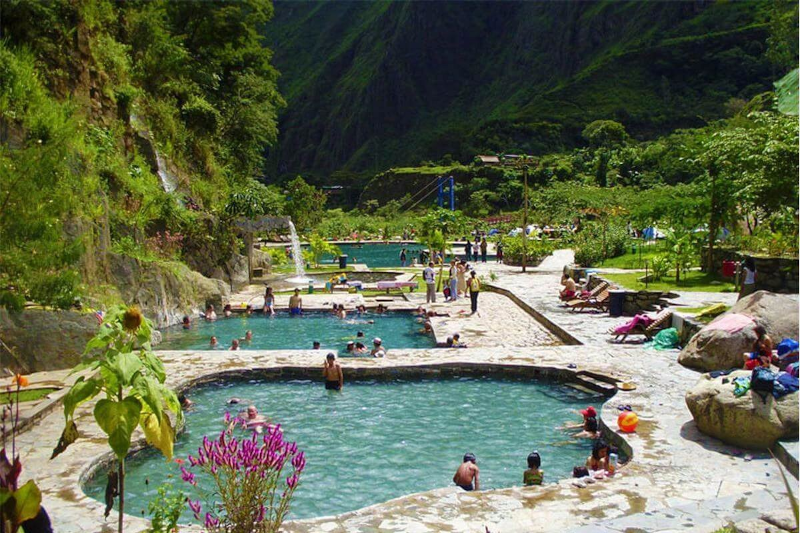
Once on the ground – and, more often, transported – as you do when you zip line – Cocalmayo Springs are a reset button. The swimming pools are basic, open-air and located on steep green slopes. You’ll notice other travelers taking in the stuff with the “blissed out” look to them that they “did not realize their knees need this.”
It’s not a spa. There’s no scented towel service. And that’s why it’s great. Warm water, tired muscles, night air cooling your shoulders—done.
Another small digression: this is where a quick-dry towel earns its place in your pack. It sounds like a minor item, but it’s a morale booster. Dry clothes are a morale booster too.
So… how does this compare to the Classic Inca Trail or Salkantay?
People love asking this, and the honest answer is: it depends on what kind of “hard” you want.
The Classic Inca Trail is iconic, historic, and permit-limited. It is also a considerable amount of walking and follows a given momentum, which thousands of people will follow each season. Seasoned travelers would prefer to spend the night on Salkantay because of its increased size, ferocity, and the potential for gigantic views. The Inca Jungle route is a bit more eclectic and provides an additional amount of hopping from activities, with a more comfortable price tag.
Quick comparison (human version, not spreadsheet version):
- Classic: History-forward, controlled access, hiking-heavy
- Salkantay Trek: Big mountains, tougher days, more exposure to altitude
- Inca Jungle: Variety, adrenaline moments, and fewer “same-same” miles
And yes—Jungle can feel easier because you’re not hiking every hour of every day. But it’s still a full-on trip. You’ll be sweaty. You’ll be tired. You’ll also laugh a lot, which is its own kind of energy.
Packing for four climates: the “be ready, not overloaded” approach
Here’s the thing: the weather swings are real. Cold at the pass, warm in the valleys, humid on the trail, then cool again at night. This is where layering beats bulky items. Think in modules: base layer, mid layer, shell. If you’ve ever managed a messy calendar, it’s the same logic—keep the system flexible.
Footwear is a common debate. Heavy boots sound reassuring, but many people prefer trail runners here because they dry faster and feel lighter on mixed terrain. Just make sure the grip is solid. Mud happens.
A short, practical gear list that covers most situations:
- Light rain shell (a real one, not a thin fashion jacket)
- Sun protection (SPF + hat)—the high pass sun is no joke
- Bug repellent for the lower elevations
- Swimsuit for rafting/hot springs
- Quick-dry towel
- 2L water capacity (bottles or hydration bladder)
- Headlamp (useful more often than you’d think)
If you like using apps: AllTrails can be handy for context, and a Garmin or Strava track is fun afterward. But don’t let tracking turn the trek into a performance review. The goal is experience, not a perfect graph.
Timing, tickets, and the “please don’t leave this to the last minute” note
The most popular season is typically May through September (drier, clearer). Shoulder months can be great too—fewer crowds, greener hills—but you’ll want to accept more weather variability. That’s the trade. Personally, that trade can be worth it.
Although the Inca Jungle Trek permits are not as strict as for the Classic Inca Trail, you should consider tickets to enter Machu Picchu, as well as timing. There are timed entry systems in place and demand peaks during peak travel times at the site. When travelling with an agency, agree on the inclusions: entry ticket and bus up from Aguas Calientes and a guide on the visit to Machu Picchu.
Another grown-up detail: travel insurance. It’s not exciting. It’s also the kind of decision you only regret when you skip it. Adventure activities plus remote roads equals “plan for contingencies.”
The final morning: Machu Picchu, but make it feel real
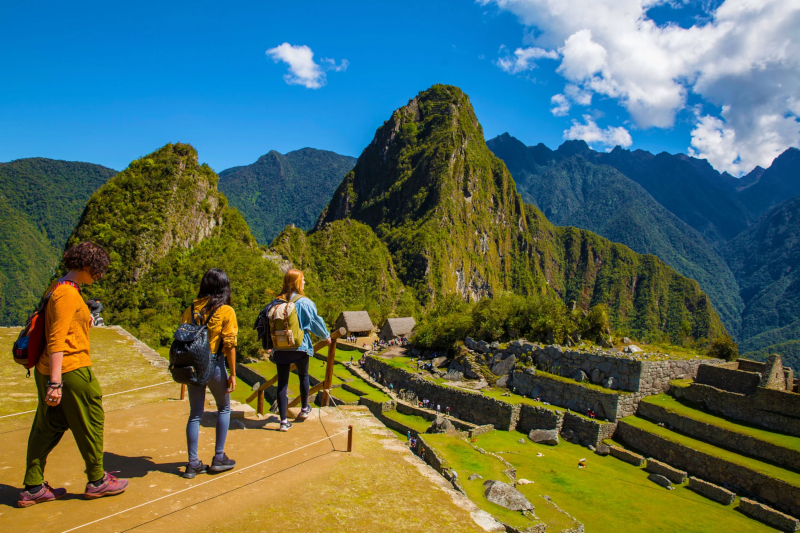
Around the time you are at the summit of Mount Everest you have a tiny little timeline of this journey in your body – the pressure of squeezing that brake in your forearms, the blisters from all of that paddling (may start, may not finish), the soaked socks that believe it or not dried out, the soak in the hot spring that was surely a reward. Then the stone city appears, silently, as if waiting for you to arrive.
Try not to rush the first view. Everyone rushes the first view. Then they slow down and realize: this place has texture. The walls fit together with a precision that still feels slightly unreal. The terraces roll down the slope like green steps. You’ll hear wind, birds, and a lot of camera shutters—somehow all at once.
And when it’s over, when you’re back in town eating something salty and staring at your hands like they belong to someone else, you’ll probably say the same thing people always say: “That was a lot.” They mean it as a compliment.
Quick recap (because repetition helps when you’re planning)
This trail is for those who prefer inca jungle trail experiences with some variety – perhaps bike, raft, hike, zipline and hot springs. Active, social and somewhat untidy, a good thing. Take layers, check out your arrangements for spending time at Machu Picchu, choose an operator who is committed to safety and always allow for the weekend to be unexpected. The Andean people indulge in surprises.