


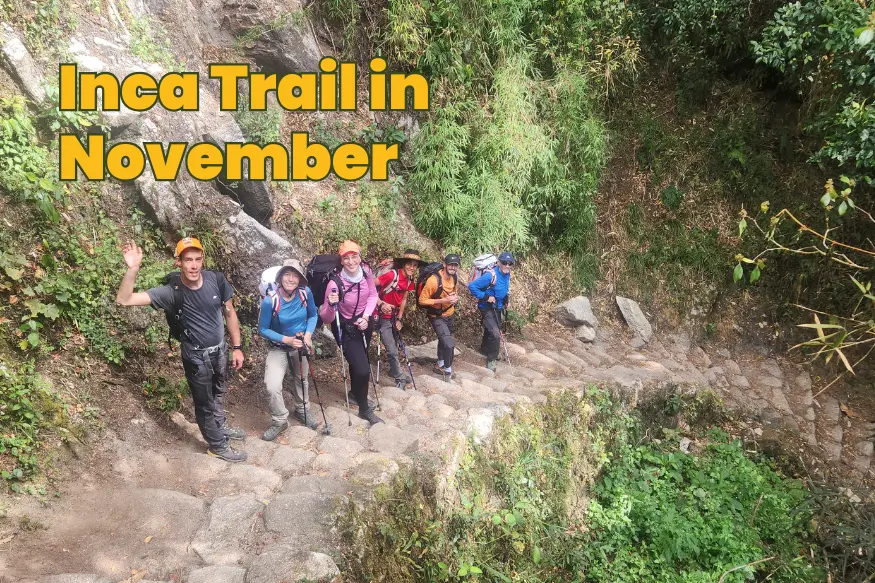
Inca Trail in November

Hiking the Inca Trail in November
Hiking the Inca Trail in November can be an exceptional experience — and yet it comes with its own unique considerations. If you’re planning a trek in November, this guide will walk you through everything you need to know: weather and trail conditions, crowd levels, permits, practical tips, what to pack, and how November differs from the prime dry-season months. The aim is to equip you with enough information to make an informed decision and ensure you’re fully prepared.
Weather and Conditions in November
Weather Patterns
November marks the transition between the dry and rainy seasons in the Cusco region. Early in the month, the weather often remains pleasant, with cool mornings, mild days, and occasional light showers. By late November, rainfall becomes more frequent as the wet season approaches.
Average daytime temperature: around 21°C (70°F)
Average nighttime temperature: around 6°C (43°F)
Average rainfall: approximately 70–80 mm spread over 10–12 days
Daytime conditions are generally comfortable for hiking, but you must be prepared for changing weather — clear skies in the morning can turn to mist or showers in the afternoon.
At higher altitudes, such as Dead Woman’s Pass, the air is cold and thin, while the lower valleys are warmer and more humid.
Trail Conditions and Crowds
The Inca Trail remains open and fully operational in November, and it is less crowded than the peak months of June through August. With fewer trekkers, you can enjoy a quieter, more personal experience at the archaeological sites.
However, expect:
Slightly muddier or slippery trails, especially in forested sections.
Occasional cloudy skies obscuring mountain views.
More humidity, which can make the trail feel warmer.

Advantages and Disadvantages
Advantages:
Fewer tourists, allowing a more peaceful trek.
Lush green vegetation returning after the dry season.
Comfortable daytime temperatures.
Easier to find permits and flexible tour dates.
Disadvantages:
Increasing chance of rain and cloudy weather.
Cold nights at higher camps.
Occasional slippery sections that require careful footing.
Permits, Booking, and Logistics
Permits and Regulations
All trekkers must have a government-issued Inca Trail permit, obtained only through licensed tour operators. November is a shoulder-season month, so permits are easier to secure than in peak season, but it’s still wise to book several months in advance.
Remember that the Inca Trail is closed every February for maintenance, so November offers one of the last months before that closure period begins.
Duration and Route
The standard route is the 4-day Classic Inca Trail, but there are also shorter alternatives such as the 2-day Short Inca Trail, which begins closer to Machu Picchu.
In November, starting the hike early each day is advisable because rain showers often appear in the afternoon.
Accommodation and Transport
You’ll need at least two nights in Cusco before the trek to acclimatize. Most tours include:
Transfer from Cusco to the trailhead at km 82
Porters to carry camping gear
Three nights of camping with meals
Train from Aguas Calientes back to Cusco
Since November weather can be unpredictable, it’s good to add one extra day at the end of your itinerary in case of travel delays.
What to Pack for the Inca Trail in November
Packing smart is essential for comfort and safety. November requires preparation for both dry and wet conditions.
Clothing
Lightweight, breathable trekking shirts
Warm fleece or down jacket for evenings
Waterproof jacket and pants
Quick-dry hiking pants
Thermal underwear for cold nights
Hat and gloves
Sun hat and sunglasses
Extra pairs of socks
Footwear and Equipment
Broken-in hiking boots with good grip
Trekking poles (recommended for muddy sections)
Backpack with rain cover
Sleeping bag rated for temperatures near 0–5°C
Headlamp for early starts
Dry bags or plastic liners for clothes
Refillable water bottle or hydration pack
Other Essentials
High-SPF sunscreen and lip balm
Insect repellent
Personal first-aid kit
Snacks and energy bars
Power bank and camera
Passport (needed at checkpoints)
Because November may bring showers, rain protection is critical. Pack rain gear even if the weather seems clear when you depart.
Challenges of Trekking The Inca Trail in November
Rain Risk: Afternoon showers can occur frequently, so pack rain gear and waterproof covers.
Temperature Swings: Warm days and cold nights require layered clothing.
Trail Conditions: Expect some muddy or slippery sections, especially in shaded areas.
Unpredictable Weather: Conditions can change rapidly — always stay flexible and follow your guide’s advice.
Despite these challenges, many hikers find that November offers a more intimate, authentic Inca Trail experience than the crowded high season.
Health and Safety Tips
Spend at least two nights in Cusco before starting the trek to acclimatize to the altitude.
Drink plenty of water and avoid alcohol before the hike.
Bring coca leaves or altitude medication if you are sensitive to high altitudes.
Use trekking poles to reduce pressure on knees and for stability on wet trails.
Protect yourself from both sun and rain — the UV radiation is strong even when cloudy.
Photography and Scenery in November
November’s lighting conditions can be dramatic — a mix of sun, mist, and cloud creates ever-changing photo opportunities. The trail becomes more vibrant with green foliage and flowers, making this a wonderful time for photography enthusiasts.
Morning photos at Inti Punku or Wiñay Wayna can show a mystical atmosphere with light fog drifting over the mountains. Keep your camera in a waterproof bag, as sudden showers are common.
Booking and Preparation Tips
Book early: Even in November, Inca Trail permits are limited to 500 per day, including guides and porters.
Choose a reputable agency: Ensure they provide licensed guides, proper camping equipment, and sustainable porter policies.
Get travel insurance: Include coverage for high-altitude trekking and weather delays.
Check gear quality: Tents and sleeping bags should be waterproof and warm.
Prepare physically: Train by hiking or climbing stairs several weeks before the trip.
Frequently Asked Questions About Inca Trail in November
Is November a good time to hike the Inca Trail?
Yes. November is a great shoulder-season month with fewer crowds and pleasant temperatures. Just be prepared for occasional rain.
Will the trail be closed?
No. The Inca Trail only closes in February for maintenance.
Are permits available?
Generally yes, but booking ahead is still required due to strict daily limits.
Is November too rainy?
Not necessarily. Early November is relatively dry, but rain increases later in the month.
What should I wear?
Dress in layers and carry a waterproof jacket. A good pair of hiking boots is essential.