


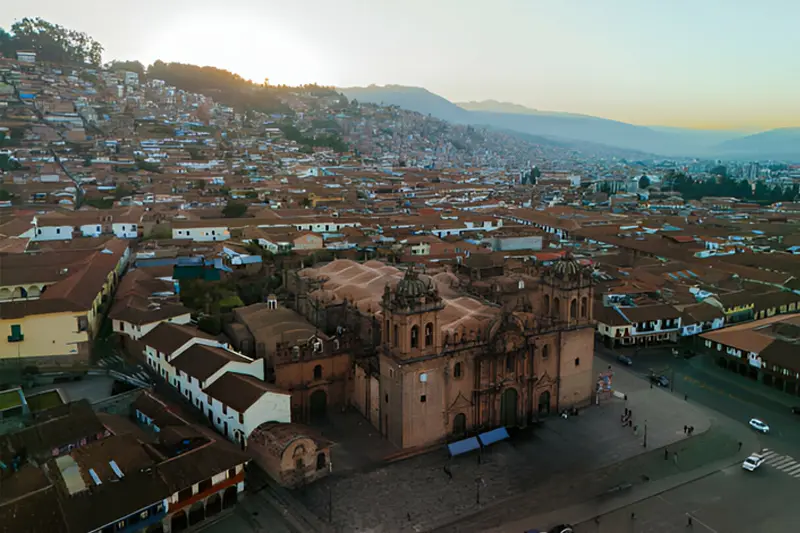
Top Tourist Attractions in Cusco, Peru
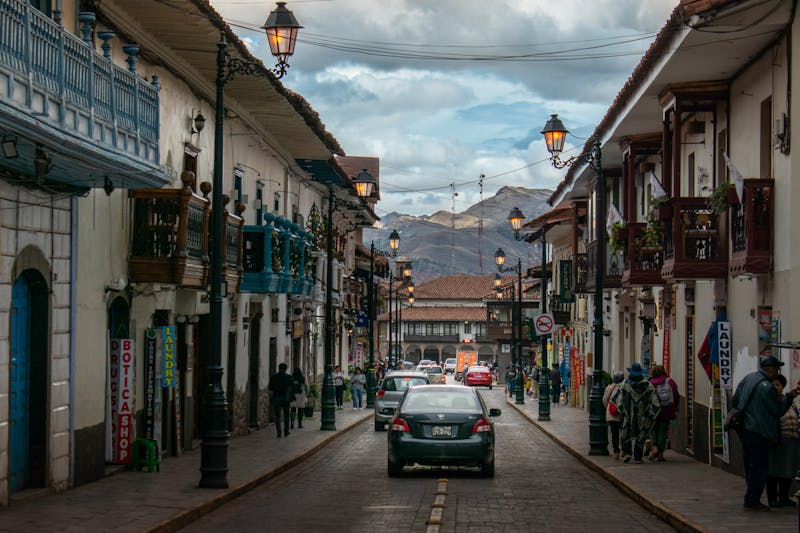
Cusco or the historical capital of Peru is full of cultural heritage and swing landscapes. The city, which lies at high level in the Andes, links the tourists to most of the iconic sites in South America and the best Attractions Cusco Peru is associated with. You can find old Inca ruins, incredible natural views, or lively markets of the locals, but Cusco is the place that can offer both, which is pristine and memorable. Delve further and you will realize how the historical, the cultural and the natural merge together forming a destination that is at once heart and imagination captivating.
Cusco was used as the prosperous capital of the Inca Empire many years ago. This civilization became well known with its mastery in building the architecture and its enormous impact on the rest of the continent. It is that heritage that the city boasts of to this day. Pieces of great art, colonial buildings, still share some details about the centuries ago. Thus, wandering in Cusco would feel as an extension of living in a museum. All the streets and stones maintain a silent reminder of ancient success.
Exploring the Inca Empire’s Heart
Cusco was at the heart of the Inca world. Therefore, what was written here ruled emperors and made decisions of relevance in its plazas. The past is a present when you are strolling through the city. History comes alive by use of cobblestone streets, ritual squares and remnants of the temples. Moreover, the structure of the city is like a puma which is a holy animal of the Inca faith. There is an element of spiritual symbolism and engineering in this design. It also demonstrates how strongly the Incas related the city planning and the worldview.
The Legacy of Colonial Influence
There was however a transformation of Cusco by Spanish arrival. The city did not fade away, it was redesigned. Spanish constructors erected mansions and churches with very powerful Inca foundations. This has led to a great cultural mix in a number of structures. The Convent of Santo Domingo was made on the site of the Inca Temple of the Sun. This comparison gives an account of conquest, adaptation and surviving. Nowadays, a visitor can clearly observe how one and the same streets were marked by two civilizations.
Preservation of Cultural Heritage
There are growing conservation initiatives in recent years. Cusco was recognized to have global value since UNESCO designated it a World Heritage Site in 1983. Due to this awareness, they have taken good care of historical zones today. Temples, plazas and colonial houses are under restoration efforts. Regulations, on the other hand, serve as a way of bringing about uncontrolled development. Cusco is therefore holding on to its history without necessarily rejecting the modern visitors. Such initiatives will make sure that the future generations will keep learning through its legacy.
Qorikancha: The Golden Temple
Qorikancha is one of the other fascinating landmarks of Cusco. It was named Golden Temple and it was claimed to have named Inti, the Sun God. The wall of the building was covered with gold plates which reflected sunlight in its glory in its prime. Even though the Spanish took away most of that wealth, the stonework of the temple continues to astonish the visitors. The complex today comprises the Convent of Santo Domingo that renders another layer of history and contrast to the eye.
The Architectural Marvel of Qorikancha
Qorikancha was constructed with great accuracy by Incas engineers. They carved the stones in such a way that the stones fit without mortar. Due to this technique the walls are resistant to earthquakes even today. Moreover, constructors also oriented the temple on astronomical events. This planning reveals how much the Incas were connected with architecture, science and spirituality. Their artistry still remains an inspiration to architects and historians across the world.
The Spiritual Heart of the Inca Empire
Qorikancha was not only designed, but it also served as a centre of worship. Inti was worshiped by the priests performing ceremonies at the site. Sacred objects and altars that were covered with gold placed sacred significance on them. Even though conquerors took most of its riches away, the location has a strong atmosphere. Several visitors experience strong energy when they are walking through the remains. The religious meaning, thus, rings up to this day.
The Transformation into Santo Domingo
Spanish leaders transformed the temple into a catholic complex after the conquest. Two buildings were put atop of the first structure; a church and convent. Such transformation was a sign of political and religious superiority. The building is however supported by the Inca stonework. Due to this, the location silently discloses that the knowledge of the Inca survived under their colonial stratum. It is an unquestioned embodiment of cultural endurance.
Sacsayhuamán: The Fortress of Stone
One of the most outstanding constructions of the Inca is Sacsayhuaman that is located high above Cusco. Its zigzagging walls are constructed of huge stone blocks. One stone is placed in another in the most unexpected fashion. Visitors today are unable to put paper between them. Evidently, stone engineering was well undertaken by the Incas. In addition to its historical value, the site also offers the sightseers broad panorama visibility of Cusco.
The Strategic Importance of Sacsayhuamán
Sacsayhuaman was not just a ceremony place. It was one of the strongest defensive fortresses. The warriors of Inca also stood on its high place and monitored the valley and defended the capital. Besides, the fortress was linked to a bigger defense system. The system enabled fast communication and coordinated protection. Thus, Sacsayhuaman puts emphasis on military intelligence and architectural genius. It explains how the Incas applied natural geography to their benefit.
Engineering Feats of the Inca Builders
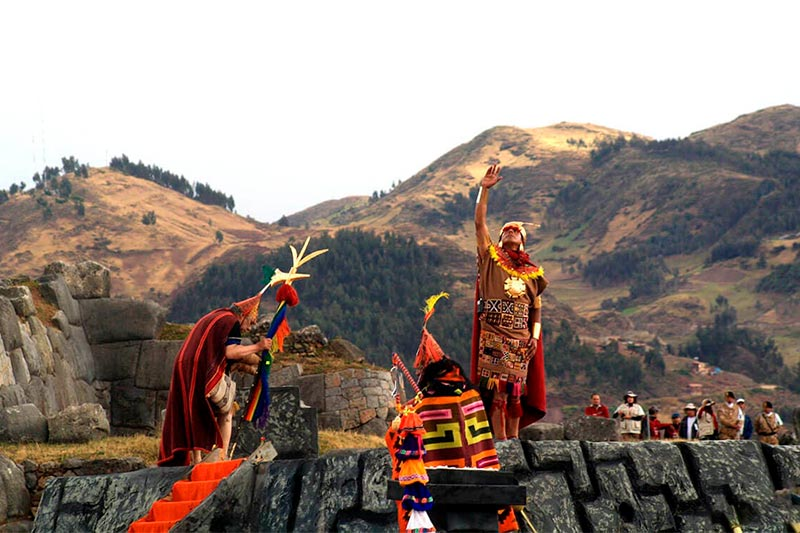
Sacsayhuaman has a cultural significance other than the historical one. An example is that it is the birthplace of contemporary festivals such as Inti Raymi, the Festival of the Sun which attracts thousands of tourists every year. The festival is a recreation of an ancient Inca ritual and a celebration of winter solstice in the honour of the Sun God. Thus, the site remains a cultural and spiritual attraction site.
Cultural Significance and Modern-Day Celebrations
Today, Sacsayhuamán carries cultural importance beyond its historical role. For instance, it hosts modern celebrations like Inti Raymi, the Festival of the Sun, which draws thousands of visitors each year. This festival reenacts an ancient Incan ceremony and celebrates the winter solstice while honoring the Sun God. Therefore, the site continues to serve as a cultural and spiritual landmark.
Natural Wonders and Treks
Cusco as a gateway also leads to breathtaking treks and nature directly associated with the city. The area experiences a wide variety of sceneries with rainforests and mountainous ranges. Due to this diversity, tourists can never get bored with adventure. In addition, the natural wonders augment the rich cultural clothing of Cusco and attract tourists to visit Andes.
The Sacred Valley
One of the most popular activities to do in Cusco is the Sacred Valley where there are fertile lands and beautiful scenery. The Incas used to depend on it in the past. The valley now contains quaint villages, markets and several places of interest such as Pisac and Ollantaytambo. Tours here are therefore an experience of Incan culture and natural beauty.
The Fertile Heartland of the Incas
Sacred Valley was the breadland of the Inca Empire. It had fertile soils and moderate climate which enabled farmers to produce numerous crops. As a result, the population grew due to this abundance which promoted prosperity. Nowadays, they go to terraced landscapes, which remind them of Incan farming innovation. Their experience in agriculture is still noted by these terraces.
Exploring Pisac and Ollantaytambo
Pisac and Ollantaytambo are some of the most significant archaeological attractions in the Sacred Valley. Pisac has impressive agricultural terraces and ruins which show planning and design of Incan architecture. In the meantime, Ollantaytambo hosts great terraces made of stone and an impressive fortress. During the historic times, it served as a military and religious hub by leaders. Thus, the researches of the two sites enhance any insight into the Inca civilization.
Traditional Markets and Local Culture
Sacred Valley also has vibrant local markets where the visitors can explore the culture at the local level, like Pisac Market. Sellers are marketed with fresh produce, home textiles, jewelry, and displayed colorfully. Besides, meetings with craftsmen and peasants give unique cultural experience. In such a way, these markets are not only the places to go shopping, but also to be exposed to the local culture and home-cooked food.
Machu Picchu: The Iconic Inca Citadel
There is no place you can visit in Cusco without visiting Machu Picchu. It remains one of the top tourist attractions in Cusco Peru. This is one of the UNESCO world heritage sites that is usually covered with mist, which contributes to the mystery of the location. Travelers can hike the Inca Trail or choose the train instead. Whichever the case, the trip turns out to be as memorable as the citadel under discussion.
The Mystique of Machu Picchu
Machu Picchu is a site that makes people interested due to its enigma and theatricality. It is located on top of a mountain ridge and has a view of Andes mountain and Uruguamba River. Consequently, each opinion is an eye dropper. The exact purpose of the site remains open in dispute between historians, which further contributes to the mystery of the site. There are those who think that it was used as a royal estate by rulers, but others believe it served as a religious or astronomical position. In spite of the theory, Machu Picchu still enjoys a fascination among the travelers of different parts of the world.
The Inca Trail: A Journey Through History
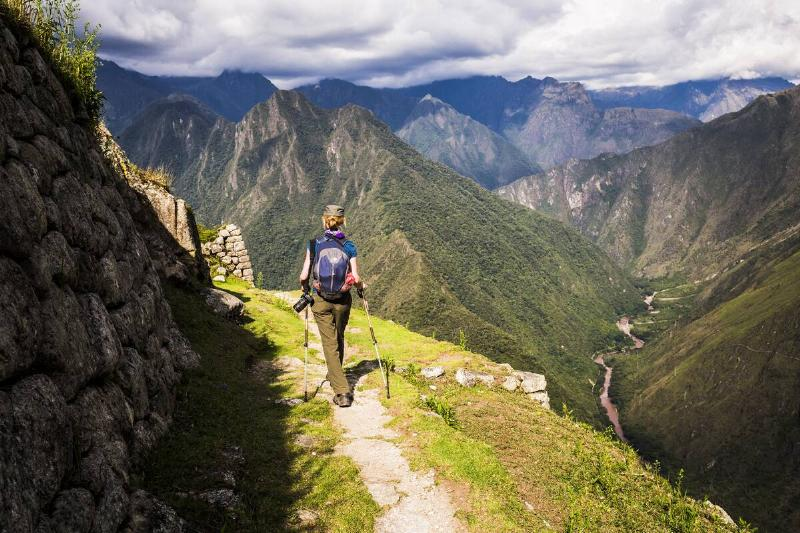
The Inca Trail ranks among the world’s most famous trekking routes and guides hikers through ecosystems and ancient ruins. In this four day trip, the visitors use routes that were used in the past by the Incas. On their journey, they go through the changing landscape and physical difficulties. At some point, the path leads to the Sun Gate. It is the point where trekkers have a glimpse of Machu Picchu. It is a very strong and satisfying moment and thus many even call it the climax of the trek.
Conservation Efforts and Sustainable Tourism
World bodies and the Peruvian government take all the steps to preserve Machu Picchu. They are conservation-oriented and responsible for tourism. To illustrate, they are working towards environmental protection and management of visitor influence. The government restricts the number of people that can enter everyday and promote sustainability. Due to such activities, the site is in its state. In addition, they should save Machu Picchu as a cultural relic to the following generations.
The Salkantay Trek
Salkantay Trek is preferred by a number of travelers who prefer a less traveled road to Machu Picchu. This route is a challenging, yet highly rewarding one. It traverses cloud forests, mountain valleys and snowy landscapes. Finally, hikers arrive at magnificent views close to Salkantay Mountain. Thus, the expedition is a combination of the beauty of nature and the genuine adventure.
A Journey Through Varied Landscapes
The Salkantay Trek is well known due to its variety of landscape. In a few days, trekkers pass through a number of ecosystems. Originally, they go through green cloud forests. Then they scale up to mountain passes that are high where snowy mountains clog the horizon. Therefore, the scenery is never the same. Every day brings with itself new perspectives and new difficulties. Due to this diversity, the trek can be remembered by several hikers as unforgettable.
The Majesty of Salkantay Mountain
The whole trek is anchored with the Salkantay Mountain at the top of the skyline. The snow-white top of it attracts the gaze of miles. The Salkantay Pass is an important achievement for hikers. Anyone who stops halfway up the mountain needs hard work and perseverance. Nevertheless, that much effort is paid back with the panoramic mountain views. The mountain is also regarded as holy by the local communities. Therefore, the pilgrimage has cultural and religious overtones.
Embracing the Spirit of Adventure
The Salkantay hike’s challenges are more than a physical pose. It challenges tourists to be adventurous, and be close to nature. Gradually, hikers go out of their comfort zones. Meanwhile, they encounter the locals and other trekkers. Such interactions frequently become a long-lasting memory. Eventually, Salkayt Trek demonstrates how travelling can motivate, provoke, and change people who experience the adventure.
Colorful Landscapes
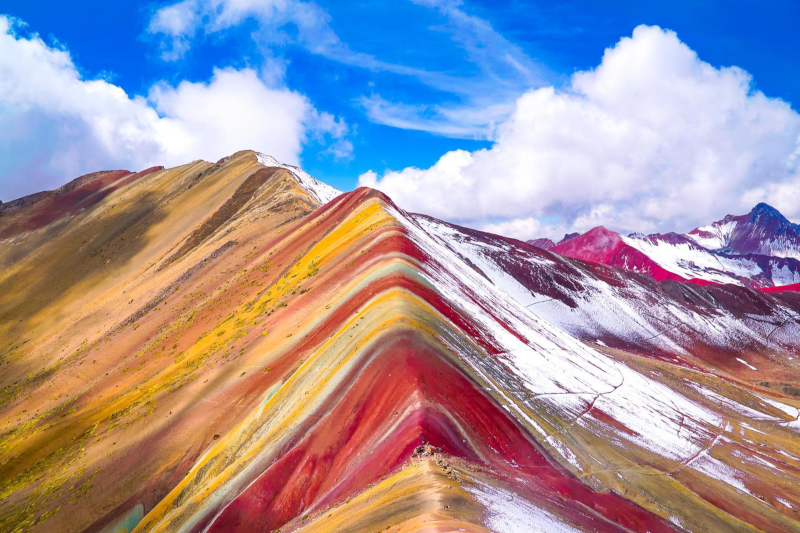
Landscapes of Cusco have remarkable diversity and breathtaking beauty and expose an epic palette of nature marvels. Colored mountains, valleys with fertile soils are just a few of the things that can leave a sight to the pleasure of both the traveling and photographing persons. Besides, both settings tell another tale of nature and time. You find yourself as you pass through the territory; all the valleys, peaks, and tracks beckon you to explore them. Thus, here, visitors do not just see nature, but they relate with it.
Rainbow Mountain: Vinicunca
Rainbow Mountain, also known as Vinicunca, has quickly risen as one of the most desired attractions in Cusco Peru. It is a very colorful place, having its bright slopes as a result of strong mineral layers, and they shape a landscape that is almost unrealistic. Consequently, a significant number of the travelers put it on their bucket list. Despite the effort required to hike up it, the expansive Andean scenery delivers on those who hike it. Because of this reason, this experience is termed by many hikers as difficult and memorable.
Geological Wonders and Natural Beauty
The millions of years that created Rainbow Mountain were made up of mineral deposits that formed the colors of the Rainbow Mountain. Red, orange, yellow and green layers cover the slopes and give natural mosaic. As a result, this mountain is one of the most distinctive attractions in the area. Such structures are also used to show how the earth is very active in the field of geology. It is due to this that the site does not only receive tourists but also nature enthusiasts. Numerous visitors stand and stare in silence particularly when they absorb the vivid colors and the dramatic contrast of the color with the neighboring mountains.
The Trek to Vinicunca’s Summit
The hike to Vinicunca is a challenge to stamina and strong will. Given the fact that the route is a high-altitude ascent, the hikers require adequate acclimatization and preparation. Nevertheless, this passage provides an unending satisfaction. On the trails, hikers get panoramic mountain sceneries. Moreover, they usually see llamas and alpacas grazing around. One by one the landscape grows larger beneath them. Lastly, once the hikers are on the summit, they use the experience to celebrate the victory and have panoramic views of the Andes. This is normally the best thing in their trip to Cusco.
The Cultural Significance of Vinicunca
Vinicunca has a profoundly personal meaning to local Quechua communities also. They believe that the mountain is holy, and relate it to their traditional ancestry. Moreover, a great number of families have been dwelling in the communities around such lands since generations. The mountain colors are related to the richness and identity based on culture. As such, respectful tourism is significant in this case. Tourists who take time to learn through the local society are in a better position to have a more beautiful understanding. Travelers get to value the people and the landscape more through conversations and through sharing stories, which appear as a whole.
Cultural Experiences in Cusco
Besides the natural and historical charm, Cusco is also a hub of the living culture. The city is vibrating with everyday traditions, life in the community, and colorful heritage. Consequently, the tourists do not just have sightseeing experiences; they get to explore the real local life. Through the flats, fetes and the street scenes one can see how tradition mingles with new beats. Thus, sightseeing in Cusco can be rather all-inclusive as opposed to being on the periphery.
San Pedro Market
A trip to San Pedro Market is a way to start living the life of the locals. Vendors crowd the stalls with fresh foods, cloth and everything handmade. In the meantime, the rhythmic motion and good-natured conversations make the atmosphere very energetic. Tourists tend to visit to savor such cuisine as ceviche or rocoto relleno. Meanwhile, they encounter locals and they share their culture and cuisine. Due to this fact, there is taste and cultural knowledge in the market.
A Feast for the Senses
The colorful, full-flavored, and energetic sounds, colors, and aromas of San Pedro Market impress the visitors. Bright fruits and fragrant herbs attract attention on your way between the aisles. Besides, the food counters sell traditional snacks and beverages like coca tea. All the sections present new tastes and ingredients of Andes origin. This makes the market a location in which the market learns and also tastes. Most visitors go home having a better insight into Peruvian food.
Artisanal Crafts and Traditional Textiles
Regional practice is also exhibited in the market. Artisans also exhibit ancestral woven fabrics, jewelry and pottery. Moreover, a lot of sellers describe the way they make their works. These handicrafts are a heritage of knowledge and culture. Thus, the purchase of a handmade product is a direct contribution to the local family. More to the point, every one of the pieces has an Andes story behind it.
Connecting with the Local Community

San Pedro Market is a daily gathering of locals. There, families make purchases and gossip and communicate. To the visitor these are moments where they look into the very fabric of life. During basic discussions, they soon become cordial cultural interactions. Consequently, the travelers recollect these encounters even after the excursion is over. The most significant travel memories are typically formed under the influence of personal relations.
Cusco’s Vibrant Festivals
Cusco provides a tribute to its heritage by celebrating it at festivals where people make merry with music, dance, and ritual. Such events preserve the ancient traditions as well as uniting communities. It is seen through the color and sound of color livelihood throughout the year. As such, the scheduling of a visit during one of the festivals can add value to any tour. Visitors that come are sometimes better placed to see the local identity and pride.
The Inti Raymi: A Celebration of the Sun
Inti Raymi stands as Cusco’s most famous festival. It celebrates Inti, the Sun Father and the winter solstice. Actors are dressed up in fancy attires and they re-enact the rituals of the Incas. In the meantime, music and dancing dominate the plazas. This is primarily celebrated at Sacsayhuamun where huge numbers of people attend. As a result, the event is a combination of history, spirituality and spectacle. It is said by many visitors as a heritage of their culture.
Other Festivals and Cultural Events
There are also many other celebrations taking place in Cusco throughout the year. As an example, there are religious processions and traditional dances in Corpus Christi. All of the festivals are some blend of colonial and Indigenous. Due to this mixture, the cultural calendar of Cusco is very heterogeneous and dynamic. Tourists who visit are observing living customs as opposed to exhibits.
Embracing the Spirit of Celebration
Attending local festivals will enable the traveler to identify themselves with the society. These parties are an expression of identity, thankfulness and continuity. They are not mere performances but cultural heritage. When you join them you find how proud people are about their practices. Finally, all these moments enhance cultural popularization and appreciation.
Planning Your Cusco Tour
Various things to include in the Cusco tour would be a combination of history, nature and culture. It could be taken as an example to combine market visits and archeological ones. This equilibrium produces a more enhanced itinerary. Also, careful planning can be used to control the altitude and travel time. One can have a different but satisfying everyday in Cusco, with attitude.
Practical Tips for Visiting Cusco
- Cusco is at a high altitude, therefore one needs to allow 1 to 2 days to acclimatise, relax and drink a lot of water without alcohol.
- Dry and sunny in the months May to September are the best time to visit it, but since it is peak season, it is always good to book well in advance or you may visit during the months of April and October and have fewer visitors.
- Within the center of Cusco, it is easy to walk but guided tours can be used when going to Machu Picchu and Sacred valley whereby taxis and public transport are available to provide a flexible choice.
Conclusion
Cusco is a second to none destination that incorporates history, nature and living culture into a single destination. Tourists will be strolling through ancient ruins, hiking over incredible sceneries, and learning about strong traditions. Due to the difference, every day may seem entirely different. One time you are visiting stone temples, and the next time you are visiting colorful markets or mountain trails. Such diversity makes the journey interesting throughout. As you discover the top attractions in Cusco Peru, the city’s energy and heritage leave a strong impression.
Therefore, start your adventure in Cusco out of curiosity and planning. Every experience is an addition to your narration. Eventually, such instances translate into unforgettable ones. You will still remember the sights, the tastes and the experiences even after you have gone home. Cusco is a fascinating city to see whether you are fascinated with history, nature, culture etc. It beckons you to come and seecand enjoy the city. Ultimately, it is the city of Cusco that impresses, but not to leave a visitor indifferent.