If you’ve ever landed in Cusco and felt a little woozy, welcome. The altitude hits fast. Your legs say “no thanks.” Your head says “why is my heart racing?”

And yet, people live here. Farm here. Raise kids here. Laugh here. That’s your first clue about Pachamama: the Andes don’t let you pretend you’re the boss.

So you hear a word said with real care: Pachamama.

Most guides translate it as “Mother Earth.” That’s close. But it’s a bit like calling the Sacred Valley “a nice view.” True… and also missing the point.

pachamama meaning

Mini-outline (so it’s easy to follow): 

  • what the word means, 
  • why Cusco + the Sacred Valley make it feel real, 
  • what people do day to day, 
  • the big rule: reciprocity, 
  • what changed after the Spanish arrived, 6) why it still matters.

So, what does Pachamama mean?

Here’s the thing. Quechua words can carry a whole worldview inside them. English likes neat labels. Quechua often gives you a whole scene.

Pachamama is commonly explained as two parts:

  • Pacha = world, place, time. All together.
  • Mama = mother, and also a respected elder.

So the meaning of Pachamama is bigger than dirt and rocks. It’s the land and the timing of life on that land. Seasons. Rain. Frost. Harvest days. The slow patience of soil.

In simple terms? Pachamama is the living ground that holds you. The ground that feeds you. The ground that can also humble you.

And yes, it’s spiritual. But it’s also practical. If your food depends on weather, you don’t treat the weather like background noise. You treat it like a key stakeholder.

Why Peru (and why Cusco + the Sacred Valley) makes this feel personal

Pachamama is honored across the Andes. But Peru—especially Cusco and the Sacred Valley—puts you right up close to the idea.

Cusco was the center of the Inca world. The Sacred Valley (Pisac, Urubamba, Chinchero, Ollantaytambo) still shows what “working with the land” looks like when you mean it.

Terraces climb steep hillsides. Canals carry water with calm precision. Stone walls hold everything in place, like the world’s most patient engineering project.

If you’ve stood at Moray and looked down into those circles, you’ve probably thought: “This is smart.” It is. It’s also respectful. It says: the land has limits. Work inside them.

That’s Pachamama. Not a pretty concept. A relationship.

Is Pachamama a goddess? Yes… and also not quite

Here’s a small contradiction that helps: people may call Pachamama a goddess, but they don’t treat her like a fictional character. They treat her like a real presence with real consequences.

In inca culture and religion, Pachamama is tied to fertility and food. That sounds lofty, but it’s simple. If the soil is healthy, families eat. If it’s exhausted, everyone feels it.

She’s also not only gentle. You’ll hear people say that if humans take too much, or take in a rude way, the land responds. Bad harvests. Slips and slides. A streak of misfortune. Is that “literal”? Maybe. Maybe not. But it lands as a clear rule: don’t be careless with what keeps you alive.

Quick side note: the Apus (mountains with reputations)

pachamama meaning

In the Cusco region, Pachamama often sits alongside the Apus—sacred mountain beings. People talk about Ausangate or Salkantay the way you’d talk about a powerful client: impressive, generous when treated with respect, and not someone you ignore.

Do the Apus replace Pachamama? Not really. Think layers. Pachamama is the mother ground. Apus are local powers tied to specific peaks and watersheds. Same web. Different nodes.

A quick sketch of Andean cosmology 

Andean thought often describes three connected realms. Keep it light. The main idea is connection.

  1. Hanan Pacha: the upper realm (sun, moon, stars).
  2. Kay Pacha: the everyday realm (people, plants, animals, work, meals).
  3. Uku Pacha: the inner realm (ancestors, seeds, what grows unseen).

You’ll see the chakana (Andean cross) all over Cusco—on textiles, murals, jewelry. Sometimes it’s tourist merch, sure. But it’s also a real symbol of connection. It’s basically saying: nothing stands alone.

“Mother Nature” vs. Pachamama (same direction, different vibe)

Many of us grew up with “Mother Nature,” which can feel warm and poetic. It can also feel distant, like a poster on a classroom wall.

Pachamama feels closer. More like kin.

Here’s a work-flavored way to put it: a lot of environmental talk in the U.S. sounds like a slide deck. Targets. KPIs. Reporting. Risk mitigation. That isn’t bad—those tools matter.

Pachamama adds another layer: relationship. Instead of “How do we manage resources?” the question becomes “How do we stay on good terms with the land?”

That shift changes behavior. It nudges you toward care, not control.

What people actually do 

This is where the concept turns into habits.

You might see someone pour a small splash of chicha, beer, or wine onto the ground before the first sip. That first share goes to the earth.

Or you’ll notice a farmer pause before turning soil. A quiet word. A brief moment. Not a performance. More like a check-in.

If you’ve ever worked on a good team, you’ll recognize the feeling. You don’t bulldoze the people you rely on, you acknowledge them, you keep trust alive. Here, the “team member” is a hillside.

Small digression: coca tea, respect, and the tourist learning curve

Visitors often hear about coca leaves fast. Maybe your hotel offers coca tea for altitude sickness. Maybe your guide mentions it on the way to a trail. (If you’re curious, look up the local rules before you travel home—customs rules are not a fun surprise.)

In the Andes, coca has many meanings. It can be practical, it can be social, it can be sacred. In offerings, coca often carries intention. It’s a way of speaking when words feel too thin.

The key is tone: treat it as part of living culture, not a gimmick.

pachamama meaning

August: when Pachamama gets extra attention

Across the Andes, August is often described as a time when the earth is “open” and “hungry.” The explanation varies by community, but the theme is steady: it’s a season for gratitude and repair.

In the Cusco region, you may notice more offerings and ceremonies. Markets carry ritual items. Incense. Herbs. Coca leaves. You can feel the calendar shift, even if you don’t know the dates.

It’s quiet, but it’s not small.

Pago a la Tierra: “Payment to the Earth”

Pago a la Tierra means Payment to the Earth. That phrasing can sound strange in English. Like: “Wait, are we paying rent?”

Kind of, yes. But not as a transaction. More as a return. A way to say: we’ve received, so we give back.

A ritual specialist may guide the ceremony (English often uses “shaman,” though local titles vary). People may do a pago before planting, after harvest, before travel, or when starting a new home. It’s a moment to reset the relationship.

Common elements in Peru include:

  • Coca leaves (chosen with care; used to carry intention)
  • Seeds and grains (future food, future life)
  • Sweets or foods (a way to feed the earth)
  • Chicha or alcohol (small pours for the ground)

The offering may be burned or buried, depending on local custom. People watch the process closely. Smoke. Ash. The feel of the moment. You could call it symbolism. You could also call it a feedback signal. Either way, it’s taken seriously.

The big rule underneath it all: ayni (reciprocity)

If Pachamama is the relationship, ayni is the rule that keeps it healthy.

Ayni is reciprocity. Give and take. Not in a petty way. In a long-term way.

Think of it like community governance. When you extract, you return. Likewise, if you benefit, you contribute. Ignoring that balance is when problems show up—maybe as soil damage, maybe as conflict, or just a deeper sense that something’s off.

This is where Andean spirituality starts to look like a solid operating model. Terraces last only when they’re maintained. Irrigation works only when it’s shared fairly. Reciprocity is ethics, and it’s also logistics.

Sumak kawsay: “good living,” with a sharp edge

Sumak kawsay is often translated as “good living” (you may see buen vivir in Spanish). It pushes back on the modern reflex of “more, faster, now.”

Good living, here, simply looks like having enough. That means reliable food, clean water, unhurried time, and a tight-knit community. Ultimately, it’s about ensuring the landscape can keep going.

That can sound idealistic until you look at a terrace wall. Someone built that with patience. Someone repaired it season after season. Care, made visible.

Then history hit: Spanish colonial pressure and survival

When Spanish colonial rule took hold in Peru, Indigenous religions were suppressed. Sacred places were renamed or reframed. Catholic symbols were promoted. Older practices were restricted.

And yet Pachamama didn’t disappear.

In many communities, older relationships to land and mountains continued through syncretism—layered meanings, shared spaces, quiet continuities. It’s messy. It’s human. And it helped the tradition survive in Cusco and beyond.

pachamama meaning

A modern detour: Cusco tourism (helpful, weird, and complicated)

If you’re reading this in the U.S., you might be thinking about travel. So let’s talk tourism for a second.

Cusco and the Sacred Valley are major destinations. Tourism brings jobs. It funds guides, drivers, hotels, restaurants, artisans. It also changes the meaning of things.

Some rituals are performed for visitors. Some symbols become souvenirs. The chakana turns into a brand mark. Pachamama turns into a caption.

Is that all bad? No. But it can flatten a living practice into a quick culture clip. If you visit, a good approach is simple: ask permission, don’t treat ceremonies like content, and pay people fairly for their time and knowledge.

And if you’re planning hikes, use your tools like a grown-up. Download offline maps on Google Maps. Check trail notes on AllTrails. Bring layers (REI isn’t wrong about this). Being prepared is also a kind of respect.

Why Pachamama still matters (even if you live far away)

Pachamama isn’t only a tradition to admire from a distance. It carries a hard question: If the land supports us, what do we owe the land?

That question shows up in Peru in debates about mining, water, and land rights. It also shows up everywhere in small ways: what we waste, what we buy, what we expect the planet to absorb without complaint.

So what is Pachamama? She’s Mother Earth, yes. She’s also a reminder that relationships need care. Again and again. Not once.

If you ever find yourself in the Sacred Valley near sunset—air cooling, shadows stretching across terraces—try a small experiment. Pause. Touch a stone wall. Say a quiet thanks.

Maybe you’ll feel nothing. Maybe you’ll feel a little silly. But you might also feel something else: that the place is not “for” you, and you’re not separate from it. You’re part of it.

And that, in a very real way, is the pachamama meaning.
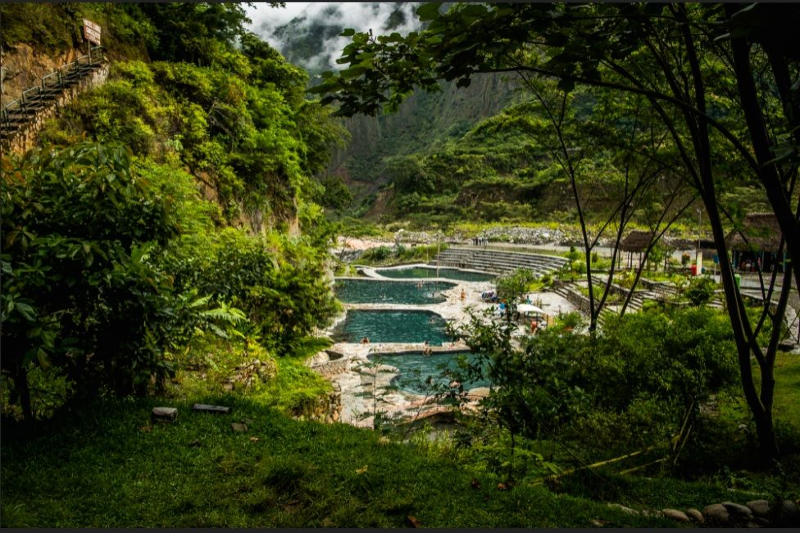
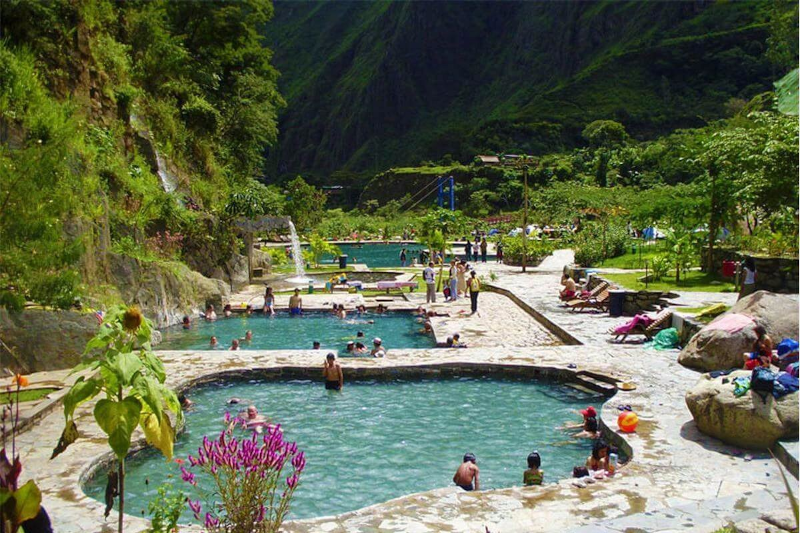
You know that post-hike moment when your legs feel like overcooked noodles, your phone battery is limping along at 12%, and you’d trade a lot for a clean, quiet soak? That’s where Cocalmayo hot springs come in. They’re tucked near Santa Teresa in Peru, and they’re the kind of place that makes you exhale without meaning to.

Cocalmayo Hot Springs

People often hear “hot springs near Machu Picchu” and think of Aguas Calientes right away. Fair. It’s right there. But if you’ve got a little flexibility (and a soft spot for calmer scenes), Cocalmayo  is a different vibe—clear water, river noise, green hills, and fewer elbows in your ribs.

A quick sketch (so you know where we’re going)

  • First: where Cocalmayo  sits, and why it feels so removed.
  • Then: what the water’s like (and yes, why it’s so clear).
  • Next: getting there from Cusco without a planning spiral.
  • After that: why Salkantay trek hikers rave about it.
  • Finally: timing, bugs, what to pack, and a simple 24-hour plan.

So… where exactly is Cocalmayo ?

Cocalmayo  sits outside the town of Santa Teresa, down in the warmer, greener side of the Cusco region. It’s not far from the route many travelers use to reach Machu Picchu via Hidroelectrica, which is why it slides so neatly into a trip that already involves trains, vans, or long walks on rail-side paths.

In plain terms: you’re swapping thin, chilly mountain air for humid jungle air. It’s a climate shift that can feel a little weird at first. One minute you’re thinking about altitude headaches; the next you’re looking for a cold drink and rolling up your sleeves.

The water: clear, hot, and not stinky

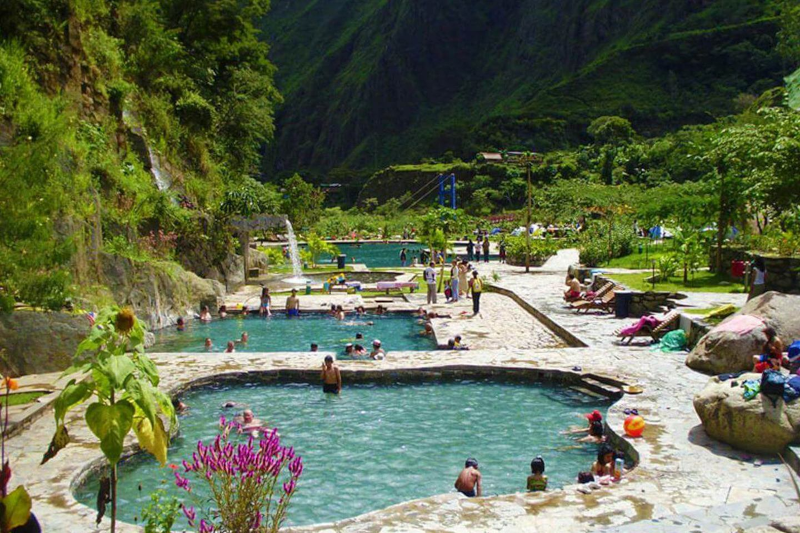
Some natural hot springs have that strong “minerals!” smell that follows you back to your hotel like a clingy souvenir. Cocalmayo  usually doesn’t. The pools are fed by hot water that moves through rock and comes out warm and clean-looking—more “mountain spa” than “mystery soup.”

Here’s the thing: the pools are set up in tiers. The upper pool tends to be the hottest, and the lower ones are a touch cooler. It’s simple, but it works. You can ease in, find your comfort zone, and stay there long enough for your shoulders to drop back to their normal position.

Cocalmayo Hot Springs

And yes, people talk about minerals and recovery—and there’s a reason. Warm water can help circulation and loosen tight muscles. It’s not magic. It’s also kind of magic. That sounds like a contradiction, but it’s both: the science is plain, and the relief feels emotional anyway.

Thermal baths, but make it real life

Calling them thermal baths makes it sound fancy, like you need a reservation and a linen robe. You don’t. You bring your towel. You pay the entry fee. You rinse off. You soak. If you’re hungry afterward, you wander back to town and eat something simple that tastes amazing because your body is tired and happy.

Locals may refer to the site as “Aguas Termales Cocalmayo de Santa Teresa”. If you say that phrase out loud and it comes out crooked, it’s okay. Most travelers do it. A smile covers a lot.

Getting there from Cusco (without turning it into a project plan)

Reaching Santa Teresa from Cusco is a logistics puzzle, but it’s the kind you can solve with a few solid choices and a decent snack in your bag. If you like structure, think of it as a quick operations plan: pick a route, manage timing, and keep some buffer for delays.

Common ways people do it:

  • Colectivo (shared van): cheaper, bumpy, and very local. Expect a few stops and some road drama.
  • Tourist van: more predictable, usually more comfortable, and often easier to book through a hostel or agency.
  • Train + road combo: many travelers go toward Hidroelectrica and connect by car or on foot, depending on their plan for Machu Picchu.

Two small tips that feel boring until they save you: download offline maps (Google Maps works; Maps.me is a classic), and carry cash in small bills. Santa Teresa is relaxed, not cashless.

If you’re on the Salkantay Trek, this is your reset button

The Salkantay trek is beautiful, sure—but it’s also a lot. Long days. Big climbs. Boots that never fully dry. By the time you drop into the warmer zone near Santa Teresa, your body is in “maintenance mode.” That’s when Cocalmayo thermal baths feel less like a treat and more like smart recovery.

A soak won’t erase the trek. It won’t make tomorrow effortless. What it can do is calm the system down—muscles, joints, mood. And if you’ve ever tried to sleep while your legs keep twitching, you already get why that matters.

Cocalmayo  vs. Aguas Calientes: the honest comparison

Aguas Calientes has convenience on its side. You can finish your Machu Picchu day and be in the baths soon after. That’s a real advantage.

But Cocalmayo  often wins on experience: clearer water, more space, and a setting that feels closer to nature. It also tends to be easier on the budget, which matters more than people admit. (Machu Picchu trips add up fast. Tickets. buses. snacks)

If your priority is “quick and easy,” Aguas Calientes might fit better. If your priority is “quiet and memorable,” Cocalmayo is hard to beat.

Timing, bugs, and other tiny plot twists

Let me explain the one downside that catches people off guard: bugs. The area is lush, and some tiny biters show up like they own the place, especially earlier in the day. Many travelers like arriving later in the afternoon and soaking into early evening.

Also, the light gets gorgeous. The mountains darken. The river keeps roaring. Someone laughs in the next pool. It’s a whole little scene.

Bring insect repellent you trust. In Peru, you’ll see plenty of options in shops, but many travelers pack something familiar like OFF! or Sawyer Picaridin. Either works for most people. Your skin will tell you if it disagrees.

What to pack (aka: the stuff you’ll miss at 7 p.m.)

You don’t need much, but the right few items make the night smoother:

  • Flip-flops or sandals for wet walkways
  • Quick-dry towel (microfiber is great, even if it feels a little “camp counselor”)
  • Change of clothes that doesn’t feel awful against damp skin
  • Small cash for entry, lockers, snacks, and taxis
  • Headlamp if you’ll walk back after dark

One tiny, oddly important note: bring a bag for wet stuff. A plastic bag works. A proper dry bag works. The point is not soaking the rest of your backpack. Nobody enjoys the “why is everything damp?” phase.

A simple 24-hour Santa Teresa plan (loose, not bossy)

Cocalmayo Hot Springs

Morning: travel from Cusco toward Santa Teresa, with enough time buffer that you’re not sprinting through connections.

Afternoon: check in, grab food, and let your body settle into the warmer climate. Hydrate more than you think you need. The jungle air can sneak up on you.

Late afternoon to evening: head to the springs, soak, and take it slow. If you’re continuing toward Hidroelectrica or Machu Picchu the next day, set out what you need before you leave. Future you will be grateful.

Next morning: continue your route rested, cleaner, and in a better mood. That last part matters. Travel runs on mood more than we like to admit.

One last thought before you go

Cocalmayo  isn’t a secret, not really. But it still feels personal when you’re there. Maybe it’s the sound of the Urubamba River. Maybe it’s how the mountains hold the light. Or maybe it’s simply the relief of warm water after a tough day.

Either way, if you’ve been juggling plans, routes, and “should we do this or that?” questions, consider this your gentle nudge. Put Cocalmayo hot springs on the itinerary. You’ll probably talk about it more than you expect.

You know that feeling when a trip is almost too famous? Like, you’re excited… but you don’t want four straight days of the samething. That’s where the Inca Jungle Trail shines. It’s the “variety pack” way to reach Machu Picchu: biking, rafting (season-dependent), hiking, ziplining, hot springs, and a few very real moments of, “Wait, how did the weather change that fast?”

Inca Jungle Trail

In one minute, you are bundled up on top of a high pass, and gazing at snow-capped peaks. After a few hours you will be surrounded by warm green air, with a scent of wet leaves and coffee plants. It’s a fast slide from Andes to jungle edge, and that contrast is kind of the point.

Also, a quick reality check: this isn’t a luxury retreat. It’s an adventure itinerary with logistics, helmets, and group timing. But it’s fun logistics—like a well-run project sprint where the deliverables are views, stories, and sore calves.

A tiny outline first (so we don’t wander off a cliff)

  • Day 1: Downhill bike from Abra Málaga, then (often) rafting in Santa María
  • Day 2: Cloud forest hike + old Inca paths + coffee stop that tastes way better than it “should”
  • Day 3: Zipline near Santa Teresa + Cocalmayo hot springs + the “we’re close now” buzz
  • Day 4: Machu Picchu morning + the practical stuff (tickets, timing, and tired smiles)

Okay—now we can get into the good parts.

The bike day: your brakes get a workout

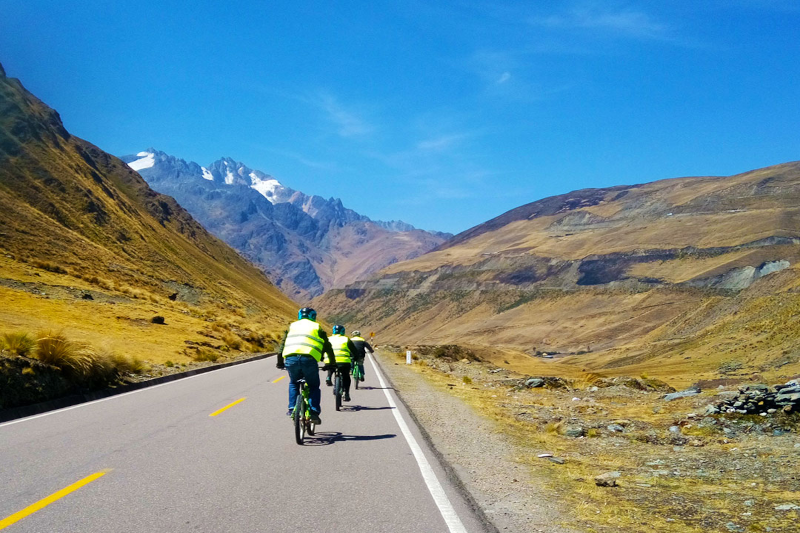
Abra Málaga (approx. 4,300m / 14,100ft) is where the majority of the Inca Tours start from the jungle. The hard climb is the vans responsibility, and you begin at the thin (cold digging fingers) air to begin. Hokey though it may initially sound, it’s a reason that lots of people who don’t want to stick to people on a nonstop uphill climb are able to feel.

The trip involves mostly downhill, depending on stops, road conditions and elevation, typically 2-3 hours. You’re not “crushing miles” like a road cyclist. You’re doing controlled speed management. Translation: you’ll be squeezing the brakes, leaning into turns, and keeping your eyes up because the scenery is distracting in the most inconvenient way.

Inca Jungle Trail

Your guide will usually give you all the safety equipment: a full-face helmet, gloves and some body protection. It can start off a little dramatic in the beginning. Next you come to a windy part and then it’s just simple risk management and nothing like drama.

Little pro tip that sounds boring but saves the day: ask for a quick brake check before you roll out. It’s like checking your laptop charger before a flight. Not exciting—just smart.

What the landscape does while you ride

The scenery changes in layers. High-altitude grasslands and big, open views up top… then cloudier slopes… then greener, thicker vegetation as you drop into the ceja de selva (the “eyebrow of the jungle”). It’s a microclimate mashup. You’ll feel it in your skin before you fully notice it with your eyes.

And yes, you might start the morning shivering and end it sweating. That’s not you being “bad at packing.” That’s just the Andes doing Andes things.

Rafting on the Vilcanota/Urubamba: thrilling, but not always on the menu

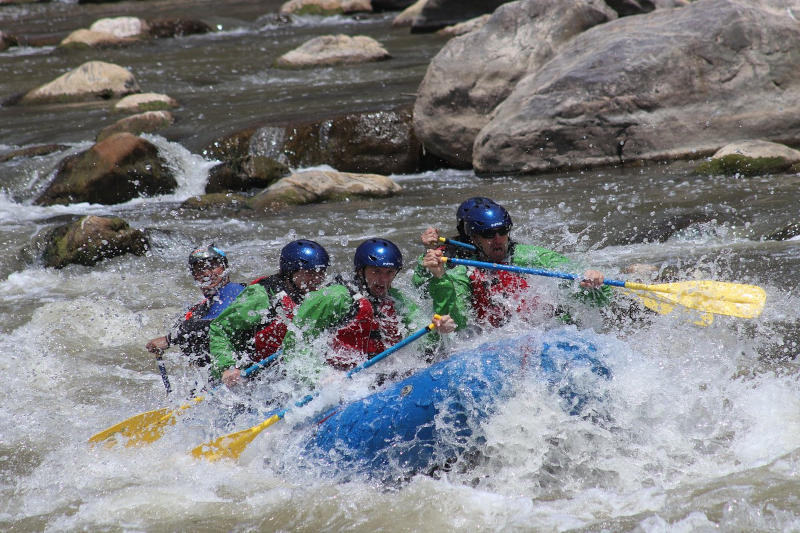
After biking, many groups head toward Santa María for rafting. The Urubamba river section guides use depending on water level and season. Here’s the mild contradiction: people sell this as a guaranteed activity, but a responsible operator will cancel or change the plan if conditions aren’t right. This is much better than to be disappointed; this is a good sign.

It will typically provide you with Class II – III rapids during the dry season within the range of getting the “ju-ju”, “dry off” and still beginner friendly when done with good guidance. But thanks to wetter months, the river can get far more serious, and that briefing may not sound quite the same anymore as much as a pep talk, but more like a safety briefing (because it should be).

Expect the standard setup: helmet, life jacket, paddle, and a quick run-through of commands. You’ll hear things like “forward,” “back,” and “hold on,” and it’ll sound simple… until you’re trying to coordinate with strangers while water is smacking the raft from the side. It’s teamwork in the funniest way.

Inca Jungle Trail

If you’ve ever been on a work call where everyone talks at once, rafting is the opposite. One person calls. Everyone acts. It’s oddly refreshing.

Day 2 hiking: the cloud forest has its own mood

Now the trek shifts gears. You’re on foot, moving through humid paths, small villages, and farmland that feels lived-in—because it is. The word “moderate,” a term which does much heavy lifting, is used to describe the hike. It’s very hilly, with dense air even though yesterday you rode downhill, and your legs were killing you.

Much of the original Inca trail stones will be walked (part of a wider Qhapaq Ñan road network). It is not the permit-only “Classic Inca Trail,” but it’s still in your brain. Someone built this. Someone maintained it. And it still works.

Coffee stops: the most satisfying “side quest”

A lot of routes include a visit to a family coffee farm. If you’re a coffee person, you’ll be happy. If you’re not, you’ll probably become a coffee person for an hour. The process is hands-on and simple in a way that makes you respect every café barista back home.

You’ll typically see the basics:

  • Picking ripe red cherries
  • Pulping to separate the beans
  • Drying on trays or patios
  • Roasting over a small fire
  • Grinding (sometimes by hand) and brewing

And then you taste it. No fancy marketing. No latte art. Just fresh coffee with a clear, earthy sweetness. It’s one of those moments that’s quietly emotional—like, “Oh. This is what ‘local’ really means.”

Little side note, but relevant: If you have been struggling to sleep properly due to altitude (Soroche) in Cusco, Coca tea can feel like a helpful boost at altitude. Many travelers enjoy it, but it’s not a substitute for hydration and proper acclimatization.

Ziplining near Santa Teresa: the “why am I smiling so hard?” section

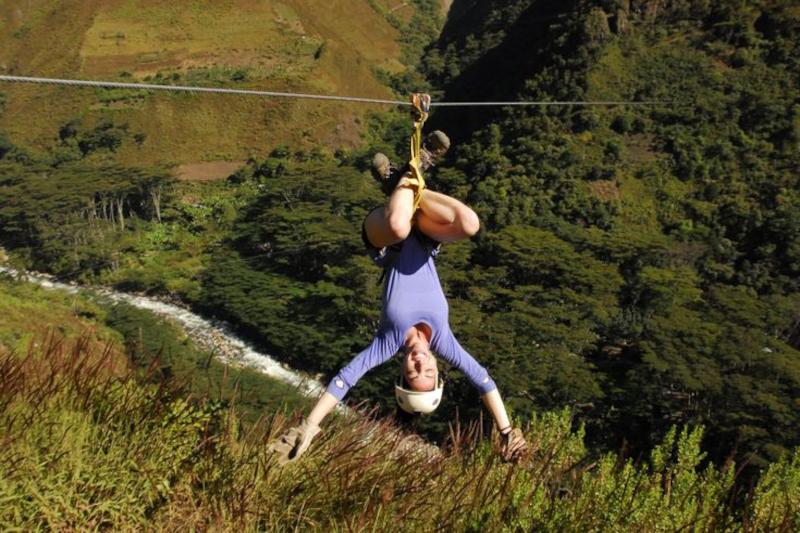
Many tours include a zipline tour near Santa Teresa by day 3. A harness, gloves and briefing will be provided. Well but it’s structured, a bit procedural and then you are flying through the canyon with your feet dangling and your brain saying “Oh, that’s real.”

Some lines let you ride seated; others offer a face-forward position that feels like flying. You don’t need to be fearless. You just need to listen, clip in correctly, and let the system do its job. It’s engineered fun.

If you’re the type who likes gear details: bring sunglasses with a strap. Wind plus speed plus loose sunglasses equals a sad little story later.

Cocalmayo hot springs: not fancy, but absolutely perfect

Once on the ground – and, more often, transported – as you do when you zip line – Cocalmayo Springs are a reset button. The swimming pools are basic, open-air and located on steep green slopes. You’ll notice other travelers taking in the stuff with the “blissed out” look to them that they “did not realize their knees need this.”

It’s not a spa. There’s no scented towel service. And that’s why it’s great. Warm water, tired muscles, night air cooling your shoulders—done.

Another small digression: this is where a quick-dry towel earns its place in your pack. It sounds like a minor item, but it’s a morale booster. Dry clothes are a morale booster too.

Inca Jungle Trail

So… how does this compare to the Classic Inca Trail or Salkantay?

People love asking this, and the honest answer is: it depends on what kind of “hard” you want.

The Classic Inca Trail is iconic, historic, and permit-limited. It is also a considerable amount of walking and follows a given momentum, which thousands of people will follow each season. Seasoned travelers would prefer to spend the night on Salkantay because of its increased size, ferocity, and the potential for gigantic views. The Inca Jungle route is a bit more eclectic and provides an additional amount of hopping from activities, with a more comfortable price tag.

Quick comparison (human version, not spreadsheet version):

  • Classic: History-forward, controlled access, hiking-heavy
  • Salkantay Trek: Big mountains, tougher days, more exposure to altitude
  • Inca Jungle: Variety, adrenaline moments, and fewer “same-same” miles

And yes—Jungle can feel easier because you’re not hiking every hour of every day. But it’s still a full-on trip. You’ll be sweaty. You’ll be tired. You’ll also laugh a lot, which is its own kind of energy.

Packing for four climates: the “be ready, not overloaded” approach

Here’s the thing: the weather swings are real. Cold at the pass, warm in the valleys, humid on the trail, then cool again at night. This is where layering beats bulky items. Think in modules: base layer, mid layer, shell. If you’ve ever managed a messy calendar, it’s the same logic—keep the system flexible.

Footwear is a common debate. Heavy boots sound reassuring, but many people prefer trail runners here because they dry faster and feel lighter on mixed terrain. Just make sure the grip is solid. Mud happens.

A short, practical gear list that covers most situations:

  • Light rain shell (a real one, not a thin fashion jacket)
  • Sun protection (SPF + hat)—the high pass sun is no joke
  • Bug repellent for the lower elevations
  • Swimsuit for rafting/hot springs
  • Quick-dry towel
  • 2L water capacity (bottles or hydration bladder)
  • Headlamp (useful more often than you’d think)

If you like using apps: AllTrails can be handy for context, and a Garmin or Strava track is fun afterward. But don’t let tracking turn the trek into a performance review. The goal is experience, not a perfect graph.

Timing, tickets, and the “please don’t leave this to the last minute” note

The most popular season is typically May through September (drier, clearer). Shoulder months can be great too—fewer crowds, greener hills—but you’ll want to accept more weather variability. That’s the trade. Personally, that trade can be worth it.

Although the Inca Jungle Trek permits are not as strict as for the Classic Inca Trail, you should consider tickets to enter Machu Picchu, as well as timing. There are timed entry systems in place and demand peaks during peak travel times at the site. When travelling with an agency, agree on the inclusions: entry ticket and bus up from Aguas Calientes and a guide on the visit to Machu Picchu.

Another grown-up detail: travel insurance. It’s not exciting. It’s also the kind of decision you only regret when you skip it. Adventure activities plus remote roads equals “plan for contingencies.”

The final morning: Machu Picchu, but make it feel real

Inca Jungle Trail

Around the time you are at the summit of Mount Everest you have a tiny little timeline of this journey in your body – the pressure of squeezing that brake in your forearms, the blisters from all of that paddling (may start, may not finish), the soaked socks that believe it or not dried out, the soak in the hot spring that was surely a reward. Then the stone city appears, silently, as if waiting for you to arrive.

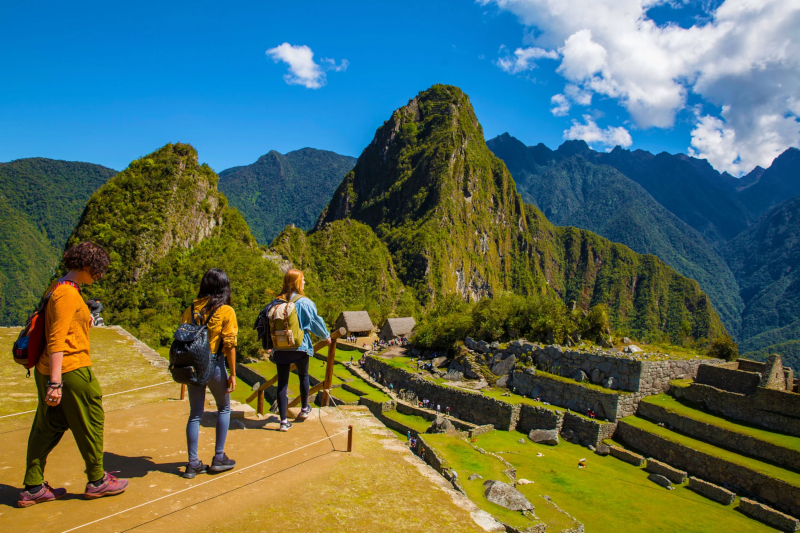
Try not to rush the first view. Everyone rushes the first view. Then they slow down and realize: this place has texture. The walls fit together with a precision that still feels slightly unreal. The terraces roll down the slope like green steps. You’ll hear wind, birds, and a lot of camera shutters—somehow all at once.

And when it’s over, when you’re back in town eating something salty and staring at your hands like they belong to someone else, you’ll probably say the same thing people always say: “That was a lot.” They mean it as a compliment.

Quick recap (because repetition helps when you’re planning)

This trail is for those who prefer inca jungle trail experiences with some variety – perhaps bike, raft, hike, zipline and hot springs. Active, social and somewhat untidy, a good thing. Take layers, check out your arrangements for spending time at Machu Picchu, choose an operator who is committed to safety and always allow for the weekend to be unexpected. The Andean people indulge in surprises.

stairs of death peru

First it suggests a dangerous path full of threatening elements, but it is nothing so deadly. Visitors who have been studying the Stairs of Death in Peru for some time have explored the design of this site in relation to death, and recently searched it online as ‘stairs of death peru,’ ‘the stairs of death peru,’ or ‘peru stairs of death’—but this route doesn’t really have anything to do with death.

If you compare almost any picture of the classic view of this city of Machu Picchu, you’ll see a green thumb looking out of place, almost like it is pointing up. It’s Huayna Picchu. It is not located inside the primary citadel, but is one of the mountains that rises about 1,000 feet above the sanctuary and the misty dancing waves of the Urubamba River below.

Why the Huayna Picchu Stairs Are So Steep

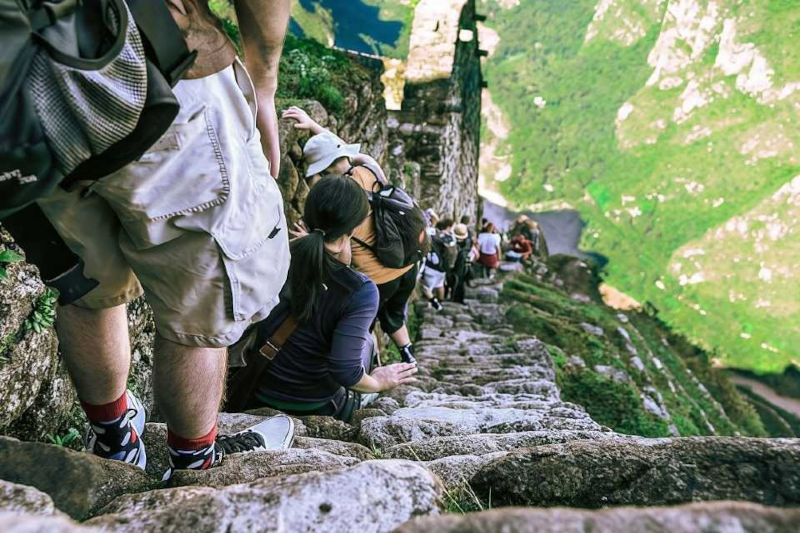
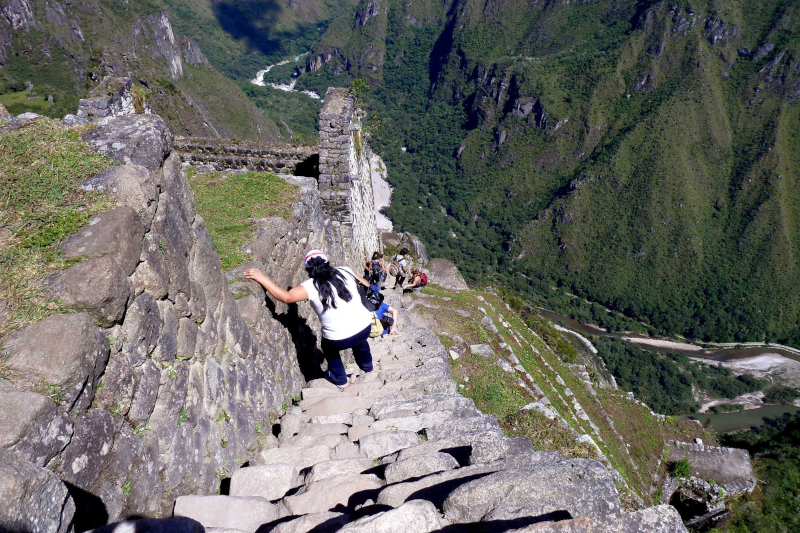
Why have steps in the large ramp made 60 degrees? They created these footpaths to lead up to the summits of the hills, fitting stones into the side of the hill at such an angle that it seems more like walking up an over-high ladder. As a result, the Huayna Picchu hike becomes extremely difficult, and many climbers must hold onto the rock with their hands just to maintain grip on the sheer granite face.

Today’s safety statistics by the park officers in Peru indicate that this route is not a “death-trap,” but rather a carefully-monitored track. Motorized machinery is currently driving rock stands and cables into the rock to provide visitors with a safe grip – turning this once terrifying Incan scouting route into a safe (although challenging) bucket list item.

Why the Incas Built a ‘Ladder into the Sky’: Engineering vs. Drama

In the course of looking up at the near-vertical slope of Huayna Picchu one might ask, “Why would anyone have constructed such a terrifying staircase?”. We aren’t searching for action on the part of the Incas, we’re searching for commanding control. 

This peak provided an unbeatable vantage point to guard Machu Picchu. Furthermore, the grueling path connected sacred sites, tying into the history of the great cavern ruins hidden within the mountain below. To reach these high-altitude sanctuaries safely, engineers had to conquer gravity.

Constructing steps in dirt was not enough, builders tied their paths to the mountain.In fact, engineers can describe the notorious Stairs of Death as an engineering school for slope and structure stabilization. The Inca builders designed them as arduous retaining structures that actively support the entire mountainside, preventing it from washing away.

The Engineering Behind the Stairs of Death

This 500 year longevity is based on three aspects of the masonry of the Incas, which are still apparent on the structures today:

  • The granite is finely cut and blocks fit together tightly without any mortar called ashlar.
  • Drainage channels: The channel structures, which are provided as a built-in effect, so that heavy rainfall from the Andes can be diverted from the foundations.
  • Interlocking joints: Stones tightly placed in the bedrock to ameliorate the impacts of an earthquake.

Imagine these high steps as an enormous drainage stone! The Incas learned how to control the flow of water to make its trails not liable to collapse in mud slides by understanding trial hydrology, or how water flowed down the steep ridge. This is not a walk along a trail, this is a journey up a super-smart water management system. It’s an invisible armor and the act of recognizing it is infinitely rewarding; however, the task is not the only hard task which awaits visitors to the tower. Deciding on the different goals of all the mountains to climb requires taking the physical requirements of each trail into consideration.

Choosing Your Peak: Huayna Picchu vs. Machu Picchu Mountain

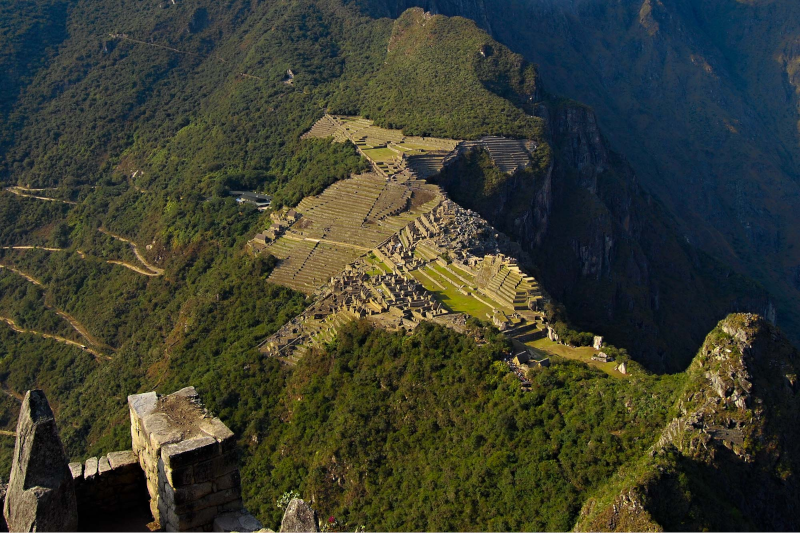
Sitting in the ancient citadel, you’ll have to make your choice of Huayna Picchu vs. Machu Picchu Mountain: which form of exhaustion are you looking for? The path known as the “Stairs of Death” is a fast and swift scramble up vertical rocks and steel scaffolding that requires a good head for heights. The other mountain, however, is a good go-to take-it-easy endurance run. Your gain adjusts accordingly: Huayna Picchu places you almost directly above the ruins, delivering that famous bird’s-eye view, while the taller peak gives you a panoramic overview of the entire river valley.

Trying to determine the fitness needed for Peru treks is best done by comparing the hard data. These two trails require totally different type of energy reserves from hikers:

  • The total distance & elevation of the Huayna Picchu trail is about 950 feet over the course of one steep mile, while the other mountain trail has its elevation rose to 2100 feet in 2 mile hike.
  • Trail Style: Huayna has a narrow two-step path with often hand-over-hand climbing, its neighbor, however, involves a prolonged two-hour hike up paths that are wider and made of stones.

Finally, it is up to your personal preference if you choose to take a thrilling journey towards the top or burnt out legs hiking gently upwards. Posting your stone steps booking on either of the two sets entails some very limited modern-day booker system.

Bureaucracy: Circuit 4 Tickets and Permit Secrets

Modern foresight is needed to access these ancient steps. Travelers favor May to October as the best period to trek Huayna Picchu because the stones stay solid and dry instead of slippery and wet. During this peak season, authorities limit daily entry to preserve the ruins, so travelers must book 4–6 months in advance. Treat the process like buying front-row tickets to a show—if you wait too long, the mountain sells out.

The official government website is your next hurdle, where you must specifically select Machu Picchu Circuit 4 entrance tickets combined with the mountain. Circuit 4 acts as your designated pathway through the lower ruins, leading directly to the trailhead. A reliable permit booking guide will remind you these passes are timed and strictly non-transferable. Rangers meticulously check passports and enforce entry windows to prevent dangerous overcrowding on the ancient stairs.

Once past the checkpoint, the paperwork quickly fades into a very physical reality. Rangers mandate a strict one-way traffic flow, meaning there is no turning back once you commit to the narrowest sections. This system prevents dangerous bottlenecks on ledges plunging hundreds of feet into the valley below. You do realise as you’ll approach that you’re unlikely to be able to pull back quickly, adding to the psychological challenge of trying to climb back up. Which is their one-way trip and a different mindset towards dealing with the sheer vertical and the thickness of going up.

Conquering Verticality: Managing Fear of Heights and Altitude

A stone staircase of 60° descend is a brave person’s challenge for the bravest traveler. The “three points of contact” rule is used at Machu Picchu as a way of countering their fear of heights. When working up a steep attic ladder, grasp and take only two hands and one foot at a time—or two feet and one hand. This realistic and practical exercise allows you to concentrate on the solid rock in front and get onto it, rather than the dizzying plunge down into the valley.

How to Handle Altitude and Steep Terrain

stairs of death peru

But atop almost 9,000 feet, there’s another unseen battle going on in your body. Active hypoxia management, as opposed to passive measures, is essential to effective altitude illness prevention in Peru hikes. During hypoxia (or low oxygen) your tissues require oxygen but you don’t, and your heart begins to pound upon standing up! You can control this by taking intentional, rhythmic breaths and stepping gently on the ground, coordinating your breathing with your steps up the terraces instead of running.

The last layer of physical stability comes from your equipment. The key pieces of equipment for successful summits are those which allow for agility… and are close to the mountain, that is the centre of gravity:

  • Non-slip hiking boots: The ancient polished granite demands deep rubber footwear for comfortable grip.
  • Light daypack: A compact and secure pack allows you to have both your hands free for the climb.
  • A continuous supply of water: The need for 2 liters capacity for water to get rid of the symptoms at the heights efficiently.

A consistent pace and select gear can make the ascent of a mountain seem like a walk in the park! Once you understand how to safely navigate the verticality, the next crucial decision dictates your view from the top, hinging on weather and timing.

The Morning Choice: Early vs. Late Climbing Slots

The selection of an early or late morning climb can determine your whole mountain days experience physically and visually. The Andean mountains form a special micro-climate at sunrise which is characterized by frequent cloud covering of the mountains. The 7:00am entry is through hearty cool fog. It can build a “wall of white clouds” from the summit if you are looking for the famous valley views from the summit, but it may give a mysterious look to the ruins as well.

The 10:00 AM group wants an intense equatorial sun with the sacrifice of that morning chill.It’s a tradeoff between an intense, equatorial sun and the morning chill for the 10:00 AM group! When the mist clears, hard, intense light floods the ruins and enhances that famous “Machu Picchu” shot that belongs on magazine covers. Given the dramatic quality of the exposure, some people asked themselves if it is dangerous for visitors to walk by the “Inca steps” in the Full Sun. The heat of the day will make climbing a lot harder on the lungs, but the morning dew WON’T be as slippery as the stones baked dry by the sun during the day, and that’s a good thing.

In the end it’s a choice between cool and enigmatic mountains and panoramic views pouring down the sun. If you’re looking for a picture with a perfectly hit landscape, then you might prefer the latter. You’ve conquered the mountain and in many ways experienced the incredible beauty of this remarkable landscape, but now the descent reveals the one thing you might not have thought to look for: an incredible but lesser-known detour.

Beyond the Summit: Finding the Great Cavern and Temple of the Moon

For the trail up, there is a concealed option on the down side which could make it a very different hike. A faint fork just below the peak takes visitors off onto the shadowy side of the mountain which leads to the Temple of the Moon. This is a very ambitious route that takes a considerably longer detour (an additional hour of scrambling down followed by an intense climb back on the way to the start) so do be careful to consider your leg endurance when undertaking this trail.

Why construct a building within the shadowed overhang? The Great Cavern ruins have a rich historical and spiritual link with Incan spirituality and binding with the underworld. In contrast to the buildings built on the surface and designed to reflect the light of the sun, this underground location recognized the earth’s unique energies from within. Incan engineers incorporated sculpted stone altars into the natural rock face to help form a connection between the physical world and the spiritual world below.

Why the Temple of the Moon Is Worth the Detour

For the tourist, it’s a great way to explore routes to the Temple of the Moon. This challenging way is rewarded by three possibilities:

  • Spanning double doorways: This kind of entrances, each with its own 2-jamb, denoted high rank and are still gorgeous in this instance.
  • Acoustics of the ‘Great Cavern’ – the stone takes the form of a bend, which helps to amplify every sound and gives off a ‘temple atmosphere’ effect.
  • Less crowds: Many people miss out on this exhausting extra so you can enjoy exploring the ancient masonry near you.

To move away from those cool shadows it will take yet one more, deep-breathing effort to get up the granite stairs to the main exit path. This is your mystical detour to strengthen you physically and mentally on the way to its ultimate heartwarming stoking.

Final Ascent: Integrating the Experience into Your Travel Story

stairs of death peru

It’s no longer a sensationalised myth on the internet that you have to face Peru’s infamous stairs of death. Now, this high, steep granite ascent is a demonstration of ancient engineering and human effort. Climbing Huayna Picchu is not only about physical fitness; it is about physically connecting with the skill and craftsmanship of the Incan builders who, centuries ago, shaped and carried these stones by hand.

How to Prepare for the Huayna Picchu Climb

Taking this historical information and creating your own summits requires careful planning; you may need to perform significant physical work to climb this trail. When taking this bucket-list trip, walk through the following, factual time line:

  • Book four months ahead: Obtain your mountain permits in advance – only a certain number are available for each day!
  • 2 day acclimatization period in Cusco or Sacred Valley: Let your lungs acclimatize before taking the tough climb.
  • Wear shoes that grip stone like razors: Get quality hiking shoes with stepped / crisscrossed soles that will have enough traction to walk safely on the narrow and moist stone stairs.

The “deadly” part of the term is an exaggeration for well-prepared modern travelers, but “demanding” of course means very little. With your preparation you will take a frightening climb on a hill, make it a bridge that puts you right into the Incan’s heart of resilience. Each grievous inhale and all sorts of assiduous footsteps mimic the fidelity of the state that fashioned it from the heavens.

As you make that final step over the last terrace, and onto the pinnacle, the ancient world is revealed below. It’s easy to see exactly why they built upwards when you take in the extensive ruins of Machu Picchu from the exact same point the Incan priests once used to view from. This is the big eyeshot, it’s not a mere marvelous picture, it’s a right view taken which forever alters the manner in which you perceive the horizon of human capacity.

Frequently Asked Questions

Are the “Stairs of Death” at Huayna Picchu Actually Dangerous?

Although people use the nickname, it exaggerates the risk. Steel hand cables secure sections of the trail, one-way signs manage traffic on narrow stretches, and ranger-controlled timed entry regulates access. The route rises steeply, feels exposed, and demands effort at nearly 9,000 feet, but it does not become reckless or dangerous for reasonably fit and cautious.

Why Did the Incas Build Such a Steep Staircase?

The trail links religious locations and provides a strategic vantage point from which the Incas watch over Machu Picchu.These stone steps provide the mountain with additional stability, by precisely masonry built and included with proper drainage and stones which ensure they are strong enough and capable to support heavy rains and earthquakes.

Which Hike Should You Choose: Huayna Picchu or Machu Picchu Mountain?

Narrow stairs, dramatic views overlooking the ruins, Huayna Picchu is short, steep and exciting. Overall, there is more elevation and resistance to the hike at Mountain of Machu Picchu, with the paths being wider and views posted across the neighboring valleys.

How Do Permits and Circuit 4 Work?

Permits are likely to be sold out 4-6 months before the peak season. Over to Huayna Picchu can be hiked only with the Machu Picchu Circuit 4 (Huayna Picchu pass included). Passport checked, access limited and in terms of time so that no overcrowding takes place.

Should You Choose the Early or Late Morning Slot?

Early entries are cooler and quieter, with often times views being restricted by fog and stones that can be slippery. Subsequent entries tend to be less cloudy and drier, although they may prove to be more challenging due to the brighter sun.