You’ve seen the photo: Machu Picchu lit up like someone turned on a soft gold lamp, with mountains stacked behind it like stage scenery. And now you’re wondering the real question—is a Machu Picchu sunrise actually worth the 3:30 AM alarm, the chilly bus line, and the gamble with clouds?

Machu Picchu Sunrise

Here’s the thing: sometimes it’s jaw-dropping. Sometimes it’s a gray, misty slow reveal that feels more like a suspense movie than a postcard. And weirdly? Both can be great.

So, what does “sunrise at Machu Picchu” really look like?

If you’re picturing a clean sun cresting the ridge at 6:10 AM and lighting every stone on cue… I mean, it can happen. But Machu Picchu sits in a cloud forest. Clouds are part of the product. Many mornings start with a thick blanket of mist, and the ruins feel like they’re hiding on purpose.

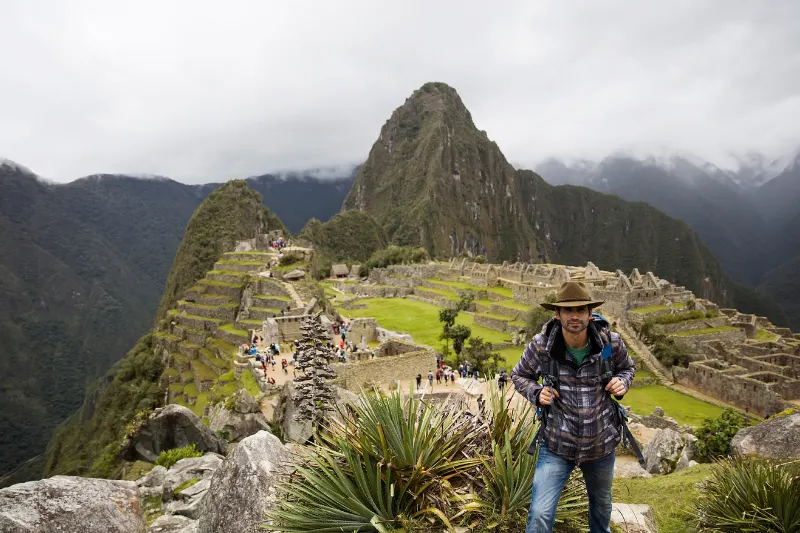
But the slow reveal is kind of the point. You’re standing there, half-awake, and suddenly a terrace appears. Then a wall. Then the whole city snaps into view like someone pulled a curtain. It’s not always “golden sunrise Machu picchu,” but it’s often mysterious sunrise at Machu Picchu, and that’s not a bad trade.

If you want higher odds of clearer skies, the dry season (roughly May through October) tends to be friendlier. June and July are popular for a reason—more stable mornings, less rain. Still, weather up there changes fast, so treat forecasts like a suggestion, not a promise. (I like checking Meteoblue or AccuWeather the night before, then checking again with coffee in hand.)

Entry times and the morning logistics

Machu Picchu has timed entry slots, and the earliest is typically 6:00 AM. If you want “machu picchu at sunrise,” that early slot is the classic pick. Your main job becomes getting from Aguas Calientes (Machu Picchu Pueblo) up to the gate on time.

Most people take the shuttle bus. Lines can start forming around 3:30–4:00 AM, especially in peak season. The first buses often roll around 5:30 AM, and the ride is about 25–30 minutes. Think of it as a commute with better scenery and worse sleep.

Could you hike up instead? Yes—fit hikers do it, and it’s a flex. But it’s steep, it’s dark, and it can be slippery. If you’re already doing the Inca Trail or another trek, you’ll get your cardio quota anyway.

And yes, there’s a premium shortcut: the Belmond Sanctuary Lodge sits right by the entrance. Staying there doesn’t guarantee sun, but it does cut out the early bus scramble. If your travel style is “pay to reduce stress,” it’s worth knowing about.

Okay, circuits: which one helps with the classic viewpoint?
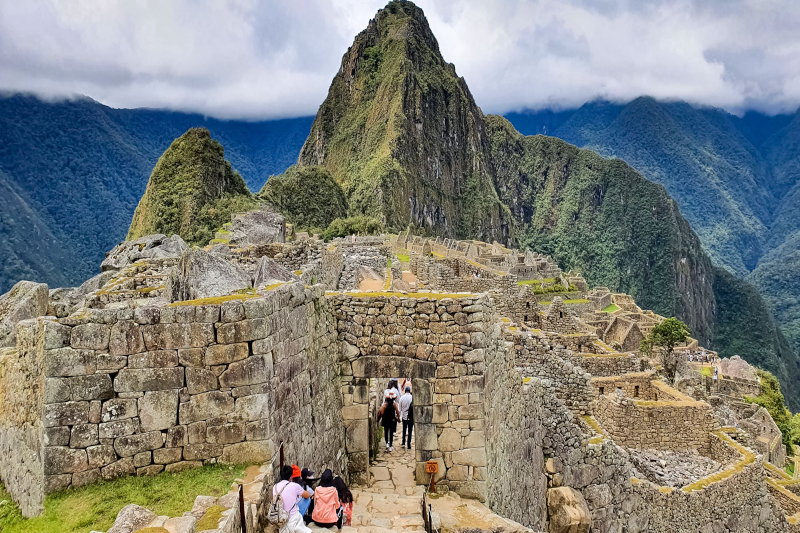
Machu Picchu Sunrise

Here’s where people get tripped up. Machu Picchu isn’t a free-roam site. It’s structured with circuits, and the circuit you book controls your route and your photos. Rules and naming can shift over time, so always confirm with the official ticket site and the current circuit map before you buy.

In general, if your dream is that iconic wide view—the one that makes your friends say “wait, is that real?”—you’ll want a circuit that includes the upper terraces and the main panoramic viewpoint area (often associated with the popular Circuit 1 or Circuit 2 choices, depending on the current setup).

If you book a route focused more on the lower urban sector, you’ll still get a great visit, but your big “wow” photo might be harder to frame. Not impossible. Just… harder. Like trying to take a team headshot in a crowded elevator.

A small but important note about add-on hikes

If you’re eyeing Huayna Picchu or Machu Picchu Mountain, that’s a different ticket layer. These are limited and can sell out well ahead of time.

How do they compare?

  • Huayna Picchu: steep, dramatic, tighter trails. Big views straight down over the ruins.
  • Machu Picchu Mountain: longer, higher, broader views of the valley. Less “vertical drama,” more “wide-angle calm.”

Either can pair with a sunrise plan, but your timing gets less forgiving. It’s like adding a second meeting to a morning that already starts at 5:00 AM—doable, but you’ll feel it.

Is the 6:00 AM slot always the best? Not exactly (and that’s okay)

I’m going to say something that sounds like heresy: the earliest entry isn’t automatically the “best” for everyone. There. I said it.

Why? Because if your only goal is a clear, bright photo, you might get a better hit rate a little later in the morning—when the sun is higher and the mist has had time to lift. Many days, the most “sunrise at machu picchu” looking light shows up closer to 7:30–9:00 AM, not right at the gate opening.

But then I’ll contradict myself (gently): the 6:00 AM slot is special. Fewer people, softer sound, a calmer pace. It feels like you’re arriving before the world fully clocks in. If you care about atmosphere—about that quiet, almost reverent vibe—early wins.

Crowds: the sneaky factor nobody wants to schedule
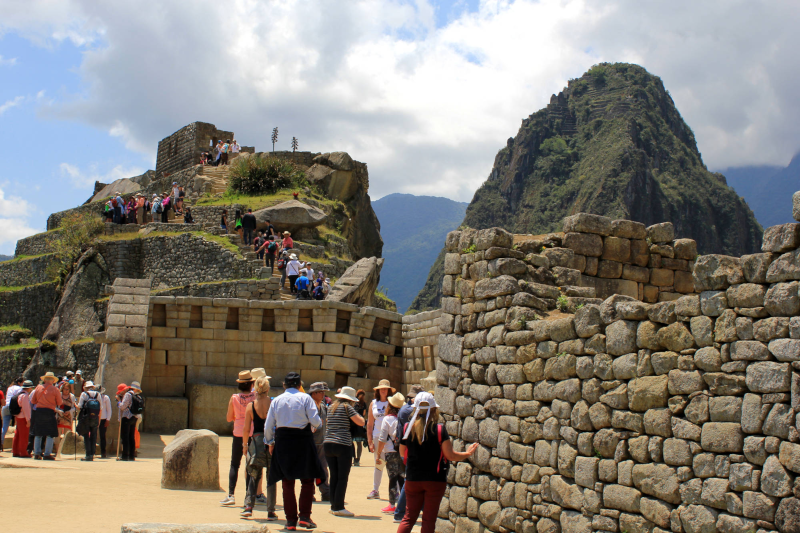
Machu Picchu Sunrise

Even at 6:00 AM, you won’t be alone. Sunrise tickets are popular, and everyone has the same idea. The trick isn’t “avoid crowds” (that’s fantasy). The trick is crowd flow.

A simple approach that works:

  • Let the first big wave rush to the viewpoint for the fast photo.
  • Hang back for a minute. Breathe. Take a few close shots.
  • Then move when the pack starts drifting down to the next sections.

It’s low-key traffic management. And yes, it feels a little like timing a lunch break to avoid the office cafeteria line.

What about a Machu Picchu Sunrise Tour—worth it?

A guided Machu Picchu Sunrise Tour can be a smart move if you like context. Guides help with routing, pacing, and the small rules that are easy to miss when you’re bleary-eyed. They also help you read the site—what you’re looking at, why it was built that way, and what still isn’t fully agreed on.

If you’re more of a DIY traveler, you can still get a lot from Machu Picchu using a good guidebook or an audio guide. But if you want the “why this matters” layer without doing homework, a guide is basically your shortcut. Not magic—just efficient.

Photography at dawn (and why your phone might do better than you think)

Let’s talk gear without getting too nerdy. The main issue at dawn is low light plus contrast. The mist can be bright, the stones can be dark, and your camera gets confused.

A few tips that don’t require a photography degree:

  • Expect fog and shoot anyway: fog adds depth and mood. You’ll like those photos later.
  • Wipe your lens: mist and drizzle leave a film. A small microfiber cloth is underrated.
  • Wait for the “open”: the best moment often comes when clouds break for 30 seconds, then close again.

And honestly, modern phones do a solid job here. If you’re on a recent iPhone or Pixel, try a steadier stance and let the night/low-light mode do its thing. If you’ve got a bigger camera, great—just don’t spend the whole sunrise stuck in settings. You came to see the place, not run a photo lab.

Comfort and safety stuff (not exciting, but it matters)

Mornings can be cold—surprisingly cold—then the day warms up fast. Dress like you’re packing for two seasons. A light puffer or fleece, plus a rain shell, is the sweet spot. Gloves and a beanie are nice at 6:00 AM and annoying by 9:30 AM, so make sure they’re easy to stash.

Altitude is the other wildcard. Machu Picchu is lower than Cusco, but plenty of travelers arrive already feeling the altitude hangover from earlier days. If you can, give yourself a couple of days in the Sacred Valley or Cusco first, drink plenty of water, and keep meals simple the night before. Coca tea helps some people; it’s common and easy to find.

One more practical note: rules at the site are enforced. Stay on the marked paths, follow the circuit, and don’t count on being able to “loop back” to a spot you missed. Think of the circuit like a one-way system in a museum—except you’re outdoors and the museum is an Inca city.

So… is a Machu Picchu sunrise worth it?
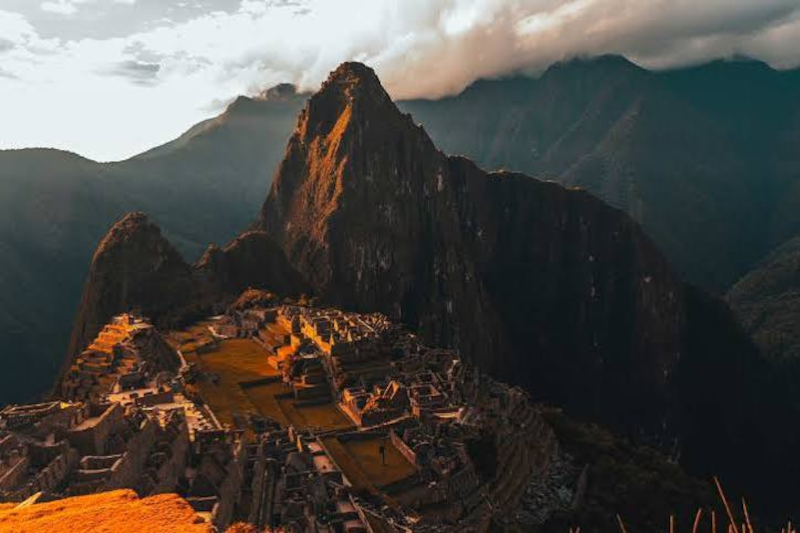
Machu Picchu Sunrise

If you want quiet, atmosphere, and that feeling of arriving before the day fully starts—yes. A Machu Picchu sunrise is worth it, even when the sun plays hide-and-seek. If you only care about a crisp, bright postcard shot, you may feel happier with a later morning entry, when the clouds have had time to thin out.

But if you’re already going all the way to Peru, waking up early one day isn’t the worst trade. You’ll get the cool air, the shifting mist, and that first look at the terraces when the site feels a bit like it’s waking up with you. And that’s the part people remember.

Plan it like a small work project—tickets, timing, contingencies. Then let it be human once you’re there. Look up. Take the photo. Take another. And when the sun finally hits the stones (or doesn’t), you’ll still have your own version of “machu picchu sunrise.”
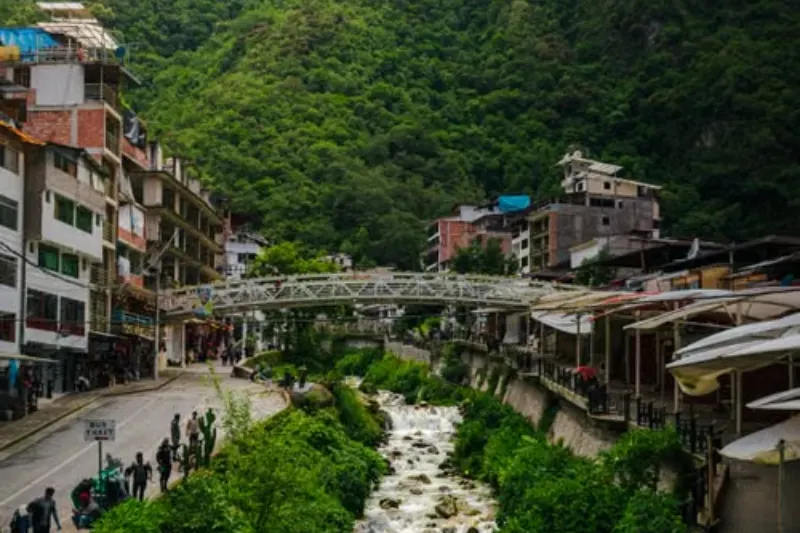
Deep in a lush, emerald valley at the base of the world’s most famous Incan citadel sits Aguas Calientes, a bustling little town that works as the gateway to Machu Picchu. Officially it’s Machu Picchu Pueblo. Surrounded completely by cloud forest mountains and the rushing Urubamba river. No roads come in directly, only train tracks and hiking trails. That isolation gives it a strange, remote feel despite the constant foot traffic year round.

Most travelers treat the town like a quick transit stop. Arrive by train, sleep a few hours, hop on a bus to the ruins the next morning. Take the time to actually look around though, and there’s a real list of things to do in Aguas Calientes worth knowing about. Hot springs, botanical gardens, solid local food. The town deserves more than a fleeting glance.

Relaxing after the Inca Trail, or acclimating before the big climb, either way, this guide covers the best things to do in Aguas Calientes to make the stop worth it.

Things to do in Aguas Calientes​

The Great Debate: Day Trip vs Staying Overnight

Planning a Peru trip usually brings up the same question. Day trip or staying overnight in Machu Picchu Pueblo? Some travelers even try to squeeze Machu picchu in 24 hours, catching an early train and heading back the same day. Technically possible. Requires an absurdly early start though, hours of train travel packed into one day, and a rushed visit at the ruins themselves

So is staying overnight actually worth it? Yes. Staying means catching the first buses up to the citadel, seeing Machu Picchu at sunrise before the mid morning crowds show up. A night or two also means actually enjoying the town itself. Time to try some aguas calientes activities without watching the clock constantly. If the itinerary allows it, two days here lowers the stress a lot and makes the whole trip better.

Arrival and Logistics: Navigating the Town

The town runs entirely on foot, aside from buses heading to the ruins. Arriving feels chaotic at first. Gets manageable fast once the layout clicks though.

From the Train Station to Your Accommodation

First time visitors usually wonder the same thing. How do you get from the station to your hotel? Stepping off the PeruRail or Inca Rail trains drops everyone straight into a maze of a market. Small town though, so it’s fine. Most hotels sit within 5 to 10 minutes on foot. High end places often send someone to the platform with a sign, ready to help with bags. Budget or mid range places just need an offline map pulled up. Compact town, easy to navigate.

Securing Your Transportation to the Ruins

Planning to take the bus instead of hiking the stairs? Buy tickets in advance. Knowing where the Machu Picchu bus ticket office sits saves real time. It’s on Avenida Hermanos Ayar, right along the main road hugging the river, close to where buses line up. Some visitors also grab their Machu Picchu entry tickets here if they haven’t bought them online already. Best to buy the bus ticket the afternoon or evening before the tour. Lines get long. Nobody wants to burn morning time in a queue instead of being on the mountain already.

Things to do in Aguas Calientes​

Top Nature and Adventure Activities

Look into what to do in aguas calientes peru and it becomes obvious fast, the surrounding nature is the real draw here. Dense cloud forest, waterfalls, towering peaks everywhere.

Relax in the Hot Springs (Las Aguas Termales)

The town’s original name literally means Hot Waters, from the geothermal springs sitting at the top of town. The Aguas Calientes Hot Springs pull in hikers almost every evening. After days of hard hiking in the Andes, these sulfur rich waters feel incredible on sore muscles. Multiple pools, different temperatures, basic changing rooms, a small bar where a Pisco Sour goes down nicely while soaking.

Worth checking the Machu Picchu thermal baths opening hours before heading up. Generally open 5:00 AM to 8:00 PM daily. Morning visits feel peaceful and misty. Evenings get busier with hikers coming down from the ruins.

The Mandor Gardens and Waterfalls Hike

Want to actually escape the crowds? The Mandor Gardens and Waterfalls hike, Jardines de Mandor locally, delivers exactly that. About a flat, one hour walk from town along the train tracks toward Hidroelectrica. Private ecological reserve. A real slice of untouched cloud forest.

The walk stays peaceful the whole way. Small entrance fee at the gardens, then trails packed with native orchids, bromeliads, exotic birds. Ends at a hidden waterfall perfect for cooling off. Easily one of the best things to do in Aguas Calientes for anyone who actually likes nature.

Thrill Seeking on Putucusi Mountain

Adrenaline junkies tend to look up at Putucusi Mountain, Happy Mountain, and get tempted immediately. No entrance ticket needed here, unlike Huayna Picchu or Machu Picchu Mountain.

Look up a hiking Putucusi Mountain trail guide though and the warnings pile up fast. Not for the faint of heart. Near vertical wooden ladders bolted to the cliff face. Heavy rains keep washing sections of these ladders out over the years, so the trail goes impassable sometimes, or just dangerous. Always ask locals or hotel staff about current ladder conditions first. If it’s open, the summit rewards with a rare horizontal view of the Machu Picchu ruins across the valley.

Discovering Local Culture and Wildlife

The Inca citadel dominates the region’s story, sure, but there are things to do in aguas calientes peru that add real depth to the local history and ecosystem too.

The Mariposario de Machu Picchu

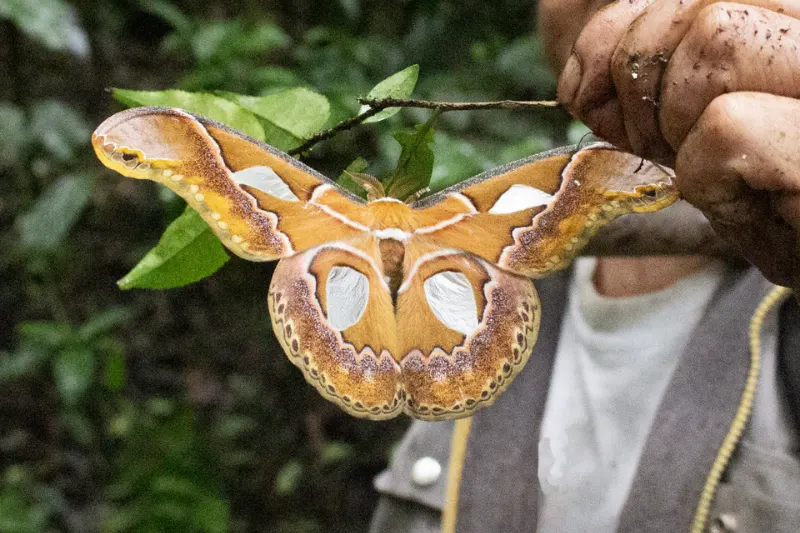
Just 15 minutes on foot from town, along the road toward the citadel, sits the Mariposario de Machu Picchu butterfly house. Local conservation project, focused on studying and protecting the region’s butterfly species. Volunteers run short, engaging tours covering the butterfly life cycle and native flora. Walking through the sanctuary with hundreds of colorful butterflies flying around feels genuinely magical. Low impact too, works for any age.

Manuel Chavez Ballon Site Museum

Want context before actually seeing the ruins? A 30 minute walk from town to the base of the mountain leads to the local museum. The Manuel Chavez Ballon Site Museum holds an impressive set of artifacts pulled from various excavations at Machu Picchu, bronze tools, ceramics, skeletal remains. Well curated exhibits, genuinely useful historical context. There’s also a nice botanical garden right next to the building.

Shopping at the Local Markets

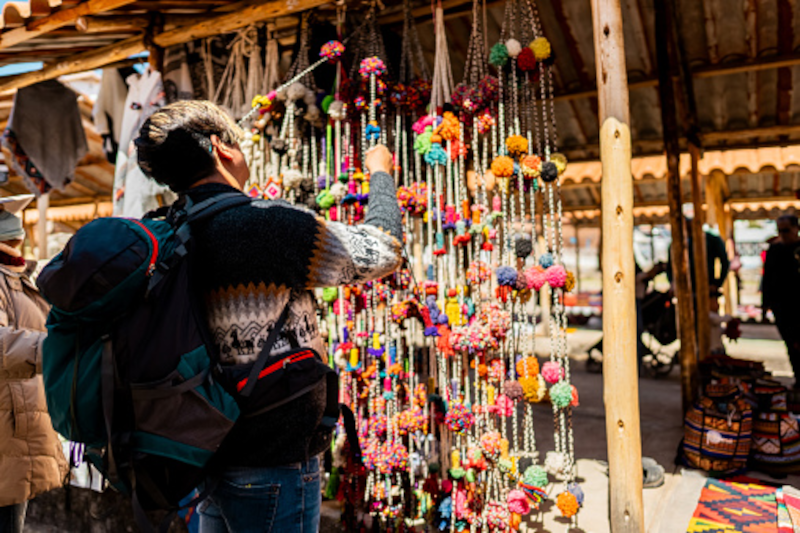
No Peru trip feels complete without browsing Andean handicrafts somewhere. Finding the Aguas Calientes artisan market locations takes zero effort, honestly. The main market basically swallows the train station whole. Stalls everywhere selling alpaca wool sweaters, woven textiles, silver jewelry, souvenirs.

Heavily geared toward tourists, prices start higher than Cusco. Haggling is expected though, and welcomed. Good way to kill an hour or two waiting for the return train.

Things to do in Aguas Calientes​

Culinary Delights: Where to Eat and Drink

Remote as it is, the town has built a surprisingly diverse food scene for its international visitors. Quick bite or full gourmet meal, finding the best restaurants in Machu Picchu Pueblo turns into a genuinely fun part of the trip.

Scenic Dining Experiences

For a memorable meal, riverside dining along the Urubamba river is worth chasing down. Several high end and mid range places have terraces or big glass windows right over the rushing water. Places like the Inkaterra Machu Picchu Pueblo Hotel dining room, or the Tree House Restaurant, serve upscale Peruvian fusion. Lomo Saltado, fresh Andean trout, tender alpaca medallions, all while the river roars below.

Unwinding with Local Brews

After a 10 mile hiking day, nothing beats a cold beer. A handful of solid craft beer bars have popped up in Machu Picchu town lately, riding Peru’s growing microbrewery wave. Mapacho Craft Beer and Peruvian Cuisine stands out, right along the river. Good range of Peruvian craft beers on tap, from light blonde ales to rich, coffee infused porters. Perfect spot to swap travel stories with other hikers passing through.

Eating on a Budget

Want to keep costs low? Plenty of budget friendly activities in Machu Picchu Pueblo when it comes to food. Head away from the main strip toward the Mercado de Abastos, the local food market, up on the higher levels of town. Local vendors serve Menu del Dia for just a few soles. Usually a big bowl of quinoa soup, chicken and rice as the main, and a glass of chicha morada, the purple corn drink.

Practical Tips for Your Stay

Getting the most out of the various things to do in aguas calientes starts with basic prep. The town sits around 6,690 feet, or 2,040 meters, way lower than Cusco. Altitude sickness rarely shows up here as a result. The climate still throws curveballs though, thanks to the location.

Packing for the Cloud Forest

High altitude jungle means unpredictable weather, plain and simple. Sunny, humid, and pouring rain, all within three hours sometimes. Knowing what to pack for Aguas Calientes weather matters a lot because of this, and it connects directly to picking the best season to visit Peru overall, since dry months bring far more predictable conditions.

  • Layers are key: mornings and evenings run cold, midday sun gets intense. Breathable, moisture wicking shirts plus a warm fleece cover most of it.
  • Rain gear: a good rain jacket or compact poncho, non negotiable regardless of season.
  • Sun protection: the equatorial sun hits harder than expected. Sunglasses, a wide brimmed hat, strong sunscreen.
  • Insect repellent: midges and sandflies stay relentless in the cloud forest. DEET or Picaridin spray is essential, especially for Mandor Gardens or the butterfly house.
  • Swimwear: don’t forget a swimsuit and flip flops for the hot springs.

Making the Most of Your Budget

Aguas Calientes has a reputation for being pricier than most Peruvian towns, thanks to its captive audience. Doesn’t have to wreck the budget though. Eating at the local market helps a lot, and simply walking around costs nothing. The central plaza, Plaza Manco Capac, works well for sitting on a bench, people watching, admiring the huge statue of the Inca emperor. The stone sculptures carved into the rock faces along the main streets are free to explore too.

Things to do in Aguas Calientes​

A Destination in Its Own Right

Too many travelers treat Machu Picchu Pueblo as nothing more than a place to crash before the ruins. This guide shows otherwise though. The sheer range of things to do in Aguas Calientes makes it worth a real visit on its own.

The thermal baths, the orchid lined trails at Mandor, the history packed into the local museum, the craft beer bars buzzing at night, all of it gives the town real character. Stay overnight, dress right for the shifting weather, mix adventure with a bit of culture. Time spent here ends up just as memorable as the citadel itself.

So drop the bags, step out into the misty streets, and start exploring everything Aguas Calientes actually has to offer.

Come on admit it; when people say, “I’m going to Machu Picchu,” what they’re visualizing is the stone city, the llamas, and that iconic postcard shot. However, it’s better understood – and more vibrant – as a mountain tale.

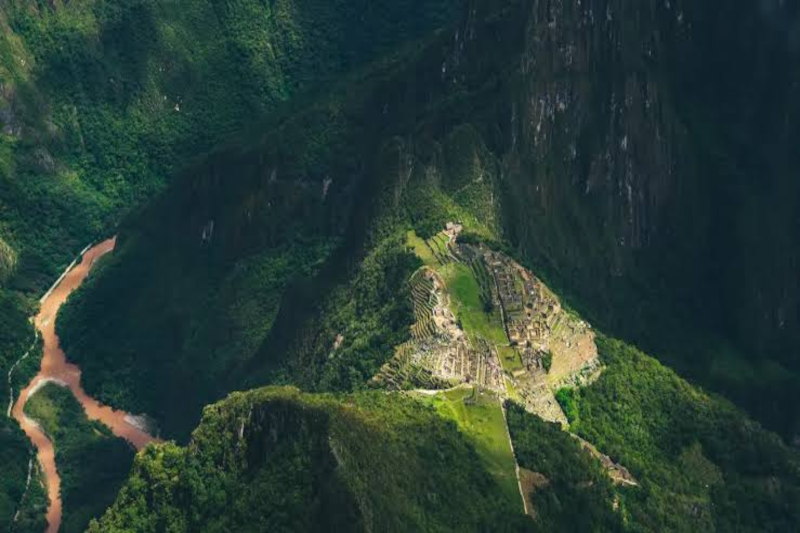
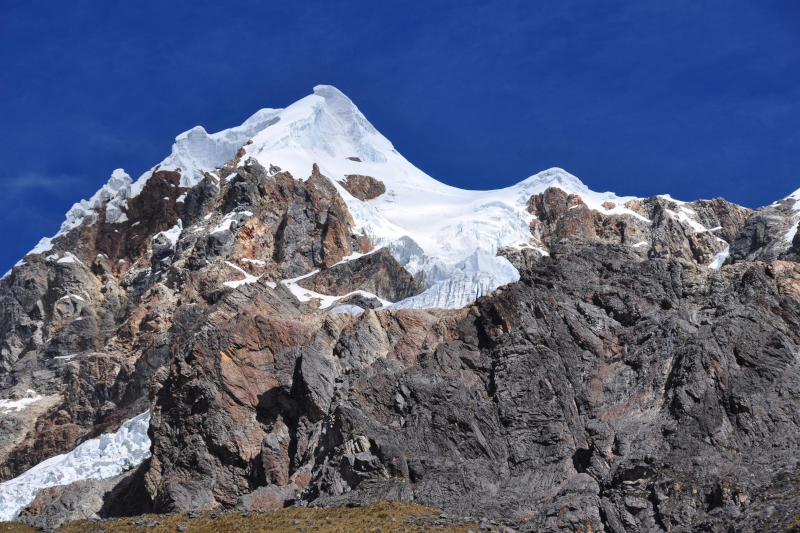
So here’s the question that pops up in a lot of trip-planning chats (and group texts): what mountain range is Machu Picchu located in? The short, clean answer: The Andes. In particular, it is located in the Vilcabamba range (also known as Cordillera de Vilcabamba), a mountainous zone within the Andes mountains in southern Peru. And, right there up on a narrow ridge over the Urubamba River, the Inca created a city that looks like it’s up in the clouds.

Machu Picchu Mountain Range

So, is it a “mountain range” or just a few peaks?

Both, kind of. People say “Machu Picchu mountain range” as a handy label for the cluster of steep peaks around the site. Locally and on maps, you’ll usually see the Andes and the Vilcabamba range mentioned more than “Machu Picchu range.” Either way, when you stand there, the geography does the talking.

The mountain behind the ruins (Huayna Picchu in photos) and the mountain in front of the ruins (Machu Picchu Mountain) are two renowned peaks that lie at either side of Machu Picchu. The city is not situated on a level plain. It’s on a ridge. That choice wasn’t random—it was a risk-managed layout before “risk management” was a job title.

The landscape has a split personality (and that’s the magic)

The thing is that you are in the Andes and close to the Amazon basin. Kinda weird and supercool and super funky—cool mountain air one minute, warm jungle breath the next. It is sometimes called cloud forest and that is because the first time the mist goes through the Trees like slow smoke you’ll understand the meaning of the term.

You’ll notice the microclimates fast. Step into the sun. Then shade. Then a light drizzle. Then sun again. It’s like the weather has multiple tabs open and keeps switching.

All round this place doesn’t have to try too hard to impress you with its natural aspects: the orchids on a rock, colorful birds darting about the trail, and plants like you’d find in a science museum. This also means you will sometimes see llamas. They don’t say much, but they are the local force of untrained security, and they don’t like you being at their property.

Machu Picchu Mountain Range

Wait—why did the Inca build there?

This is where the “project plan” angle shows up. Building on a ridge with steep slopes is a headache. And yet, it solved problems.

Defense: the terrain is naturally hard to reach.

Water: springs run through the area, and the Inca engineered channels to move water where it needed to go.

Farming: those terraces weren’t only pretty. They were a food system and a slope-stabilizing system at the same time.

People love to say it was all spiritual. Sure—there’s strong evidence the site had religious meaning. But it’s also practical. And that mix feels very human, doesn’t it? Big beliefs, but still worried about erosion and storage.

Stonework that still makes engineers squint

You don’t need to be an architect to feel it: the stone walls look tight. Like, no gaps tight. The INCAs were able to shape stones to such an exquisite degree that the blocks fit together without being masonry. This is helpful during earthquakes as the resulting earthquake-induced rock motion can adjust a little rather than cracking brittle concrete.

There is drainage at Machu Picchu and this is also something that comes across in your racing quite easily when you are busy putting in images (second or third view already taken). Rain is common here. So under the terraces and plazas, there’s layered stone and gravel that lets water pass through. Think of it as a giant, built-in “stormwater system,” except it’s made of rocks and patience.

There’s a reason civil engineers visit and nerd out a bit. The site is a case study, but it’s also oddly emotional. You’re looking at problem-solving that survived centuries.

Let’s talk Machu Picchu hikes (because the trails are half the point)

If you like walking through a place instead of only looking at it, the hikes here feel like a reward. Some are famous. Some are quieter. Most involve stairs—lots of stairs.

The Classic Inca Trail: the “iconic” choice (with paperwork)

The Classic Inca Trail is legendary for a reason. You move through ruins, forest, and high passes, and you arrive on foot the way travelers did long ago. But it’s also capped and controlled, which means you need a permit through a licensed operator.

Planning note, in plain terms: if you’re aiming for peak season (May to September), book months ahead. If you’re more of a “let’s see how we feel” traveler, you’ll want a backup plan.

Salkantay Trek: tougher, wilder, and very worth it

Machu Picchu Mountain Range

The Salkantay Trek is often pitched as the alternative, but it’s not a consolation prize. It’s a big route with big scenery. You cross high mountain zones and then drop into warmer, greener terrain. Your legs will notice.

Can beginners do it? Yes—if you train and take acclimatization seriously. No technical climbing, but the altitude can be the real boss fight.

Small digression that matters: if you track workouts, you’ll probably love how hiking here feels like a real “performance” day. If you don’t track workouts, you’ll still love it, because your brain stops buzzing after a few hours on a trail. It’s hard to worry about email when you’re counting steps and watching clouds roll over a ridge.

Inside the site: Huayna Picchu vs. Machu Picchu Mountain

After arriving at the citadel, there is a classic choice of who to climb Huayna Picchu or Machu Picchu Mountain.

The Huayna Picchu is rugged and steep. As the trail descends it is narrow and parts of it are exposed.  It’s exciting… and a little spicy if you hate heights.

Machu Picchu Mountain takes longer and climbs higher, but the path is usually wider. The payoff is a broad view of the whole area—the ruins, the river curve, the peaks. It’s less “white-knuckle,” more “slow burn.”

Both require timed tickets. And yes, they sell out. This is one of those moments where planning beats optimism.

The question people keep asking: “Will I get altitude sickness?”

Maybe. That’s the honest answer. One of the reasons you usually need to spend a couple of days acclimatizing in Cusco or the Sacred Valley is that Cusco is higher than Machu Picchu. It’s sort of like welcoming your body on the job! Allow for adjustment, water and gradually get used to the intensity of hard work. Many travelers try coca tea (it’s common in Peru). Some carry medication prescribed by their doctor. Either way, the main move is simple: don’t rush day one.

Here’s a mild contradiction: you can be “fit” and still feel rough at altitude. Fitness helps, but oxygen is a separate problem. If you’ve ever flown to a new time zone and felt off, it’s a similar vibe—your system needs a moment to catch up.

Getting there: the logistics are part of the story

Machu Picchu Mountain Range

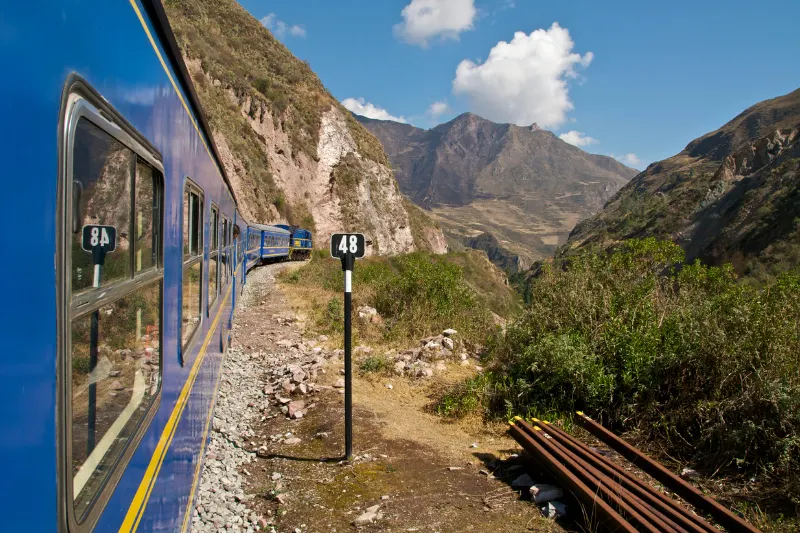
Machu Picchu is no ordinary by-pass. The majority of travellers make the journey from Cusco to Ollantaytambo and end up by train to Aguas Calientes (also known as Machu Picchu Pueblo). Train brands like PeruRail and Inca Rail run the route, and the ride is scenic in that “why does my camera roll have 80 river photos?” way.

Budget route? Some people go to Hidroelectrica and walk along the tracks to town. It’s flatter than the big treks, but it’s still a real walk. And it’s a reminder that “cheap” often means “more time.”

Once you’re in Aguas Calientes, you’ll either bus up to the entrance or hike up (steep, early, humid). Either choice works. It depends on your energy budget—and whether your knees file complaints.

When to go (and how the seasons mess with your plans)

The dry season, roughly May through September, gives you the highest odds of clear views. It’s also the busiest. Shoulder months can be a sweet spot: fewer crowds, decent weather, and a calmer feel on the paths.

Cloudy skies and slippery steps may be a feature of rainy season (from about November to March). It can also result in greener hills, moody fog and the feeling that the ruins beam out of their habitat.If you’re the type who likes atmosphere more than perfect skies, don’t write it off.

And a quick modern-trend aside: people are traveling with “content plans” now—photos, reels, drone shots (drones aren’t allowed at the site), all of it. That’s fine. Just remember the place is better when you give it a few minutes without a lens in front of it. You’ll feel the scale more. Your shoulders might drop. It happens.

What to pack (not a spreadsheet, I promise)

Packing for the Machu Picchu mountain range is a bit like packing for a day that can’t commit. Cool mornings, warm afternoons, sudden rain. Layering is the smart play.

  • Broken-in hiking shoes: grippy soles help on stone steps.
  • Light rain jacket: the mist can turn into real rain fast.
  • Warm layer: mornings can feel sharp.
  • Sun protection: hat, sunglasses, sunscreen. High altitude sun is no joke.
  • Water + snacks: steady energy beats heroic energy.
  • Offline maps: apps like AllTrails or Gaia GPS are handy (download ahead).

Also: bring patience. Lines happen. Rules change. Tickets have time windows. It’s not chaotic, but it’s not frictionless either.

Why this place sticks with you (even after the photos fade)

Machu Picchu Mountain Range

By the time you leave, you’ll probably have a favorite moment. It might be a big one—sunrise over the ruins. Or something small—hearing water run through a stone channel, or catching the scent of wet earth after a quick shower of rain.

And maybe that’s the real point of exploring the Machu Picchu mountain range. The mountains aren’t background. They’re the main character, and the city is the bold plot twist sitting right in the middle.

So yes, Machu Picchu is located in the Andes, in the Vilcabamba range. That’s the geography answer. But the lived answer is simpler: it’s a place where the land and the people who shaped it still talk to each other. Quietly. Clearly. If you listen.

Quick outline (so you know where we’re headed)

  • Why Chinchero feels different (even if you’ve done markets before)
  • Chinchero market days + hours (and the “don’t show up late” reality)
  • Getting there from Cusco without turning it into a logistics project
  • Textiles: what you’re seeing, what it means, and what’s worth buying
  • Haggling, but make it respectful
  • Chinchero market vs Pisac market (the honest comparison)
  • What else to do in town + what to eat when your nose leads the way

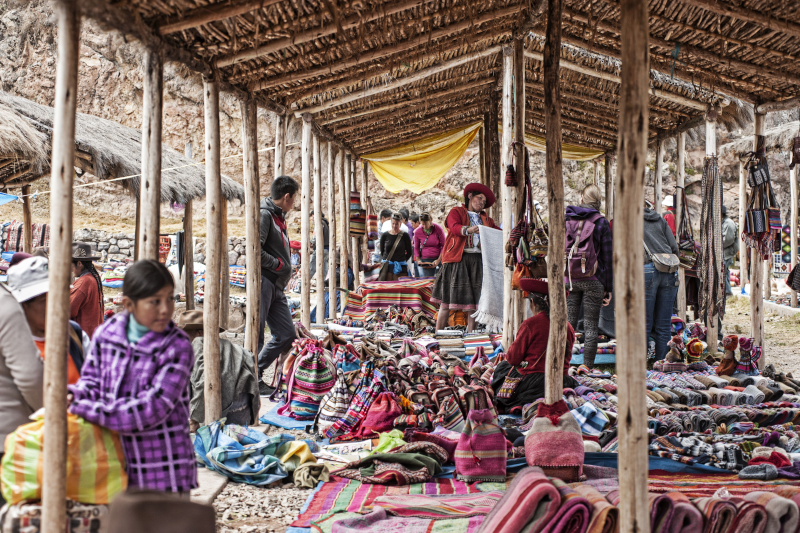
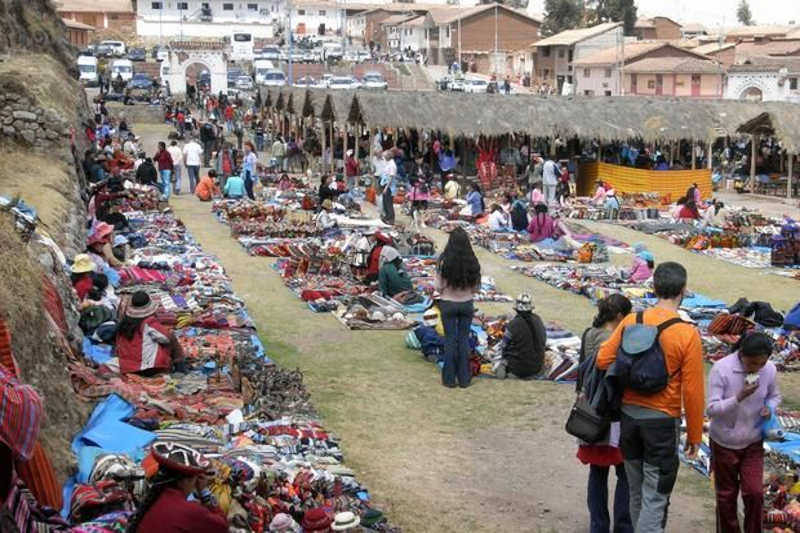
Chinchero sits high in the Andes, in the Sacred Valley, and it has this calm-but-busy energy that’s hard to fake. People often plan Peru like a project timeline: Cusco, Sacred Valley, Machu Picchu—done. But markets are where the “real life” part shows up. The Chinchero market isn’t a museum display. It’s a weekly rhythm. Local people come to sell, trade, catch up, and yes, make a living.

Chinchero Market

And if you’re wondering whether it’s worth your time when you could be staring at ruins or chasing the perfect postcard view… well, why pick? Chinchero gives you culture, color, and a very practical bonus: you can buy something that you’ll actually use again, not just a souvenir that lives in a drawer.

First impressions: why Chinchero grabs you fast

You walk into the main square and it hits you—reds, deep pinks, bold stripes, and patterns that look like they were designed with zero fear. It’s lively, but not frantic. And here’s the thing: in Chinchero Peru, a lot of people wear traditional clothing because it’s normal, not because a tour bus is watching.

Sometimes travelers say, “I want something authentic.” Fair. But let’s be real: the market is still a business. Money changes hands. Photos get taken. The difference is that in Chinchero, the tradition doesn’t feel like a performance. It feels like a Tuesday.

Chinchero market days and hours (aka: don’t overthink it, but don’t wing it)

Chinchero market days are commonly Tuesday, Thursday, and Sunday, with Sunday usually being the busiest. That’s when more families from nearby communities show up with produce and supplies, not only crafts. If you want the biggest, most energetic version of Chinchero market Peru, Sunday is your day.

Chinchero market hours aren’t posted like a mall schedule. In general, vendors start setting up early—think around 7:00 AM—and the action tapers off around 2:00 PM. If you arrive late, you’ll still see plenty, but you’ll miss the best browsing window. Also: weather and local events can shift things, so if you’re on a tight plan, ask your hotel or guide the day before.

One small, not-so-glam detail: altitude. Chinchero is around 3,700 meters. If you just flew in, your body might be running a slow background update. Go easy. Drink water. If coca tea is offered, try it. And if you feel off, listen to that feeling. No scarf is worth a headache that ruins your day.

Getting there from Cusco (simple choices, real trade-offs)

Chinchero is about 30 km from Cusco. Close enough for a day trip, far enough that you’ll want a plan that matches your style.

  • Colectivo (shared van): Cheap, frequent, and usually quick. It’s also a little chaotic, which is kind of the point.
  • Taxi or private driver: More control, more comfort. If you’re traveling with a group, the cost often makes sense.
  • Tour day: If you’re doing Moray, Maras, or Ollantaytambo anyway, Chinchero slots in neatly. Think of it as stacking stops on one route.

One pro tip from the “I’ve been burned before” department: keep small bills. Markets run on cash. ATMs are not the vibe here. And card readers? Sometimes. Often not.

Textiles: the main event (and why it’s more than shopping)

Chinchero Market

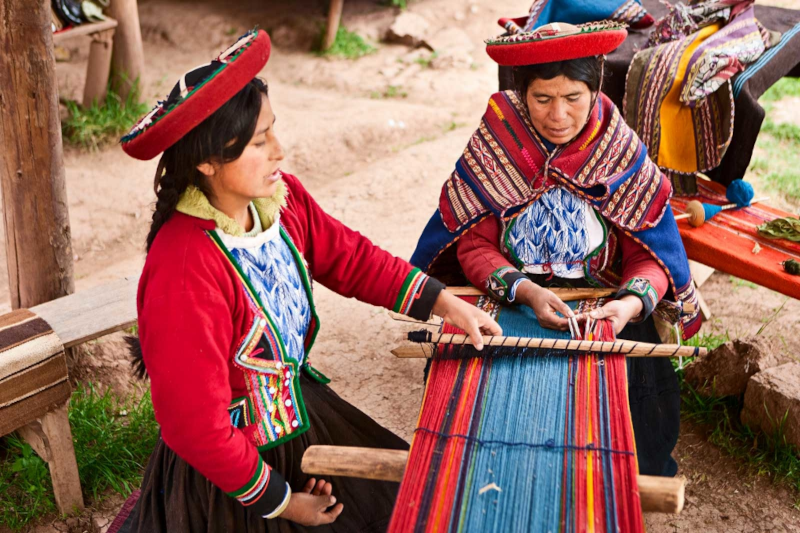
Let’s talk about what you’re actually seeing. Chinchero is known for weaving, and not in a “cute craft corner” way. Weaving here is skill, family knowledge, and income—rolled into one.

You’ll often see a loom demo at a nearby workshop or co-op. It’s worth stopping. Not because you’re required to buy (you’re not), but because once you watch someone spin yarn, set up a pattern, and keep tension with their own body position, you start reading the textiles differently. They stop looking like “a blanket.” They start looking like hours.

Natural dye talk can sound a bit like marketing, but it’s also real. You’ll hear about cochineal (a tiny insect used for reds) and plants, minerals, and even ash used to shift shades. It’s like a color lab—just without fluorescent lights and spreadsheets.

Okay, but is it real alpaca?

This is where a little buyer awareness helps. A lot of stalls will say “alpaca,” and some items are 100% alpaca, some are blends, and some are basically acrylic in disguise. That doesn’t make anyone a villain. It’s just the market.

  • Feel: Alpaca tends to feel smooth and warm quickly. If it’s scratchy, it may be a rougher fiber or a blend.
  • Drape: Better wool hangs with a soft weight. Acrylic can feel stiff.
  • Label reality: If it has a factory tag, read it. If it doesn’t, ask directly. Simple questions work.

Here’s a mild contradiction, and I mean it kindly: you can’t “test” alpaca perfectly in five seconds… but you can get a lot better at guessing once you’ve touched a few pieces side by side. Your hands learn fast.

How to haggle without being that person

Yes, you can negotiate. And yes, you should still be respectful. Think of it like a business chat, not a game show.

A friendly greeting goes a long way. Even a simple Buenos días sets a good tone. Then you can ask the price, pause, and make a counteroffer that feels fair. Often, 10–20% is a normal range. If you try to cut it in half, the vibe gets weird fast.

Also, here’s the part people don’t say out loud: you’re not only paying for an object. You’re paying for time, skill, and a supply chain that looks nothing like Amazon. If you want a “deal,” buy more than one item. That’s a win-win that doesn’t feel stingy.

Chinchero Market

Chinchero market vs Pisac market: which one wins?

If you’re comparing Chinchero market vs Pisac market, you’re not alone. They’re both famous. They’re both in the Sacred Valley. They both have textiles. And they feel very different.

Pisac is larger and tends to have more variety—especially jewelry and mass-made souvenirs. It’s also more crowded, more tour-heavy, and sometimes a bit louder in the “sales pitch” sense.

Chinchero market Peru feels smaller and more focused, especially if textiles are your priority. You’re more likely to talk with the person who made the piece (or someone close to the making of it). That direct connection is the whole point for many travelers.

So which should you choose? If you want variety and scale, Pisac. If you want weaving culture and a more local feel, Chinchero. If you can do both, do both—and then laugh at yourself for thinking you’d buy “just one scarf.”

Don’t leave right away: Chinchero has a second act

Once you’ve wandered the stalls, take 30–60 minutes to walk around town. Chinchero has Inca terraces and stonework nearby, and they’re not usually packed. It’s a nice shift. Market noise fades, and suddenly you’re looking at engineering that still makes modern people nod with respect.

There’s also a colonial church near the square, built over Inca foundations. It’s a beautiful, complicated symbol of history—two worlds layered in one place. If you like art, look for the painted walls and ceiling details. They’re the kind of thing you don’t notice at first, and then you can’t stop noticing.

What to eat (because you’ll smell it before you see it)

Markets make you hungry. It’s science.

Try choclo con queso: big Andean corn with salty cheese. It’s simple and oddly comforting. You’ll also see empanadas, soups, and sometimes sweet treats like picarones (fried rings with syrup). If you’re cautious about street food, start with something hot and freshly cooked. And keep hand sanitizer in your daypack—practical travel is still travel.

A quick tangent that matters: if you’re traveling in the rainy season (roughly November to March), pack a light rain shell. Not because you’ll melt—because the market gets slippery, and nobody looks cool sliding on stone steps. Dry season has its own personality: sunny days, cold mornings, and dust. Layering solves both.

Final thoughts: what you’ll remember later

Chinchero Market

The Chinchero market isn’t only about buying. It’s about seeing how a place works when it’s not trying too hard to impress you. You’ll hear Quechua and Spanish mixed together. You’ll see kids helping, elders bargaining, and visitors trying to keep up. It’s normal life, on display—without being staged.

If you go with curiosity, a little patience, and some small bills, you’ll do great. And when you get home and pull that woven scarf out of your closet months later, you’ll probably feel it again—the thin mountain air, the sharp colors, the quiet pride in the hands that made it. That’s the real takeaway. The rest is just stuff.

If you’ve ever landed in Cusco and felt a little woozy, welcome. The altitude hits fast. Your legs say “no thanks.” Your head says “why is my heart racing?”

And yet, people live here. Farm here. Raise kids here. Laugh here. That’s your first clue about Pachamama: the Andes don’t let you pretend you’re the boss.

So you hear a word said with real care: Pachamama.

Most guides translate it as “Mother Earth.” That’s close. But it’s a bit like calling the Sacred Valley “a nice view.” True… and also missing the point.

pachamama meaning

Mini-outline (so it’s easy to follow): 

  • what the word means, 
  • why Cusco + the Sacred Valley make it feel real, 
  • what people do day to day, 
  • the big rule: reciprocity, 
  • what changed after the Spanish arrived, 6) why it still matters.

So, what does Pachamama mean?

Here’s the thing. Quechua words can carry a whole worldview inside them. English likes neat labels. Quechua often gives you a whole scene.

Pachamama is commonly explained as two parts:

  • Pacha = world, place, time. All together.
  • Mama = mother, and also a respected elder.

So the meaning of Pachamama is bigger than dirt and rocks. It’s the land and the timing of life on that land. Seasons. Rain. Frost. Harvest days. The slow patience of soil.

In simple terms? Pachamama is the living ground that holds you. The ground that feeds you. The ground that can also humble you.

And yes, it’s spiritual. But it’s also practical. If your food depends on weather, you don’t treat the weather like background noise. You treat it like a key stakeholder.

Why Peru (and why Cusco + the Sacred Valley) makes this feel personal

Pachamama is honored across the Andes. But Peru—especially Cusco and the Sacred Valley—puts you right up close to the idea.

Cusco was the center of the Inca world. The Sacred Valley (Pisac, Urubamba, Chinchero, Ollantaytambo) still shows what “working with the land” looks like when you mean it.

Terraces climb steep hillsides. Canals carry water with calm precision. Stone walls hold everything in place, like the world’s most patient engineering project.

If you’ve stood at Moray and looked down into those circles, you’ve probably thought: “This is smart.” It is. It’s also respectful. It says: the land has limits. Work inside them.

That’s Pachamama. Not a pretty concept. A relationship.

Is Pachamama a goddess? Yes… and also not quite

Here’s a small contradiction that helps: people may call Pachamama a goddess, but they don’t treat her like a fictional character. They treat her like a real presence with real consequences.

In inca culture and religion, Pachamama is tied to fertility and food. That sounds lofty, but it’s simple. If the soil is healthy, families eat. If it’s exhausted, everyone feels it.

She’s also not only gentle. You’ll hear people say that if humans take too much, or take in a rude way, the land responds. Bad harvests. Slips and slides. A streak of misfortune. Is that “literal”? Maybe. Maybe not. But it lands as a clear rule: don’t be careless with what keeps you alive.

Quick side note: the Apus (mountains with reputations)

pachamama meaning

In the Cusco region, Pachamama often sits alongside the Apus—sacred mountain beings. People talk about Ausangate or Salkantay the way you’d talk about a powerful client: impressive, generous when treated with respect, and not someone you ignore.

Do the Apus replace Pachamama? Not really. Think layers. Pachamama is the mother ground. Apus are local powers tied to specific peaks and watersheds. Same web. Different nodes.

A quick sketch of Andean cosmology 

Andean thought often describes three connected realms. Keep it light. The main idea is connection.

  1. Hanan Pacha: the upper realm (sun, moon, stars).
  2. Kay Pacha: the everyday realm (people, plants, animals, work, meals).
  3. Uku Pacha: the inner realm (ancestors, seeds, what grows unseen).

You’ll see the chakana (Andean cross) all over Cusco—on textiles, murals, jewelry. Sometimes it’s tourist merch, sure. But it’s also a real symbol of connection. It’s basically saying: nothing stands alone.

“Mother Nature” vs. Pachamama (same direction, different vibe)

Many of us grew up with “Mother Nature,” which can feel warm and poetic. It can also feel distant, like a poster on a classroom wall.

Pachamama feels closer. More like kin.

Here’s a work-flavored way to put it: a lot of environmental talk in the U.S. sounds like a slide deck. Targets. KPIs. Reporting. Risk mitigation. That isn’t bad—those tools matter.

Pachamama adds another layer: relationship. Instead of “How do we manage resources?” the question becomes “How do we stay on good terms with the land?”

That shift changes behavior. It nudges you toward care, not control.

What people actually do 

This is where the concept turns into habits.

You might see someone pour a small splash of chicha, beer, or wine onto the ground before the first sip. That first share goes to the earth.

Or you’ll notice a farmer pause before turning soil. A quiet word. A brief moment. Not a performance. More like a check-in.

If you’ve ever worked on a good team, you’ll recognize the feeling. You don’t bulldoze the people you rely on, you acknowledge them, you keep trust alive. Here, the “team member” is a hillside.

Small digression: coca tea, respect, and the tourist learning curve

Visitors often hear about coca leaves fast. Maybe your hotel offers coca tea for altitude sickness. Maybe your guide mentions it on the way to a trail. (If you’re curious, look up the local rules before you travel home—customs rules are not a fun surprise.)

In the Andes, coca has many meanings. It can be practical, it can be social, it can be sacred. In offerings, coca often carries intention. It’s a way of speaking when words feel too thin.

The key is tone: treat it as part of living culture, not a gimmick.

pachamama meaning

August: when Pachamama gets extra attention

Across the Andes, August is often described as a time when the earth is “open” and “hungry.” The explanation varies by community, but the theme is steady: it’s a season for gratitude and repair.

In the Cusco region, you may notice more offerings and ceremonies. Markets carry ritual items. Incense. Herbs. Coca leaves. You can feel the calendar shift, even if you don’t know the dates.

It’s quiet, but it’s not small.

Pago a la Tierra: “Payment to the Earth”

Pago a la Tierra means Payment to the Earth. That phrasing can sound strange in English. Like: “Wait, are we paying rent?”

Kind of, yes. But not as a transaction. More as a return. A way to say: we’ve received, so we give back.

A ritual specialist may guide the ceremony (English often uses “shaman,” though local titles vary). People may do a pago before planting, after harvest, before travel, or when starting a new home. It’s a moment to reset the relationship.

Common elements in Peru include:

  • Coca leaves (chosen with care; used to carry intention)
  • Seeds and grains (future food, future life)
  • Sweets or foods (a way to feed the earth)
  • Chicha or alcohol (small pours for the ground)

The offering may be burned or buried, depending on local custom. People watch the process closely. Smoke. Ash. The feel of the moment. You could call it symbolism. You could also call it a feedback signal. Either way, it’s taken seriously.

The big rule underneath it all: ayni (reciprocity)

If Pachamama is the relationship, ayni is the rule that keeps it healthy.

Ayni is reciprocity. Give and take. Not in a petty way. In a long-term way.

Think of it like community governance. When you extract, you return. Likewise, if you benefit, you contribute. Ignoring that balance is when problems show up—maybe as soil damage, maybe as conflict, or just a deeper sense that something’s off.

This is where Andean spirituality starts to look like a solid operating model. Terraces last only when they’re maintained. Irrigation works only when it’s shared fairly. Reciprocity is ethics, and it’s also logistics.

Sumak kawsay: “good living,” with a sharp edge

Sumak kawsay is often translated as “good living” (you may see buen vivir in Spanish). It pushes back on the modern reflex of “more, faster, now.”

Good living, here, simply looks like having enough. That means reliable food, clean water, unhurried time, and a tight-knit community. Ultimately, it’s about ensuring the landscape can keep going.

That can sound idealistic until you look at a terrace wall. Someone built that with patience. Someone repaired it season after season. Care, made visible.

Then history hit: Spanish colonial pressure and survival

When Spanish colonial rule took hold in Peru, Indigenous religions were suppressed. Sacred places were renamed or reframed. Catholic symbols were promoted. Older practices were restricted.

And yet Pachamama didn’t disappear.

In many communities, older relationships to land and mountains continued through syncretism—layered meanings, shared spaces, quiet continuities. It’s messy. It’s human. And it helped the tradition survive in Cusco and beyond.

pachamama meaning

A modern detour: Cusco tourism (helpful, weird, and complicated)

If you’re reading this in the U.S., you might be thinking about travel. So let’s talk tourism for a second.

Cusco and the Sacred Valley are major destinations. Tourism brings jobs. It funds guides, drivers, hotels, restaurants, artisans. It also changes the meaning of things.

Some rituals are performed for visitors. Some symbols become souvenirs. The chakana turns into a brand mark. Pachamama turns into a caption.

Is that all bad? No. But it can flatten a living practice into a quick culture clip. If you visit, a good approach is simple: ask permission, don’t treat ceremonies like content, and pay people fairly for their time and knowledge.

And if you’re planning hikes, use your tools like a grown-up. Download offline maps on Google Maps. Check trail notes on AllTrails. Bring layers (REI isn’t wrong about this). Being prepared is also a kind of respect.

Why Pachamama still matters (even if you live far away)

Pachamama isn’t only a tradition to admire from a distance. It carries a hard question: If the land supports us, what do we owe the land?

That question shows up in Peru in debates about mining, water, and land rights. It also shows up everywhere in small ways: what we waste, what we buy, what we expect the planet to absorb without complaint.

So what is Pachamama? She’s Mother Earth, yes. She’s also a reminder that relationships need care. Again and again. Not once.

If you ever find yourself in the Sacred Valley near sunset—air cooling, shadows stretching across terraces—try a small experiment. Pause. Touch a stone wall. Say a quiet thanks.

Maybe you’ll feel nothing. Maybe you’ll feel a little silly. But you might also feel something else: that the place is not “for” you, and you’re not separate from it. You’re part of it.

And that, in a very real way, is the pachamama meaning.