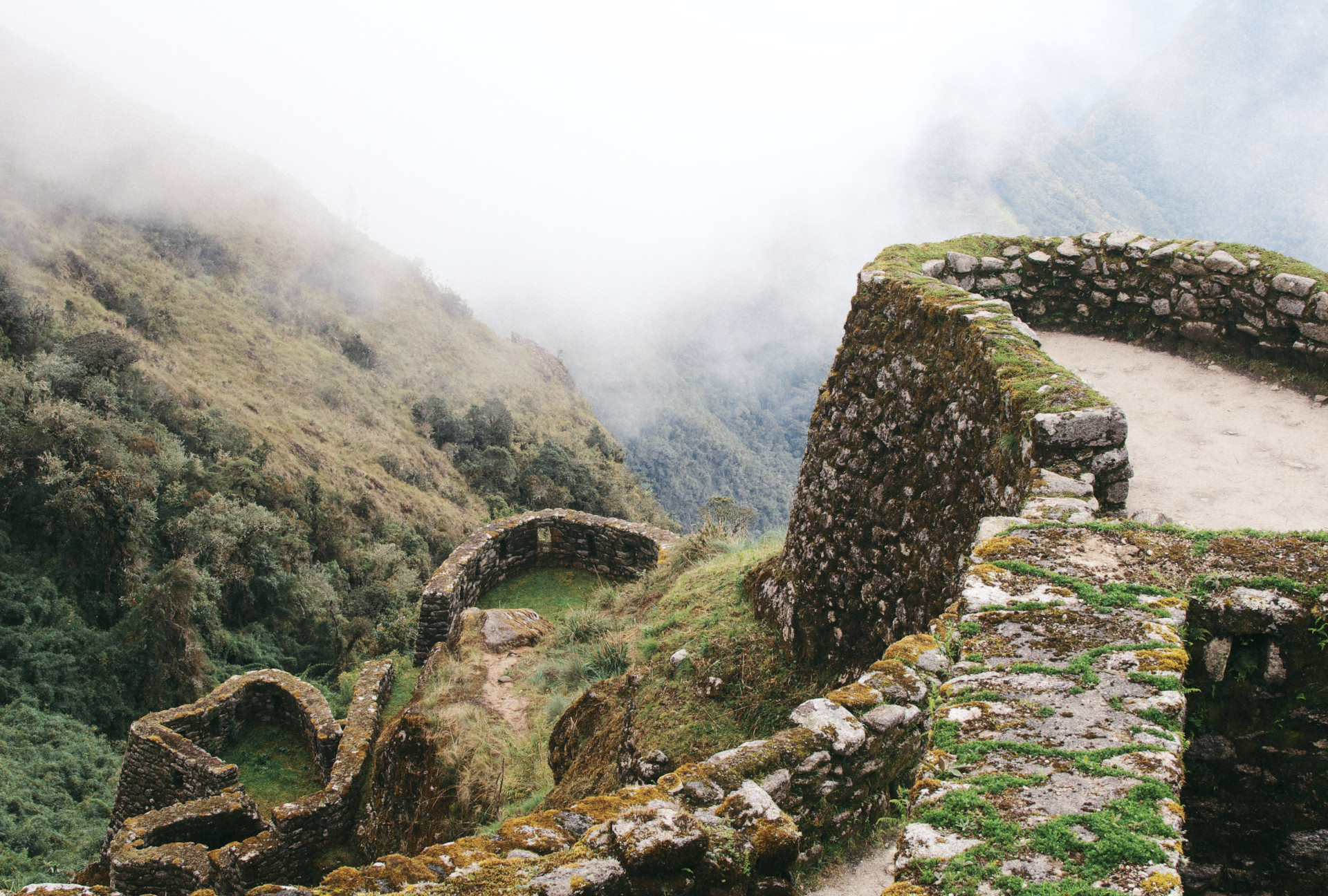
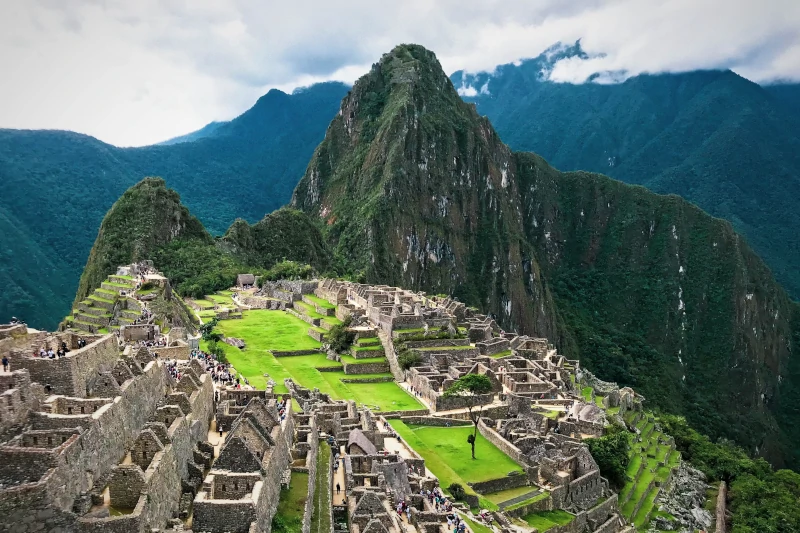
In this article, we embark on an explorative journey to the geological wonders of Machu Picchu, delving beneath its iconic stone structures to the bedrock of its existence. As we unravel the extraordinary geological processes that led to Machu Picchu’s creation, we’ll appreciate how these features have not only shaped the physical landscape but also influenced the rich culture and historical development of the Incas.
Situated high in the Andes, amidst cloud-drenched peaks, rests the enchanting and enigmatic city of Machu Picchu. Known for its intricate and awe-inspiring architecture, this historic Inca citadel is also home to some of the most stunning geological wonders of Cusco. This remarkable ancient site’s unique geological features tell a fascinating story of earth’s ancient past, which we’re only beginning to understand.
Sublime stones: Unearthing the geological wonders of Machu Picchu
Perched high in the Andes lies one of the most enigmatic cities of the ancient world. The geological wonders of Machu Picchu captivate visitors with their striking beauty and mystery. Comprising a complex of palaces, plazas, and temples, including the renowned temples of Machu Picchu, the city’s stones whisper tales from the heyday of the Inca Empire.
The landscape is a marvel, formed by the Vilcabamba Batholith – a massive formation of granite. This granite, intruded into the earth’s crust millions of years ago, is now the backbone of the awe-inspiring structures we see today. The emerald-hued peaks surrounding the site add to the grandeur, resulting from tectonic uplift and intense erosion over eons.
The Incas mastered the art of shaping these tough stones, an impressive testament to their advanced civilization. With minimal tools, they transformed the granite into intricate structures. These not only contribute to the architectural marvels but also form the geological wonders of Machu Picchu.
In the face of nature’s forces, the city has endured. Each stone tells a story of the past, marking moments in the timeline of the earth. Yet, they hold the present in an eternal embrace, continuing to shape the narrative of this mesmerizing place.
Despite the passing of centuries, the geological wonders of Machu Picchu continue to evoke awe. They remain a testament to the enduring power of nature and the skill of ancient hands. A visit to this citadel is a journey back in time, unravelling the geological tapestry of a forgotten world.
Shaping civilization: How geology influenced Inca culture and architecture
The Sacred Valley, nestled high in the Andes, is home to the remarkable Inca civilization and the geological wonders of Machu Picchu. This land, carved by geological processes, shaped more than mountains. It influenced an entire civilization’s culture and architecture.
The Incas understood their environment intimately. They capitalized on the geological resources available, which dictated the design of their cities. The geological wonders of Machu Picchu provide invaluable insights into this fascinating interaction between nature and culture.
The city’s buildings are made from the local granite, a testament to Inca ingenuity. The intricate stonework, shaped to perfection, fits together without mortar. This interlocking construction proved to be earthquake-resistant, vital in this seismically active region.
The terraced fields seen across the Inca Empire represent another intersection of geology and culture. These structures, built into steep mountainsides, were designed for effective agriculture in the rugged Andes. They’re a testament to the Incas’ understanding of their geological surroundings and their engineering capabilities.
Water was another critical factor. The Incas constructed sophisticated irrigation systems that utilized natural springs. These networks, still functional today, testify to their profound understanding of the hydrology of the region.
Lastly, the geological wonders of Machu Picchu are not only physical but also spiritual. Mountains, or ‘apus,’ were considered sacred beings in Inca cosmology. The positioning of Machu Picchu, surrounded by majestic peaks, speaks volumes about their spiritual connection to the land.
In summary, the geological wonders of Machu Picchu played a pivotal role in shaping the Inca culture and architecture. They’re a timeless monument to the interplay between humanity and the earth.
Preserving the past: Conservation challenges and solutions in a changing climate
The geological wonders of Machu Picchu have withstood the test of time. However, they now face the daunting challenge of climate change and increased human interaction. These twin threats pose a significant risk to their preservation.
Changing climatic conditions, including heavier rainfall and rising temperatures, threaten the stability of this historical site. Landslides and erosion, propelled by extreme weather, may damage the site’s intricate stone structures. These effects of climate change directly threaten the geological wonders of Machu Picchu.
Furthermore, increased human activity adds another layer of threat. Tourism, if not carefully managed, can lead to wear and tear, potentially damaging the very fabric of this timeless marvel. The footprints we leave behind could scar the site irreparably.
In response, authorities and conservationists have implemented numerous strategies. Restricted tourist access, vigilant site monitoring, and ongoing restoration work form part of these efforts. Advanced technologies like 3D mapping and satellite imaging are now used to monitor and predict potential threats.
Efforts are also being made to educate visitors about the importance of responsible tourism. Visitors are urged to follow guidelines, respect the site, and minimize their impact. After all, it’s our collective duty to protect the geological wonders of Machu Picchu for future generations.
As we work towards preserving this historical gem, we invite you to experience its grandeur responsibly. Embark on the Lares Trek or the Short Inca Trail to Machu Picchu. As you journey through the Sacred Valley, may you marvel at the geological wonders of Machu Picchu, understanding the importance of their preservation for the generations to come.
Machu Picchu Hiking Trails: From Easy to Challenging Treks
Machu Picchu, a marvel of the ancient world, beckons adventurers of all levels. Its trails vary from simple walks to rigorous treks. This guide explores them all, from easy to challenging.
We start with gentle paths, perfect for beginners. These routes offer stunning views with minimal effort. Ideal for those seeking beauty without the burn.
Next, we delve into moderate Machu Picchu hiking trails. These require a bit more stamina and offer richer views. They bridge the gap between leisurely walks and true challenges.
Finally, we tackle the toughest hikes. These are for the seasoned hiker, craving adventure. They promise unparalleled vistas and a sense of accomplishment.
Whether you’re a casual walker or an experienced trekker, there’s a trail for you. Let’s discover the paths of Machu Picchu together. Embark on a journey through history, nature, and breathtaking landscapes.
Navigating the Inca Paths: A Guide to Machu Picchu’s Easiest Hikes
Machu Picchu, an ancient Inca city, draws hikers from around the world. Its mystique is unparalleled, nestled high in the Andes. For many, hiking the Inca Trail to this historic site is a bucket-list adventure.
But not all Machu Picchu hiking trails demand extreme fitness or endurance. This post illuminates the easiest hikes, ensuring everyone can witness its splendor.
A Gentle Introduction to Inca Wonders
The Inca Trail to Machu is known for its challenging routes. Yet, easier paths also weave through the majestic landscape. These trails allow for a leisurely exploration, perfect for families or those preferring a gentle hike. Among these, the hike to Machu Picchu via the Sun Gate, or Inti Punku, stands out. It offers a moderate walk with breathtaking views, without the arduous journey of the Salkantay Trek or Lares Trek.
Exploring the Sun Gate
Inti Punku serves as the ancient entrance to Machu Picchu. The hike starts from the Machu Picchu site itself. It is a round trip that can be completed in about 2 to 3 hours. As you ascend, the panoramic views of the ruins and surrounding mountains unfold. Reaching the Sun Gate rewards you with a vista that captures the essence of the Inca civilization.
Another accessible route is the hike around Machu Picchu’s agricultural sector. This path delves into the Inca’s farming techniques. Terraces carved into the mountain showcase their advanced agricultural knowledge. The hike is easy and enriches your understanding of Inca society.
The museum near Machu Picchu also offers a gentle hike. It leads to insights into Inca culture and artifacts. This walk combines learning with the beauty of nature, a rare treat.
Machu Picchu Hikes for Everyone
What makes these hikes appealing is their inclusivity. They cater to a broad audience, from avid historians to nature lovers. Each step on these trails is a journey through time, offering a glimpse into the Inca way of life.
Safety and Preparation
Even on easier trails, preparation is key. Wear comfortable hiking shoes and bring water and snacks. The weather can change quickly, so pack rain gear and sunscreen. Always stay on marked paths to protect both the site and yourself.
Hiking the Inca Trail or any Machu Picchu hike is more than physical exercise. It’s an immersion into a rich, historical tapestry. The easiest hikes offer a unique blend of accessibility and awe-inspiring views. They prove that adventure doesn’t always require extreme challenges.
Connecting with Nature and History
As you walk these paths, reflect on the people who built and walked them before. The landscape tells stories of ingenuity, spirituality, and survival. Each step is a connection to the past, a moment to ponder the mysteries of this ancient wonder.
Machu Picchu hiking trails, even the easiest ones, offer unforgettable experiences. They remind us of the marvels humans can achieve. Whether you’re gazing out from the Sun Gate or wandering through ancient terraces, the spirit of the Inca is palpable.
Don’t let the fear of difficult hikes deter you from visiting Machu Picchu. The easier Machu Picchu hiking trails trails provide a fulfilling journey into the heart of Inca culture. They are a testament to the fact that beauty and history are accessible to all. So, lace up your hiking boots, and embark on an adventure that marries the simplicity of walking with the majesty of Machu Picchu.
Conquering the Andes: Challenging Treks to Machu Picchu’s Summit
Machu Picchu, a citadel lost in time, calls to the brave and the bold. Its rugged terrain and breathtaking views offer a challenge like no other. For those seeking the thrill of conquest, several Machu Picchu hiking trails promise just that. These paths are not just walks but adventures into the heart of the Andes.
The Salkantay Trek: A Path Less Traveled
One of the most revered routes to Machu Picchu is the Salkantay Trek. Spanning over 60 kilometers, it weaves through the majestic Andes. This journey takes you past the imposing Salkantay Mountain, through cloud forests, and into the depths of the Lares Valley. It’s a longer hike, taking about 4 to 5 days, but the vistas and solitude it offers are unparalleled.
Huayna Picchu: The Stairway to Heaven
For an intense day hike, Huayna Picchu beckons. This peak, overlooking Machu Picchu, offers a steep and exhilarating climb. It’s famous for its narrow steps and breathtaking overlooks.
Climbers navigate through ancient Inca ruins, experiencing history with every step. The view from the top is a reward that National Geographic often celebrates.
The classic trail to Machu Picchu is the Inca Trail. It’s a four-day trek that combines natural beauty with historical exploration. Hikers traverse multiple mountain passes, each offering a new perspective of the Andean landscape. Along the way, the trail unveils various Inca ruins, providing a glimpse into the past.
Adventures in the Lares Trek
Another challenging route is the Lares Trek. This path offers a mix of cultural immersion and natural beauty. It passes through remote Andean villages, offering insights into the lives of the Quechua people. The Lares Trek also requires crossing high mountain passes, making it a physically demanding journey.
The Choquequirao Trek: A Hidden Gem
Choquequirao, often referred to as Machu Picchu’s sister city, is reachable through a challenging trek. This route is less frequented, offering solitude and untouched beauty. The trek to Choquequirao tests endurance, with steep climbs and descents. Yet, the solitude and untouched ruins at the end make every step worthwhile.
Tackling these trails requires thorough preparation. Adequate fitness levels are a must, as is acclimatization to high altitude. It’s crucial to pack wisely, including essentials like water, food, and first aid supplies. Guides are invaluable, providing insight and ensuring safety.
As adventurers, it’s our duty to protect these ancient paths. Stick to the trails and leave no trace. This respect ensures that Machu Picchu’s beauty remains for generations to come.
A Rewarding Endeavor
The challenge of these treks is matched by their rewards. The sense of achievement in reaching Machu Picchu via these routes is immense. The journey offers more than just physical challenges; it’s a spiritual and historical pilgrimage.
The challenging treks to Machu Picchu’s summit offer a unique adventure. They test your limits, immerse you in history, and connect you with nature. Whether you choose the Salkantay Trek, Huayna Picchu, the Inca Trail, the Lares Trek, or the path to Choquequirao, you’re embarking on a journey of a lifetime. These routes promise not just a destination, but a transformation.
Staying in Ollantaytambo
Nestled in the Sacred Valley, Ollantaytambo is a gem waiting to be discovered. This village offers a unique blend of history and nature. It’s the perfect base for exploring Machu Picchu.
Accommodations here range from cozy hostels to luxurious lodges. Each option provides a different experience of this ancient town. Whether budget or splurge, there’s something for everyone.
Hostels in Ollantaytambo promise affordability and community. They are ideal for solo travelers and backpackers. You’ll find friendly environments and shared adventures.
Luxury lodges, on the other hand, offer serenity and splendid views. These places combine comfort with cultural immersion. They cater to those seeking a pampering retreat.
This post will guide you through staying in Ollantaytambo. We’ll explore accommodations suited to various tastes and budgets. Prepare for an unforgettable journey in the heart of the Inca empire.
Choosing Your Ideal Ollantaytambo Stay: A Guide
Staying in Ollantaytambo connects you deeply with the Inca past. The town serves as a crucial gateway for those embarking on the Inca Trail. Its streets and structures whisper tales from centuries ago.
Travelers often begin their journey from Cusco to Ollantaytambo. The ride takes about 45 minutes, winding through the stunning Valley of the Incas. Upon arrival, the majestic sight of the Temple of the Sun welcomes you.
Accommodations here cater to a wide range of preferences and budgets. Before choosing where to stay, consider your itinerary. Whether visiting Ollantaytambo for a day trip or as a base to visit Machu Picchu, options abound.
Budget-Friendly Hostels: A Social Hub
Hostels are a magnet for solo travelers and groups alike. They offer not just a place to sleep but a community. Prices are affordable, making them ideal for those prioritizing experiences over luxury.
Most hostels in Ollantaytambo are near the train station. This proximity makes catching early trains or buses convenient. Expect to pay less here than you would for hotels in Ollantaytambo.
Hostels provide a unique opportunity to meet fellow adventurers. They often organize tours and activities. This communal vibe adds a special layer to your stay.
Hotels in Ollantaytambo: Comfort Meets Culture
Hotels in Ollantaytambo vary from simple to moderately luxurious. They blend modern comforts with traditional Inca architecture. Stone blocks, intricately carved, adorn many of these establishments.
Choosing a hotel here means enjoying personal space with cultural flair. Many offer stunning views of the surrounding ruins and landscapes. Their prices reflect the level of comfort and amenities provided.
Staying in a hotel gives you a serene base for exploring. After a long day of visiting Ollantaytambo or trekking, comfort awaits. It’s a balanced choice between budget and indulgence.
Luxury Lodges: The Pinnacle of Pampering
For those where budget is no constraint, luxury lodges are the answer. These establishments nestle you in the lap of comfort. Every detail reflects the rich heritage of the area.
Luxury lodges provide an unparalleled view of the Inca defeated landscapes. Their design often incorporates elements of Inca architecture. Expect to pay a premium for these exceptional experiences.
These lodges serve as a peaceful retreat from the bustling trails. They’re perfect for recharging in the lap of luxury.
Staying Connected: The Importance of Location
Proximity to the train station is a key factor for many. It’s the main hub for those looking to visit Machu Picchu. Hotels and hostels near the station offer ease of travel.
However, staying closer to the Inca Trail’s starting point has its perks. It allows for an early start on your trekking journey. Weigh your priorities when choosing your location.
Remember, Ollantaytambo is more than a stopover; it’s a destination. Its market, ruins, and local eateries deserve exploration. Choose a place that allows easy access to all these treasures.
Frequently Asked Questions
Visitors often have questions about staying in Ollantaytambo. Here, we address a few common ones.
How much should I expect to pay for accommodation? Prices range widely, from budget hostels to luxurious lodges. Research and book in advance for the best deals.
Is Ollantaytambo worth visiting beyond being a base for Machu Picchu? Absolutely. Its rich history, friendly locals, and breathtaking scenery make it a worthy destination on its own.
How do I get from Cusco to Ollantaytambo? Buses and shared taxis are popular options. The journey offers incredible views of the Valley of the Incas.
Making Your Choice
Choosing your ideal Ollantaytambo stay depends on several factors. Consider your budget, itinerary, and what you hope to get from your visit. Whether it’s a hostel, hotel, or lodge, each offers a unique way to experience this ancient town.
Remember, staying in Ollantaytambo is about more than just finding a place to sleep. It’s about immersing yourself in the history and culture of the Incas. It’s about being at an elevation where ancient civilizations flourished and left a mark on the world.
As you plan your visit, let these accommodations serve as a home away from home. From the bustling streets near the train station to the tranquil heights above sea level, Ollantaytambo welcomes you. Embrace the adventure, the history, and the beauty of staying in this timeless place.
Top Tips for Maximizing Your One Day Machu Picchu Tour
Machu Picchu, a World Heritage site, attracts thousands every year. This ancient wonder holds mysteries of the Incan civilization. Here’s how to maximize your one day Machu Picchu tour.
Planning is crucial for a fulfilling visit. Prioritize early arrival to avoid the crowds. This strategy offers a serene experience and great photos.
Select a knowledgeable guide to enhance your tour. Their insights bring the ruins to life, revealing hidden gems. This makes your trip both educational and memorable.
Finally, wear comfortable walking shoes. The terrain can be uneven and challenging. Comfortable footwear ensures you explore extensively without discomfort.
Essential Preparations for Your Machu Picchu Day Trip
Planning a one-day Machu Picchu tour can be exhilarating yet daunting. Given its status as an iconic archaeological site, preparation is key. Ensuring a seamless experience starts with knowing what to expect.
Firstly, acquiring tickets to Machu Picchu well in advance is crucial. The site limits visitors to preserve its integrity. You might miss out without early booking.
Choosing the right transportation plays a significant role. Train tickets and bus schedules should be aligned with your entry time. This coordination helps maximize your day at the historic site.
Booking the Right Tour
When considering a tour to Machu Picchu, selecting an experienced tour guide is essential. They provide not only historical context but also logistical support. This ensures a richer and more informed experience.
Also, Happy Gringo Tours, as an export tour operator, has the best local guides. We can ensure the best experience in the Inca World Wonder.
For those interested, options like the Lares Trek to Machu Picchu offer an adventurous route. However, this requires more than a day. Be sure to align your expectations with your schedule.
We highly recommend staying at a hotel in Cusco before your trip. This gives you time to acclimate to the high altitude. Acclimatization reduces the risk of altitude sickness, enhancing your tour experience.
Hydration is key in high-altitude areas like Machu Picchu. Drinking plenty of water before and during your visit helps. This simple step can greatly improve your physical well-being on the day.
Choosing the right time to visit can also impact your experience. The dry season, from May to October, offers clearer skies and safer trails. Consider this when booking your one-day Machu Picchu tour.
Navigating Machu Picchu
Upon arrival, your guide will often suggest starting at the upper terraces. This strategy offers panoramic views as you descend. You’ll appreciate the Inca citadel in its entirety from above.
Wearing appropriate footwear is crucial, as the stone paths can be slippery. Durable, comfortable shoes are a must for safe exploration. They ensure you can navigate the site without discomfort.
Remember, each section of Machu Picchu has its unique allure. From the Intihuatana stone to the Temple of the Sun, there’s much to explore. Allow your tour guide to lead the way, ensuring you don’t miss these highlights.
Maximizing Your Visit
If your schedule allows, climbing Huayna Picchu provides a breathtaking perspective. However, this requires separate tickets and physical readiness. The climb is steep and can be challenging.
Photography enthusiasts will find the early morning light ideal for capturing the site. The soft morning light enhances the mystical feel of the ruins. Make sure your camera batteries are fully charged and ready.
Lastly, respect the site’s rules to ensure its preservation for future generations. This includes adhering to designated paths and no-fly zones for drones. Your cooperation helps maintain the integrity of this world treasure.
Reflecting on Your Journey
After your one day trip to Machu Picchu, reflect on the experience. The Inca citadel is not just a tourist destination but a symbol of ancient brilliancy and perseverance. Each stone tells a story of a civilization that thrived against all odds.
Traveling back to Cusco, you can ponder the day’s sights and insights. Machu Picchu isn’t just a visit; it’s a journey through history. Each moment there connects you to the past in a profound way.
A one-day Machu Picchu tour, though brief, can be deeply fulfilling. With the right preparations, you can make the most of your visit to this ancient wonder. Remember, it’s not just about seeing the site but experiencing the legacy of the Inca Empire.
Guided Tour Benefits: Unlocking Machu Picchu’s Secrets
A one-day Machu Picchu tour offers an unforgettable journey into the heart of Inca history. This iconic destination requires careful planning to appreciate its wonder fully. Starting your preparations early ensures a smooth and enjoyable experience.
Securing Your Spot
Securing entrance to this world-renowned archaeological site is the first step. The demand for one-day Machu Picchu tours is high, and spots fill quickly. Book your tickets months in advance to avoid disappointment.
Travelers have several options for reaching Machu Picchu. Most opt for a combination of bus and train from Cusco. This route takes you through the picturesque Sacred Valley.
Upon arrival, you will find yourself in Machu Picchu town, also known as Aguas Calientes. This small town serves as the gateway for all visitors to the site. It’s the perfect spot to rest before or after your tour.
Choosing the Best Path
Many tourists choose the classic route to the site, which involves a bus ride from Machu Picchu town. However, for the adventurous, a hike along the Salkantay Trek offers a more immersive experience. This trek reveals stunning landscapes and a unique approach to the Inca citadel.
For those limited by time, one-day Machu Picchu tours are highly efficient. They pack in a lot of sightseeing and typically include a knowledgeable guide. Our guide can enrich your visit by detailing the site’s historical context.
Choosing the right tour operator is crucial. Look for providers who offer small group sizes. This allows for a more personal and less crowded experience during your one-day trip to Machu Picchu.
Happy Gringo Tour handles small to medium size groups for better management of the groups. This will allow you closer communication with our guides. Your experience will be as personalized as possible.
Pre-Tour Considerations
Before you travel to Machu Picchu, please familiarize yourself with its geography and history. Understanding the significance of places like Machu Picchu Mountain enriches your visit. It also helps you appreciate the site’s strategic and religious importance.
Ensure you have everything you need for a day’s hike, including water, sun protection, and appropriate clothing. The weather can change quickly, so pack layers.
Also, consider your physical readiness. Machu Picchu and its surroundings sit at high altitude. Like we said earlier, spend a few days in Cusco or the Sacred Valley to acclimate, if possible. If you are taking the Inca Trail to Machu Picchu with us, you will have the right pace to be comfortable with the altitude.
Navigating the Citadel
Once you enter Machu Picchu, follow the marked paths with your guide. These paths flow through the main archaeological highlights. Sticking to the trails helps preserve the site.
Take time to absorb the majestic views and intricate stonework of the ruins. Each structure tells a part of the Inca Empire’s story. Allow yourself to connect with the past truly.
Photographers will find endless inspiration. There’s plenty to capture from the architectural marvels to the panoramic views. Ensure your camera is charged and ready to go.
Our guide will be a key part of your visit. Imagine the tour without any guidance. It wouldn’t feel right to walk and not understand the citadel. Happy Gringo’s guide will be your best companion for Machu Picchu.
Reflections and Respect
As you conclude your one-day trip to Machu Picchu, reflect on the experience. Consider the engineering marvels and historical significance of what you’ve witnessed. This may be the opportunity of a lifetime.
Respect for the site is paramount. Follow all local guidelines and restrictions to help ensure that Machu Picchu remains intact for future generations.
Please share your experiences and tips with others planning their visit. Your insights could help enhance their journey to this incredible place. We encourage our travelers to leave a review on any tour taken to improve our service and help other visitors.
A one-day Machu Picchu tour, though brief, can be deeply enriching. Proper preparation, respect for the site, and a spirit of adventure are key to making the most of your visit. Embrace the opportunity to step back in time and witness the legacy of an ancient civilization at one of the world’s most awe-inspiring archaeological sites.
Navigating Machu Picchu: Trails, Tips, and Timing
A one-day Machu Picchu tour is a journey into the heart of Inca history and culture. Wandering the ancient site efficiently requires knowledge and planning. Here are essential tips to make the most of your day.
Early Start: The Key to Avoid Crowds
Arriving early is crucial for those on a one-day Machu Picchu tour. The gates open at 6:00 AM, and the early morning light is magical. This timing also means fewer tourists and better photos.
We begin our full-day tour to Machu Picchu at 4:30 AM and end it in Cusco at 6:30 PM, approximately. This will ensure you the maximum travel efficiency.
Booking your entrance and train tickets in advance secures your spot. Machu Picchu has visitor limits to protect the site, so plan months ahead to ensure your place.
Consider the first bus from Machu Picchu town for the smoothest start. This avoids long lines and waiting times, and an early start maximizes your time at the site.
Happy Gringo is an expert in handling all the logistics for you. This way, you can focus on enjoying your tour.
Choosing Your Path
Machu Picchu offers several trails, each with unique perspectives. The main trail leads to iconic structures like the Sun Gate, and each route offers distinct views and experiences.
The Machu Picchu Mountain trail offers stunning vistas for a challenging yet rewarding hike. However, it requires good physical condition and extra time. Check with us about the trail availability when you are booking.
The Huayna Picchu trail offers a steep climb with ancient staircases. It’s perfect for adventurous spirits. However, this trail requires a separate ticket and has limited access. Please let us know in advance if you are opting for this circuit.
Strategic Touring
Hiring a knowledgeable tour guide enhances your experience. They provide historical insights and navigate efficiently. A guide ensures you don’t miss key details about the Inca citadel.
Follow the designated paths and respect site guidelines. This helps preserve the site for future visitors and ensures a safe visit for everyone.
Use the morning to explore major sites before they crowd. Afternoons are better for less frequented areas. This strategy avoids crowds and enhances your experience.
Optimal Timing for Photos and Reflection
Machu Picchu is photogenic, especially in the morning light. The early sun illuminates the stonework beautifully. Prepare your camera to capture the awe-inspiring scenery.
Midday can be bright and crowded, making early morning or late afternoon ideal for photography. These times offer the best light and fewer people, so plan your photography around these times.
Take time to absorb the atmosphere beyond the photos. Sit and watch the clouds roll over the peaks. These moments of reflection make your one-day Machu Picchu tour unforgettable.
Cultural Respect and Preservation
Understanding and respecting the cultural significance of Machu Picchu enriches your visit. This site is sacred to many and deserves our respect. Learn about its history and importance before visiting.
Do not remove any stones or artifacts from the site. This preserves its integrity and historical value. Follow all posted rules and guidelines.
By respecting the site, you contribute to its preservation for future generations. Your mindfulness ensures that others can enjoy this wonder, too.
As your one-day Machu Picchu tour concludes, reflect on the experience. You’ve walked paths once traversed by the Incas, a unique connection to history.
Consider staying in Machu Picchu town after your tour. This allows for relaxation and reflection without rushing. Enjoy local cuisine and soak in the thermal baths.
Share your experiences and tips with future travelers. Your insights can help others plan their visit. This community knowledge enriches everyone’s experience.
A one-day Machu Picchu tour is an enriching experience that requires careful planning and respect for the site. Following these trails, tips, and timing strategies ensures a memorable and respectful visit to one of the world’s most iconic archaeological wonders. Whether you’re an avid historian, a lover of nature, or simply seeking adventure, Machu Picchu offers a profound glimpse into the past that is well worth the journey.
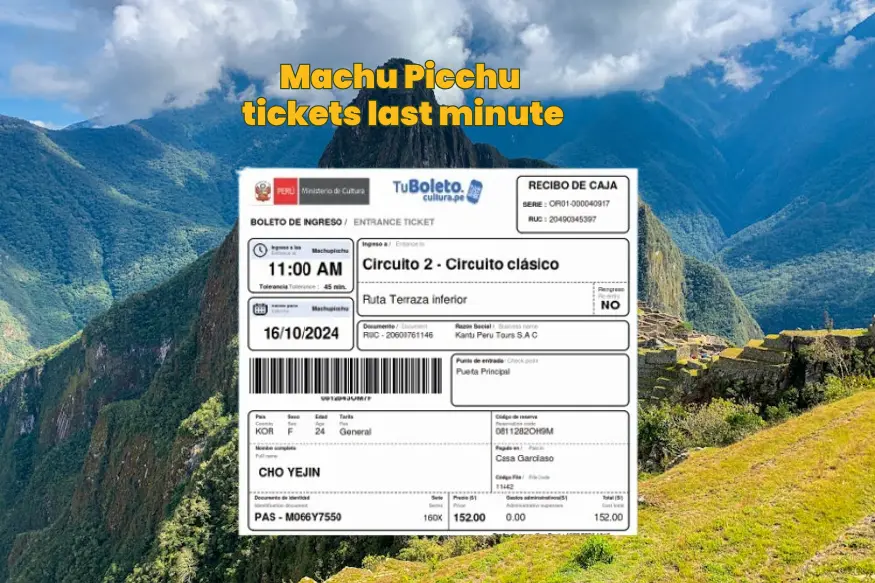
Last Minute Machu Picchu Tickets – How to buy entrances online?
Machu Picchu Tickets Last Minute: Complete Guide to Buying Entrance Tickets Late (2026 Updated)
Planning a last-minute trip to Peru and worried about finding Machu Picchu tickets last minute? You’re not alone. Millions of travelers dream of visiting the iconic Inca citadel, and while early booking is always ideal, it is still possible to get Machu Picchu tickets last minute—if you know where, when, and how to look.
This complete guide (around 2,000 words) explains everything: availability, best strategies, official availability rules, ticket types, how to secure last-minute entrances for sold-out dates, common mistakes, and expert tips travelers wish they knew earlier.
Let’s begin.
[tour_ad id=”4639″]
What “Machu Picchu Tickets Last Minute” Really Means
When travelers say “Machu Picchu tickets last minute,” they usually refer to buying tickets:
1–7 days before the visit, or
The same day, when desperation kicks in
Because Machu Picchu has limited daily capacity, many visitors worry that without advance booking they won’t get in. But in reality, ticket availability depends heavily on:
Month of travel
Ticket type
Visitor capacity
Flexibility with time slots
Whether you are willing to purchase directly on-site in Aguas Calientes
In many cases, last-minute tickets are absolutely possible. In others—especially for Huayna Picchu—options are extremely limited.
This guide will help you understand your real chances.
Understanding Machu Picchu’s Daily Capacity
Knowing capacity helps you judge whether last-minute tickets will be available.
Inca Trail (2D or 4D): limited permits, must book months in advance
For last-minute trips, your best chances are the Llaqta General ticket.
Huayna Picchu, however, is almost always sold out weeks or months ahead.
When Last Minute Machu Picchu Tickets Are Impossible
There are times when buying Machu Picchu tickets last minute is very difficult:
June, July, August (peak season)
National holidays in Peru (July 28–29)
Easter week (Semana Santa)
Christmas and New Year holidays
If you’re traveling during these dates, flexibility is essential—especially with time slots and ticket types.
When Last Minute Tickets Are Easy to Get
You will almost always find Machu Picchu last-minute availability during:
January, February, March (rainy season)
First half of December
Late October – November
Early April
These months see fewer visitors, so last-minute purchases are usually possible.
Where to Buy Machu Picchu Tickets Last Minute (Official Sources Only)
1. Online on the Official Gobierno Website
This is the only official platform for government-issued tickets.
Pros:
Cheapest option
Instant confirmation
Shows real-time availability
Cons:
Payment sometimes glitches
Website often overloaded
Not user-friendly on mobile
Frequently down for maintenance
Even if dates look sold out, visit multiple times a day—cancellations refresh automatically.
2. In Person in Aguas Calientes (Machu Picchu Town)
If the website shows “sold out,” this is your strongest last-minute option.
The official ticket office here has:
Physical tickets
A separate pool of allocations
Same-day & next-day availability
Many travelers who believed “everything was sold out” ended up finding tickets here in minutes.
Important: Go early—lines form around 5:00–6:00 AM in high season.
3. In Person in Cusco (Ministry of Culture Offices)
Located on Calle Garcilaso near the Plaza Regocijo.
Best for:
Next-day tickets
Changes in schedule
Avoiding the chaos of Aguas Calientes
Still, Aguas Calientes usually has more last-minute availability.
4. Through Licensed Travel Agencies
If the website is down or you’re out of Peru, agencies often still find last-minute options.
Benefits:
They check availability constantly
They know when ticket batches refresh
They can secure time slots you might miss
However, prices are higher due to service fees.
How to Buy Machu Picchu Tickets Last Minute: Step-by-Step
Step 1: Check the Official Website First
Choose your ticket type & date. If it shows availability—buy immediately.
Step 2: Be Flexible With Time Slots
The main reason people miss last-minute tickets is they only want:
Morning 6–7 AM entry
Perfect lighting hours
Last-minute strategy requires accepting any available slot.
Step 3: Try Changing Ticket Type
Examples:
If Huayna Picchu is sold out → try Huchuy Picchu
If Mountain is sold out → try Llaqta General
If Llaqta General is sold out → check “Circuito 4 + Huchuy Picchu”
Flexibility is the #1 advantage in last-minute trips.
Step 4: If Website Shows “Sold Out” → Go to Aguas Calientes Office
Same-day or next-day tickets often appear here, especially for General entry.
Step 5: Ask Your Hotel in Aguas Calientes
Hotels often check availability earlier than visitors—they know patterns and can send staff to the ticket office.
Types of Machu Picchu Last Minute Tickets (And Which Are Best)
1. Llaqta General (Classic Machu Picchu Visit)
Best chance for last-minute booking. Allows access to:
Main temples
Guardian House
Upper terraces
Main viewpoints
Highly recommended if traveling last minute.
2. Huayna Picchu Last Minute Tickets
Extremely difficult. These sell out 2–3 months in advance.
Only try last-minute if:
Traveling in February
Or checking repeatedly online
Or physically going to Aguas Calientes office
Chances: LOW
3. Montaña Machu Picchu Last Minute Tickets
Slightly better availability than Huayna Picchu, but still limited.
Chances: MEDIUM
4. Huchuy Picchu (Best Last Minute Alternative)
Great option when Huayna Picchu is sold out.
Easy hike Short climb Same panoramic views of the citadel
Chances: HIGH
5. Circuit-Only Tickets
In recent years, circuits were created to reduce crowding. Some circuits (3 & 4) remain available longer.
Good for last-minute — especially in shoulder season.
How to Increase Your Chances of Getting Machu Picchu Tickets Last Minute
✔ Refresh the official website multiple times per day
Cancellations appear randomly.
✔ Use a laptop, not your phone
The website works better on desktop.
✔ Avoid peak time slots (6 AM – 9 AM)
Choose:
1 PM
2 PM
3 PM
Afternoon times almost never sell out completely.
✔ Check alternative ticket types
Many travelers only look for “Circuit 1”—you can enter Machu Picchu with other circuits too.
✔ Go straight to the ticket office in Aguas Calientes
This is the single most effective last-minute solution.
✔ Travel outside peak season
January, February, March, November, and early December are the best for last-minute purchases.
Can You Buy Machu Picchu Tickets the Same Day?
Yes, same-day tickets are possible, but only at the Aguas Calientes office, and only for:
General circuits
Huchuy Picchu
Afternoon slots
Not possible same day for:
Huayna Picchu
Montaña
Morning prime hours during peak season
If your visit date is today, go to the ticket office at 5–6 AM.
Last Minute Options When Machu Picchu Is Fully Booked
If absolutely nothing is available for your date online, you still have options:
1. Change the Day (Go Tomorrow)
Most travelers spend 1–2 nights in Aguas Calientes, giving you time to secure a ticket.
2. Choose an Afternoon Solt
These are the last to sell out.
3. Buy Huchuy Picchu Instead
It’s the best alternative and often available last minute.
4. Use an Authorized Travel Agency
Agencies often manage ticket blocks or know when fresh batches drop.
5. Switch Your Itinerary
Example:
Day 1: Aguas Calientes town / Hot springs
Day 2: Machu Picchu
Day 3: Return to Cusco
Flexibility increases chances dramatically.
Common Mistakes When Trying to Buy Machu Picchu Tickets Last Minute
Avoid these errors:
❌ Only checking once
Availability changes constantly.
❌ Only searching for morning entry
Afternoons often have space.
❌ Expecting Huayna Picchu last minute
Very unrealistic in high season.
❌ Arriving directly to the ruins without a ticket
You cannot purchase at the Machu Picchu entrance gate.
❌ Waiting until arriving in Cusco to check availability
By then, some dates may already be gone.
What to Do If Machu Picchu Tickets Sell Out Completely
Although rare, during peak season it can happen. If so, consider:
Visit Sacred Valley instead (Pisac, Ollantaytambo)
Visit Humantay Lake or Rainbow Mountain
Choose alternative archeological sites in Cusco
Return to Aguas Calientes the following day
Most travelers eventually find tickets by waiting 24 hours and trying again.
Tips for Visiting Machu Picchu After Buying Last Minute Tickets
Stay in Aguas Calientes the night before
Go early to catch your scheduled bus
Drink water and avoid alcohol the day before
Bring printed or digital copies of your ticket & passport
Arrive 20–30 minutes before your time slot
Remember, entry times are strict and late arrivals may be denied.
FAQ About Machu Picchu Tickets Last Minute
Can I buy tickets at the Machu Picchu entrance?
No. Tickets are not sold at the entrance gate.
Is it safe to buy last-minute tickets in Aguas Calientes?
Yes—only at the official Ministry of Culture office.
Are last-minute tickets more expensive?
Official prices remain the same; agencies may charge service fees.
Can I change the date or time after buying a last-minute ticket?
In most cases, no—tickets are non-refundable and non-changeable.
Is it possible to get Huayna Picchu tickets last minute?
Very difficult. Try Huchuy Picchu instead.
Final Recommendations for Getting Machu Picchu Tickets Last Minute
Be flexible with your schedule
Try buying in Aguas Calientes for best last-minute results
Choose afternoon times
Consider alternative circuits
Travel outside peak season if possible
Check the official website frequently
With the right strategy, even last-minute travelers can successfully visit Machu Picchu without stress.
If deseas, puedo crear también el mejor meta title y meta description para esta palabra clave o una versión
Last-Minute Train Tickets to Machu Picchu
You must book transportation once you’ve secured your Machu Picchu entrance ticket. Machu Picchu is located near Aguas Calientes, a town reachable by train. Here’s what you need to know about last-minute train tickets: However, Happy Gringo Tours can do everything for you!
Train Companies: The two leading train operators are PeruRail and IncaRail. Both offer daily services to and from Ollantaytambo or Cusco to Aguas Calientes town.
Booking Train Tickets: You can purchase train tickets online, but for last-minute bookings, visit the train station in Cusco or Ollantaytambo. Train tickets often sell out quickly, especially during high season, so book as soon as you know your travel dates.
Train Ticket Costs: Prices vary based on the train class and service you choose. Last-minute tickets might be more expensive, so be prepared for potential surcharges.
Bus Tickets to Machu Picchu
From Aguas Calientes, you’ll need a bus to reach the entrance of Machu Picchu. Here’s how to get last-minute bus tickets:
Buy in Advance or on Arrival: You can buy bus tickets at the station in Aguas Calientes the day before or the same morning as your visit. The earlier you go, the better, especially in high season when lines can be extended.
Ticket Cost: The round-trip bus ticket costs about $24 for adults, but you can also hike the route if you prefer to save money and enjoy the scenic walk (about 1.5 hours uphill).
Accommodation in Cusco or Aguas Calientes
If you’re visiting Machu Picchu at the last minute, finding a hotel can be challenging, especially in the high season.
Hotel in Cusco or Aguas Calientes: If you’re staying in Cusco, consider taking an early morning train to Aguas Calientes. For a more relaxed trip, stay overnight in Aguas Calientes. Several budget and mid-range hotels are available, but book them in advance whenever possible.
Booking Last-Minute: Use hotel booking platforms or check with hotels upon arrival for available rooms. Many accommodations may offer last-minute discounts, so it’s worth inquiring.
Is Visiting Machu Picchu Last Minute Worth It?
Absolutely! While planning is ideal, a spontaneous trip to Machu Picchu can still be incredible. You’ll need to be flexible and patient, but with the proper preparation, you’ll experience the magic of this ancient Inca citadel.
Labor tax system used by the Incas
The Inca Empire, a civilization that once thrived in the rugged Andean mountains, was a marvel of ancient ingenuity. Its vast expanse, intricate infrastructure, and complex societal structures were all underpinned by a unique economic system. At the heart of this system was the mita, a labor tax system that fueled the empire’s growth and prosperity.
The mita was more than just a tax. It was a form of public service, a societal obligation that bound the Inca people together. Every able-bodied individual was expected to contribute their labor to the state. This labor was not given freely, but rather, it was a form of tribute, a duty owed to the Sapa Inca, the divine ruler of the empire.
The Inca did not use money. Instead, they relied on the mita system to mobilize labor for public works projects. From the construction of their impressive road network to the cultivation of their terraced farms, the fruits of the mita system were visible across the empire.
But the mita was not just about labor. It was a tool for social integration, a means of assimilating diverse ethnic groups into the Inca state. It was a system that fostered a sense of communal responsibility and unity, reinforcing the social hierarchy and the divine authority of the Sapa Inca.
The mita system was also a testament to the Inca’s administrative prowess. Managing the labor contributions of an empire that stretched across thousands of miles required a sophisticated bureaucracy. The Inca’s ability to effectively organize and mobilize their labor force was a key factor in their empire’s success.
Mita System: A Silent Force Behind Inca Greatness
However, the mita system was not without its challenges. It was a system that required a delicate balance, ensuring that the labor demands of the state did not overburden the people. It was a system that had to adapt to the diverse geographies and climates of the empire, from the arid coastal plains to the high mountain valleys.
The legacy of the mita system is still visible today. From the remnants of the Inca’s grand infrastructure to the enduring practices in Andean communities, the influence of the mita system continues to resonate. It serves as a testament to the Inca’s innovative approach to labor organization and their ability to sustain a vast empire without a monetary system.
In this article, we will delve deeper into the intricacies of the mita system. We will explore its historical context, its operation, and its impact on the Inca civilization. We will also examine its legacy and its relevance to modern economic systems. Join us on this journey into the heart of the Inca Empire, as we unravel the mysteries of the mita, the labor tax system that powered an ancient civilization.
The Inca Empire: A Brief Overview
The Inca Empire was a marvel in pre-Columbian America, extending across vast terrains. From Ecuador to Chile, its territories spanned numerous ecosystems, showcasing the empire’s adaptability and organizational skills. Founded in the early 15th century, the empire quickly rose to prominence under the leadership of visionary rulers like Pachacuti.
The administrative center of this vast empire was Cusco, strategically nestled in Peru’s Andes. Cusco served as a hub, directing the intricate governance of the four suyus, or quarters, which comprised the empire. Each suyu was a microcosm of the empire’s diversity, contributing to the Inca’s strength.
The Inca ruler, known as the Sapa Inca, wielded absolute power and was revered as a god. Under his rule, the empire thrived through a blend of diplomacy, military might, and a keen eye for social integration. Conquered peoples were offered assimilation, which often required adopting Quechua, the Inca language.
This assimilation was pivotal to maintaining harmony across the empire’s territories. The Inca’s ability to weave distinct ethnic groups into a cohesive society was revolutionary. Their cultural practices and centralized authority ensured stability and unity among the regions.
Infrastructure was another hallmark of the Inca Empire. The extensive road system, Qhapaq Ñan, connected remote areas, facilitating trade, communication, and military mobilization. This network was crucial for the empire’s cohesion, symbolizing the Inca’s engineering prowess and strategic foresight. Through these roads, the mita system efficiently mobilized labor, enabling the Inca to undertake grand projects, solidifying their legacy in history.
Understanding the Mita: Labor Tax System Inca
The labor tax system used by the Inca, known as the mita, was revolutionary. It was a structured, organized way to harness human resources for imperial projects. Instead of monetary taxes, the Inca relied on a collective contribution of labor. Each community was obligated to provide a workforce, integrating their efforts toward the empire’s greater goals.
The system was unique, reflecting the Inca’s understanding of collective responsibility. Inca subjects worked on ambitious projects such as road construction and agricultural terraces. This collective effort was essential for the empire’s socio-economic advancement. The mita ensured essential services, supporting the state’s needs and addressing communal demands.
Workers were generally organized by their local communities, known as ayllus. Each community contributed laborers to fulfill mita obligations. This fostered a sense of unity and responsibility among the people. Duties could vary, as tasks depended on location, resources, and the season’s needs.
Key aspects of the mita system include:
Organized by ayllus, creating a collective labor force.
Used for public works like roads, terraces, and fortifications.
Tasks differed by region, climate, and available resources.
Contributed to the empire’s infrastructure and agricultural excellence.
Fostered cultural assimilation and social cohesion.
The mita was integral to the Inca’s economic system. Without a currency, the regime depended on reciprocal labor for state and communal projects. The legacy of the mita remains notable for its sophisticated organization and civic contribution.
Historical Context of the Mita System
The mita system’s roots lie in the traditions of Andean culture. Long before the Inca rose to power, Andean societies practiced labor exchange. This customary practice evolved into the mita, reflecting a societal understanding of shared responsibility.
During the Inca’s ascent, the mita formalized, becoming a state policy. Its implementation was a strategic move to bind the empire’s far-reaching territories. This policy allowed the Inca to engage various ethnic groups under a unified economic plan.
Under Inca rule, labor contributions became a standardized form of tribute. This helped maintain control over conquered regions and support infrastructural development. By incorporating mita, the empire could efficiently administer its vast domains.
Cultural harmony was another benefit of the mita system. As subjects participated, they absorbed Inca ideals and practices, promoting unity. The labor tax linked diverse communities, crafting a cohesive identity.
This widespread practice enhanced the Inca’s governance capabilities. The empire could mobilize labor swiftly, responding to environmental or military needs. Such readiness was vital for sustaining a vast and dynamic empire.
The enduring concept of mita illustrates the Inca’s mastery of logistics and societal integration. Through mita, they forged an impressive civilization that resonated deeply within Andean traditions.
How the Mita System Worked
The mita system operated on principles of organized labor distribution. Each community contributed workers to meet the state’s labor demands. This approach ensured that state projects always had ample manpower.
Communities were expected to send laborers for specific periods, rotating individuals to prevent exhaustion. This practice allowed the state to conduct projects year-round. The allocation of tasks was systematic, depending on location and resource availability.
Communication between regional leaders and the central administration ensured smooth operation. Leaders coordinated labor shifts and maintained a robust labor force pipeline. This facilitated the completion of complex projects seamlessly.
The mita was flexible, adapting to the empire’s needs. During agricultural seasons, labor focused on terraces and farming. In quieter times, the construction of infrastructure took precedence.
Transportation routes across the Andean highlands were a priority. Mita laborers built and maintained roads that connected remote corners of the empire, fostering trade and communication.
Military campaigns also utilized mita labor. During conflicts, workers could be conscripted to support logistical efforts. This enhanced the empire’s ability to respond swiftly to threats.
Overall, the mita’s effectiveness lay in its structure, adaptability, and ability to harness communal commitment. The Inca managed to sustain prosperity through a disciplined and organized approach.
Organization and Logistics
The organization of the mita was critical to its success. The empire relied on a hierarchical system to delegate responsibilities. Local leaders played a key role in organizing labor contributions from their communities.
These leaders ensured that workers rotated frequently, maintaining a healthy and capable workforce. Such a strategy prevented exhaustion while maximizing productivity. This well-orchestrated flow of labor highlighted the Inca’s administrative acumen.
Efficient record-keeping was another essential facet. The Inca utilized quipu, a system of knotted strings, for managing labor data. These devices recorded contributions, ensuring equitable distribution of work.
Logistics were equally vital for coordinating distant projects. The vast road network facilitated mobility, allowing rapid transportation of laborers and resources. This infrastructure supported logistical efficiency and operational flexibility.
Regional diversity required careful planning. The Inca adjusted labor assignments based on geographical challenges and resource availability. This adaptability showcased the empire’s ability to manage a complex socio-economic network.
The organizational prowess of the mita exemplifies the Inca’s understanding of human and natural resources. Their skills in managing logistical challenges allowed the mita to function seamlessly across a vast empire.
Types of Labor and Projects
The mita encompassed diverse projects reflecting the empire’s expansive needs. Each region contributed to tasks that suited local specialties and demands.
Primary projects included:
Agricultural Development: Mita labor advanced terracing techniques, optimizing crop production in the Andean highlands.
Road Construction and Maintenance: The creation and upkeep of an extensive road system was vital for trade and military logistics.
Construction of Public Buildings: Laborers built administrative and ceremonial structures, asserting Inca power and cultural influence.
Mining Operations: Workers extracted valuable minerals, fueling the empire’s trade and wealth.
Military Support: Mita laborers supported campaigns, maintaining supply lines and constructing fortifications.
Agricultural labor focused on constructing terraces and irrigation systems, which revolutionized farming practices. This allowed sustainable production, crucial for feeding the growing population.
Roads and infrastructure connected the empire, facilitating economic integration. Without a centralized monetary system, these routes were essential for exchanging goods and labor.
Public buildings symbolized the Inca’s architectural prowess. Workers contributed to constructing Cusco’s Sacsayhuamán and Machu Picchu. Such feats underscored the empire’s advanced engineering skills.
Mining was another critical area. Laborers worked in regions like Potosí, extracting silver and other valuable minerals. These resources supported trade networks and the Inca’s ceremonial life.
Military campaigns relied on mita labor, ensuring logistical support and strategic defenses. The versatility of the mita allowed for multifaceted contributions to the empire’s success. Such diverse projects underscore the system’s adaptability to various socio-economic needs and challenges.
Compensation and Obligations
In the mita system, laborers were compensated through sustenance rather than currency. The Inca valued reciprocal relationships, providing food, clothing, and shelter for their work. This ensured that workers’ basic needs were met, fostering loyalty to the state.
The system was seen as a civic duty, with a focus on communal welfare. Each member of society contributed to projects that benefited their regions as well as the entire empire. By sharing these responsibilities, Inca society maintained stability and cohesion.
While labor was mandatory, obligations were balanced with workers’ welfare in mind. The rotation of individuals ensured no single group was overburdened. This communal approach prevented exploitation and maintained high morale.
Labor expectations varied, tailored to regional and seasonal demands. Typically, a laborer’s time was split between personal and state obligations, offering a sense of balance. Such flexibility demonstrated the Inca’s understanding of socio-economic dynamics.
Despite the absence of monetary compensation, the mita fostered a strong sense of duty and honor. Workers participated willingly, knowing their efforts contributed to the empire’s prosperity and integrity. This non-monetary system was innovative, emphasizing the Inca’s commitment to collective well-being.
The Social and Economic Impact of Mita
The mita system profoundly shaped the Inca Empire’s social and economic landscape. It was a cornerstone for integrating diverse communities under a single cohesive state. The system bound people by common goals, promoting unity across the empire’s vast regions.
Economically, the mita circumvented the need for currency, as labor acted as a valuable commodity. This allowed the Inca to amass resources efficiently, supporting large-scale projects like roads, fortresses, and agricultural terraces. The empire thrived by optimizing its human capital without monetary exchanges.
The collective labor efforts fostered a sense of pride and ownership among workers. Each community saw tangible benefits from their contributions, reinforcing loyalty to the state. Through mita, regional differences merged into a unified economic force, enhancing the empire’s stability.
Social cohesion was further bolstered by shared obligations under the mita. It reinforced the principle of reciprocal aid, where communities supported each other in times of need. This interconnectedness was vital in an empire susceptible to environmental and political shifts.
The mita system represented an ancient form of social security, ensuring all members participated in and benefited from the commonwealth. Such participation instilled a sense of duty while providing a safety net in uncertain times. The system’s design reflected the Inca’s prioritization of communal well-being.
By institutionalizing shared labor, the mita fostered a powerful sense of identity and resilience among subjects. Its impact was lasting, having created a legacy of social unity and economic vigor that served the Inca Empire well.
Integration and Cultural Assimilation
The mita system was instrumental in integrating various ethnic groups within the Inca Empire. Through shared labor projects, distinct communities were brought together, fostering mutual understanding and cooperation. This helped reduce cultural barriers among the empire’s diverse populations.
Participation in mita activities exposed individuals to Inca customs and language, particularly Quechua. It served as a channel for cultural assimilation, as workers adopted the dominant cultural norms while retaining their unique identities. This blend enriched the imperial culture, binding people under a unified identity.
Labor contributions often involved movement across regions, allowing individuals to experience different parts of the empire. This mobility broadened horizons and encouraged a sense of belonging to something larger. It was a subtle yet effective means of weaving a complex social fabric.
The Inca wisely used the mita to create a shared experience among their subjects. This inclusive approach helped maintain order and stability across vast territories. Social integration through labor laid the groundwork for a strong, united empire capable of withstanding external pressures.
Redistribution of Resources and Labor
A crucial aspect of the mita system was its ability to redistribute resources and labor efficiently across the Inca Empire. By mobilizing a communal workforce, the Inca ensured that all regions contributed to and benefited from state projects. This practice enhanced regional equality and sustainability.
The system allowed resource-rich areas to support less-fortunate regions, creating a balanced approach to development. Surplus goods generated by labor in fertile areas were shared with those facing scarcity. Such redistribution reduced disparities and enhanced overall prosperity.
Furthermore, the flexibility of the mita meant that labor could be redirected in response to specific needs. During emergencies, communities could quickly allocate workers to address issues like natural disasters or construction demands. This adaptability ensured that the empire could respond to challenges swiftly.
Central coordination of labor distribution enabled the efficient use of resources, minimizing waste and redundancy. It preserved ecological balance, as the Inca managed resources carefully to prevent overexploitation. The mita’s focus on equitable distribution was fundamental to its success and the empire’s endurance.
By leveraging communal labor, the Inca achieved impressive feats without depleting any single region’s assets. This strategic allocation of human and material resources played a significant role in maintaining the empire’s strength and longevity.
The Mita System’s Role in Inca Infrastructure
The mita system was pivotal in the development of the Inca Empire’s remarkable infrastructure. It facilitated the construction and maintenance of extensive networks that connected the vast empire. This interconnectedness was critical for both administration and trade.
Laborers under the mita system built roads, fortresses, and storage facilities. These projects were essential for the mobility of people, goods, and information. Without monetary transactions, labor stood as the currency that propelled such immense endeavors.
The sophisticated infrastructure supported the Inca’s military prowess. Strategic fortifications enabled rapid deployment of troops during conflicts. The efficiency of these structures reflected the precision of their builders, all thanks to coordinated labor efforts.
Communication across different regions relied on a well-established road network. The Inca developed a system of messengers who traveled these roads, bearing vital news and edicts. This rapid communication ensured cohesive governance throughout the empire.
Public works like bridges and terraces showcased the empire’s commitment to unifying diverse landscapes. The labor tax system, by mobilizing the workforce, facilitated the adaptation and enhancement of the natural environment for practical use. This harmony between man and nature stands as a testament to Inca ingenuity.
Through mita, the Inca transformed their environment to suit their needs. A well-structured infrastructure not only connected far-flung regions but also integrated them into a single, thriving civilization. The contributions of mita laborers were instrumental in making this vision a reality.
Construction of the Qhapaq Ñan and Other Feats
One of the most remarkable achievements facilitated by the mita system was the construction of the Qhapaq Ñan. This expansive network of roads spanned the Inca Empire, covering varied and challenging terrains. It enabled efficient administrative control and facilitated trade across great distances.
Qhapaq Ñan was not just a road; it was a symbol of Inca power and organization. Built using mita labor, it demonstrated the empire’s ability to manage and mobilize its workforce effectively. Each stone placed was the result of coordinated communal effort.
Construction of this infrastructural marvel required skills in engineering and logistics. Workers collaborated to overcome geographical challenges, such as rivers and mountains. This required advanced planning and precise execution, highlighting the labor force’s expertise.
In addition to roads, the Inca used mita labor for other construction feats. Notable structures include the majestic cities of Machu Picchu and Sacsayhuamán. Each stone in these constructions testifies to the dedication and skill of laborers who shaped them with precision.
The integration of these projects into the empire’s expansion strategy underlines the mita’s strategic value. The roads and structures built through mita labor ensured resilience and longevity for the Inca’s dominion. The Qhapaq Ñan remains a lasting emblem of this enduring legacy.
Agricultural Advancements Through Mita Labor
The mita system also played a transformative role in agriculture across the Inca Empire. Through communal labor, the Inca developed innovative farming techniques suited to the Andean terrain. These advancements supported the empire’s sustainability and growth.
Terrace farming was a central innovation attributed to mita labor. Workers carved terraces into steep hillsides, expanding arable land in mountainous regions. This method enhanced soil quality and facilitated controlled irrigation, significantly boosting agricultural productivity.
Irrigation systems further complemented these efforts, constructed using collective labor. Channels and aqueducts redirected water to fields, ensuring a regular supply even in arid areas. Such systems reflected a deep understanding of the local environment.
In addition to increasing land productivity, laborers engaged in the diversification of crops. The Inca cultivated a wide variety of plants, including maize, potatoes, and quinoa. This diversification was crucial for food security across diverse ecological zones.
Storage infrastructure built by mita labor was another critical component. Well-organized storage facilities preserved surplus produce, enabling resource distribution during scarcity periods. This foresight and preparation were crucial for the empire’s resilience.
Through the mita system, the Inca harnessed communal efforts to revolutionize agriculture. Their techniques allowed them to feed a vast population and withstand environmental challenges. The agricultural legacy of the Inca persists, with terrace farming still evident in modern Andean landscapes.
The Mita System Under Spanish Rule
The arrival of Spanish conquistadors marked a drastic change for the Inca and their systems. One of the notable transformations was the adaptation of the mita system. The Spanish, recognizing its potential, modified it to serve their colonial interests.
Under Spanish rule, the mita was distorted into a more exploitative form. The focus shifted from community-oriented projects to mining operations, especially in silver mines. Potosí became infamous for its harsh conditions and heavy labor demands on indigenous workers.
The humane aspects of the original mita were lost. Workers were subjected to grueling conditions with little regard for their well-being. The focus was on maximizing extraction of resources rather than sustainable development.
Laborers were coerced into service, stripping away the reciprocity that once existed. This adjustment created severe hardships for Andean communities, affecting social structures and causing distress. The legacy of this exploitation lingered long after the colonial period ended.
The Spanish adaptation of the mita highlighted a stark departure from Inca values. It demonstrated how the system’s flexibility was manipulated for oppressive ends. The impact on indigenous populations was profound, altering lives and livelihoods.
Changes and Exploitation by the Conquistadors
The conquistadors imposed radical changes on the traditional mita system. What was once a structured form of communal duty turned into enforced servitude under Spanish oversight. The initial balance between labor and reward disappeared, replaced by exploitation.
Forced labor in the mines became a grim reality for many indigenous people. They faced perilous working conditions and long hours. The human cost was high, with numerous lives lost in the hazardous mining environments.
The Spanish were indifferent to the impact on local communities. They were driven by a desire to extract wealth and increase Spain’s riches. This focus led to practices that disregarded the welfare of the native populations.
The shift from agricultural and infrastructure projects to mining operations marked a significant change. It drained local resources and disrupted traditional livelihoods. This period of exploitation left a lasting scar on the Andean region, a poignant reminder of colonial greed and its destructive effects.
The Legacy of the Inca Mita System
The Inca mita system holds a distinct place in history with a legacy that continues to intrigue scholars. Although altered by Spanish conquest, its original principles shaped the management of labor and resources. This ancient system inspired discussions about economic organization in diverse societies.
The mita showcased early ideas akin to social welfare systems, focusing on community sustenance. It provided insights into managing economies without currency, relying on labor and resource exchanges. These elements offer a unique perspective on how ancient societies efficiently organized labor.
The resilience of the mita system, even during colonial exploitation, underscores its foundational impact on Andean culture. It continues to influence discussions on labor taxation and communal contribution. Thus, the mita system remains a fascinating topic for economists and anthropologists exploring non-monetary economies.
The systemic transformation under Spanish rule reflected its adaptability, albeit in more exploitative forms. Despite its darker periods, the mita represents an innovative approach to governance and labor distribution. This enduring impact is seen in cultural and economic practices today.
Influence on Modern Economic Systems
The mita system’s influence extends beyond historical studies, offering valuable insights for modern economic frameworks. Its emphasis on communal labor and resource sharing parallels contemporary ideas of public service. Observing the mita system provides lessons on resource redistribution and civic duty.
Though modern economies are currency-driven, the Inca system offers alternative perspectives on non-monetary contribution. It highlights the potential of cooperative labor as a developmental tool. Such insights encourage examination of labor dynamics in modern economies, emphasizing balance and collective welfare.
Incorporating community-driven approaches could enhance sustainability in today’s economic policies. The mita’s success in managing vast resources invites comparisons to current public works and welfare schemes. Its focus on equitable labor distribution inspires discussions on reducing economic disparities.
The Inca system also underscores the importance of adaptable economic models. Studying its application and evolution aids in shaping resilient policies. These principles align with modern goals of equitable growth and community-oriented development, making the mita’s lessons relevant even today.
Enduring Practices in Andean Communities
Despite the passage of time, echoes of the mita system resonate in contemporary Andean practices. Many communities continue to embrace communal labor traditions, drawing from ancient methods. These practices reflect the enduring value of collective effort and resource sharing.
Andean communities often participate in minga, a modern reflection of mita, emphasizing voluntary communal work. Such initiatives address community needs, echoing the original intent of the mita system. This sense of shared responsibility remains integral to local cultures and social structures.
Today, these practices cultivate community bonds and promote sustainable development. By engaging in collective projects, communities maintain cultural heritage and support their economies. The emphasis on cooperation and reciprocity showcases the lasting impact of the Inca system.
Furthermore, these enduring traditions provide invaluable lessons in resilience and adaptability. They highlight the strength found in unity and shared purpose, vital for overcoming social and economic challenges. Thus, the spirit of the mita lives on, fostering community cohesion in a modern context.
Conclusion: Reflecting on the Mita’s Historical Significance
The mita system was fundamental to the Inca Empire’s success and legacy. It showcased a sophisticated approach to labor organization. By requiring labor as a form of tribute, the Inca established efficient resource management across their vast empire. This system facilitated monumental infrastructure projects and agricultural advancements.
The Inca’s innovative approach to social and economic challenges remains an area of interest for historians and economists alike. The mita’s adaptability to different environments and needs underscores the empire’s strategic prowess. Its influence is evident in modern discussions around resource allocation and communal responsibility.
Despite its appropriation and exploitation under colonial rule, the mita’s core principles endured. It remains an enduring symbol of collective effort and foresight. The system’s ability to foster unity and productivity without monetary exchange highlights its timeless relevance.
Ultimately, the mita system reflects the Inca’s deep understanding of human and material resource management. Its historical impact continues to resonate, providing insights into balancing societal growth with equitable contributions. Today, the mita is a testament to the ingenuity of the Inca civilization.
The Mita’s Role in the Success of the Inca Civilization
The mita system was pivotal in maintaining the Inca Empire’s dominance. It coordinated labor to build an extensive network of roads and terraces. These projects were crucial for administrative efficiency and food security. By mobilizing their citizens for collective achievements, the Inca ensured sustained development.
Moreover, the mita facilitated integration by binding diverse groups into a unified empire. People from different regions engaged in shared projects, fostering a sense of belonging. This helped spread the Quechua language and culture, centralizing governance efforts across various territories.
Through the mita, the Inca demonstrated a profound ability to govern and expand their vast domains. The system’s effectiveness in harnessing labor contributed significantly to the empire’s enduring legacy. It exemplified how structured collective labor could underpin the success of a civilization.
Lessons from the Inca’s Labor Tax System
The mita system offers timeless lessons on resource management and communal labor. Its non-monetary approach exemplifies how economies can thrive through cooperation. This demonstrates potential for shared duties in achieving societal advancements, even in contemporary contexts.
The significance of communal contributions in the mita echoes in modern discussions on public service and civic duty. It highlights community engagement as a catalyst for developmental projects. This principle can inspire current efforts toward sustainable community-driven initiatives.
Importantly, the mita emphasizes adaptability to regional and cultural nuances. Tailoring systems to specific contexts can lead to success, a lesson applicable to modern economic strategies. The Inca’s ingenuity in workforce organization and resource stewardship remains relevant today, reflecting universal principles of shared human endeavor.
References and Further Reading
To explore the intricacies of the Inca’s labor tax system further, readers are encouraged to delve into scholarly articles and books focused on pre-Columbian history. Works that dissect the administrative and social systems of the Inca Empire provide valuable insights into how the mita system functioned.
Additionally, resources discussing the broader context of Andean cultures and economic systems can help enrich understanding. Such literature often includes diverse perspectives on the cultural and economic impacts of the mita, reflecting its significance in shaping Inca society and its enduring legacy in the Andes.
Machu Picchu in January
Visiting Machu Picchu in January offers a unique and mystical experience. With lush green mountains, shifting clouds, warm temperatures, and fewer crowds, this time of year reveals a different side of the Inca citadel—one that’s peaceful, dramatic, and deeply atmospheric. While January also brings frequent rain and fog, travelers who prepare properly can enjoy an unforgettable trip with beautiful landscapes and more flexibility compared to peak season.
This complete guide explains everything you need to know: weather patterns, what to expect each day, crowd levels, entrance circuits, train and transport conditions, packing recommendations, safety tips, and how to make the most of your visit during this rainy but stunning month.
What Is Machu Picchu Like in January?
January is one of the rainiest months in the Andes, yet Machu Picchu remains fully open and operational. Rain showers are common but usually come in waves—they rarely last all day. Clouds move quickly, revealing dramatic openings with incredible light, making January a favorite for photographers.
Travelers visiting this month will find:
Deep green vegetation and vibrant landscapes
Warm, humid weather
Cloudy mornings and clearer afternoons
Quieter pathways and less crowd pressure
Lower prices for accommodations and tours
Even with rain, Machu Picchu retains its magic—sometimes even more intensely than during the dry season.
Weather in Machu Picchu in January
Temperatures
Daytime: 18°C–22°C (64°F–72°F)
Nighttime: 10°C–13°C (50°F–55°F)
The combination of warm temperatures and high humidity makes the environment feel tropical.
Rainfall
January brings frequent rain, sometimes heavy.
Drizzles, short storms, and occasional downpours are normal.
Rain is more intense during early morning or late afternoon.
Despite this, long intervals with no rain are very common.
Humidity
Humidity levels range between 70% and 90%, creating a jungle-like atmosphere.
Cloud Coverage
Early mornings often bring fog
Clouds usually lift mid-morning
After rain, the air becomes sharp and clear—perfect for photos
Is January a Good Time to Visit Machu Picchu?
For many travelers, yes—as long as they understand the conditions. January is ideal for people who prioritize peace, nature, and affordability over perfect blue skies.
Pros of Visiting Machu Picchu in January
Fewer tourists: A calmer, more intimate atmosphere inside the ruins.
Greenest landscapes of the year: Mountains turn intensely lush and vibrant.
Lower prices: Hotels, trains, and tours often offer discounts.
More availability: Easier to secure last-minute tickets and train spaces.
Warm temperatures: Comfortable climate despite the rain.
Cons of Visiting Machu Picchu in January
Heavy and unpredictable rain
Foggy views, especially early in the morning
Possible train delays due to landslides or storms
Slippery paths and stone steps
More mosquitoes due to humidity
Crowd Levels at Machu Picchu in January
January is one of the quietest months to visit.
Morning entries (6–10 AM) still attract visitors, but nothing compared to June–August.
Afternoon entries (12–2 PM) are extremely calm.
Fewer lines at shuttle buses, train stations, and popular viewpoints.
For many travelers, this is one of the biggest advantages of visiting in January.
Machu Picchu Entrance Circuits in January
All entrance circuits remain open during this month.
Circuit 1 – Panoramic Upper Terrace
Great for wide panoramas, but fog is more common early in the morning.
Circuit 2 – Classic Route
The most complete and recommended circuit, January or not. Includes the main temples, terraces, plazas, and classic views.
Circuit 3 – Lower Part + Huayna Picchu
Better visibility in rainy season because it sits lower and fog clears earlier.
Circuit 4 – Lower Part + Huchuy Picchu
Shorter hiking option with fewer steep sections.
Are Huayna Picchu and Machu Picchu Mountain Open in January?
Yes, both require separate tickets and remain fully open.
Huayna Picchu
Very steep
Narrow pathways
Extremely slippery during rain
Fog may block views in the morning
Recommended only for physically prepared and confident hikers.
Machu Picchu Mountain
Longer but safer and wider
Great views when clouds lift
Very slippery when wet
Both hikes require good shoes and caution.
Train Travel to Machu Picchu in January
Trains operate normally during January, though weather can cause occasional delays.
What to Expect
More space and better prices than in high season
Some reduced speeds during storms
Possible schedule modifications if landslides occur (rare but possible)
The route remains safe and reliable overall
Booking trains 2–4 weeks in advance is recommended.
Morning vs. Afternoon Visit: Which Is Better in Machu Picchu in January?
Morning Visit (6–10 AM)
Pros
Beautiful mystical atmosphere
Cool temperatures
Clouds lifting slowly across the mountains
Cons
Fog may block classic viewpoints
Trails are slippery from overnight rain
Afternoon Visit (12–2 PM)
Pros
Fewer visitors
Fog usually clears
Better photo visibility
Cons
Higher chance of afternoon rain
Stronger humidity
Best recommendation for January: Entry between 9 AM and 12 PM—best visibility + moderate crowds + stable weather.
Photography in January
January lighting is unpredictable—but beautiful. Clouds move quickly, giving photographers multiple moods in minutes.
Tips for Better Photos
Capture ruins before, during, and after rain—colors change dramatically.
Use microfiber cloths to handle droplets.
Take advantage of cloud breaks; they are golden moments.
Fog can create magical, mystical effects around temples.
Best times: 9:30 AM – 12 PM, and after any rain shower.
Trekking to Machu Picchu in January
Inca Trail
Open but muddy and slippery. Still safe with proper gear.
Salkantay Trek
Not recommended—heavy rain, mud, storms, and snow near the pass.
Lares Trek
A better alternative in rainy season, focused on culture and lower altitudes.
Choquequirao & Ausangate
Dangerous during heavy rain; not recommended in January.
What to Pack for Machu Picchu in January
Clothing
Waterproof rain jacket or poncho
Waterproof hiking shoes
Quick-dry pants and shirts
Fleece or light jacket
Extra pair of dry socks
Gear
Backpack with rain cover
Insect repellent
Sunscreen even on cloudy days
Hat (sun + rain protection)
Reusable water bottle
Useful Extras
Hiking poles with rubber tips
Ziplock bags for electronics
Small towel
Extra T-shirt for after the tour
Safety Tips for January Travelers
Walk slowly—wet stones are very slippery.
Stick to marked paths at all times.
Avoid getting too close to terrace edges.
Protect phones and cameras from rain.
Carry a power bank (humidity drains batteries faster).
Bring cash in case card terminals lose connection during storms.
If your train is delayed, follow staff instructions calmly—they’re highly experienced with rainy season protocols.
Visiting Aguas Calientes (Machu Picchu Pueblo) in January
The town is fully operating and actually cozy during rainy months.
You will Experience:
Warm, humid tropical-like climate
Coffee shops perfect for drying off
Lower prices on hotels and massages
Open hot springs
Rain showers throughout the day
It’s a relaxing base before or after Machu Picchu.
How Far in Advance Should You Book for January?
January allows more flexibility than dry season months.
Machu Picchu entrance tickets: 2–4 weeks in advance
Huayna Picchu / Machu Picchu Mountain: 1–2 months in advance
Trains: 2–4 weeks
Hotels: 1–2 weeks
You can often find last-minute options, except for the mountain hikes.
Best Tips for Visiting Machu Picchu in January
Choose an entry between 9 AM and 12 PM for the best chance of clear views.
Wear waterproof, slip-resistant shoes—they make a huge difference.
Carry a poncho or rain jacket because rain is common and unpredictable.
Take photos throughout the visit, as clouds move quickly.
Bring dry clothes to change into after the tour.
Use a backpack rain cover to protect your belongings.
Book with experienced operators who know rainy-season logistics.
Stay one night in Aguas Calientes to reduce travel stress.
Check train status during heavy rain periods.
Protect electronics with waterproof bags or ziplocks.
Ollantaytambo Ruins: The Inca Town That Refused to Fade
A person steps onto a street paved with rounded stones – clear water runs in gutters carved from the same stones five centuries ago. The channels still work and people still live here. The place is Ollantaytambo, a town in Peru that never stopped being used since Inca times.
Many visitors leave the train, walk to the ruins and leave again. They pass the town itself plus miss the last complete Inca street plan on earth. Every block, every lane, every drainage slit remains where the original surveyors set it. The layout still guides foot traffic and rainwater exactly as planned.
The Inca chose this narrow valley mouth for two reasons – first, the spot commands the only sensible route from the high capital of Cusco down toward the Amazon. The steep slopes give a natural defence. A fortress rose on the cliffs, a temple rose higher still and the town filled the flat ground between.
Above the roofs, the Sun Temple sits on a ridge of pink granite. Each block weighs many tons but no mortar holds them together. The joints are so tight a razor blade will not slide in. Stonemasons cut the joints once, lifted the pieces with ramps but also ropes and locked them forever.
Mastering Your Visit: The Best Way to Reach Ollantaytambo and How Long to Stay
The city of Cusco lies behind you – your next step is to reach the Sacred Valley. To travel from Cusco to Ollantaytambo you must choose between price and comfort. Those are the usual ways
Colectivo (Shared Van): The most cost-effective choice (around $4 USD). You share the ride with locals and other travelers, departing only when the vehicle is full.
Private Taxi: Offers maximum comfort and the freedom to stop for photos along the mountain roads (around $40 USD).
Train: A premium, highly scenic route primarily used by travelers heading directly toward Machu Picchu ($50+ USD).
You must buy the Cusco Tourist Ticket(Boleto Turístico) before you enter. One pass opens every site in the region. Allow at least three hours for the ruins. This gives you time to walk the whole archaeological zone and then reach the old town market below.
The terraces climb in giant steps – a “climb-rest” plan helps – stop after every third level to look around – the pause lowers the risk of altitude sickness. When you stand on the top terrace you see the whole valley and you face the Sun Temple, where stones of fifty tons rest.
The Mystery of the Sun Temple’s 50-Ton Stones
At the highest point the Wall of the Six Monoliths waits – each slab is pink granite and weighs as much as four school buses. The rock did not come from this hill. Workers brought it from the Kachiqhata quarry on the far side of the valley. They crossed the river and pulled the stones up the same slope you just climbed.
Look closely at how these Sun Temple megalithic stone walls fit together. Look closely at those slender stone strips wedged between huge blocks. Craftsmen shaped each piece of ashlar so perfectly, mortar became unnecessary. Those narrow inserts act like shock absorbers when the ground shakes. Built to let heavy stones shift slightly then return, they prevent collapse during quakes.
Maneuvering such heavy materials into place highlights the sheer genius of Incan engineering. Scanning the bottom edges of the blocks, you will notice large, unpolished bumps sticking out of the smooth surface. These “protuberances” acted as built-in stone handles, allowing thousands of workers using thick ropes to lever the massive giants into perfect position before chiseling them flat.
This immense effort served a vital civic purpose rooted in the Temple of the Sun’s astronomical alignment. Lacking paper calendars, the Inca angled this structure to catch the exact first light of the winter solstice. This giant celestial clock signaled when to begin planting crops, a reminder that survival meant mastering the mountain landscape—a skill beautifully mirrored by the cascading agricultural steps directly below.
Engineering the Andes: How Incan Terraces Fed an Empire
Up top near the temple, those giant green stairs at Ollantaytambo seem built for enormous beings. Each platform rises fifteen feet, forming what’s known as Andenes – clever stone barriers shaped to handle sharp mountain angles. Though used now for crops stacked upward, their main role was support, holding rocky terrain firm against slips, yet giving farmers more ground to plant on.
The true genius of these structures lies hidden beneath the dirt. To engineer a flawless Incan agricultural terrace irrigation system that survived heavy seasonal rains, builders constructed each platform using three carefully planned layers:
Base: Massive boulders at the bottom let excess water drain quickly.
Middle: A thick band of sandy gravel filtered moisture and stopped mud from washing away.
Top: Rich topsoil, carried up from the valley floor, provided a fertile bed for crops.
This ingenious stratified design did more and managed water; it physically reshaped the weather. The tall stone faces absorbed the sun by day, emitting trapped heat at night to create warm microclimates that made it possible for delicate corn to thrive without fear of frost. By coupling this thermal engineering with a web of tunnels, designed to direct pure snowmelt from mountain tops through the town square, builders transformed Sacred Valley agriculture. Having established themselves with bumper harvests, their next task was storage and preservation, which brings us to climbing Pinkuylluna: how the Inca created high-altitude “fridges.”
Climbing Pinkuylluna: Why the Inca Built High-Altitude ‘Refrigerators’
High on Pinkuylluna’s rugged slopes, stone storehouses seem to balance against gravity itself. Though the climb tests your legs, reaching the Incan grain rooms costs nothing – no pass needed at all. Perched above, the land unfolds beneath you: patchwork fields stretch into mist while the old town lies neatly laid out just underfoot.
These high-altitude structures were not temples, but qollcas—massive agricultural storehouses. Unlike the perfectly polished, mortarless stones of the religious sites, these walls utilized rough fieldstones and clay to prioritize pure function. Builders positioned them high on the mountain to act as natural refrigerators. Chilly winds funneled through the narrow valley continuously cooled the buildings, naturally preserving surplus crops so the empire’s population could survive years of harsh droughts.
Guarding these precious supplies is a colossal face etched into the adjacent mountain rock, representing the creator deity Tunupa. Tracing his stern stone profile, it becomes obvious why the Inca viewed this rugged landscape as a divine fortress. That natural advantage would soon face a brutal test when a rebel emperor used these exact mountains to block European invaders.
The Battle of 1537: How Manco Inca Defeated the Spanish Cavalry
From out of nowhere, European forces stormed across the Andes, turning the once quiet spiritual site at Ollantaytambo into a stronghold overnight – shifting Peru’s fate. After that first wave of takeover, resistance sparked under Emperor Manco Inca, who broke away to form what became known as the Neo-Inca State. Because those high farming steps offered more than crops – they stood like giant barriers – he pulled back to this place. Standing below them today, you can easily imagine the impossibility of climbing these massive stone steps while defenders rained down boulders from the sky.
Water did the real work when it came to protection. Back in 1537, Spanish horsemen showed up ready for an easy win – only to step straight into a clever setup built in three brutal stages
The Confident Arrival: The Spanish rode onto the flat plains below the terraces, relying entirely on their horses for superior speed and power.
The Tactical Flooding: Using their mastery of the valley’s water channels, the Inca deliberately flooded the plain, turning the firm battlefield into an inescapable swamp.
The Desperate Retreat: Bogged down in deep mud, the paralyzed cavalry forced the exhausted conquistadors to flee under heavy fire.
Victory here marked a rare moment when native fighters fully pushed back against Spanish troops. Though the win stood strong, fresh enemy groups were expected soon after. Because of that risk, Manco Inca left the fortress behind, moving farther into dense forest cover. The trail once used for escape now guides travelers from Ollantaytambo toward Machu Picchu.
Your Roadmap from Ollantaytambo to Machu Picchu
You no longer just see ancient rubble; you see a masterclass in Inca engineering. When you transition toward Aguas Calientes, carry this perspective with you. The monumental terracing and precision masonry you witnessed here are the exact architectural foundations that made the famous citadel in the clouds possible.
Before leaving, double-check your Boleto Turístico to ensure you have explored all included Sacred Valley sites. Staying overnight here is a brilliant strategy, granting you quiet mornings free from heavy day-trip crowds. This peaceful pause also lets you effortlessly coordinate your morning train to Machu Picchu, located just down the road.
Take one last stroll through the village grid before departing. Look closer past the modern doorways to spot the traditional canchas—ancient communal courtyards where families still live together exactly as they did five centuries ago. The true magic of this valley isn’t just in the fortress towering above, but in the enduring Inca heartbeat still echoing beneath your feet.
Tips for Hiking the Inca Trail to Machu Picchu – How to prepare for hiking the Inca Trail
Marko Andinauta’s Hiking Story
INCA TRAIL
THE INCA TRAIL VIDEO TO MACHU PICCHU
WHAT IS THE INCA TRAIL?
The good thing is that it’s a lot shorter than you can expect at only 45 Kms or 26 miles. On the other hand; there is a significant chunk of which is 45 km up steep, narrow Andean mountain trails at altitude.
WHY IS IT SO FAMOUS & POPULAR HIKE?
Hiking the Inca Trail to Machu Picchu with a locally tour company, you won’t regret it.
WHO BUILT THE LEGENDARY INCA TRAIL?
BOOKING THE INCA TRAIL HIKE
WHAT ARE INCA TRAIL PERMITS & DOES HIKER NEED A GUIDE?
Marko recommends everyone who is interested to do the hiking to obtain the permits months in advance.
WHAT IS THE BEST TIME OF YEAR TO HIKE THE INCA TRAIL?
May to October (Dry Season).
Advantages
Disadvantages
Advantage
Disadvantage
DO TRAVELLERS NEED TO BOOK THE INCA TRAIL TOUR IN ADVANCE?
ARE THERE AGE RESTRICTIONS?
Marko Andinauta advice the following recommendations:
Not good for travelers with back problems
Not recommended for pregnant travelers
I do not recommend to hikers with heart problems or other serious medical conditions
All traveler children under 17 years old must be accompanied by an adult and we do not have age requirements
HOW MUCH DOES THE INCA TRAIL COST?
Recommendations
HOW EXACTLY IS THE INCA TRAIL FOOD?
Breakfast
Drinkable Water to Refill Up
Snacks
Lunch
Teatime or Happy Hour
Dinner
DOES HAPPY GRINGO TOURS PROVIDE DRINKABLE WATER ON THE INCA TRAIL?
PREPARE FOR HIKING THE INCA TRAIL
HOW FIT DOES HIKER NEED TO BE?
Also, you must be mentally prepared. It is just as very important as physical preparation when it comes to hiking the legendary Inca trail to conquer Machu Picchu.
WHAT DO YOU NEED TO PACK FOR THE INCA TRAIL?
WHAT IS THE INCA TRAIL ALTITUDE?
WHY IS IT CALLED DEAD WOMAN’S PASS?
DO YOU NEED SPECIAL INCA TRAIL INSURANCE?
HIKING THE GREAT INCA TRAIL
INCA TRAIL ROUTE AND MAP
Is Peru a good travel destination?
In this article, we’ll explore the many reasons why Peru is a good travel destination. Additionally, we’ll discuss some considerations to keep in mind when planning your trip. Peru has something to offer everyone, whether you’re an adventurer seeking thrilling outdoor experiences or a history buff fascinated by ancient civilizations.
Peru is the land of the ancient Inca civilization and the majestic Andes mountains. This country has captured the imaginations of travelers for centuries with its rich cultural heritage and stunning natural landscapes.
From Machu Picchu, one of the world’s most famous archaeological sites, to the vibrant city of Lima, Peruoffers a unique blend of history, culture, and natural beauty. However, with so many travel destinations around the world, one may wonder whether Peru is a good travel destination.
Peru’s cultural and historical attractions
Peru’s rich cultural and historical heritage make it a good travel destination. It’s particularly attractive to those interested in exploring the ancient civilizations that once thrived in the region. Machu Picchu, the most famous of Peru’s archaeological sites, is a must-see for anyone interested in Inca culture. The site’s stunning location on a mountaintop makes it one of the world’s most impressive feats of engineering. Additionally, its intricate stone architecture adds to its awe-inspiring beauty.
In addition to Machu Picchu, Peru is home to many other sites that offer a glimpse into the country’s fascinating history. Moreover, these sites provide a unique insight into Peru’s rich cultural heritage. The Nazca Lines, a series of enormous geoglyphs etched into the desert sands, are believed to have been created by the Nazca culture between 500 BCE and 500 CE. They offer a fascinating glimpse into ancient Peruvian civilization.
The city of Cusco, once the capital of the Inca empire, is now a bustling city with a unique blend of ancient and modern culture. Additionally, it’s a popular destination for travelers seeking to immerse themselves in Peruvian history and culture.
Peru’s modern culture is just as vibrant and fascinating as its ancient history. Lima, the country’s capital, is a good travel destination for foodies and nightlife enthusiasts. This is because of its world-renowned culinary scene and lively nightlife. The city’s historic center, a UNESCO World Heritage site, is also worth exploring for its beautiful architecture and rich history.
Peru’s cultural and historical attractions make it a good travel destination for anyone interested in exploring the ancient civilizations that once thrived in the region. Additionally, it’s a good destination for experiencing modern Peruvian culture.
Peru’s natural wonders
Peru’s natural wonders make it a good travel destination for those seeking to experience stunning landscapes and unique ecosystems. The country is home to the Andes mountain range, the world’s second-highest mountain range. Furthermore, it offers some of the most breathtaking scenery in South America. Trekking in the Andes is a popular activity for adventurous travelers, with options ranging from day hikes to multi-day expeditions.
Peru is also home to the Amazon rainforest, one of the most biodiverse regions on the planet. The Peruvian Amazon is an excellent destination for nature lovers. There are a range of activities available such as wildlife spotting, birdwatching, and exploring indigenous communities. The Tambopata National Reserve and the Manu Biosphere Reserve are two of the most popular areas to visit in the Peruvian Amazon.
Another natural wonder that makes Peru a good travel destination is Lake Titicaca, the highest navigable lake in the world. Located on the border between Peru and Bolivia, the lake is surrounded by stunning scenery. Additionally, traditional Andean communities that have maintained their way of life for centuries can be found in the area. Visitors can take boat tours of the lake and visit the islands, including the famous Uros floating islands.
Peru’s natural wonders offer a unique and unforgettable travel experience. This is especially true for those seeking to explore stunning landscapes and unique ecosystems. From the Andes to the Amazon and beyond, Peru is a good travel destination for nature lovers and adventure seekers alike.
Safety, budgeting, and navigating Peru’s tourism industry
While Peru is a good travel destination with a wealth of cultural and natural attractions, it’s important to keep some practical considerations in mind. This will help you plan your trip effectively and make the most of your experience. Safety is a top concern for many travelers, and Peru is no exception. It’s always a good idea to research the safety situation in the areas you plan to visit. Additionally, taking precautions accordingly can help ensure a safe and enjoyable trip. It’s also important to be aware of common scams and take steps to protect your belongings while traveling.
Budgeting is another important consideration when planning a trip to Peru. While the country is generally affordable compared to many other travel destinations, costs can vary widely depending on the type of travel you’re planning. For example, hiking in Peru can be a great but expensive way to see the country’s stunning landscapes. It’s important to do your research and plan your trip accordingly to make sure you’re staying within your budget.
Navigating Peru’s tourism industry can also be a challenge for travelers. While there are many reputable tour operators and accommodations in the country, there are also many scams and less-than-reputable businesses to be aware of. It’s important to read reviews, do your research, and book with reputable companies to ensure a safe and enjoyable trip.
With some practical considerations in mind, Peru can be a good travel destination for those seeking adventure, culture, and natural beauty. Whether you’re planning a trek to Machu Picchu or exploring the Peruvian Amazon, taking the time to plan your trip carefully can help ensure a safe and memorable experience.