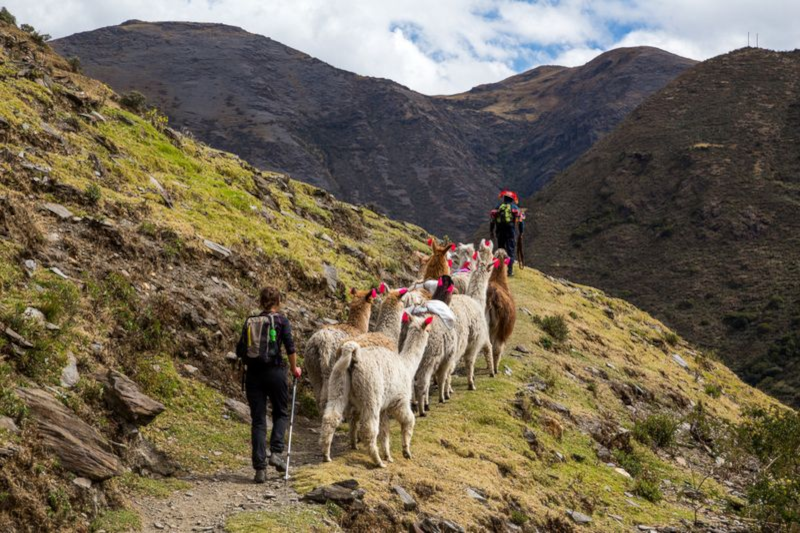
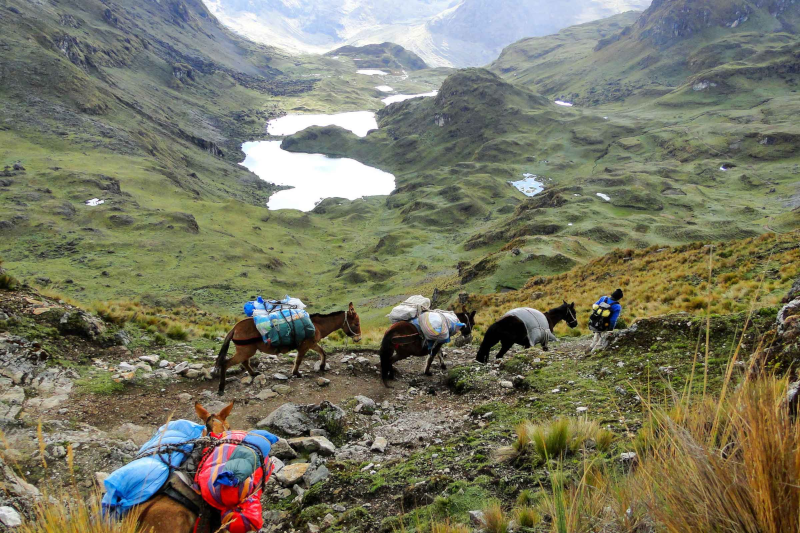
Lares Trek is the third most preferred trail to Machu Picchu, and it is available in a variety of lengths, ranging from a 3-day trip to a 5-day trek. Every one of these Lares Treksterminates in the Sacred Valley of Incas.
From Ollantaytambo, travelers board trains to Aguas Calientes, the gateway to Machu Picchu, rather than arriving by the Sun Gate. We’ve put together a list of important questions to ask if you ever go on this trek, so let’s get started.
What is the Lares Trek?
One of the numerous choices for going to Machu Picchu is the Lares Trek. The trek does not, however, end at Machu Picchu; nevertheless, every Lares Trek includes transportation from Huaran to Ollantaytambo. Here you will board a train to Aguas Calientes.
Even though the walk may be completed in five days, most people prefer to do it in four. You’re just trekking for three days out of the four. The fourth day is spent in Machu Picchu, the Inca’s Lost City. In terms of actual path, the Lares Trek has several versions, the majority of which end in Ollantaytambo.
Why the Lares Trek?
The Ultimate Heritage Trek is the Lares Trek. On the Lares Trek, you will not only have the opportunity to hike a section of the Inca Trail structure, but you will also have the opportunity to meet people living in remote Andean settlements.
It adds depth and meaning to your adventure, as well as to your trip to Machu Picchu. Another advantage of the Lares Trek is that no hiking permits are required. You only need a ticket to enter Machu Picchu, which isn’t as difficult as getting approvals for the traditional Inca Trail.
Here are some FAQs to clear your doubts:
What is the difficulty level of the Lares Trek?
The Lares Trek is a moderately difficult hike. Although it is not a demanding trek, some people may be affected by the elevation. While in Peru, we recommend obtaining a wooden stick to aid with balancing and lessen the pressure on your legs. We urge that you refrain from using a walking stick with a metal point since this can affect the sensitive ecosystem along the route.
What is the duration of the trek?
The Lares Trek is 33 kilometers (20.5 miles) long, with an estimated time of 17 hours divided over three days based on which campgrounds are chosen.
Is the altitude sickness problem real?
Who will be influenced by elevation is hard to anticipate. Your genetic composition determines your capacity to adjust to high elevation and has nothing to do with fitness or wellness.
Most folks have no difficulties if they took the time to properly acclimate. Most people can get by with a whole day in Cusco (3249m), taking it slow and drinking lots of water.
What is the temperature?
Because of the great altitude, it may get rather cold, particularly during the Andean season (May to September), where temperatures can fall below 0 degrees (Celsius) at nighttime.
We advise keeping warm clothes and a thick backpack in other seasons of the year because it can be cold. In Cuzco, you may buy hand-woven winter coats that are warm, affordable, and manufactured locally.
What is the availability of the water?
We recommend bringing refillable bottles for efficiency and to keep the environment clean. You can fill them at various points.
The Inca Trail is famous worldwide as one of the most iconic trekking routes in South America. It is a 26-mile (43-kilometer) trail that leads hikers through breathtaking Andean landscapes, dense jungles, and ancient Inca ruins, all the way to the mystical citadel of Machu Picchu.
The Inca Trail is famous for several reasons
The Inca Trail is famous for many reasons. Firstly, it is a remarkable feat of engineering, constructed by the Incas over 500 years ago. The trail winds its way through the Andes. It reaches altitudes of over 13,000 feet (4,000 meters). Also, it features stunning stone staircases, tunnels, and bridges that were built to withstand the harsh mountain environment.
Also, the Inca Trail is famous for the spectacular scenery it offers. Hikers are treated to panoramic views of snow-capped mountains, lush valleys, and cascading waterfalls. Along the way, they pass through dense forests filled with exotic flora and fauna. They also come across ancient Inca ruins that provide a glimpse into the past.
Additionally, the Inca Trail is famous for its historical significance. The trail was originally built by the Incas to facilitate communication and trade within their vast empire. It was also used as a pilgrimage route to Machu Picchu, a sacred site that was believed to be the home of the gods.
Today, the Inca Trail is one of the most popular trekking destinations in the world. Every year, thousands of hikers from all over the globe embark on the journey to Machu Picchu, drawn by the trail’s natural beauty, historical significance, and the challenge of the hike itself.
Trekking this route is a once-in-a-lifetime experience
There are several different routes to Machu Picchu, but the Classic Inca Trail is the most popular and well-known. The trek usually takes four days and three nights, with hikers camping along the trail.
The first day of the hike is relatively easy, with a gradual climb through the Sacred Valley and along the Urubamba River. On the second day, hikers face the most challenging section of the trail, known as Dead Woman’s Pass. This is the highest point of the trek, reaching an altitude of 13,800 feet (4,200 meters).
The third day of the trek takes hikers through the cloud forest and past several Inca ruins, including the impressive site of Wiñay Wayna. On the final day of the trek, hikers wake up early to make the final push to Machu Picchu, arriving at the Sun Gate in time for sunrise.
The Inca Trail is famous for its stunning scenery and diverse ecosystems. Hikers pass through several distinct climate zones, from the high Andean peaks to the steamy jungles of the Amazon basin. Along the way, they encounter a wide variety of wildlife, including llamas, hummingbirds, and vizcachas.
Despite its popularity, the Inca Trail is not for the faint of heart. The trail is physically demanding, with steep ascents and descents, narrow pathways, and rugged terrain. Hikers need to be in good physical condition and should prepare for the altitude and climate.
Cultural significance of the trail
The Inca Trail is also famous for its cultural significance. Hiking the Inca Trail provides an opportunity to learn about the rich history and culture of the Incas, one of the most advanced civilizations of the pre-Columbian era. The Incas believed that the mountains, rivers, and natural features of the land were sacred. So, they incorporated these elements into their religious and cultural practices. Along the Inca Trail, hikers can see evidence of this belief in the many temples, shrines, and ceremonial sites that dot the landscape.
In recent years, concerns have been raised about the impact of tourism on the Inca Trail and Machu Picchu. The Peruvian government has taken steps to limit the number of hikers allowed on the trail each day, and to regulate the use of campsites and waste management. Hikers are encouraged to be responsible and respectful visitors, leaving no trace and following the principles of sustainable tourism.
The Inca Trail is famous for many reasons, from its stunning natural beauty to its historical and cultural significance. For adventurous travelers who are up for the challenge, the Inca Trail offers a once-in-a-lifetime experience that combines physical exertion, cultural exploration, and breathtaking scenery. Whether you’re a seasoned hiker or a first-time trekker, the Inca Trail is a journey that you won’t soon forget.
Machu Picchu Weather: A Guide for Travelers
Nestled in the Peruvian Andes, Machu Picchu beckons travelers worldwide. Its enigmatic ruins tell tales of a bygone era. Yet, its weather remains an unpredictable companion.
Understanding its climatic quirks is crucial for a memorable journey. Different seasons offer distinct experiences. This guide ensures you’re prepared, come rain or shine.
So, before packing your bags and lacing up those hiking boots, delve into this comprehensive overview. Let’s decode the meteorological mysteries of this ancient Incan citadel. Your adventure to Machu Picchu starts here.
Understanding the seasons: Machu Picchu’s climate year-round
Machu Picchu sits high in the Peruvian Andes. As such, its weather is a blend of subtropical highland conditions. This means fluctuating temperatures and varied rainfall.
From November to March, Machu Picchu witnesses its wet season. Rainfall is frequent, sometimes heavy, during these months. This can make certain pathways slippery and challenging.
However, the wet season offers vibrant green landscapes. The site looks fresh, with fewer crowds visiting. But travelers must tread with caution.
April to October marks the dry season. This period experiences cooler temperatures and minimal rainfall. It’s the most popular time to visit.
Most travelers planning the Inca Trail choose these months. Clear skies offer majestic panoramic views. However, it also means larger visitor numbers.
Machu Picchu weather in the dry season remains unpredictable. Nights can be chilly, so packing layers is essential. Daytime sees warmer temperatures, often requiring sun protection.
Always pack rain gear, regardless of the season. Machu Picchu weather can change suddenly, even in dry months. Waterproof boots and clothing are indispensable.
Remember, altitude affects temperatures significantly. The higher you go, the cooler it becomes. Keep this in mind when packing.
For those trekking, consider the terrain and duration. Your clothing should accommodate temperature swings. Especially when resting after an arduous hike.
Understanding Machu Picchu weather aids in a smoother trip. Preparation ensures comfort and safety. With this knowledge, your Machu Picchu journey will be unforgettable.
Packing for all conditions: Weather-ready tips for travelers
Machu Picchu’s allure draws thousands every year. However, its altitude and location make weather quite unpredictable. Preparing adequately ensures a pleasant visit.
Machu Picchu weather requires a layered approach. Pack lightweight, breathable clothes for sunny daytime hikes. For chillier evenings, carry warm, insulating layers.
Rain can surprise visitors at any time. Waterproof jackets are essential, even in the dry season. Packable designs are preferable for easy storage.
Sturdy, waterproof hiking boots serve dual purposes. They support ankles on uneven terrains and keep feet dry. These are crucial when hiking Machu Picchu Mountain.
Light rain can quickly turn heavy. Therefore, consider packing a rain poncho or cover. This protects both you and your backpack.
Sun protection is another key consideration. Machu Picchu weather often means strong sunlight. Carry a hat, sunglasses, and high SPF sunscreen.
Altitude can be challenging for many. Carry personal medication and remedies for altitude sickness. Staying hydrated also helps in acclimatization.
Always keep an eye on the Humantay Lake Weather forecast. If you’re extending your trip, it provides vital information. This ensures you’re equipped for diverse conditions.
When packing, think of mobility. Opt for lightweight backpacks with multiple compartments. It makes accessing essentials much easier.
Snacks and a reusable water bottle are must-haves. The former provides energy during long treks. The latter ensures hydration, reducing plastic waste.
Electronics, like cameras or phones, need protection. Waterproof cases or sealable bags work wonders. This ensures your devices survive sudden downpours.
Lastly, remember the importance of comfort. Your shoes should be well-worn before the journey. Blisters can quickly ruin any adventure.
Machu Picchu weather is part of its charm. Its unpredictability offers travelers diverse experiences. By packing wisely, you’re ready for any meteorological surprise.
Maximizing your visit: Weather-related dos and don’ts at Machu Picchu
Machu Picchu’s breathtaking beauty attracts travelers worldwide. Yet, its unpredictable weather requires visitors to be vigilant. Knowledge of dos and don’ts is essential.
Do:
Check weather forecasts regularly. This helps in planning your day efficiently.
Wear layered clothing. Temperatures fluctuate, so adjust layers as needed.
Use sunscreen. The high altitude intensifies UV rays, so protect your skin.
Stay hydrated. Drinking water combats altitude sickness and keeps you energized.
Carry a waterproof backpack. It keeps essentials safe during unexpected rain showers.
Wear sturdy, waterproof shoes. Slippery paths demand good traction and support.
Bring a hat and sunglasses. They shield you from both rain and sunlight.
Don’t:
Underestimate the rain. Even in dry seasons, showers can occur.
Overexert yourself. Altitude sickness is real; listen to your body.
Leave litter behind. Preserve the site’s beauty for future generations.
Ignore local advisories. They have the best insights into terrain and weather patterns.
Venture off designated paths. Stick to trails to ensure safety and prevent erosion.
Forget to capture memories. But ensure electronics are protected from the elements.
Machu Picchu is not just about the destination, but the journey. Its weather adds a unique touch to every visit. By following these guidelines, you ensure a smooth experience.
Finally, to truly immerse yourself, consider extending your trip. A Machu Picchu Tour One Day offers a glimpse of its majesty.
For a deeper dive into its wonders, opt for a Two Day Inca Trail to Machu Picchu. Both promise unforgettable experiences amidst awe-inspiring landscapes. Your adventure awaits!
Sacred Rock at Machu Picchu
The Sacred Rock at Machu Picchu is one of the most mysterious and spiritually charged monuments within the Inca citadel. While most visitors are drawn to its temples, terraces, and panoramic views, few truly understand the meaning behind this enigmatic stone that has stood silently for centuries.
This massive carved boulder is not just another archaeological feature — it embodies the profound spiritual connection that the Incas maintained with their natural surroundings. The Sacred Rock represents a union between architecture, geography, and cosmology, reminding us that for the Incas, the landscape itself was alive and sacred.
In this complete guide, we will explore its history, location, symbolism, and practical information for travelers who wish to visit and understand the Sacred Rock at Machu Picchu in depth.
What Is the Sacred Rock at Machu Picchu?
The Sacred Rock at Machu Picchu (known in Spanish as La Roca Sagrada) is an enormous monolith located in the northern sector of the Inca citadel, near the entrance to the Huayna Picchu Mountain. The stone measures approximately 7 meters (23 feet) wideand 3 meters (10 feet) high, and is set upon a carved platform surrounded by low stone walls.
At first glance, the Sacred Rock may seem like a simple large boulder. However, its deliberate shape, orientation, and positioning reveal its importance as a ritual and symbolic monument. The Incas did not carve stones randomly; they shaped them to align with the surrounding mountains, which they considered deities or apus.
It is widely believed that the upper outline of the Sacred Rock mirrors the silhouette of the mountain Yanantin, located directly behind it. This visual harmony between human craftsmanship and nature perfectly captures the Inca concept of sacred geography.
History and Origin of the Sacred Rock
Discovery and Early Research
The Sacred Rock at Machu Picchu was first documented in 1911 by Hiram Bingham, the American explorer credited with rediscovering Machu Picchu. In his field notes, Bingham referred to it as “a great ceremonial stone” and noted its unique location and orientation within the site.
Unlike the finely polished stones of temples such as the Temple of the Sun or the Intihuatana, the Sacred Rock is left mostly in its natural form — a clear sign that the Incas viewed it as a living part of the mountain rather than a man-made object.
The Inca Philosophy Behind Its Creation
The Incas believed that every element of nature had spiritual energy, known as camay. Mountains, rivers, rocks, and even wind were manifestations of divine forces. Stones such as the Sacred Rock were revered as wak’as — sacred objects that served as bridges between humans and the gods.
The Sacred Rock may have been carved and consecrated during the reign of Pachacútec, the visionary Inca emperor who ordered the construction of Machu Picchu around the mid-15th century. Archaeologists suggest that this area was part of a ceremonial route, where priests and pilgrims made offerings to honor the spirits of the mountains and the earth.
Location and How to Reach the Sacred Rock
Where Is the Sacred Rock Located in Machu Picchu?
The Sacred Rock stands in the northernmost section of the Machu Picchu citadel, close to the checkpoint for the Huayna Picchu Mountain trail. It is part of the Sacred Plaza area, an important religious and ceremonial zone within the Inca complex.
This location is not coincidental. The rock sits at the intersection of several energy lines and faces the mountain Yanantin, believed to be its spiritual counterpart. The Incas often positioned sacred stones to “reflect” the shape of nearby peaks, symbolically uniting heaven and earth.
Continue walking north along the Huayna Picchu access path.
After a few minutes, you will arrive at a small open area where the Sacred Rock at Machu Picchu rests, enclosed by low stone walls.
It takes around 20 to 25 minutes to reach the Sacred Rock from the entrance gate, depending on your pace and the visitor circuit you choose.
Cultural and Spiritual Importance of the Sacred Rock
A Portal Between Worlds
For the Incas, the Sacred Rock at Machu Picchu was more than a piece of geology — it was a spiritual portal. The Incas believed the rock served as a connection between the three levels of existence:
Hanan Pacha (the upper world) – the realm of gods and celestial beings.
Kay Pacha (the earthly world) – where humans and animals live.
Ukhu Pacha (the inner world) – associated with ancestors and the spirit of the earth.
By venerating the rock, priests and pilgrims sought balance between these realms, ensuring fertility, prosperity, and cosmic order.
The Alignment with Sacred Mountains
The Sacred Rock faces Mount Yanantin, one of the many peaks surrounding Machu Picchu. In Andean belief, mountains were living deities or apus, and this alignment symbolized communication between the sacred mountain and the people below.
Researchers have also observed that the rock’s orientation allows it to receive direct sunlight during certain times of the year, particularly around the solstices. This suggests that the site may have also served astronomical purposes, helping the Incas track seasonal changes for agricultural planning.
Ceremonial Use
Archaeological studies indicate that the area around the Sacred Rock was likely a ritual gathering space. The platform in front of it could have been used for offerings, chants, or coca-leaf ceremonies performed by priests and nobles.
Because of its proximity to the Huayna Picchu trail, some scholars believe the rock marked a spiritual checkpoint for pilgrims before ascending the mountain, which was also considered a sacred site.
Architecture and Design of the Sacred Rock
The Sacred Rock at Machu Picchu displays both natural and human craftsmanship. While its general shape follows the mountain’s natural contours, the Incas carefully carved its base to rest on a polished stone platform.
This attention to detail demonstrates the Inca principle of architectural duality — combining nature’s perfection with human order.
Dimensions and Structure
Height: Approximately 3 meters (10 feet)
Width: About 7 meters (23 feet)
Shape: The upper outline mirrors the mountain Yanantin
Surroundings: Enclosed by a small plaza and retaining walls
Unlike other monuments such as the Intihuatana Stone, the Sacred Rock does not contain carved niches or astronomical angles. Its simplicity underscores its role as a natural huaca — a sacred element venerated for its intrinsic energy rather than its sculptural detail.
Symbolism of the Sacred Rock at Machu Picchu
The Sacred Rock embodies several layers of symbolism that reflect the Inca worldview:
Union with Nature: Its outline mirrors the mountain behind it, showing respect for the natural world.
Duality (Yanantin): In Quechua philosophy, yanantin means balance between opposites — masculine and feminine, earth and sky, life and death. The rock’s alignment with Mount Yanantin symbolizes this harmony.
Spiritual Energy: The Incas believed sacred stones could absorb and radiate the energy of the apus, protecting the city and its inhabitants.
Pilgrimage Center: Its location along a ceremonial route suggests it was a place of purification and prayer before entering or leaving the citadel.
Practical Tips for Visiting the Sacred Rock
Access and Visitor Route
The Sacred Rock at Machu Picchu is part of Circuit 3 (Low Route) and also accessible from the Huayna Picchu entrance path. Most guided tours include this stop toward the end of the circuit, right before or after visiting the Temple of the Condor.
To visit it, you must have a valid Machu Picchu entrance ticket — either the standard ticket or the Machu Picchu + Huayna Picchu combination.
Best Time to Visit
Morning (6:00 – 9:00 a.m.): Fewer crowds and clearer visibility for photographs.
Afternoon (3:00 – 4:30 p.m.): Softer light, but mist may form.
Avoid the rainy season (January to March) if possible, as humidity and fog can obscure visibility.
Photography Tips
Use a wide-angle lens to capture both the Sacred Rock and Mount Yanantin in one frame.
The best angle is from the plaza directly in front of the rock.
Tripods are not permitted without special authorization, so handheld photography is recommended.
Etiquette and Preservation
Do not touch or lean on the Sacred Rock.
Remain within designated pathways and barriers.
Avoid loud noises; treat the site with the respect due to a sacred place.
Flash photography is discouraged.
Curiosities and Lesser-Known Facts
The Sacred Rock is sometimes referred to as “The Stone of Yanantin”, referencing its alignment with the mountain of the same name.
Many visitors experience a sense of calm or energy when standing near it, a phenomenon often associated with Andean sacred sites.
The small plaza in front of the rock may have served as an amphitheater for ceremonies, where sound reverberates in a unique way.
The Sacred Rock is one of the few untouched natural monuments in the citadel — it remains almost exactly as the Incas left it.
Some esoteric researchers claim the rock functions as an energetic vortex, connecting Machu Picchu with other sacred sites in the Andes.
The Sacred Rock is often overlooked by visitors rushing to climb Huayna Picchu, yet it offers one of the most serene and spiritually charged spots in the entire site.
Why the Sacred Rock Is a Must-See
Visiting the Sacred Rock at Machu Picchu offers more than a historical lesson — it is a moment to feel the spiritual essence of the Andes. Unlike temples or walls, the rock conveys its meaning through silence, geometry, and presence.
Standing before it, surrounded by mountains and mist, you can sense why the Incas chose this exact location to build their city. The Sacred Rock is not an ornament — it is a reminder that Machu Picchu was conceived as a living organism, where every stone and mountain played a role in maintaining cosmic balance.
For those who visit with an open heart, the Sacred Rock becomes more than a monument — it becomes a mirror of the harmony between humankind and the natural world.
Frequently Asked Questions about the Sacred Rock at Machu Picchu
How can I visit the Sacred Rock?
You can reach it by following the main visitor route toward the Huayna Picchu checkpoint. It is included in most standard tours and accessible with a Machu Picchu or Machu Picchu + Huayna Picchu ticket.
What is the purpose or meaning of the Sacred Rock?
The rock symbolizes the Inca belief in the sacredness of nature and duality. It may have served as a ceremonial altar and a representation of the surrounding mountains’ spiritual energy.
Is the Sacred Rock still used for ceremonies today?
While no formal rituals are performed inside Machu Picchu today, some local guides and Andean shamans continue to honor it symbolically during cultural or spiritual tours.
Can I touch the Sacred Rock?
No. Touching or leaning on the rock is prohibited to preserve its condition. Visitors are asked to maintain a respectful distance.
Inca Trail in May
The Inca Trail in May is one of the most rewarding times of the year to hike the legendary path leading to Machu Picchu. May marks the beginning of the dry season in the Peruvian Andes—arguably the best moment for trekking—offering clear skies, vibrant green landscapes from recent rains, stable weather, and ideal temperatures for long days of hiking. Because of these exceptional conditions, May has become one of the most popular months for the Classic 4-Day and Short 2-Day Inca Trail routes.
Hiking the Inca Trail in May
This complete guide covers everything hikers need to know: weather conditions, trail difficulty, scenery, wildlife, crowds, packing recommendations, permits, tips for altitude, and a detailed breakdown of what to expect day by day. If you’re planning to experience the Inca Trail in May, this article will help you prepare like an expert.
Why Hike the Inca Trail in May?
Choosing to hike the Inca Trail in May comes with a long list of advantages:
1. Start of the Dry Season
May is the first “true” month of Peru’s dry season. Rainfall decreases significantly, but the valleys and mountains are still lush and green from March and April’s moisture—creating the perfect balance between good weather and beautiful scenery.
2. Excellent Visibility
If you want clear, wide-open views of snow-capped peaks such as Veronica, Salkantay, and the surrounding cloud forests, May delivers. Sunrises and sunsets are spectacular, especially from viewpoints like Dead Woman’s Pass and Intipunku (Sun Gate).
3. Comfortable Temperatures
Daytime temperatures range between 18°C and 22°C (64–72°F), perfect for hiking. Nights can be cold but not as freezing as June or July.
4. Fresh Wildlife Activity
Because the vegetation is still abundant after the rainy season, May is one of the best months to spot orchids, hummingbirds, butterflies, and small mammals along the route.
5. Highlight Month for Machu Picchu
May offers some of the clearest views of Machu Picchu all year. Photographers often choose this month because the atmosphere is crisp, the skies are blue, and the citadel is surrounded by vivid green mountains.
Weather on the Inca Trail in May
Overview of May Weather
May has ideal trekking weather:
Rain: Low to moderate chance, but mostly short and light.
Sky: Mostly clear mornings with occasional afternoon clouds.
Temperature:
Day: 18°C–22°C (64–72°F)
Night: 5°C–8°C (41–46°F)
Rain Levels
Compared with wet-season months like January or February, rainfall in May drops dramatically. However, hikers should still bring waterproof layers because isolated showers can occur.
Trail Conditions
During May, the ground tends to be:
Firm and dry
Less slippery
Easier for steep ascents and descents
Clear of excessive mud
Crowds on the Inca Trail in May
Because May marks the start of peak trekking season, permits for this month sell out extremely fast, often 5–6 months in advance. The Inca Trail only allows 500 permits per day (including guides, cooks, and porters), so availability is limited.
Expectations Regarding Crowds
Campsites such as Wayllabamba and Pacaymayo may feel busy.
Viewpoints like Dead Woman’s Pass can have medium to heavy traffic at peak hours.
Arriving early to viewpoints is recommended for a calmer experience.
The Sun Gate (Intipunku) sunrise can be crowded, but the lighting in May makes it totally worth it.
Inca Trail Permits for May
To hike the Inca Trail in May, travelers must secure permits well in advance—typically between October and January of the previous year.
Permit Tips
Book at least 6 to 9 months ahead.
Only authorized tour operators can purchase permits—independent trekking is prohibited.
Your passport details must match the permit exactly.
May is one of the top three busiest months (along with June and July), so early planning is essential.
Scenery and Nature in May
May is a transitional month between rainy and dry seasons, offering the best of both worlds.
1. Lush Green Landscapes
The valleys and terraces shine with intense greens. Mountains have a fresh, lively appearance compared to the dusty brown colors of July or August.
2. Andean Orchids
More than 400 species of orchids exist in the Machu Picchu Sanctuary. May is one of the peak months for sightings.
Animals are more active in May due to recent rainwater availability:
Hummingbirds
Andean bears (rarely visible)
Viscachas
Butterflies
Andean deer
Colorful birds in the cloud forest
4. Flowers on the Trail
The blooming flowers make May one of the most photogenic times of year.
Difficulty of Hiking the Inca Trail in May
Factors That Affect Difficulty
Altitude: The highest point (Dead Woman’s Pass) reaches 4,215 meters.
Steep ascents: Day 2 includes intense uphill sections.
Temperature changes: Hot sun during the day, cold nights.
Long distances: The classic route covers 42 km (26 miles).
Why May Is a Favorable Month
Dry ground reduces the risk of slipping.
Moderate temperatures make uphill climbs less exhausting.
Stable weather reduces the chances of losing time due to storms.
Overall difficulty: Moderate to challenging, depending on fitness level.
What to Pack for the Inca Trail in May
Clothing
Quick-dry shirts
Lightweight trekking pants
Fleece jacket
Insulated jacket for mornings
Waterproof jacket (just in case)
Sun hat + warm beanie
Gloves (nights can be chilly)
Comfortable hiking boots (broken in)
Gear
Trekking poles
30–40 L daypack
Refillable water bottle or hydration pack
Headlamp for early mornings
Rain cover for backpack
Sleeping bag (–5°C rating recommended)
Other Essentials
Sunscreen (UV is extremely strong in May)
Insect repellent (mosquitoes increase later near Machu Picchu)
Personal snacks (nuts, chocolate, electrolytes)
Passport (needed at checkpoints and at Machu Picchu)
Altitude Sickness on the Inca Trail in May
Acclimatization is essential regardless of the month.
Pre-Hike Recommendations
Spend 2–3 days in Cusco or Sacred Valley.
Stay hydrated.
Avoid heavy alcohol consumption.
Eat light during first days in altitude.
Symptoms to Watch For
Headaches
Nausea
Loss of appetite
Fatigue
Shortness of breath
Because May is cool and dry, symptoms can feel milder than in hot months, but proper preparation is still important.
Inca Trail in May vs Other Months
Compared to April
Less rain
Better trail conditions
Similar greenery
Compared to June
Slightly fewer crowds
Warmer nights
More flowers
Compared to July–August
Much fewer tourists
More vegetation
More wildlife
Compared to October–November
Drier and more stable weather
More predictable trail conditions
Tips for Hiking the Inca Trail in May
1. Start Training Early
Begin conditioning 6–8 weeks before your trek, ideally focusing on:
Hiking on hills or staircases
Leg strength
Cardiovascular endurance
2. Wear Layers
May mornings can be cold, while midday sun is intense. Layering is essential.
3. Protect Yourself From the Sun
UV radiation in the Andes is extremely high—even in cooler months.
4. Keep Your Camera Ready
May’s lighting conditions are excellent for photography.
5. Book Permits Early
May is a premium month—tickets disappear fast.
6. Bring Cash
Remote communities along the way occasionally sell:
Snacks
Drinks
Walking sticks
Frequently Asked Questions About the Inca Trail in May
Is May a good month for the Inca Trail?
Yes—May is one of the two or three best months of the entire year due to excellent weather and beautiful scenery.
Will it rain in May?
There is a low chance of short showers, but overall May is considered dry.
Are the nights very cold?
Cold, but not freezing. Expect 5–8°C (41–46°F).
Is the Sun Gate sunrise nice in May?
Yes—some of the clearest, bluest mornings happen in May.
Should I book the trek early?
Absolutely. May permits sell out among the fastest.
Are mosquitos a problem?
Not during high-altitude sections. Near Machu Picchu, mosquito activity increases; bring repellent.
Machu Picchu in July
Visiting Machu Picchu in July is one of the most rewarding travel experiences in Peru. July marks the peak of the dry season, offering travelers the clearest skies, the most stable weather, and exceptional visibility of the Inca citadel. But it is also one of the busiest months of the year, meaning that planning ahead becomes essential.
In this complete guide, you will find everything you need: weather, crowds, what to pack, the best circuits, how to book tickets, trekking options, tips, pros and cons, and frequently asked questions.
Why Visit Machu Picchu in July?
July is considered one of the best months of the year to visit Machu Picchu thanks to:
Clear skies and sunny days
Minimal chances of rain
Excellent visibility for photography
Cool temperatures ideal for hiking
Special cultural events like Inti Raymi celebrations extending into early July
However, it is also:
The peak of high season
The time with the largest influx of tourists
When tickets and trains sell out quickly
Because of this, planning in advance—1 to 3 months—is highly recommended.
Weather in Machu Picchu in July
July is part of the dry season in the Andes. Expect:
Sunny mornings
Blue skies
Crisp air
Cold nights
Average climate conditions:
Daytime temperatures: 17°C to 20°C (62°F to 68°F)
Night temperatures: 7°C to 10°C (45°F to 50°F)
Rain probability: Very low
Humidity: Moderate
Does It Rain in Machu Picchu in July?
Although July is known for being dry, occasional showers may still occur. They are usually short and light.
Most days remain clear, bright, and dry, making it ideal for exploring ruins and hiking surrounding trails.
Is July a Good Month to Visit Machu Picchu?
Yes. July is one of the best months to experience Machu Picchu, especially for photographers and hiking enthusiasts.
July is peak season, and Machu Picchu receives up to:
5,600 visitors per day (maximum allowed by the Peruvian government)
Full trains between Cusco – Ollantaytambo – Aguas Calientes
Very few last-minute tickets available
To secure your visit in July, you should book:
Machu Picchu entrance tickets: at least 1–2 months in advance
Train tickets: 1–3 months in advance
Hotels in Aguas Calientes: 1 month in advance
Guided tours: 1–2 months in advance
Hiking Options in July
Because July is dry and sunny, it is one of the best months for trekking around Machu Picchu.
Inca Trail in July
Best weather of the year
Fully booked weeks in advance
Dry, safe, and spectacular
Tips:
Book 4–6 months in advance
Expect cold nights but warm hiking days
Huayna Picchu in July
The trail is dry, stable, and ideal
Tickets sell out fast
Book 1–2 months before
Machu Picchu Mountain in July
Dry and clear
Incredible visibility of valleys
Physically challenging but rewarding
What to Wear and Pack for Machu Picchu in July
Even though July is dry, the weather can vary dramatically between morning and afternoon.
Clothing Recommendations:
Lightweight trekking pants
Breathable T-shirt
Fleece or warm mid-layer for early morning
Waterproof jacket (just in case)
Hat and sunglasses
Comfortable hiking shoes
Gloves (mornings can be cold)
Additional Essentials:
Sunscreen (UV is strong in July)
Insect repellent
Reusable water bottle
Snacks
Camera or smartphone
Passport (required for entry)
Cash for small purchases
Tips for Visiting Machu Picchu in July
Book Everything Early:
July is one of the busiest months. Always secure:
Entrances
Train tickets
Bus tickets
Tours
Choose Morning Visits for Best Light:
Sunrise conditions are spectacular in July due to clear skies.
Bring Layers: Mornings are cold but afternoons can be warm.
Avoid Bringing Large Backpacks: Only small daypacks are allowed.
Drink Water and Protect Yourself from the Sun: The UV index is very high in the Andes during July.
Be Patient with Lines: July brings more people, especially at bus stations.
Machu Picchu Tickets in July
Because July is high season, purchase tickets early through:
The official Ministry of Culture website
A registered travel agency
Official offices in Cusco or Aguas Calientes
Ticket Types:
Machu Picchu General (Circuits 1–4)
Machu Picchu + Huayna Picchu
Machu Picchu + Mountain
Machu Picchu + Huchuy Picchu
Frequently Asked Questions About Machu Picchu in July
Is Machu Picchu open in July?
Yes, Machu Picchu remains open every day in July.
Do I need travel insurance?
Highly recommended due to altitude and trekking activities.
Is July too crowded?
It is crowded, but with early entry and planning, it is manageable.
What circuit is best for July?
Circuit 2, because it offers the most complete view and experience.
Can I hike Huayna Picchu in July?
Yes, but you must book far in advance.
Should I stay in Aguas Calientes?
Yes. It makes your visit more relaxed and improves your chances of getting early entry.
Lares Trek to Machu Picchu Scenic Andean Route with Hot Springs
The Lares Trek is often overshadowed by the more famous Inca Trail, yet it holds its own charm and cultural significance. Starting in the picturesque town of Lares, this route traverses through diverse ecosystems, from lush valleys to rugged mountain passes, eventually leading to the iconic Machu Picchu. This alternative trek not only offers fewer crowds but also provides trekkers with an authentic encounter with the Andean way of life.
The Road Less Traveled
While many adventurers set their sights on the Inca Trail, the Lares Trek invites explorers to take the road less traveled. This path offers a quieter, more personal journey, allowing trekkers to connect deeply with the environment and themselves. Each step taken on this less-crowded path feels like a step back in time, where the serenity and solitude of the mountains envelop you.
Diverse Ecosystems
The Lares Trek is a tapestry of diverse ecosystems, each offering its own unique charm. Trekkers will traverse through lush valleys teeming with vibrant flora, ascend through cloud forests shrouded in mist, and cross over majestic mountain passes where the air is crisp and clear. These transitions between ecosystems not only challenge the body but also offer an unparalleled opportunity to witness the resilience and beauty of nature.
An Authentic Andean Experience
Beyond the breathtaking scenery, the Lares Trek offers a rare opportunity to immerse oneself in the traditional Andean way of life. Unlike more commercialized routes, the Lares Trek provides an authentic glimpse into the daily lives of the local people. From learning about ancient agricultural practices to understanding the spiritual significance of the mountains, each interaction with the community enriches the journey.
Cultural Encounters
One of the most enriching aspects of the Lares Trek is the opportunity to interact with Quechua-speaking communities. These encounters offer a window into the traditional practices and livelihoods of the Andean people. From observing intricate weaving techniques to sharing a meal of locally sourced potatoes and quinoa, trekkers gain invaluable insights into the enduring cultural heritage of the Andes.
Quechua Language and Traditions
The Quechua language, spoken by the indigenous people along the trek, is a vital part of the region’s cultural identity. Trekkers have the chance to learn basic phrases and greetings, fostering meaningful interactions and mutual respect. Engaging with locals in their native tongue opens doors to understanding their rich oral traditions, stories, and legends that have been passed down through generations.
Weaving and Textile Arts
A highlight of cultural encounters on the Lares Trek is witnessing the exquisite craftsmanship of Andean weaving. Local artisans demonstrate intricate techniques that have been preserved for centuries, using natural dyes and hand-spun wool. These textiles are not just beautiful works of art; they are a testament to the skill, patience, and creativity of the Andean people, each piece telling a story woven into its fabric.
Andean Cuisine
Sharing a meal with local communities is an integral part of the cultural immersion on the Lares Trek. Trekkers are often invited to partake in traditional dishes, made from ingredients sourced from the surrounding landscape. From hearty stews to quinoa salads, these meals offer a taste of the Andes, highlighting the simplicity and wholesomeness of the local diet. Each bite is a celebration of the land’s bounty and the people’s deep connection to it.
The Scenic Route
The trail itself is a canvas of natural beauty. Trekkers will pass through verdant valleys, glacial lakes, and towering peaks. Each bend in the trail reveals a new facet of the Andean landscape, often accompanied by the sight of alpacas grazing in the distance. The tranquility of the surroundings is a refreshing contrast to the bustling paths of more popular treks.
Verdant Valleys
As trekkers begin their journey, they are greeted by lush, verdant valleys filled with a symphony of sights and sounds. The vibrant greenery is a feast for the eyes, while the gentle murmur of streams provides a soothing soundtrack. These valleys are alive with biodiversity, offering a glimpse into the intricate web of life that thrives in the Andes.
Glacial Lakes
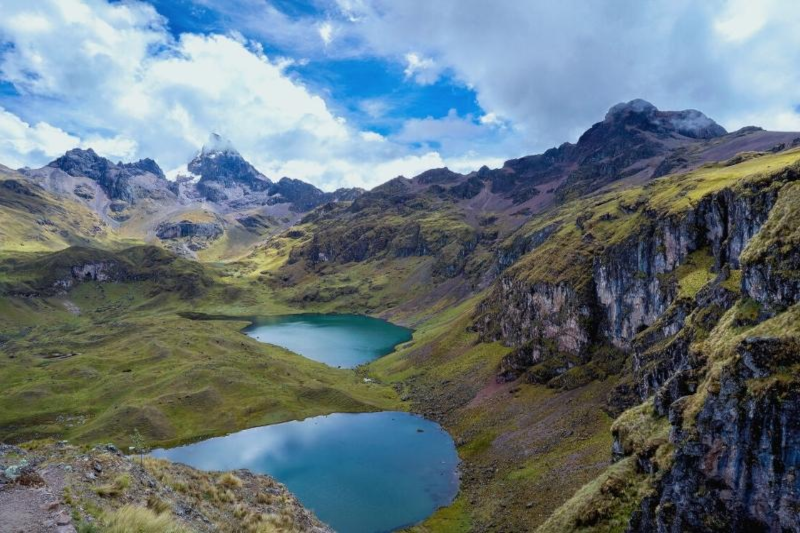
One of the most breathtaking features of the Lares Trek is the pristine glacial lakes that dot the landscape. These azure bodies of water are like mirrors reflecting the surrounding peaks, creating a surreal and tranquil setting. Trekkers often take a moment to pause and soak in the serene beauty, feeling a deep sense of peace and connection to the natural world.
Towering Peaks
The trek ascends to towering peaks that offer panoramic views of the Andean landscape. The majesty of these mountains is awe-inspiring, with their snow-capped summits standing as timeless sentinels. From these heights, trekkers gain perspective, both literally and figuratively, as they reflect on the journey and the boundless beauty of the world around them.
Preparing for the Trek
Embarking on the Lares Trek requires careful preparation. Due to the high altitudes involved, it is crucial to acclimatize properly to prevent altitude sickness. Spending a few days in Cusco or the Sacred Valley before the trek can help your body adjust to the thin air.
Acclimatization Tips
Proper acclimatization is essential for a successful trek. It is recommended to arrive in Cusco a few days before starting the trek to allow your body time to adjust. Engage in light activities such as walking tours or visiting nearby attractions like Pisac, Ollantaytambo, Maras, and Moray, which offer cultural insight without excessive physical strain. Staying hydrated and avoiding alcohol can also aid in acclimatization, ensuring you are well-prepared for the physical demands of the trek.
Physical Preparation
To fully enjoy the Lares Trek, physical preparation is key. Engage in regular cardiovascular exercises like hiking, cycling, or swimming in the months leading up to your trip. Strength training can also be beneficial, particularly for the legs and core. Building endurance and strength will make the trek more enjoyable and reduce the risk of injury.
Mental Readiness
Equally important to physical preparation is mental readiness. The Lares Trek can be challenging, and maintaining a positive mindset is crucial. Embrace the journey with an open mind and a sense of adventure. Prepare for varying weather conditions and be adaptable. Cultivating resilience and patience will enhance your overall experience and allow you to fully appreciate the wonders of the trek.
Essential Packing List
Packing for the Lares Trek requires careful consideration. Here are some essentials to ensure a comfortable and enjoyable experience:
Layers of Clothing: The weather in the Andes can be unpredictable. Pack lightweight, moisture-wicking layers that can be easily added or removed.
Sturdy Footwear: A good pair of hiking boots with ankle support is essential for navigating uneven terrain.
Hydration System: Staying hydrated at high altitudes is vital. Consider bringing a hydration bladder or water bottles.
Sun Protection: The sun’s rays are stronger at higher elevations. Pack sunscreen, sunglasses, and a wide-brimmed hat.
First Aid Kit: Include essentials like blister treatment, pain relievers, and altitude sickness medication.
Clothing Essentials
When packing clothing, consider the varied weather conditions you may encounter on the trek. Layering is key, allowing you to adjust to temperature changes. Pack thermal base layers, a fleece jacket, and a waterproof outer shell. Don’t forget warm gloves and a beanie for chilly mornings and evenings. Comfort and functionality should guide your clothing choices.
Footwear and Accessories
Footwear is perhaps the most critical aspect of your trekking gear. Invest in high-quality hiking boots that offer good grip and ankle support. Break them in before your trip to avoid blisters. Gaiters can be useful for keeping debris out of your boots. Trekking poles are also recommended to provide stability on uneven terrain and reduce strain on your knees.
Health and Safety Gear
Prioritize your health and safety by packing a comprehensive first aid kit. Include blister pads, adhesive bandages, antiseptic wipes, and any personal medications. Consider bringing altitude sickness medication if you are prone to its effects. A headlamp with extra batteries is essential for navigating campsites at night. Ensure your backpack has a rain cover to protect your gear from unexpected showers.
The Allure of Hot Springs
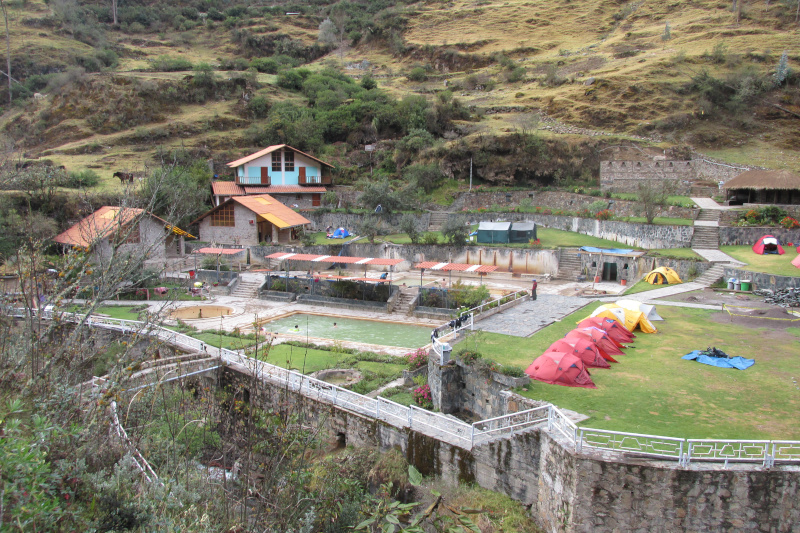
A highlight of the Lares Trek is the opportunity to soak in natural hot springs. Located near the trailhead in the town of Lares, these thermal waters offer a soothing respite for weary trekkers. The mineral-rich waters are believed to have therapeutic properties, providing relief for sore muscles and rejuvenating the spirit.
Therapeutic Benefits
The hot springs of Lares are renowned for their therapeutic benefits. The warm, mineral-rich waters help to relax tight muscles and soothe aches and pains from days of trekking. The minerals are said to have healing properties, promoting circulation and detoxification. This natural spa experience is the perfect way to unwind and rejuvenate both body and mind.
A Tranquil Oasis
Nestled amidst the majestic Andean landscape, the hot springs provide a tranquil oasis away from the hustle and bustle of everyday life. Surrounded by towering peaks and the sounds of nature, soaking in these thermal waters is a meditative experience. The steam rising from the water creates an ethereal atmosphere, inviting trekkers to pause, reflect, and connect with the natural world.
Community Significance
For the local communities, the hot springs hold cultural and historical significance. They have been used for centuries by the indigenous people for both practical and ceremonial purposes. Trekkers have the opportunity to learn about the traditions and beliefs associated with these waters, gaining a deeper appreciation for the cultural heritage of the region. This shared experience fosters a sense of connection and respect for the land and its people.
Arrival at Aguas Calientes
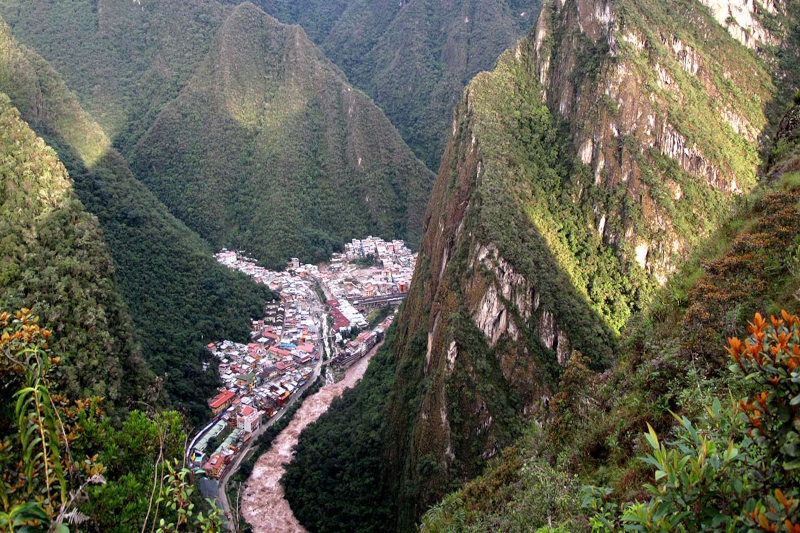
After completing the trek, travelers will arrive at Aguas Calientes, the gateway to Machu Picchu. This bustling town is nestled in a lush valley, surrounded by steep, verdant mountains. It offers a range of accommodations and dining options, making it a convenient base for exploring the ancient citadel.
Exploring Aguas Calientes
Aguas Calientes, also known as Machu Picchu Pueblo, is a vibrant town that welcomes trekkers with open arms. The town’s bustling markets and colorful streets are a delight to explore. Visitors can shop for local handicrafts, sample traditional Peruvian cuisine such as fresh ceviche, and soak in the lively atmosphere. The town is a melting pot of cultures, offering a unique blend of modern amenities and traditional charm.
Accommodation Options
Aguas Calientes provides a variety of accommodation options to suit every traveler’s needs and budget. From cozy hostels to luxurious hotels, there is something for everyone. Staying in Aguas Calientes allows trekkers to rest and recharge before their visit to Machu Picchu. Many accommodations offer stunning views of the surrounding mountains, adding to the overall experience.
Dining Experiences
The culinary scene in Aguas Calientes is a treat for the senses. The town boasts a wide range of dining options, from street food stalls offering local delicacies to gourmet restaurants serving international cuisine. Trekkers can savor traditional dishes like ceviche and lomo saltado or indulge in fusion cuisine that showcases the creativity of Peruvian chefs. Dining in Aguas Calientes is an opportunity to celebrate the journey and enjoy the flavors of the region.
Machu Picchu: The Final Destination
The culmination of the Lares Trek is the awe-inspiring Machu Picchu, a UNESCO World Heritage site and one of the New Seven Wonders of the World. The journey to this ancient Incan city is a journey through time, where the whispers of the past echo through its stone walls and terraced slopes.
Architectural Marvels
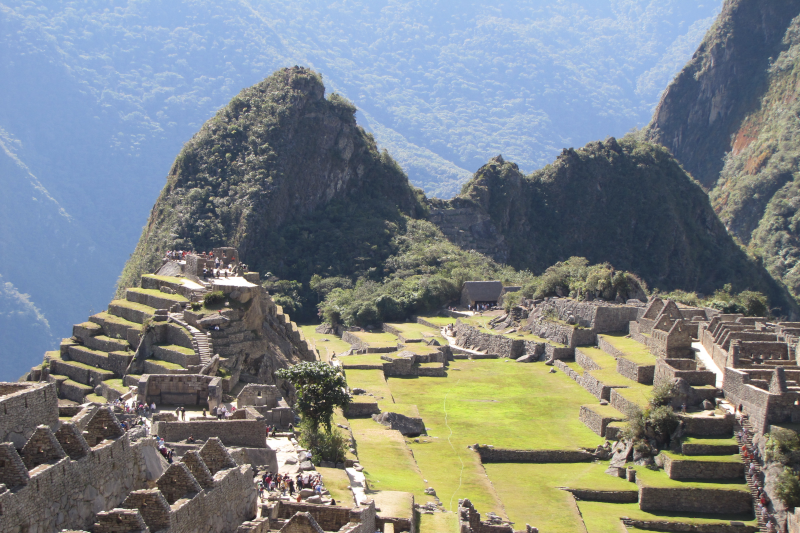
Machu Picchu is renowned for its architectural marvels, showcasing the ingenuity and craftsmanship of the Inca Empire. Visitors can explore the intricate stone structures, marveling at the precision and skill involved in their construction. The Temple of the Sun and the Intihuatana stone are just a few of the highlights that captivate the imagination and offer a glimpse into the spiritual and cultural significance of this ancient city.
Breathtaking Views
The location of Machu Picchu, perched high in the Andes, offers breathtaking views that leave visitors in awe. The surrounding mountains and valleys create a dramatic backdrop, enhancing the mystical atmosphere of the site. Sunrise at Machu Picchu is a truly magical experience, as the first rays of light illuminate the ancient ruins, creating a moment of pure wonder and reflection.
A Journey Through Time
Visiting Machu Picchu is more than just a sightseeing experience; it is a journey through time. As you walk through the ancient city, you are transported to a bygone era, where the echoes of history resonate in every corner. The mystery and allure of Machu Picchu captivate the soul, leaving a lasting impression and a deeper appreciation for the rich cultural heritage of the Andes.
Tips for a Memorable Trek
While the Lares Trek is less crowded than other routes, it still requires planning to maximize the experience.
Engage with Local Guides
Hiring a knowledgeable local guide can enhance your journey significantly. Guides offer valuable insights into the history and culture of the region, enriching your understanding of the places you visit.
Respect Cultural Norms
When interacting with indigenous communities, show respect for their customs and traditions. Ask for permission before taking photographs and engage in meaningful exchanges that prioritize mutual respect and learning.
Embrace the Journey
The Lares Trek is as much about the journey as it is about the destination. Take time to savor the moments, whether it’s admiring a panoramic view or sharing a smile with a local villager.
Plan for Weather Variability
The weather in the Andes can be unpredictable, with sudden changes in temperature and conditions. Be prepared for all types of weather by packing versatile clothing and gear. Check the forecast regularly and adjust your plans as needed to ensure a safe and enjoyable trek.
Stay Connected with Nature
One of the greatest rewards of the Lares Trek is the opportunity to disconnect from the digital world and reconnect with nature. Embrace the simplicity of life on the trail, listen to the sounds of nature, and take in the beauty that surrounds you. Allow yourself to be present in the moment and appreciate the tranquility of the Andes.
Capture the Memories
While it’s important to immerse yourself in the experience, don’t forget to capture the memories. Bring a camera or smartphone to document the breathtaking landscapes, cultural encounters, and personal milestones along the way. These photos will serve as lasting reminders of your incredible adventure on the Lares Trek.
Conclusion
The Lares Trek to Machu Picchu offers a unique blend of natural beauty, cultural immersion, and historical intrigue. It is a journey that challenges the body, enriches the mind, and uplifts the spirit. For those seeking an alternative route to Machu Picchu that delves deeper into the heart of the Andes, the Lares Trek promises an unforgettable adventure that transcends the ordinary.
Embark on this trek with an open heart and a curious mind, and you will discover the timeless magic of the Andes waiting to be unveiled. As you traverse the diverse landscapes, engage with local communities, and reach the awe-inspiring Machu Picchu, you will create memories that will last a lifetime. The Lares Trek is not just a journey to a destination; it is a journey of self-discovery and a celebration of the rich tapestry of life in the Andes.
Llactapata Trek with Machu Picchu Views
People around the world recognize the classic Machu Picchu photo taken from a crowded platform. But the Llactapata Trek is yet another perspective altogether. Just think about a hidden place where the majority of the traveling people would never get to. Imagine that you are standing in a distant valley when you see the lost city–there is no one there, just you and the ruins of an Incan watchtower of an ancient lookout.
A Hidden Ridge with a Direct View
The Inca Trail is a dream hiking trail of many hikers which opens out as sold out. Llactapata is the ideal solution. This path is a substitute of the Inca Trail including ruins. It provides the actual feeling of exploration without large crowds.
What exactly is Llactapata? The ‘VIP Balcony’ to Machu Picchu
Llactapata is a pre-colonial Incaian village. Quechua means High Town in its name. Imagine it was a backstage balcony over Machu Picchu. Archaeologists have cleared and restored the site in recent years. Many visitors still miss it. To have landed on this side is such a revelation.
Llactapata was not simply a point of view. It was significant in the Inca trail. It was an administrative and agricultural center according to historians. Terraces and storehouses supported the nearby areas. They must have aided in the provision of Machu Picchu. When you are standing at that, the connection becomes real.
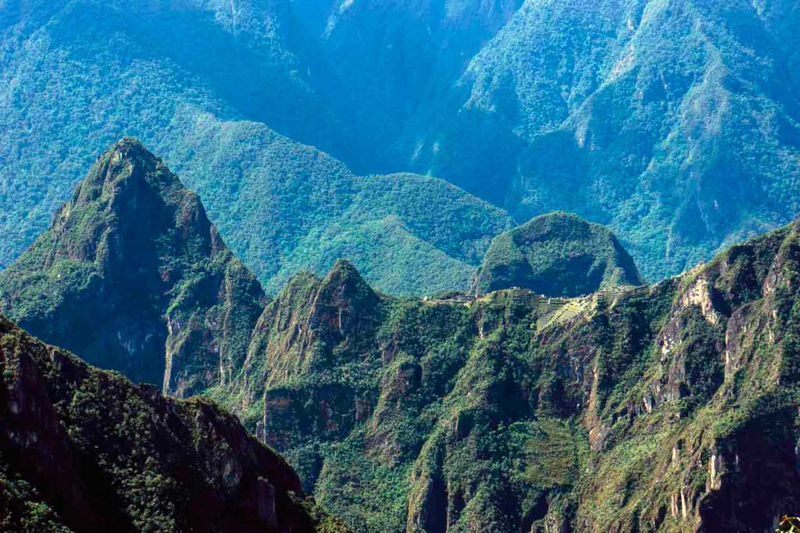
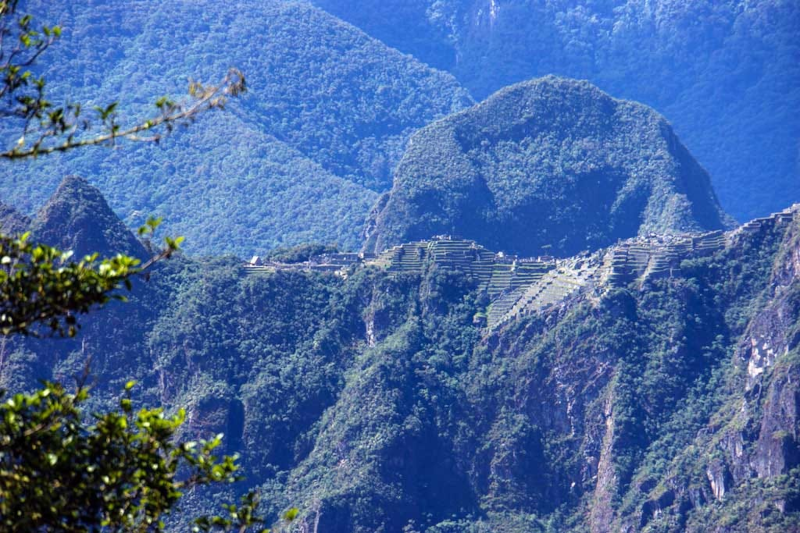
What is really magical is its location. The ruins are located on a ridge on the opposite side of the valley Aobamba. Here you are more informed about the geography. Thou hast seen how Machu Picchu runs up the mountain spine. This view is totally opposing the view of the Sun Gate.
LlactapataTrek vs. The Sun Gate: Which Machu Picchu View Is Better for You?
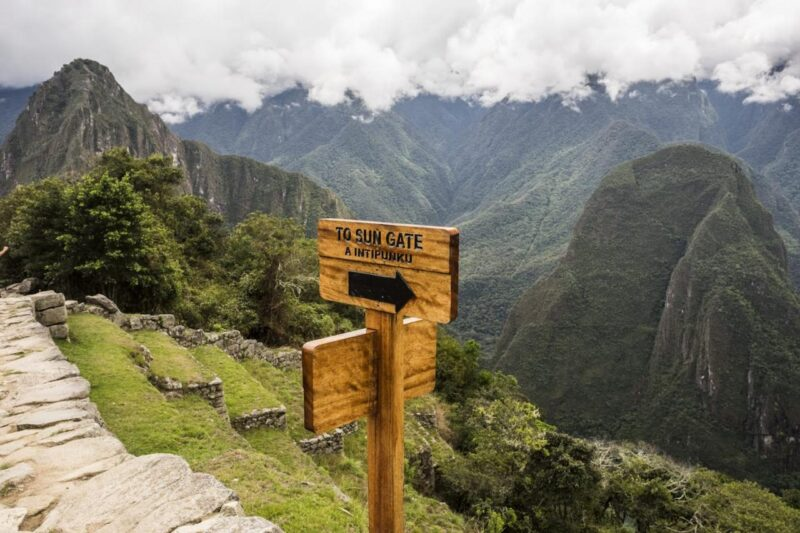
In the majority of cases, people visit the Sun Gate spotview. Inti Punku offers such a typical post-card picture. This is the first place visited by hikers on the Inca Trail. The citadel comes out in a magnificent display beneath. It is victorious and mythical.
Llactapata is another story. The angle depicts the way in which the city cascades within the ridge. Huayna Picchu emerges at the back of it. The scale becomes clearer. The engineering is more impressive. You know why they are talking about it as the city in the clouds.
The atmosphere also differs. The Sun Gate often feels busy. Llactapata feels calm, sometimes there are only a few visiting parties. There is a personal and silent first look. Sunrise contributes to golden light and dark shadows. The scene might be close to spirituality.
The Sun Gate provides a conventional entrance. Llactapata presents a seldom-to-find. One feels celebratory. The other feels reflective. Llactapata is the one to visit in case you want to make your first impression a more deliberate and contemplative one. The second step is easy, either choose whether the trip there suits your type of adventure or not.
Are You Fit Enough? A Realistic Look at the LlactapataTrek’s Difficulty
Once curiosity about discovering something special grows, the next practical question is: how difficult is the Llactapata trek? The short answer is “moderate.” Consider it to be a long walk rather than a technical climb. It is like a day long in a hilly national park. If you can spend most of the day on your feet and handle slopes, you can likely take on the challenge.
One of the main parts of the trek is the part between Lucmamba and Llactapata. This section entails gradual uphill climb within a couple of hours. The route traverses coffee farms and cloud forest. average time of walking 5-6 hours per trekking day. These breaks cover the general water, snack, and photo breaks. The guides established a modest pole, pole (slowly, slowly) rhythm. This beat makes everybody have fun on the way without any form of rush.
What about the Llaqtapata trek difficulty and altitude? This is often the best part for many hikers. You first acclimatize in high-altitude Cusco.The trek itself stays lower. Llactapata is located about 2,850 meters (9,350 feet). It is at that time that your body will tend to feel adjusted.
You don’t need elite fitness. Such a good attitude and proper conditioning go a long way. The trail is challenging but achievable . It does pay hard work with scenery and actual achievement.
Your 3-Day LlactapataTrek Itinerary: Coffee, Ruins, and a Legendary View
The schedules may change, yet the standard program is 3 days that go by a specific circuit. Each day balances physical effort with beautiful scenery. The first day is usually a scenic drive although it is usually a long drive in between Cusco and Santa Teresa valley. The actual increase commences thereafter. The hike between Lucmabamba and Llactapata ascends to sceneries that most tourists never get to encounter. You go over coffee-fields and thick woods. You end the day at a camp or lodge. Rest is setting you up to the next big thing.
Day two delivers the payoff. You get up early and see the sunrise strike mountains. Then one sees Machu Picchu emerging out of Llactapata. This initial perspective is a strong one. The path takes one down to the valley after visiting the ruins. The road terminates at Hidroelectrica power station. There it is the Hidroelectrica-Aguas Calientes walk which continues along the tracks. The walk remains mostly level during the two-hour walk. Your town steered along the river.
This itinerary Llactapatatrek is a combination of nature and history. It builds toward a big reward. Here is the quick summary:
Day 1: Travel by car between Cusco and Lucmabamba. Hiking tour of coffee farms to Llactapata camping spot.
Day 2: Witness Machu picchu sunrise. Take a descent to Hidroelectrica and walk to Aguas Calientes.
Day 3: Take a sightseeing tour of Machu Picchu and head back to Cusco.
Guided Tour vs. DIY: How to Hike to Llactapata
When you arrive at this marvellous path, what you next think is how to take it. You may reserve a complete guided tour or do the logistics yourself. These both work, however, they produce entirely different experiences. Realizing the trade-offs between convenience and independence can make you make a good choice.
To the majority of the tourists a guided Llactapata tour will be her easiest and least stressing way to go. A tour operator handles all the details, including transport from Cusco to the remote trailhead. They are involved in the transport of Cusco to the far trailhead. They apply a professional guide, meals, water and accommodation. Most to the point they pre-book your Machu Picchu entry ticket. Many companies sell this trek as a standalone excursion, and others include it as the scenic final section of the Salkantay trek via Llactapata. What comes out is an uninterrupted stress free package that will allow you to concentrate on the experience.
When you are going to hike to Llactapata without a guide, the hike is not the ultimate problem. The area that involves the greatest effort is logistics. You must arrange your own transport to the starting point. It is also your duty to find and reserve rural accommodation in the area where the trail is located. Planning of navigation and timing are completely on your hands also. Top to that, you have to book Machu Picchu tickets months in advance, and they do run out. The need to plan well arises.
Self adventurous travel will be cheaper and will be flexible. The guided walk has order and tranquility. Many travelers prefer to focus on the experience instead of managing the logistics. Whomever, smart packing contributes a lot to the comfort and success of your choices.
Your Essential Llactapata Packing List (And What to Leave at Home)
Suitcase packing when travelling to Andes may be complex since weather changes rapidly. You may get sunshine and wind and fog in one afternoon. That is not a single jacket that would provide a solution but a layering system. Think in three parts. Begin with the bottom that wicks moisture away on your skin. Wear a warm middle-layer, such as fleece. Complete it with wind and rainproof outer wrap. This system allows you to add or delete layers and feel comfortable during the whole day.
This list includes the essential equipment with that in mind. You can also use this list for the Salkantay trek because the conditions are similar.
Clothing Necessities: Waterproof Rain jacket, warm fleece jacket, 2-3 moisture-wicking shirts, and sweaty hiking pants (no jeans).
Shoes: Old pair of waterproof, hiking shoes and sandals or comfy shoes when at the hotel in the evenings.
Daypack Essentials: small daypack (20-30L), sunscreen with high SPF, powerful insect repellant, a copy of a passport, and Peruvian Soles.
Footwear is most essential among all the gear you use. New boots can bring about blisters and pain. The simplest rule is that all you have to do is never go on a trek with new boots. Put them on weeks before your journey on normal walks. Half the battle is in good gear. The rest is solved by choosing the appropriate season.
When Is the Best Time to Hike to Llactapata?
There are two major seasons of the Andes. The dry season is between April and October. The wet seasons are between November and March. The dry months are normally characterized by sunny days and clear skies. The situation is ideal to be able to have a long distance look at Machu Picchu. The negative aspect is increased visitors. During this period, trails and towns are busy.
Hikers and greener scenery are experienced during the wet season. The valleys appear vivid and lively. Tails may however be muddy and slippery due to rain. The Machu Picchu is sometimes concealed by a cloud. It can be a seriously disappointing thing after a lengthy hike.
The shoulder season is the favorite of many travelers. In between the extremes are April, May, September and October. These are the months that follow up with good weather and less people. The landscape remains green due to the fresh rainfall. States are more harmonized in general.
You can trek most of the year. There are also possible maintenance or parts of the Inca Trail close-downs in February. The same weather patterns are followed by the Salkantay trek. These months are the best time to pick as it is more likely to be clear. The effort is justified by those clear views. However, there is one last question.
Is the LlactapataTrek Really Worth It?
This is an alternative Inca Trail that provides feasible options. It is filled with a more intimate experience with large masses of people. You get the first look through hard work and perseverance. It is a special well deserved moment. Machu Picchu emerges all over the valley and the experience seems personal. Not many of the visitors ever view the citadel in this perspective.
The path provides something greater than a photo. It provides you with a narrative and a recollection that is formed as a result of the journey itself. The more subdued tracks and the coffee farms and the sunrise point of view have a stronger attachment to landscape.
Your next step is simple. Begin to compare itineraries of reputable tour operators. Now you know how to make choices with certainty. It is beyond just planning to hike. It is the start of a story that you would still be telling even after you are out of the trip.
Incas History
The Incas history first appeared in the Andesregion during the 12th century A.D. It gradually built a massive empire through the military strength of their emperors. Known as Tawantinsuyu, the Inca state spanned the distance of northern Ecuador to central Chile. It consisted of 12 million inhabitants from more than 100 different ethnic groups at its peak. Well-devised agricultural and roadway systems, along with a centralized religion and language, helped maintain a cohesive state. Despite their power, the Inca were quickly overwhelmed by the diseases and superior weaponry of Spanish invaders, the last bastion of their immense empire overtaken in 1572.
Inca Civilization
When Spanish conquistador Francisco Pizarro landed in Tawantinsuyu – Perú in 1532, he found unimaginable riches. The Inca civilation was in full bloom. The streets may not have been paved with gold but their temples and palaces were…such as Qoricancha the temple of the sun.
According to Incas History, Quechuas were most prominent for establishing the Inca Empire in pre-Columbian America. It was centered in what is now Peru from 1438 to 1532 c.e and represented the height of the Inca civilization. The Inca state was known as the Kingdom of Cusco before 1438. Over the course of the Inca Empire, the Inca used conquest and peaceful assimilation to incorporate in their empire a large portion of western South America, centred on the Andean mountain ranges.
All the history you learn hiking the Inca Trail to Machu Picchu and experience the legendary path that takes you to the wonder of the world.
Beginning of Spanish rule:
However, shortly after the Inca Civil War, the last Sapa Inca (Ruler) of the Inca Empire was captured and killed on the orders of the conquistador Francisco Pizarro, marking the beginning of Spanish rule. The remnants of the empire retreated to the remote jungles of Vilcabamba city and established the small Neo-Inca State, which was conquered by the Spanish in 1572 by viceroy Francisco de Toledo.
The Quechua name was Tawantinsuyu which can be translated The Four Regions or The Four United Regions. Before the Quechua spelling reform it was written in Spanish as Tahuantinsuyo. Tewantin is a group of four things –tawa “four” with the suffix -ntin which names a group, suyu means region, province and state.
The empire was divided into four suyus, whose corners met at the capital, Cuzco (Qosqo), in modern-day Peru.
Official language of the empire was Quechua, although over seven hundred local languages were spoken. The Inca leadership encouraged the worship of their gods, the foremost of which was Inti, the sun father or god.
Origin stories of the Incas:
The Inca had four types of origin myths. In one, Tici Viracocha of Colina de las Ventanas in Paqariq Tampu sent forth his four sons and four daughters to establish a village. Along the way, Sinchi Roca was born to Manco and Ocllo, and Sinchi Roca is the person who finally led them to the valley of Cuzco where they founded their new village. There Manco became their leader and became known as Manco Cápac.
In another origin myth of Incas History, the sun god Inti ordered Manco Cápac and Mama Ocllo to emerge from the depths of Lake Titicaca and found the city of Cuzco. They traveled by means of underground caves until reaching Cuzco where they established Hurin Cuzco, or the first dynasty of the Kingdom of Cuzco.
In the third origin myth, an Inca sun god told his wife that he was lonely. She proposed that he create a civilization to worship him and keep him company. He saw this as a wise plan and carried it out. The Inca were born from Lake Cusco and populated the Andes and worshiped their sun god.
In the last origin myth of Incas History, Manco Cápac, who was the son of the sun, and his sister Mama Occlo, the daughter of the moon, were sent by the sun to look for a place to build an empire. They were to tell when they were at the right place by carrying a special rod with them at all times. Wherever the rod sank into the ground, this was where they were to create a new city. The rod sank into the ground in Cusco.
The knowledge of these myths is due to oral tradition, since the Incas did not have writing. Manco Cápac, who became the leader of his tribe, probably did exist, despite lack of solid evidence. The archeological evidence seems to indicate that the Inca were a relatively unimportant tribe until the time of Sinchi Roca, also called Sinchi Roca, who is the first figure in Inca mythology whose existence can be supported historically.
Cusco:
The Inca people began as a tribe in the Cusco area around the 12th century Ad. Under the leadership of Manco Cápac they formed the small state of Cusco Quechua Qosqo.
In 1438 AD, under the command of Sapa Inca (paramount leader) Pachacuti, whose name meant “world-shaker”, they began a far-reaching expansion. The land Pachacuti conquered was about the size of the Thirteen Colonies of the United States in 1776, and consisted of about half the Andes mountain range.
Pachacuti reorganized the kingdom of Cusco into an empire, the Tahuantinsuyu, a federalist system which consisted of a central government with the Inca at its head and four provincial governments with strong leaders: Chinchaysuyu (NW), Antisuyu (NE), Kuntisuyu (SW), and Qullasuyu (SE). He is also thought to have built Machu Picchu, either as a family home or as a Camp David-like retreat.
Pachacuti would send spies to regions he wanted in his empire who would report back on their political organisation, military might and wealth. He would then send messages to the leaders of these lands extolling the benefits of joining his empire, offering them presents of luxury goods such as high quality textiles, and promising that they would be materially richer as subject rulers of the Inca.
Most accepted the rule of the Inca as a fait accompli and acquiesced peacefully. The ruler’s children would then be brought to Cuzco to be taught about Inca administration systems, then return to rule their native lands. This allowed the Inca to indoctrinate the former ruler’s children into the Inca nobility, and, with luck, marry their daughters into families at various corners of the empire.
It was traditional for the Inca’s son to lead the army; Pachacuti’s son Túpac Inca began conquests to the north in 1463, and continued them as Inca after Pachacuti’s death in 1471. His most important conquest was the Kingdom of Chimor, the Inca’s only serious rival for the coast of Peru. Túpac Inca empire stretched north into modern-day Ecuador and Colombia.
Túpac Inca’s son Huayna Cápac added significant territory to the south. At its height, Tahuantinsuyu included Peru and Bolivia, most of what is now Ecuador, a large portion of modern-day Chile, and extended into corners of Argentina and Colombia. Tahuantinsuyu was a patchwork of languages, cultures and peoples. The components of the empire were not all uniformly loyal, nor were the local cultures all fully integrated.
The portions of the Chachapoya that had been conquered were almost openly hostile to the Inca, and the Inca nobles rejected an offer of refuge in their kingdom after their troubles with the Spanish. For instance, the Chimú used money in their commerce, while the Inca empire as a whole had an economy based on exchange and taxation of luxury goods and labour (it is said that Inca tax collectors would take the head lice of the lame and old as a symbolic tribute).
Economic productivity was based on collective labor which was organized in order to benefit the whole community. The Ayni was used to help individual members of the community in need, such as a sick member of the community. Minka or team work represented community service and the mita was the tax paid to the Inca in the form of labor. The Inca did not use currency, economic exchanges were by reciprocity and took place in markets called k’atus.
Spanish Conquest and Neo – Inca state
Spanish conquistadors led by Francisco Pizarro explored south from Panama, reaching Inca territory by 1526. It was clear that they had reached a wealthy land with prospects of great treasure, and after one more expedition (1529), Pizarro traveled to Spain and received royal approval to conquer the region and be its viceroy.
At the time they returned to Peru, in 1532, a war of succession between Huayna Capac’s sons Huáscar and Atahualpa and unrest among newly conquered territories and perhaps more importantly, smallpox, which had spread from Central America had considerably weakened the empire.
Francisco Pizarro:
Pizarro did not have a formidable force; with just 170 men, 1 cannon and only 27 horses, he often needed to talk his way out of potential confrontations that could have easily wiped out his party. Their first engagement was the battle of Puná, near present-day Guayaquil, Ecuador; Pizarro then founded the city of Piura in July 1532. Hernando de Soto was sent inland to explore the interior, and returned with an invitation to meet the Inca, Atahualpa, who had defeated his brother in the civil war and was resting at Cajamarca with his army of 80,000 troops.
Pizarro met with the Inca, who had brought only a small retinue, and through interpreters demanded that he convert to Christianity. A widely disputed legend claims that Atahualpa was handed a Bible and threw it on the floor, the Spanish supposedly interpreted this action as adequate reason for war. Though some chroniclers suggest that Atahualpa simply didn’t understand the notion of a book, others portray Atahualpa as being genuinely curious & inquisitive in the situation. Regardless, The Spanish attacked the Incas retinue (see Battle of Cajamarca), capturing Atahualpa.
Francisco Pizarro used the capture to gain gold as a ransom. Atahualpa offered the Spaniards enough gold to fill the room he was imprisoned in, and twice that amount of silver. The Incas fulfilled this ransom. Over four months, almost 8 tons of gold was collected. Pizarro was supposed to let the ruler of the Incas free once the ransom was paid, but he refused to release the Inca after that and instead had him strangled in public. During Atahualpa’s imprisonment Huáscar was assassinated. The Spanish maintained that this was at Atahualpa’s orders; this was one of the charges used against Atahualpa when the Spanish finally decided to put him to death, in August 1533.
Rise of Manco Inca Yupanqui:
Incas History further mentions that the Spanish installed his brother Manco Inca Yupanqui in power; for some time Manco cooperated with the Spanish, while the Spanish fought to put down resistance in the north. Meanwhile, an associate of Pizarro’s, Diego de Almagro, attempted to claim Cusco for himself. Manco tried to use this intra-Spanish feud to his advantage, recapturing Cusco (1536), but the Spanish retook the city.
Manco Inca then retreated to the mountains of Vilcabamba and founded the Neo-Inca State, where he and his successors ruled for another 36 years, sometimes raiding the Spanish or inciting revolts against them. In 1572 the last Inca stronghold was discovered, and the last ruler, Túpac Amaru, Manco’s son, was captured and executed, bringing the Inca empire to an end.
After Spanish Invasion
Since the fall of Tahuantinsuyu, the new Spanish rulers repressed the people and their traditions. Many aspects of Inca culture were systematically destroyed, including their sophisticated farming system. The Spanish used the Inca mita (mandatory public service) system to get labourers for mines and plantations. One member of each family was forced to work in the gold and silver mines, the foremost of which was the silver mine at Potosí. When one family member died, which would usually happen within a year or two, the family would be required to send a replacement.
The major languages according to Incas History were, Quechua and Aymara, were employed by the Catholic Church to evangelize in the Andean region. In some cases, these languages were taught to peoples who had originally spoken other indigenous languages. Today, Quechua and Aymara remain the most widespread Amerindian languages.
As Peru Incas History, the legend of the Inca has served as inspiration for resistance movements in the region. These include the 1780 rebellion led by Tupac Amaru II against the Spanish, as well as contemporary the guerrilla movements Tupac Amaru Revolutionary Movement (MRTA) and Sendero Luminoso in Peru and Tupamaros in Uruguay.
Rainbow Mountain vs. Palccoyo – Alternative Rainbow Mountain Peru
Rainbow Mountain VS Palccoyo. This post is curated to give you an insight to both popular tourist attractions. You can choose which one is ideal to visit.
Rainbow Mountains of Peru are among the most visited attractions in Peru, if not South America. It is as popular as Machu Picchuand Sacred Valley of Incas.
Vinicunca Rainbow Mountain:
Vinicunca Rainbow Mountain is more visited than Palccoyo on a full day tour. Until early 2016, it was covered in snow and people did not know about its existence. When the snow started to melt, gradually the color started appearing. It quickly got a deserving attention and became a popular full day trip from Cusco City.
Most travellers prefer visiting Vinicunca as it involves a hike off the beaten path of the Peruvian highland region. This gives an opportunity to get an insight to the life and culture of the Andean communities here.
In addition to the Vinicunca Rainbow Mountain, the region is also popular with the red valley. On a full day hike from Cusco, you can visit both Rainbow Mountain and the Red Valley.
Duration of Hike: 2 Hours each way | Highest Point: 5200 metres (17060 feet) | Highlights: Rainbow Mountain & Red Valley
Alternative Rainbow Mountain:
The Alternative Rainbow mountain (Palccoyo) is an ideal choice for those wanting to see the most without much of a hike.
Popularly known as the Rainbow Mountain Tour (instead of trek), Palccoyo Rainbow Mountain Tour is an easier option. You will be driven to the trailhead which is just 200 metres lower than the summit. From the trail head, it is an easier and a comfortable hike.
On this tour, you will also get to see the colonial town of Checaupe. It is home to a colonial church and a rope bridge that resembles the Qeswachaka Bridge. However, the bridge here was built during the colonial era and not by Incas.
You will also get an insight to the life of the Andean community. They have preserved their age old traditions and continue to talk in Quechua.
The hike from the trailhead to the summit takes you through the stone forest or bosque de piedras. Here you will get to see natural stone formations.
Often Palccoyo Rainbow Mountain tour is operated in a small group of 6-7 travellers.
Duration of Hike: 45 minutes each way | Highest Point: 5000 metres (16404 feet) | Highlights: Checacupe, Stone Forest and Rainbow Mountain
INTERESTING FACTS ABOUT RAINBOW MOUNTAIN
These Are Few Things That Make Rainbow Mountain So Special:
Fun is ensured!
It is situated on the most elevated pinnacle of Cusco from where you have a spectacular view.
It is one of the most scenic mountains on earth.
You can have a connection with the Andean culture and customs of individuals where it is found.
The full journey is filled with inquisitive things like Andean plants, and many Alpacas, rodents, fowls, llamas, etc.
You can see the Andean agribusiness extremely closely.
BEST TIME TO VISIT RAINBOW MOUNTAINS IN PERU:
Both Vinicunca and Palccoyo are part of the Peruvian Andes. It is subject to two seasons, wet season and dry season. It is highly recommended to visit the Rainbow Mountains during the dry season – between March and November.
INTERESTING FACTS ABOUT THE PALCCOYO:
These are Few Things that Make Palccoyo Mountain So Special:
The Palccoyo, Alternative Rainbow Mountain Peru is located approx. 3.5 hours by car from Cusco. It is situated at an altitude of 4,980 meters above sea level. Here you will find a colourful mountain.
A stunning valley with a rock forest and more than three Rainbow Mountains. This makes the Palccoyo Rainbow Mountains beautiful and classic.
The Palccoyo Rainbow Mountains are not overcrowded.
The hiking journey to the Palccoyo Rainbow Mountains is simpler and more wonderful.
DISTANCE:
The Palccoyo, alternative Rainbow Mountain Peru hike is relatively easier, particularly if you have done hikes earlier. The path is flatter. The duration is shorter. You only need to hike around 45 minutes in comparison to 2 hours each way in the Rainbow Mountain.
When discussing Vinicunca and Palccoyo, distance doesn’t look relatively different but the elevation is the main factor here. Every single kilometre matters at such an elevation.
FINAL WORDS:
The hike up to Vinicunca can be difficult and long, and the height can result in problems for some. The route to Palccoyo is simpler, flat and shorter.
Also, as Palccoyo, Alternative Rainbow Mountain Peru is a new route; you will most likely have few members in your group. You will get the opportunity to click better pictures than Rainbow Mountains.
If you do not like crowded areas, you can visit the Palccoyo Rainbow Mountains instead of the classic Rainbow Mountain. Here you will be able to avoid massive amounts of tourists.
Both Rainbow Mountains are at a high altitude. It is highly recommended to spend a few days in Cusco to avoid altitude sickness.